U6 snRNA biogenesis phosphodiesterase 1
Dernière mise à jour 18 Aug 2020
Respecte les directives éditoriales
- TéléchargerTélécharger
- Partager
- Language
- Discussion
- Ask Patient
- Version audio
- Ajouter aux sources préférées sur Google
La USB1 gene provides instructions for making an enzyme that functions as an RNA exonuclease. RNA exonucleases cut off (cleave) building blocks called nucleotides one at a time from molecules of RNA (a chemical cousin of DNA). This process helps stabilize the RNA and protects it from damage.
Normal function
La USB1 gene provides instructions for making an enzyme that functions as an RNA exonuclease. RNA exonucleases cut off (cleave) building blocks called nucleotides one at a time from molecules of RNA (a chemical cousin of DNA). This process helps stabilize the RNA and protects it from damage.
Specifically, the USB1 enzyme protects a small RNA molecule called U6, which is an essential component of a complex called a spliceosome. The USB1 enzyme also helps transport (chaperones) U6 to the spliceosome and helps it attach (bind) to the proteins in the complex. Spliceosomes process RNA molecules called messenger RNAs (mRNAs) by recognizing and removing regions known as introns and splicing the mRNA molecules back together to provide the blueprint for making proteins.
Different versions (isoforms) of the USB1 enzyme are produced in different tissues, where they play various roles. In blood-forming tissues, the USB1 enzyme is thought to be important for the maturation of neutrophils. Neutrophils are a type of white blood cell involved in the immune system. In the skin, the USB1 enzyme is found in pigment-producing cells (melanocytes), cells in the outer layer of the skin called keratinocytes, and structural cells called fibroblasts. Its role in the function of these cells is unknown.
Conditions referring to this gene or chromosome
Other names
C16orf57
chromosome 16 open reading frame 57
hMPN1: mutated in PN1
U six biogenesis 1
U6 small nuclear RNA biogenesis phosphodiesterase 1
U6 snRNA biogenesis 1
Related patient information and medicines

Patient information leaflet
Calculs rénaux
Calculs rénaux sont hard stones that can cause severe pain in your side along with blood in your urine, and nausea and vomiting. You are more likely to develop kidney stones if you eat a Western diet, don't drink enough fluids or are overweight. Once you have had one episode they are likely to recur but there are several kidney stone treatment.

Patient information leaflet
Biopsie rénale
A biopsie rénale involves taking a small sample of tissue from the kidney. Cells from the kidney can then be looked at in detail. It is used to diagnose and monitor certain conditions. Note : the information below is a general guide only. The arrangements, and the way tests are performed, may vary between different hospitals. Always follow the.

Patient information leaflet
Artérite à cellules géantes
Prompt treatment aims to prevent serious complications such as severe sight impairment which can occur soon after the disease starts. What is giant cell arteritis. Giant cell arteritis (GCA), also known as temporal arteritis, is a condition which causes inflammation on the inside of some blood vessels (arteries). It is called 'giant cell' because.

Patient information leaflet
Maladie de Wilson
Maladie de Wilson est a genetic disorder in which copper builds up in the body, mainly in the liver and brain. Without any treatment, the build-up of copper can cause serious symptoms. Treatment is with medication to remove the excess copper and/or to prevent a further build-up of copper. What is Wilson's disease. Wilson's disease is a condition.
Patient information leaflet
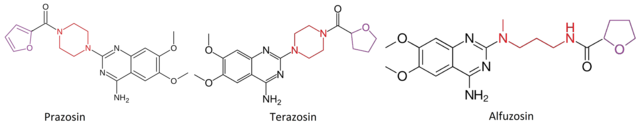
Alpha-bloquants
Alpha-bloquants are medicines that are mainly used to traiter l’hypertension artérielle (hypertension) and problems with passing urine in men who have enlargement of the prostate gland. Prostate gland enlargement is also called benign prostatic hyperplasia (BPH). What are alpha-blockers used for. In the past, some alpha-blockers were also used to treat.
Patient information leaflet
Bronchodilatateurs oraux
What is a bronchodilator. Bronchodilators sont medicines that are used to treat breathing problems in people with lung diseases such as asthma Asthma and chronic obstructive pulmonary disease (COPD) Chronic obstructive pulmonary disease. They help to relieve symptoms such as coughing, wheezing and shortness of breath. Bronchodilators are usually.
Lectures complémentaires et références
- U6 snRNA biogenesis phosphodiesterase 1; MedlinePlus, National Library of Medicine.
- Colombo EA, Bazan JF, Negri G, Gervasini C, Elcioglu NH, Yucelten D, Altunay I, Cetincelik U, Teti A, Del Fattore A, Luciani M, Sullivan SK, Yan AC, Volpi L, Larizza L. Novel C16orf57 mutations in patients with Poikiloderma with Neutropenia: bioinformatic analysis of the protein and predicted effects of all reported mutations. Orphanet J Rare Dis. 2012 Jan 23;7:7. doi: 10.1186/1750-1172-7-7.
- Didychuk AL, Montemayor EJ, Carrocci TJ, DeLaitsch AT, Lucarelli SE, Westler WM, Brow DA, Hoskins AA, Butcher SE. Usb1 controls U6 snRNP assembly through evolutionarily divergent cyclic phosphodiesterase activities. Nat Commun. 2017 Sep 8;8(1):497. doi: 10.1038/s41467-017-00484-w.
- Hilcenko C, Simpson PJ, Finch AJ, Bowler FR, Churcher MJ, Jin L, Packman LC, Shlien A, Campbell P, Kirwan M, Dokal I, Warren AJ. Aberrant 3' oligoadenylation of spliceosomal U6 small nuclear RNA in poikiloderma with neutropenia. Blood. 2013 Feb 7;121(6):1028-38. doi: 10.1182/blood-2012-10-461491. Epub 2012 Nov 27.
- Mroczek S, Dziembowski A. U6 RNA biogenesis and disease association. Wiley Interdiscip Rev RNA. 2013 Sep-Oct;4(5):581-92. doi: 10.1002/wrna.1181. Epub 2013 Jun 14.
- Mroczek S, Krwawicz J, Kutner J, Lazniewski M, Kucinski I, Ginalski K, Dziembowski A. C16orf57, a gene mutated in poikiloderma with neutropenia, encodes a putative phosphodiesterase responsible for the U6 snRNA 3' end modification. Genes Dev. 2012 Sep 1;26(17):1911-25. doi: 10.1101/gad.193169.112. Epub 2012 Aug 16.
- Negri G, Crescenzi B, Colombo EA, Fontana L, Barba G, Arcioni F, Gervasini C, Mecucci C, Larizza L. Expanding the role of the splicing USB1 gene from Poikiloderma with Neutropenia to acquired myeloid neoplasms. Br J Haematol. 2015 Nov;171(4):557-65. doi: 10.1111/bjh.13651. Epub 2015 Aug 25.
- Shchepachev V, Azzalin CM. The Mpn1 RNA exonuclease: cellular functions and implication in disease. FEBS Lett. 2013 Jun 27;587(13):1858-62. doi: 10.1016/j.febslet.2013.05.005. Epub 2013 May 15.
- Volpi L, Roversi G, Colombo EA, Leijsten N, Concolino D, Calabria A, Mencarelli MA, Fimiani M, Macciardi F, Pfundt R, Schoenmakers EF, Larizza L. Targeted next-generation sequencing appoints c16orf57 as clericuzio-type poikiloderma with neutropenia gene. Am J Hum Genet. 2010 Jan;86(1):72-6. doi: 10.1016/j.ajhg.2009.11.014. Epub 2009 Dec 10.
- Walne AJ, Vulliamy T, Beswick R, Kirwan M, Dokal I. Mutations in C16orf57 and normal-length telomeres unify a subset of patients with dyskeratosis congenita, poikiloderma with neutropenia and Rothmund-Thomson syndrome. Hum Mol Genet. 2010 Nov 15;19(22):4453-61. doi: 10.1093/hmg/ddq371. Epub 2010 Sep 3.
- Wang L, Clericuzio C, Larizza L, Concolino D. Poikiloderma with Neutropenia. 2017 Oct 26 [updated 2024 Feb 22]. In: Adam MP, Bick S, Mirzaa GM, Wallace SE, Amemiya A, editors. GeneReviews(R) [Internet]. Seattle (WA): University of Washington, Seattle; 1993-2026. Available from http://www.ncbi.nlm.nih.gov/books/NBK459118/
Partagez vos pensées ou expériences avec les autres dans notre communautés de patients.
Accès simple à des traitements fiables et à des services de santé en ligne.
Common conditions
Get help with common conditions through the NHS, without a GP appointment.





Inscrivez-vous à la newsletter Patient
Votre dose hebdomadaire de conseils de santé clairs et fiables - rédigés pour vous aider à vous sentir informé, confiant et maître de la situation.
En vous abonnant, vous acceptez notre Politique de confidentialité. Vous pouvez vous désabonner à tout moment. Nous ne vendons jamais vos données.