Calculs rénaux
Évalué par des pairs Dr Krishna Vakharia, MRCGPDernière mise à jour par Dr Colin Tidy, MRCGPDernière mise à jour 18 mai 2023
Répond aux directives éditoriales
- TéléchargerTélécharger
- Partager
- Language
- Discussion
- Version audio
- Ajouter aux sources préférées sur Google
Les calculs rénaux sont des pierres dures qui peuvent causer une douleur intense sur le côté, accompagnée de sang dans les urines, de nausées et de vomissements. Vous êtes plus susceptible de développer des calculs rénaux si vous suivez un régime occidental, ne buvez pas suffisamment de liquides ou êtes en surpoids. Une fois que vous avez eu un épisode, ils sont susceptibles de réapparaître, mais il existe plusieurs options de traitement des calculs rénaux disponibles.
En un coup d'œil
Les calculs rénaux sont des masses dures qui peuvent se former dans vos reins, uretères ou vessie.
Ils sont courants, touchant jusqu'à 1 personne sur 7.
Les symptômes peuvent inclure une douleur intense dans l'abdomen, du sang dans les urines ou des infections urinaires.
La plupart des petits calculs s'éliminent naturellement, mais boire beaucoup de liquides peut aider.
Les pierres plus grosses peuvent nécessiter des traitements comme des ondes de choc, une chirurgie par trou de serrure ou une opération.
Si vous présentez des symptômes de calculs rénaux, votre médecin peut organiser des analyses d'urine, de sang ou des examens d'imagerie.
What are kidney stones?
Kidney stones are hard stones that can form in the kidney, in the tube (the ureter) draining urine from the kidney, or in the bladder.
Renal (kidney) stones with indication of size
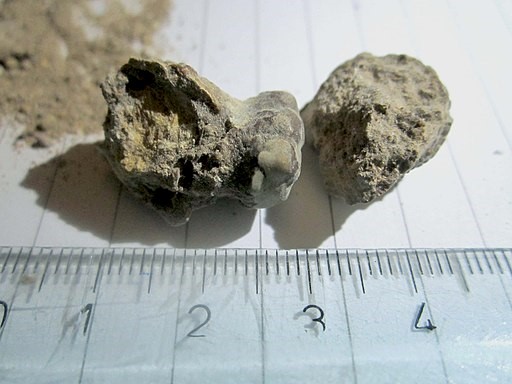
© Jakupica, CC BY-SA 4.0, via Wikimedia Commons
Our kidneys remove many different chemicals from our body. This is really important to keep us healthy. These chemicals are passed from our kidneys to our bladder and out of our body. Occasionally these chemicals can join together and form kidney stones.
How common are kidney stones?
Kidney stones are common and occur in up to 1 in 7 people.
Each year 1 or 2 people in every 1,000 will have symptoms caused by kidney stones.
About 1 in 8 men and 1 in 16 women will have an episode of pain caused by kidney stones at some time in their lives.
If you have a kidney stone there is about a 1 in 2 chance of having another stone within the following five years.
Kidney stones are more common in people who are en surpoids, ou avoir diabète, ou hypertension.
What causes kidney stones?
Diagram with kidney cross-section
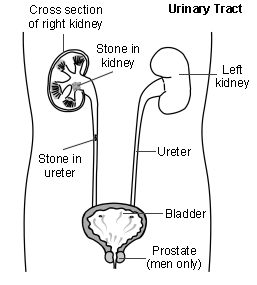
The kidneys filter the blood and remove excess water and waste chemicals to produce urine. Urine travels from each kidney down the tube (the ureter) draining urine from the kidney into the bladder. This is called the urinary tract.
Many waste chemicals are dissolved in the urine. The chemicals sometimes form tiny crystals in the urine which clump together to form a small stone. Most kidney stones are small and pass out with the urine. Some stones become stuck in a kidney or in the ureter.
In most cases, there is no known reason why a stone is formed. Most stones are made of calcium. However, in most cases, the amount of calcium and other chemicals in the urine and blood is normal.
Kidney stone symptoms
For some people, a kidney stone may just stay in a kidney and cause no symptoms. Other kidney stones may travel out of your body in your urine without you knowing anything about it. If kidney stone symptoms do occur, they include:
Pain from a kidney. A stone that is stuck in a kidney may cause pain in the side of your abdomen (loin). This pain can be very severe and cause you to feel sweaty and be sick (vomit).
Colique néphrétique:
This is a severe pain which is caused by a stone that passes into the tube (the ureter) draining urine from the kidney.
The stone becomes stuck. The ureter squeezes the stone towards the bladder, which causes intense pain in the side of your tummy (abdomen).
The pain caused by renal colic may last from a few minutes to a few hours. The pain comes in spasms and between these spasms there may be intervals of no pain or just a dull ache.
The pain may spread down into the lower abdomen or groin. You may sweat, feel sick or even vomit because the pain can be very bad.
Blood in your urine. You may see blood in your urine (the urine turns red). This is caused by a stone rubbing against the inside of your ureter.
Infection urinaire. Urine infections are more common in people with kidney stones. Urine infections may cause high temperature (fever), pain on passing urine (dysuria) and a need to pass urine more often.
What makes kidney stones more likely?
You are more likely to form a kidney stone if your urine is concentrated. For example, if you exercise vigorously, if you live in a hot climate or if you work in a hot environment when you may lose more fluid as sweat and less as urine.
You are also more prone to develop kidney stones if you have:
Repeated (recurrent) urine infections.
An abnormal kidney - for example, with scars or cysts on it.
A close relative who has had a kidney stone.
Underlying causes are uncommon
In a small number of cases, a medical condition causes the kidney stone. Various uncommon conditions can lead to high levels of chemicals in the body, such as calcium, oxalate, uric acid and cystine. If the level of these chemicals is high enough in the urine, they can form into stones.
Do some medicines make kidney stones more likely?
Taking certain medicines can make you more prone to making kidney stones. Examples include:
Some chemotherapy medicines for cancer.
Some medicines used to treat VIH.
However, many people safely take these medicines without developing kidney stones. If you think that a medicine you are taking is the cause of your kidney stone, you should not stop taking the medicine but discuss it with your doctor.
Diagnosing kidney stones
Your doctor may arrange some initial urine and blood tests if you display kidney stone symptoms:
Un test sanguin to check that the kidneys are working properly.
You may also have other blood tests to check the level of certain chemicals that may cause kidney stones if the level is high. Examples include calcium and uric acid.
Analyses d'urine to check for infection and for certain crystals.
If you have kidney stone symptoms, special X-rays or scans of the kidneys and the tubes (the ureters) draining urine from the kidneys may be done. These tests may start with an radiographie et échographie. A Scan CT may also be needed. These tests are used to detect a stone, to find out exactly where it is and to check that a stone is not blocking the flow of urine.
What can be done to rule out or confirm an underlying cause?
Kidney stones are common and they are not caused by any known underlying disease for most people. However, some tests may be recommended to rule out an underlying problem. In particular, tests are more likely to be advised if:
You have repeated (recurring) kidney stones.
You have symptoms of an underlying condition.
You have a family history of a particular condition.
A stone forms in a child or young person.
You may be asked to catch a stone so that it can be analysed. This will help to find out if there may be an underlying cause for the kidney stone. To catch a stone, you will need to pass urine through gauze, a tea strainer or a filter such as a coffee filter.
Kidney stone treatment
Most stones that cause renal colic are small and pass out with the urine in a day or so. You should drink plenty of fluids to encourage a good flow of urine. Analgésiques puissants are often needed to ease the pain until you pass the stone. No other treatment is usually needed.
Some stones become stuck in a kidney or in one of the tubes (the ureters) draining urine from a kidney and cause persistent symptoms or problems. In these cases, the pain usually becomes severe and you may need to be admitted to hospital. There are various kidney stone treatment options, including:
Extracorporeal shock wave lithotripsy (ESWL) uses high-energy shock waves which are focused on to the stones from a machine outside the body to break up stones. You then pass out the tiny broken fragments when you pass urine.
Percutaneous nephrolithotomy (PCNL) is used for stones not suitable for ESWL. A thin telescope-like instrument (a nephroscope) is passed through the skin and into the kidney. The stone is broken up and the fragments of stone are removed via the nephroscope. This procedure is usually done under general anaesthetic.
Ureteroscopy is another treatment that may be used. In this procedure, a thin telescope is passed up into the ureter via the urethra and bladder. Once the stone is seen, a laser is used to break up the stone. This technique is suitable for most types of kidney stones.
Chirurgie to remove the stone. This is only needed in a very small number of cases where the above, newer techniques have not worked or are not possible. It may be done if you have a very large stone in your kidney.
Another option for a purely uric acid stone (about 1 in 20 stones) is to dissolve the stone. This can be done by drinking plenty of fluids and making the urine alkaline with medication.
How to prevent kidney stones
There are various kidney stone treatment options available, but about half of people who have a kidney stone develop another one at a later time in their lives. Drinking plenty of water each day may help in preventing kidney stones in future.
For the few people who have a high level of certain chemicals in the body, further advice and treatment to reduce the amount of these chemicals may be needed.
Kidney stone complications
Complications from kidney stones are uncommon. Rarely, a large stone can completely block the flow of urine passing down one of the tubes (ureters) draining urine from the kidney. This may lead to infection or even damage to the kidney (lésion rénale aiguë ou la maladie rénale chronique).
This is now very uncommon because X-rays or scans will usually detect any blockage so that large stones can be removed before they cause any damage to your kidneys.
Sélections des patients pour Troubles rénaux
Rein et voies urinaires
Maladie polykystique des reins
La maladie polykystique des reins (PKD) provoque le développement de nombreux sacs remplis de liquide (kystes) dans les reins.
par Dr Colin Tidy, MRCGP
Rein et voies urinaires
Maladie rénale chronique
La maladie rénale chronique signifie que les reins ne fonctionnent pas aussi bien que prévu. Diverses conditions peuvent causer une maladie rénale chronique. La gravité peut varier, mais la plupart des cas sont légers ou modérés, surviennent chez les personnes âgées et ne provoquent pas de symptômes. La maladie rénale chronique a tendance à s'aggraver progressivement sur des mois ou des années.
par Dr Philippa Vincent, MRCGP
Questions fréquemment posées
Où vont les calculs rénaux une fois qu'ils sont passés ?
La plupart des calculs rénaux de petite taille sont simplement évacués du corps avec votre urine. Vous ne remarquerez peut-être même pas leur passage. Si un calcul a été analysé, c'est généralement parce qu'on vous a demandé de le récupérer après son passage.
Pourquoi me sentirais-je malade ou vomirais-je lorsque j'ai un calcul rénal ?
La douleur associée aux calculs rénaux, en particulier la colique néphrétique, peut être très intense. Cette douleur intense peut entraîner des sensations de malaise (nausée) et vous faire vomir.
Les calculs rénaux sont-ils dangereux ?
Les complications dues aux calculs rénaux sont rares. Il est rare qu'un calcul très gros puisse bloquer complètement l'écoulement de l'urine d'un rein, ce qui pourrait potentiellement entraîner une infection ou endommager le rein lui-même. Cependant, de tels blocages sont généralement détectés par des examens d'imagerie, permettant ainsi de retirer le calcul avant qu'il ne cause des dommages.
Quel est le délai typique pour expulser un calcul rénal ?
La plupart des petits calculs qui provoquent des coliques néphrétiques sont évacués avec l'urine en environ un jour ou deux. Boire beaucoup de liquides aide à favoriser un bon débit urinaire, ce qui peut faciliter ce processus.
Comment puis-je empêcher le retour des calculs rénaux ?
Environ la moitié des personnes ayant eu un calcul rénal en développeront un autre plus tard dans leur vie. Une mesure préventive clé est de boire beaucoup d'eau chaque jour. Si vous avez des niveaux élevés de certains produits chimiques dans votre corps qui contribuent à la formation de calculs, des conseils et un traitement supplémentaires pourraient être nécessaires pour réduire ces niveaux.
Lectures complémentaires et références
- CUA guideline on the evaluation and medical management of the kidney stone patient; Canadian Urological Association (November 2016)
- Renal or ureteric colic - acute; NICE CKS, octobre 2024 (accès réservé au Royaume-Uni)
- Urolithiase; European Association of Urology (2023)
- Khan SR, Pearle MS, Robertson WG, et al; Kidney stones. Nat Rev Dis Primers. 2016 Feb 25;2:16008. doi: 10.1038/nrdp.2016.8.
- Fontenelle LF, Sarti TD; Kidney Stones: Treatment and Prevention. Am Fam Physician. 2019 Apr 15;99(8):490-496.
À propos de l'auteurVoir la biographie complète

Dr Colin Tidy, MRCGP
Médecin généraliste, Auteur médical
MBBS, MRCGP, MRCP (Paediatrics), DCH
Le Dr Colin Tidy est un médecin du NHS, basé dans l'Oxfordshire.
À propos du critiqueVoir la biographie complète

Dr Krishna Vakharia, MRCGP
Médecin-chef pour la santé, Optum UK
MBChB, MRCGP(2013), BMedSci (hons), DFSRH, DRCOG, PGDipDerm (Distn)
Le Dr Krishna Vakharia est un médecin généraliste du NHS. Elle est également examinatrice régulière pour le diplôme de troisième cycle en dermatologie pratique à l'Université de Cardiff, ainsi que médecin-chef pour la santé chez Optum UK.
Historique de l'article
Les informations sur cette page sont rédigées et examinées par des cliniciens qualifiés.
Article également disponible en Anglais, Allemand, Espagnol, Français, Italien, Portugais, Hindi, Hébreu, Arabe, and Suédois.
Prochaine révision prévue : 12 mai 2028
18 mai 2023 | Dernière version

Demandez, partagez, connectez-vous.
Parcourez les discussions, posez des questions et partagez vos expériences sur des centaines de sujets de santé.

Vous ne vous sentez pas bien ?
Évaluez vos symptômes en ligne gratuitement
Inscrivez-vous à la newsletter Patient
Votre dose hebdomadaire de conseils de santé clairs et fiables - rédigés pour vous aider à vous sentir informé, confiant et maître de la situation.
En vous abonnant, vous acceptez notre Politique de confidentialité. Vous pouvez vous désabonner à tout moment. Nous ne vendons jamais vos données.
Plus dans le rein et les voies urinaires
- Énurésie
- Médicament pour l'énurésie nocturne - desmopressine
- Systèmes de récompense pour l'énurésie
- Sang dans les urines
- Cystite chez les femmes
- Cystoscopie
- Maladie rénale diabétique
- Régime alimentaire en cas de maladie rénale chronique
- Cétones dans l'urine
- Biopsie rénale
- Cancer du rein
- Transplantation rénale
- Maladie polykystique des reins
- Protéinurie
- Cystite récurrente chez les femmes
- Test sanguin de routine pour la fonction rénale
- Incontinence urinaire
- Infection urinaire chez les personnes âgées
- Infection urinaire pendant la grossesse
- Cystourethrogramme mictionnel