X-linked Kx blood group antigen, Kell and VPS13A binding protein
Dernière mise à jour 1 Aug 2022
Respecte les directives éditoriales
- TéléchargerTélécharger
- Partager
- Language
- Discussion
- Ask Patient
- Version audio
- Ajouter aux sources préférées sur Google
La XK gene provides instructions for producing a protein that is found in various tissues of the body, particularly the brain, muscle, and heart. This protein is also present on the surface of red blood cells and carries a molecule known as the Kx blood group antigen. Blood group antigens are found on the surface of red blood cells and determine a number of blood types. When blood cells with unfamiliar antigens enter the bloodstream, the body's immune system recognizes the cells as foreign and may trigger an immune reaction that destroys the foreign blood cells.
Sélections vidéo pour GènesBibliothèque vidéo
Normal function
La XK gene provides instructions for producing a protein that is found in various tissues of the body, particularly the brain, muscle, and heart. This protein is also present on the surface of red blood cells and carries a molecule known as the Kx blood group antigen. Blood group antigens are found on the surface of red blood cells and determine a number of blood types. When blood cells with unfamiliar antigens enter the bloodstream, the body's immune system recognizes the cells as foreign and may trigger an immune reaction that destroys the foreign blood cells.
The function of the XK protein is unclear; researchers believe that it might play a role in transporting substances into and out of cells. On red blood cells, the XK protein attaches to another blood group protein, the Kell protein. The function of this blood group complex is unknown.
Conditions referring to this gene or chromosome
Other names
Kell blood group precursor (McLeod phenotype)
KX
Kx antigen
membrane transport protein XK
X-linked Kx blood group (McLeod syndrome)
X1k
XK, Kell blood group complex subunit (McLeod syndrome)
XK-related protein 1
XK_HUMAN
XKR1
Related patient information and medicines
Patient information leaflet
Analyses de sang
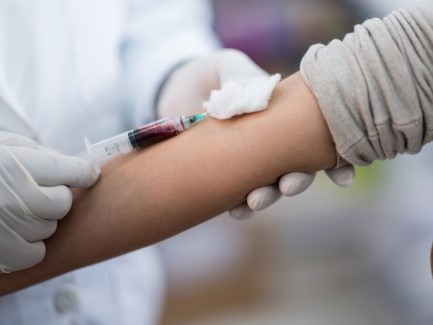
The main reasons to know your blood group are if you need to have a blood transfusion or if you are pregnant. You cannot request a blood test just to know your blood group on the NHS. What is blood made up of. Blood cells These can be seen under a microscope and make up about 40% of the blood's volume. Blood cells are made in the bone marrow by.

Patient information leaflet
Le système immunitaire
This leaflet gives a brief overview of the système immunitaire and how it works. In autoimmune diseases the body is unable to tell what is its own and what is foreign, so it attacks itself. Autoimmune diseases can attack any part of the body - eg, type 1 diabetes (pancreas), multiple sclerosis (brain and nerves), systemic lupus erythematosus (skin and.

Patient information leaflet
Groupes sanguins et types
ABO and rhesus are both types of antigens found on the surface of red blood cells. There are lots of other types but these are the most important. The main reasons to know your blood group are if you need to have a blood transfusion or if you are pregnant. What is a blood group. Red blood cells (erythrocytes) have certain proteins on their.

Patient information leaflet
Hémophilie
Hémophilie is a rare bleeding disorder that affects your ability to make a clot. The blood contains substances called clotting factors that work with platelets to form a clot. When you injure yourself the clot stops you bleeding. Haemophilia is a condition where there is a deficiency of clotting factors, so people with this condition usually have.

Patient information leaflet
Test de Coombs
A Coombs test est a type of blood test. It is named after the person who invented it, Dr Robin Coombs. There are two types of Coombs test. What is a Coombs test. However, in some conditions, known as autoimmune diseases, your own body can destroy your own red blood cells. Réaction transfusionnelle Human sang est grouped by the different types of.
Patient information leaflet
Tests d'anticorps et d'antigènes
Antibodies are part of the body's defence (immune) system. Antigens are the particles that cause the body to create an antibody. Tests to detect antibodies and antigens help to identify certain infections and some other medical conditions. What is the difference between antibodies and antigens. Antibodies are small proteins that circulate in the.
Lectures complémentaires et références
- X-linked Kx blood group antigen, Kell and VPS13A binding protein; MedlinePlus, National Library of Medicine.
- Claperon A, Hattab C, Armand V, Trottier S, Bertrand O, Ouimet T. The Kell and XK proteins of the Kell blood group are not co-expressed in the central nervous system. Brain Res. 2007 May 25;1147:12-24. doi: 10.1016/j.brainres.2007.01.106. Epub 2007 Feb 2.
- Danek A, Rubio JP, Rampoldi L, Ho M, Dobson-Stone C, Tison F, Symmans WA, Oechsner M, Kalckreuth W, Watt JM, Corbett AJ, Hamdalla HH, Marshall AG, Sutton I, Dotti MT, Malandrini A, Walker RH, Daniels G, Monaco AP. McLeod neuroacanthocytosis: genotype and phenotype. Ann Neurol. 2001 Dec;50(6):755-64. doi: 10.1002/ana.10035.
- Lee S. The value of DNA analysis for antigens of the Kell and Kx blood group systems. Transfusion. 2007 Jul;47(1 Suppl):32S-9S. doi: 10.1111/j.1537-2995.2007.01308.x. No abstract available.
- Russo DC, Lee S, Reid ME, Redman CM. Point mutations causing the McLeod phenotype. Transfusion. 2002 Mar;42(3):287-93. doi: 10.1046/j.1537-2995.2002.00049.x.
Partagez vos pensées ou expériences avec les autres dans notre communautés de patients.
Accès simple à des traitements fiables et à des services de santé en ligne.
Common conditions
Get help with common conditions through the NHS, without a GP appointment.





Inscrivez-vous à la newsletter Patient
Votre dose hebdomadaire de conseils de santé clairs et fiables - rédigés pour vous aider à vous sentir informé, confiant et maître de la situation.
En vous abonnant, vous acceptez notre Politique de confidentialité. Vous pouvez vous désabonner à tout moment. Nous ne vendons jamais vos données.