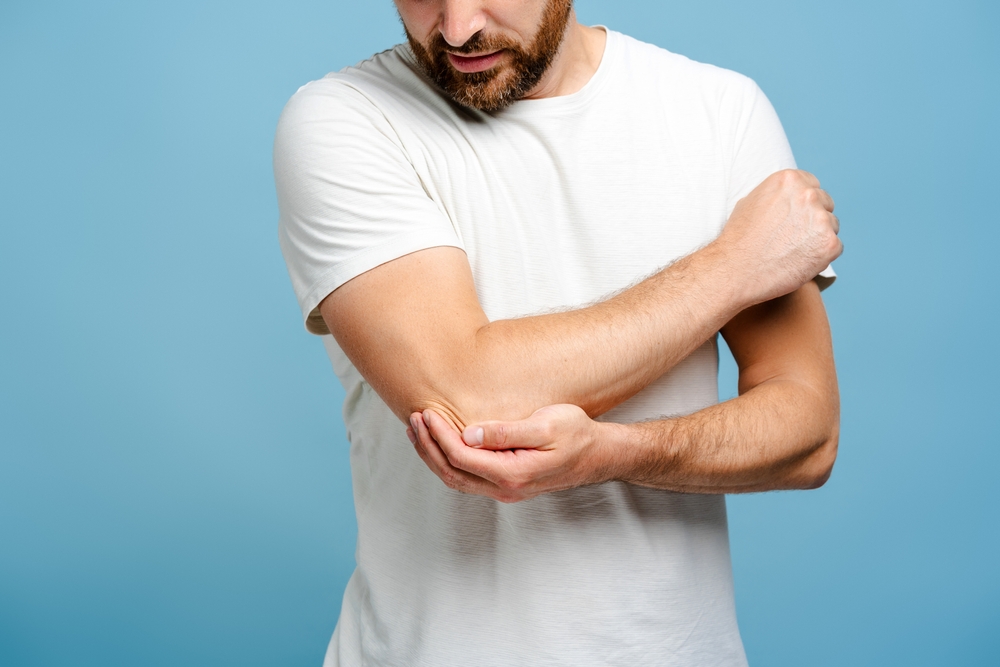
Options de traitement pour le tennis elbow
Revu par Dr Hayley Willacy, FRCGP Dernière mise à jour par Dr Colin Tidy, MRCGPLast updated 1 juil. 2018
Respecte les directives éditoriales
- TéléchargerTélécharger
- Partager
- Language
- Discussion
- Version audio
Tennis elbow is a condition where you have pain on the outer side of the elbow. It is often caused by overuse, which causes damage to tendons around your elbow. In many people, symptoms improve over time just by stopping activities that bring on the symptoms.
Studies have not yet confirmed the best way to treat tennis elbow. Therefore it's very important to consider which treatment (if any) is best for you.
Dans cet article:
Video picks for les blessures sportives
There are six options for the management of l'épicondylite:
Changing your activities - rest and/or changing the way you use your arm.
Soulagement de la douleur - in the form of ice, creams/gels, tablets or patches.
Supports - usually in the form of a supportive strap.
Physiothérapie - can use a variety of treatments.
Injection de stéroïdes.
Other types of injection such as injecting a sample of the patient's own blood (autologous blood), and botulinum toxin may be available.
Chirurgie - usually only considered if other options have not worked well and symptoms have been present for over 12 months.
Continuez à lire ci-dessous
No treatment apart from modifying activity
| Avantages | Risques |
|---|---|---|
No active treatment. Resting the arm and avoiding doing things that make it worse. | Pain from tennis elbow usually lasts for 6 to12 weeks. In some people it can go after as little as three weeks. It is likely to settle more quickly if you can avoid any activities that bring on symptoms. There are no side-effects and there is no need for hospital treatment. You can choose another option at any time. | In about 1 in 10 people, pain can last for longer than 12 months. Once you have had tennis elbow, it may return. It may already have an impact on your life and well-being. It can be very hard to rest your arm, even just with usual day-to-day activities. |
Simple treatments
Retour au sommaireAvantages | Risques | |
|---|---|---|
Ice cubes in a plastic bag, held on the elbow for 10 minutes repeatedly. | Simple and will ease pain for a while. Avoids potential side-effects from medication. | Need to be prepared to apply it for up to 10 minutes at a time. Often need to repeat as relief does not last very long. |
Topical non-steroidal anti-inflammatory drugs (NSAIDs), such as ibuprofen gel. | Can reduce pain a little. Less risk of side-effects compared with oral NSAIDs. | Rarely, the gel can irritate the skin. |
Oral non-steroidal anti-inflammatory drugs (NSAIDs), such as ibuprofen as a tablet. | Sometimes helps to ease the pain. | Stomach pain is common. Bleeding from the stomach is the most serious side-effect. Other medication can be prescribed to protect the stomach if necessary. Some people with asthma, high blood pressure, kidney problems and heart failure may not be able to take NSAIDs. |
Nitrate (GTN) patches, applied daily to the skin over the elbow. | Can help to reduce pain over 1-3 months. About 4 in 5 people are pain-free after 6 months. | 1 in 5 people will not be better after six months of treatment. Potential side-effects include headaches, dizziness and low blood pressure. |
Continuez à lire ci-dessous
Supports and physiotherapy
Retour au sommaireAvantages | Risques | |
|---|---|---|
Supportive strap. Small disc of plastic with a Velcro® strap that is fastened around the arm, just below the elbow. | Can help to reduce pain by taking the pressure away from the tendon insertion. This may help to allow natural healing. | Some people do not find this helpful. Some people find it uncomfortable to wear. |
Physiothérapie. Can use a variety of treatments including exercises, soft tissue massage, ultrasound, laser therapy, acupuncture, and nerve mobilisations. | There is some evidence that exercises can help the tendon to repair and therefore improve the chances of long-term benefit. Low-level laser treatment may be effective in the short term. | Requires time and repeated visits to a physiotherapist. Most physiotherapy treatments have uncertain effectiveness. |
Injections
Retour au sommaireAvantages | Risques | |
|---|---|---|
Steroid (cortisone) injection. An injection into the painful area. | In the short term often helps to reduce the pain during the first 3 months. It can be useful if you absolutely have to be able to use the arm in the near future. | A number of studies have shown that for many people, the pain tends to come back and the problem may recur more often than for other treatments. May be a painful injection and can ache for a few days. Potential side-effects include infection, shrinking (atrophy) of the fatty tissue under the skin, change in skin colour, bruising, bleeding and, rarely, damage to the tendon. |
Injecting part of your own blood. This procedure is generally only considered if other treatments have failed, as research is ongoing. | Long-term outcomes may be better than steroid injection. It is thought that blood helps to heal the tendon. | Not enough evidence to suggest better than other treatments. May be a painful injection. May require more than one hospital visit. Potential side-effects include infection, bruising, and bleeding. May not be available locally. |
Botulinum toxin A injections | Has been shown to be effective in some studies. | May be a painful injection. May not be available locally. Sometimes offered as an alternative treatment to surgery. |
Continuez à lire ci-dessous
Chirurgie
Retour au sommaireAvantages | Risques | |
|---|---|---|
Chirurgie. Only considered if other treatments have failed and symptoms have been present for over 12 months. Involves an incision and release of the tendon. | Good to excellent long-term results have been reported. | It can take up to six months to recover fully from the operation. Potential side-effects include infection and a small risk of damage to other structures - eg, nerves or blood vessels. Usually reserved for people who have more severe and more long-standing problems. |
Patient picks for les blessures sportives

Os, articulations et muscles
Au-delà de la brûlure : déchiffrer la hype HYROX
HYROX est une course de fitness mondiale qui combine différentes disciplines d'exercice en un seul événement exigeant. Bien que le nom puisse sembler un terme technique, HYROX est en réalité une fusion des mots « hybride » et « star du rock ». Sur TikTok et d'autres plateformes sociales, il a explosé en popularité, grâce à ses entraînements visuellement dynamiques et à son format riche en variété. Nous avons interviewé un expert pour savoir si ce phénomène de fitness est adapté à tout le monde.
par Victoria Raw
Os, articulations et muscles
Récupération après une blessure sportive
Une blessure sportive grave peut avoir un impact énorme sur votre vie, surtout si elle affecte votre mobilité. Aussi frustrante que puisse être la situation, il est important de prendre votre temps et de reconstruire progressivement votre force pour éviter le risque de nouvelles blessures.
par Danny Chadburn
Continuez à lire ci-dessous
Historique de l'article
Les informations sur cette page sont examinées par des cliniciens qualifiés.
1 juil. 2018 | Dernière version

Demandez, partagez, connectez-vous.
Parcourez les discussions, posez des questions et partagez vos expériences sur des centaines de sujets de santé.

Vous ne vous sentez pas bien ?
Évaluez vos symptômes en ligne gratuitement
Inscrivez-vous à la newsletter Patient
Votre dose hebdomadaire de conseils de santé clairs et fiables - rédigés pour vous aider à vous sentir informé, confiant et maître de la situation.
By subscribing you accept our Politique de confidentialité. Vous pouvez vous désabonner à tout moment. Nous ne vendons jamais vos données.