
Les directives concernant le coronavirus sont-elles différentes pour l'Écosse, le Pays de Galles et l'Irlande du Nord ?
Revu par Dr Colin Tidy, MRCGPDernière mise à jour par Dr Sarah JarvisDernière mise à jour 13 May 2020
Respecte les directives éditoriales
- TéléchargerTélécharger
- Partager
- Language
- Discussion
- Version audio
- Ajouter aux sources préférées sur Google
Au cours des dernières semaines, différentes nations du Royaume-Uni ont commencé à introduire des recommandations spécifiques à chaque pays pour les précautions contre le coronavirus. À partir du 13 mai, ces différences deviendront plus marquées. Nous examinons comment ces directives affectent les habitants d'Angleterre, d'Irlande du Nord, d'Écosse et du Pays de Galles.
Utiliser le patient outil de vérification du coronavirus si vous présentez des symptômes de fièvre ou une nouvelle toux. Jusqu'à ce que vous ayez utilisé l'outil et reçu des conseils sur les mesures à prendre, veuillez rester chez vous et éviter tout contact avec d'autres personnes.
Travel and exercise
Dans Écosse et Pays de Galles, people can exercise outdoors more than once a day, but only if they stay in their local area. Sunbathing and picnicking are not permitted. Currently, Northern Ireland is the only one of the four nations which has not yet eased exercise restrictions - people should only exercise outside their homes once a day.
However, On 12th May, the Northern Ireland Executive published its five-stage plan for easing its coronavirus restrictions. Part of their first phase will be the opening of outdoor spaces and public sports amenities, including golf, tennis and cycling.
Subject to following social distancing guidelines, people in England are allowed to go outside to exercise as often as they wish.
They can also:
Spend time outdoors (including sunbathing, picnicking or sitting).
Use tennis or basketball courts or golf courses with their families or one other person.
Go fishing.
People in England are allowed to travel by car to places they wish to take exercise, without any restrictions on distance. They should not, however, cross the border into Scotland or Wales, where people are required to stay within their local area.
There have been concerns raised that the English move could prompt a flood of visitors to beauty spots such as the Scottish Borders, or Snowdonia, which saw its busiest visitor day in history on the weekend before UK lockdown plans were implemented. People are not allowed to stay in another home (including their second home) for a holiday, and hotels will remain closed except for essential workers. However, after seven weeks of not travelling and good weather on the horizon, the temptation to travel hundreds of miles in a day may be significant.
There have also been concerns raised by residents of English holiday destinations. While numbers of coronavirus cases are dropping in cities such as London and Birmingham, they remain higher than those in rural areas and there have been fears of a spike in areas which to date have had relatively low levels of infection.
Regional figures put the relative risk into perspective (figures as of 1st May):
Birmingham 3,162 confirmed cases and 908 coronavirus-related deaths out of a local population of 1,141,374.
Borders confirmed 294 cases and 45 coronavirus-related deaths out of a local population of 115,510.
Conwy (which includes Snowdonia national park) 312 confirmed cases and 32 coronavirus-related deaths out of a local population of 117,203.
Cornwall and Isles of Scilly 552 confirmed cases and 145 coronavirus-related deaths out of a local population of 568,210.
Cumbria 2,115 confirmed cases and 359 coronavirus-related deaths out of a local population of 498,888.
Devon 777 confirmed cases and 158 coronavirus-related deaths out of a local population of 795,286.
Dorset 348 confirmed cases and 119 coronavirus-related deaths out of a local population of 376,484.
Gwynedd (which includes Snowdonia national park) 308 confirmed cases and 39 coronavirus-related deaths out of a local population of 124,560.
Manchester 1,349 confirmed cases and 263 coronavirus-related deaths out of a local population of 547,627.
Somerset 585 confirmed cases and 112 coronavirus-related deaths out of a local population of 559,399.
Yorkshire 408 confirmed cases and 79 coronavirus-related deaths out of a local population of 209,893.
By contrast, Londres had 1,033 more deaths than expected for the time of year in a single week (ending 1st May) alone, of which three quarters mention COVID-19 on the death certificate. In its worst week (ending 17th April) there were over 2,200 excess deaths. There have been 5,564 deaths in hospitals alone for people who tested COVID-19 positive.
Working outside the home
For Northern Ireland, Scotland and Wales, rules have not changed. People should work from home if they can and should only work outside the home if they are key workers in the healthcare or other sectors. Businesses should be open only if what they do is essential to the effort of tackling the virus or the well-being of society.
In Scotland, some businesses in the construction sector can continue to work, subject to strict social distancing and other guidance.
In England, by contrast, people are being encouraged to go back to work if their work can only be done in the workplace. Sectors set to reopen or expand their output include food production, construction, manufacturing, logistics, distribution and scientific research in laboratories.
The reopening does not include non-essential retail, hairdressers, restaurants, pubs, bars, gyms and leisure centres. These will remain closed but may begin to open gradually as part of the third phase of relaxation in England, at some point after 4th July.
There have already been concerns raised about pressure being put on people to return to what they consider unsafe working environments. The Health and Safety Executive has warned of strict penalties for companies flouting the rules and encourages workers to inform them if they cannot reach a resolution with their employers.
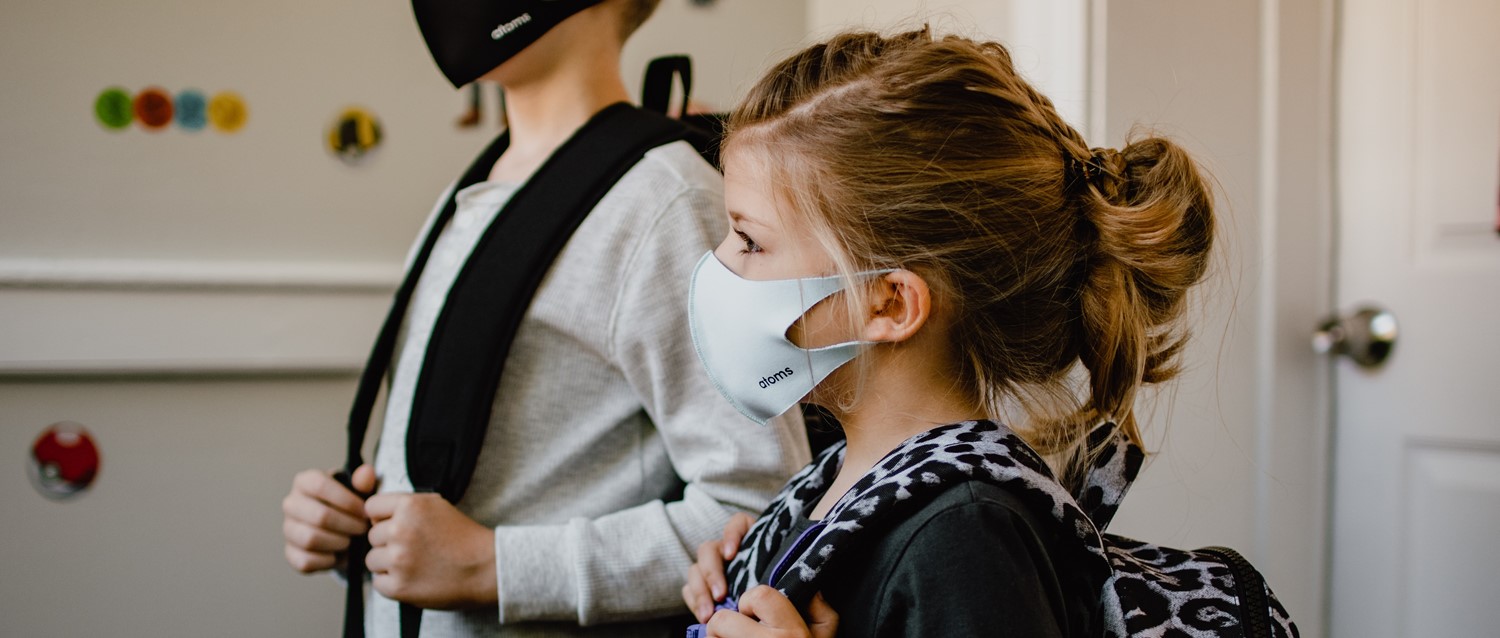
Face masks
Scotland started recommending the use of face coverings in certain indoor situations a week before Northern Ireland and two weeks before England. They are not recommended in Wales.
Recommendations for Scotland, Northern Ireland and England are similar:
The evidence suggests that portant un couvre-visage does not protect you (English advice), but it may protect others if you are infected but have not developed symptoms.
Face coverings are not a substitute for social distancing and handwashing.
There is no evidence to suggest there might be a benefit from face coverings outdoors, unless in an unavoidable crowded situation.
Face coverings are different to surgical masks or respirators used as part of personal protective equipment, which should be reserved for healthcare and other workers.
Face coverings should not be used by children under 2 years old.
There is a risk that if face coverings are not used, put on and removed properly, they could increase your risk through contamination.
To reduce this risk:
Wash your hands (or use at least 60% alcohol hand sanitiser) before you put it on, after you take it off and after you use it.
Do not touch the main part of the face covering once it has been in touch with your face.
Remove your covering using the straps only.
Never partly remove a face covering then pull it back into place.
Store used face coverings in a plastic bag until you can wash them.
Wash face coverings after every use. In England the recommendation is to wash them with your other laundry. Scotland specifies a 60°C wash.
Garden centres
Garden centres in England and Wales are now allowed to reopen. No changes have been made to regulations on garden centres in Scotland or Northern Ireland.
However, they will be part of the first phase of changes in Northern Ireland and Scottish First Minister Nicola Sturgeon has suggested she may make an an announcement about garden centres within the next week.
Sélections des patients pour articles sur la pandémie

COVID-19
Comment les Britanniques ont-ils négligé leur santé bucco-dentaire pendant la pandémie ?
De nouvelles recherches révèlent qu'un Britannique sur trois a négligé sa santé bucco-dentaire depuis le début de la pandémie, en raison d'un manque de routine et d'autres problèmes de santé ayant pris le pas sur le soin de leurs dents et gencives.
par Emily Jane Bashforth
COVID-19
La pandémie affecte-t-elle le développement des enfants ?
Nous vivons des temps sans précédent, et nous ressentons tous la pression. En plus de leurs propres inquiétudes et préoccupations, la plupart des parents s'inquiètent pour leurs enfants - comment le confinement les affectera-t-il ?
par Gillian Harvey
À propos de l'auteurVoir la biographie complète

Dr Sarah Jarvis
Consultant Clinique
MA (Cantab), BM, BCh (Oxon), DRCOG, FRCGP, MBE
Après avoir suivi une formation en médecine à Cambridge et Oxford, le Dr Sarah Jarvis MBE est devenue médecin généraliste.
À propos du critiqueVoir la biographie complète

Dr Colin Tidy, MRCGP
Médecin généraliste, Auteur médical
MBBS, MRCGP, MRCP (Paediatrics), DCH
Le Dr Colin Tidy est un médecin du NHS, basé dans l'Oxfordshire.
Historique de l'article
Les informations sur cette page sont examinées par des cliniciens qualifiés.
Article également disponible en Anglais, Allemand, Espagnol, Français, Italien, Portugais, Hindi, Hébreu, Arabe, and Suédois.
13 May 2020 | Dernière version

Demandez, partagez, connectez-vous.
Parcourez les discussions, posez des questions et partagez vos expériences sur des centaines de sujets de santé.

Vous ne vous sentez pas bien ?
Évaluez vos symptômes en ligne gratuitement
Inscrivez-vous à la newsletter Patient
Votre dose hebdomadaire de conseils de santé clairs et fiables - rédigés pour vous aider à vous sentir informé, confiant et maître de la situation.
En vous abonnant, vous acceptez notre Politique de confidentialité. Vous pouvez vous désabonner à tout moment. Nous ne vendons jamais vos données.
Plus sur la COVID-19
- Mauvaise posture : comment vaincre la « déprime COVID »'
- Les applications peuvent-elles vous aider à gérer votre santé mentale pendant la pandémie ?
- COVID-19 : Les personnes vulnérables doivent-elles se protéger à cause d'Omicron ?
- COVID-19 : Devez-vous annuler vos plans de Noël à cause d'Omicron ?
- Comment les Britanniques ont-ils négligé leur santé bucco-dentaire pendant la pandémie ?
- Comment réserver votre vaccin de rappel COVID-19
- Comment gérer l'anxiété liée à la santé dans un monde post-pandémique
- Comment ventiler en toute sécurité pour se protéger contre la COVID-19 cet hiver
- Devons-nous porter des masques après la pandémie ?
- Quels sont les symptômes de la variante Pirola du COVID-19 ?
- Quel impact la COVID-19 a-t-elle eu sur le dépistage du VIH ?
- Que faire si vous avez besoin de contraception ou de soins d'avortement pendant le confinement
- Aurons-nous besoin d'un rappel de vaccin COVID-19 chaque année ?