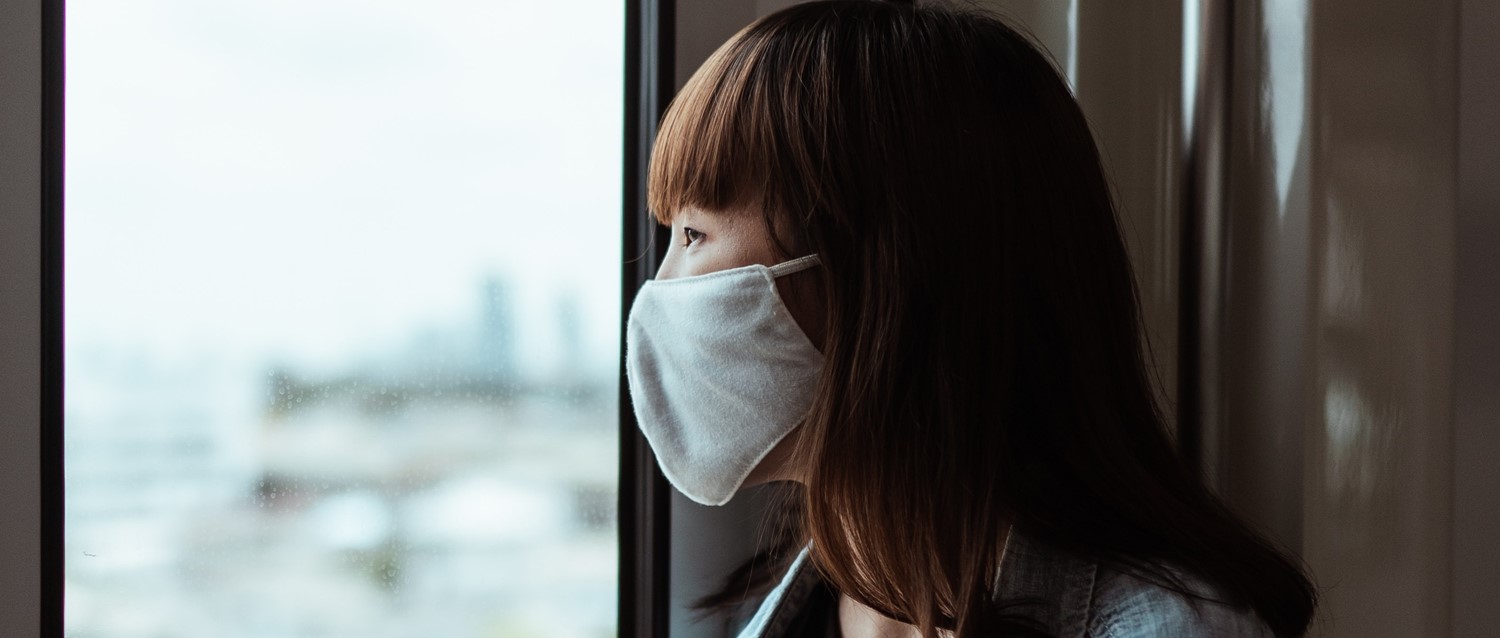
Should we wear face masks after the pandemic?
Peer reviewed by Dr Sarah JarvisAuthored by Lydia SmithOriginally published 4 Nov 2021
Meets Patient’s editorial guidelines
- DownloadDownload
- Share
- Language
- Discussion
- Audio Version
- Add to preferred sources on Google
Wearing face masks has been a crucial part of the strategy to contain COVID-19, alongside the vaccination programme and social distancing. However, fewer people have been wearing face coverings in public since restrictions were eased in the UK over the summer. But should we continue wearing them to prevent the spread of diseases in the future, even after the pandemic?
Why wearing a face mask is important to stop the spread of COVID-19
Wearing face masks can provide both personal protection against COVID-19 and is also a public health measure to prevent the spread of the disease to others, particularly vulnerable people.
"A mask of appropriate quality like N95, KN95 and in some instances cloth can help reduce risk and offer protection in a respiratory agent pandemic, such as flu or SARS," says Rodney E. Rohde, a professor of clinical laboratory science and an infectious disease specialist at Texas State University.
"They can offer people protection - especially in high-risk environments - from not only respiratory pathogens but also from seasonal allergies. It is especially a positive if someone is an immunocompromised individual," he adds. "The global health community must do a better job of communicating the reasons for masks to build confidence."
Should we wear face masks after the pandemic?
With cases of COVID-19 rising alongside the flu and colds, some experts have suggested it might be prudent to reinforce mandatory mask-wearing in busy indoor areas. But should we continue wearing masks even after the pandemic has ended?
"In my professional and personal opinion, I think this will be an individual choice unless a public health emergency requires a mandate," says Rohde. "However, I do plan to continue to wear a mask after the pandemic. For context, I plan to wear a mask in high-risk environments. For example, when I travel by airline, train or bus."
Rohde says he will also wear a mask in crowded areas in which the vaccination status or health of others is unknown. "For example, large ceremonies in crowded, poorly-ventilated areas such as concerts, meetings and conferences," he says.
"Research and personal information continue to show the value of risk reduction a mask can offer from respiratory pathogens as well as allergens."
While it might not make sense to wear a mask 24/7 once COVID-19 is contained, masking is easy and may be justifiable in risky settings. It may be logical during cold and flu season, too. Ultimately, each person who chooses to wear a mask would be doing a little something extra to keep themselves and those around them healthy in a post-COVID future.
How face masks protect against COVID-19
Face masks can help curb the spread of COVID-19 because the virus that causes the disease is primarily transmitted in the air. This means that people with the virus - especially those who may be asymptomatic and unaware that they have it - spread it through respiratory droplets that are exhaled when they cough, sneeze or talk. These droplets are then inhaled by somebody else.
In addition, COVID-19 infection can be spread through much smaller particles which we breathe out - so-called aerosol spread. Because these particles are so small and light, they remain suspended in the air, building up in the air surrounding an infected person if ventilation is inadequate.
Multiple studies have shown face masks help to block these droplets and particles from escaping into the air. Another study of people who had flu or the common cold found that wearing a surgical mask significantly reduced the amount of these respiratory viruses emitted in droplets and aerosols.
Epidemiological data also suggest face masks can help curb the spread of disease. Last year, US researchers compared the COVID-19 growth rate before and after mask mandates in 15 states and the District of Columbia. It found that mask mandates led to a slowdown in daily COVID-19 growth rate, which became more apparent over time.
It's important to remember that cloth face coverings offer much less protection to the wearer than personal protective equipment (PPE) alternatives such as FFP3 respirators. However, they appear to play a significantly greater role in reducing the risk to others nearby. To a large extent, where cloth masks are concerned, the mantra of 'mine protects you, yours protects me' applies.
Are there any downsides to mask-wearing after COVID-19?
In countries like China, Singapore and Taiwan, mask-wearing was already common before coronavirus. After the outbreak of severe acute respiratory syndrome (SARS) in 2002, masks became increasingly popular to prevent infection.
In western countries including the UK, however, mask-wearing is a new phenomenon. While some see it as an important means to halt the virus's spread and a sign of social consideration, others have politicised masks - claiming they infringe on individual rights.
Therefore, widespread mask-wearing may be unlikely in the future. While masks can reduce the transmission of COVID-19, there are some downsides. For some, masks can be uncomfortable and cause communication problems for those who use lip reading. However, mask-wearing is just one form of protection, alongside being vaccinated, staying home when unwell and social distancing.
"I try to educate others that a mask is mostly about risk reduction. It is not 100% protective, but neither is wearing a seat belt," says Rohde. "It is about lowering the risk to respiratory pathogens. We still will need vaccines and other healthcare and public health mitigation measures to protect ourselves and each other."
Patient picks for General information

COVID-19
Shielders: how can vulnerable people stay safe as restrictions end?
For thousands of people who are now a year and a half into shielding, the end of official COVID-19 restrictions means the start of a nerve-racking new period. With no official advice for people at greater risk, many feel left behind - and some, deliberately left at risk. Experts advise on how to cope until booster jabs arrive.
by Ellie Broughton
COVID-19
COVID-19: how to avoid catching viruses at work
As the final COVID-19 restrictions have been lifted in England more people are being encouraged to go back to work. But as more people begin to travel to work and mix in public areas, so the risk of catching viruses increases, whether it's colds, stomach bugs or coronavirus.
by Andrea Downey
About the authorView full bio

Lydia Smith
Feature writer
BA, MA, MSc
Lydia Smith is an award-winning journalist and feature writer who has written extensively on women's health and mental health. She is currently studying for an MSc in psychology.
About the reviewerView full bio

Dr Sarah Jarvis
Clinical Consultant
MA (Cantab), BM, BCh (Oxon), DRCOG, FRCGP, MBE
After training in medicine at Cambridge and Oxford, Dr Sarah Jarvis MBE became a GP.
Article history
Article also available in English, German, Spanish, French, Italian, Portuguese, Hindi, Hebrew, Arabic, and Swedish.
4 Nov 2021 | Originally published
Authored by:
Lydia SmithPeer reviewed by
Dr Sarah Jarvis
Join the conversation
Share your thoughts or experiences with others in our patient communities.

Ask, share, connect.
Browse discussions, ask questions, and share experiences across hundreds of health topics.

Feeling unwell?
Assess your symptoms online for free
Sign up to the Patient newsletter
Your weekly dose of clear, trustworthy health advice - written to help you feel informed, confident and in control.
By subscribing you accept our Privacy Policy. You can unsubscribe at any time. We never sell your data.
More in cOVID-19
- Bad posture: how to defeat the 'COVID slump'
- COVID-19: how to avoid catching viruses at work
- COVID-19: how to manage back-to-school worries
- COVID-19: When should you do a lateral flow test and when should you do a PCR?
- How has the COVID-19 pandemic affected access to contraception?
- How to help your child adjust to a post-COVID world
- How to stay healthy while working at home
- Long COVID: what it is and how to cope
- Shielders: how can vulnerable people stay safe as restrictions end?
- Should you be worried about the Indian COVID-19 variant?
- Tips for restarting your exercise routine after lockdown
- What are the symptoms of the COVID-19 variant Pirola?
- What happens if you catch flu and COVID-19 at the same time?
- What we know about the new COVID-19 variants Eris and Pirola
- What you need to know about the COVID-19 vaccine
- When will I get my COVID-19 vaccine?
- Why it's normal to feel anxious about a post-COVID future