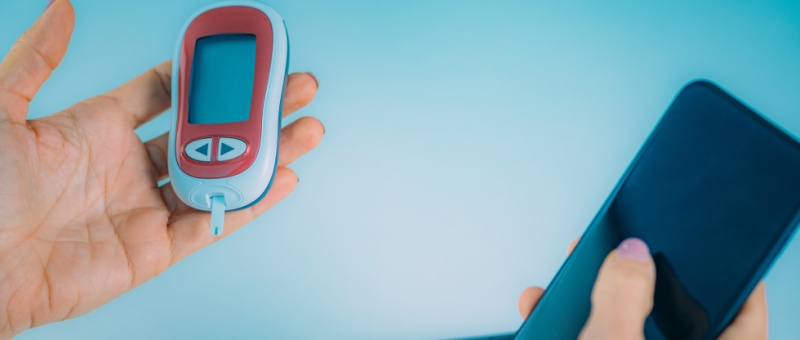
Les applications peuvent-elles vraiment aider à gérer le diabète ?
Évalué par des pairs Dr Sarah JarvisDernière mise à jour par Lydia SmithDernière mise à jour 30 Mar 2021
Respecte les directives éditoriales
- TéléchargerTélécharger
- Partager
- Language
- Discussion
- Version audio
- Ajouter aux sources préférées sur Google
Technology often plays a big part in how we manage our health. We use fitness trackers to log how much exercise we do. Calorie counters help us keep on top of our snacking habits - and we even use apps to help support our mental well-being. Tech can also support us when managing more specific health conditions like diabetes. But how do these apps work - and can they really help?
Inscrivez-vous à notre cours gratuit de 10 semaines sur le diabète !
Chaque semaine, nous explorerons un sujet différent pour vous aider à mieux comprendre et gérer votre diabète, y compris la vie quotidienne et les médicaments, le bien-être mental, les dernières technologies en matière de diabète et la nutrition.
En vous abonnant, vous acceptez notre Politique de confidentialité. Vous pouvez vous désabonner à tout moment. Nous ne vendons jamais vos données.
"For many people living with all types of diabetes, apps can be a huge help in supporting their self-management, helping with carbohydrate counting, blood glucose tracking and diabetes education," says Dan Howarth, head of care at Diabetes UK.
"Several apps allow people with diabetes to automatically share information with their healthcare teams, which has been particularly useful during the pandemic. There are also many apps being used by people at risk of developing type 2 diabetes, to support their weight loss."
Why apps can help with diabetes management
Diabetes is a condition which causes a person's blood sugar level to become too high. There are two different types. In type 1 diabetes, the body's immune system attacks and destroys the cells that produce insulin. Therefore, the body is unable to produce enough insulin to adequately regulate blood glucose levels. People with type 1 diabetes must take insulin daily and monitor their blood sugars to ensure appropriate dosing.
In type 2 diabetes, the body can no longer respond effectively enough to its own insulin to prevent blood glucose levels from going too high. However, unlike type 1 diabetes, you can take action to get your body to respond better to insulin. Type 2 diabetes is complex and management can vary: while it always includes les changements de mode de vie, drug options include tablets, injectable therapies and insulin.
It can be hard to keep on top of diabetes management when you're busy, but apps can help with everything from medication and GP appointments to alimentation and exercise. "Diabetes is a relentless condition, and when combined with the stresses of everyday life, for many, managing their diabetes can easily become a second priority," says Howarth.
"There is so much to remember when trying to manage diabetes, so it's understandable that things may sometimes get missed. The important thing is to discuss with your healthcare team how to overcome ongoing concerns and find the routine that works for you."
Keeping track of diet and exercise
There are a huge number of different apps to help track your diet and log your exercise, which can seem overwhelming. However, using tech to monitor your progress can be motivating when things seem tough.
La Klinio app is for people with diabetes and diabetes-related issues such as high blood sugar, excess weight and high cholesterol. With over 150,000 members, it provides personalised diabetes management and weight loss advice, including plans created by nutritionists to help you create and maintain a healthy diet. It is suitable for people with type 1 or type 2 diabetes, as well as pre-diabetes and less common types of diabetes such as latent autoimmune diabetes of adults (LADA).
La Klinio app helps you to transition to a moderate-carb diet with a personalised meal plan (adapted for you over time) that covers your calorie and carb/sugar intake as well as your macronutrient composition. It also allows you to log your blood glucose and HbA1c levels, weight and medications; to track your progress; offers 5- to 15-minute exercise workouts to build up your physical activity; and includes educational videos via the Klinio Academy.
La Low Carb Program, which is free if you are given an access code by your GP or nurse, is a platform available in the UK that helps you make les changements de mode de vie that can improve your health. You can personalise the information you receive. The app covers sleep, stress, mental health, blood glucose testing, cholesterol and stopping smoking, as well as recipes and meal plans for weight loss.
Changing Health is another app for people aged over 18 who have type 2 diabetes, which you can access following a referral from your GP. It helps you manage your physical activity, diet and weight.
Managing insulin, medication and blood glucose
With so much going on in our lives, it can be easy to forget to take medications or attend appointments. However, it's important to take your medications, injections or treatments when necessary to avoid complications.
If insulin injections or medications are missed, complications can include hypoglycaemia - blood sugar levels which are too low - and ketoacidosis - a serious complication that occurs when your body produces high levels of blood acids called ketones. Longer-term complications include heart disease, stroke, kidney disease and eye problems, which can potentially lead to loss of vision.
The thought of injecting each day can be daunting, but once you get the hang of it, it becomes a manageable part of life. Apps can make managing insulin easier by allowing you to log when you have taken your medication, set reminders and check your blood glucose.
You can track your progress and activity, access workouts, find meal plans and create shopping lists to help you stay on track with your diet.
La Mumoactive app is one option for tracking type 1 diabetes. It allows you to add your diabetes values quickly and easily to keep track of blood sugar, carbohydrates and insulin. You can see all your recent results presented in simple graphs and decide what to do next, such as do a test, exercise, eat or take insulin.
Accessing information
Learning about diabetes can make a huge difference to how well you manage your condition. Mapmydiabetes, endorsed by the National Institute for Health and Care Excellence, is an online programme of information, guidance and self-help tools to support people in the management of their type 2 diabetes. The app is free on prescription from your GP.
"Diabetes UK's Learning Zone is a great online tool for people living with all types of diabetes to learn more about their condition and how they can self-manage it," says Howarth.
What are the downsides of using diabetes apps?
Apps can be really helpful, but it's important to remember the pitfalls. Some applications may only be compatible with US blood sugar measurement units, so make sure you check that the app gets the units right for you (mmol/L for UK).
Mobile apps are also constantly evolving, with new software updates being rolled out on a regular basis. These updates can improve user experience, but they can also introduce bugs too.
Some apps allow people with diabetes to meet others for peer support, which can be great for boosting bien-être mental. However, it can be easy for misinformation to circulate because of limited moderation in online communities. It's also important to make sure your app comes from a reputable source, too.
"There are hundreds of diabetes-related apps, and it can sometimes be overwhelming to know which one to choose," says Howarth. "The NHS Apps library is also a good place to start, and your clinician can help you find the right diabetes app for you."
For those living with diabetes, the Klinio app is available to download on iOS or Android to help you track and manage your condition and treatment.
Sélections des patients pour Diabète sucré
Diabète
Vos médicaments contre le diabète expliqués
Managing your diabetes involves several factors - including medicines. Here we look at why you may have been prescribed the medicines you are on, how to get the most from them, and how they affect your everyday life - and your everyday life affects them.
par Lawrence Higgins

Diabète
Comment manger au restaurant avec le diabète
Que ce soit pour un rapide rendez-vous dans un café, un déjeuner tranquille ou un dîner formel, manger au restaurant avec la famille et les amis est l'un des grands plaisirs de la vie. Mais lorsque vous avez le diabète, cela peut aussi être un défi de manger sainement, de contrôler votre glycémie et de réduire vos risques d'autres complications, telles que l'acidocétose diabétique (ACD). Nous explorons comment, avec un peu de planification et de réflexion, il n'est pas nécessaire de renoncer - même si vous prenez des médicaments.
par Lawrence Higgins
À propos de l'auteurVoir la biographie complète

Lydia Smith
Rédacteur de reportages
Licence, Master, MSc
Lydia Smith est une journaliste primée et rédactrice spécialisée qui a beaucoup écrit sur la santé des femmes et la santé mentale. Elle prépare actuellement un MSc en psychologie.
À propos du critiqueVoir la biographie complète

Dr Sarah Jarvis
Consultant Clinique
MA (Cantab), BM, BCh (Oxon), DRCOG, FRCGP, MBE
Après avoir suivi une formation en médecine à Cambridge et Oxford, le Dr Sarah Jarvis MBE est devenue médecin généraliste.
Historique de l'article
Les informations sur cette page sont examinées par des cliniciens qualifiés.
Article également disponible en Anglais, Allemand, Espagnol, Français, Italien, Portugais, Hindi, Hébreu, Arabe, and Suédois.
30 Mar 2021 | Dernière version

Demandez, partagez, connectez-vous.
Parcourez les discussions, posez des questions et partagez vos expériences sur des centaines de sujets de santé.

Vous ne vous sentez pas bien ?
Évaluez vos symptômes en ligne gratuitement
Inscrivez-vous à la newsletter Patient
Votre dose hebdomadaire de conseils de santé clairs et fiables - rédigés pour vous aider à vous sentir informé, confiant et maître de la situation.
En vous abonnant, vous acceptez notre Politique de confidentialité. Vous pouvez vous désabonner à tout moment. Nous ne vendons jamais vos données.
Plus sur le diabète
- Un meilleur sommeil peut-il aider à gérer le diabète ?
- Les compléments alimentaires peuvent-ils aider à gérer le diabète ?
- Changer vos habitudes alimentaires après un diagnostic de diabète de type 2
- Conseils pour faire ses courses alimentaires pour les personnes diabétiques
- Aliments sains pour Hanoucca pour votre poids, cœur et diabète
- Comment gérer le diabète pendant le Ramadan
- La MHRA approuve le teplizumab pour retarder la progression du diabète de type 1
- Adopter un régime à base de plantes réduit le risque de diabète de type 2
- L'avenir du traitement du diabète
- Le lien entre le diabète et les troubles de santé mentale
- Comprendre le jargon du diabète
- Vidéo : Comment savoir si vous avez un diabète de type 2 ?
- Vidéo : Quelle est la différence entre le diabète de type 1 et le diabète de type 2 ?
- Qu'est-ce qu'une « hypo » et peut-on en avoir une si on n'a pas de diabète ?
- Qu'est-ce que le syndrome métabolique ?
- Ce que vous devez savoir sur l'épuisement lié au diabète
- Pourquoi une hypoglycémie est dangereuse
- Pourquoi les contrôles du diabète de type 2 sont-ils si importants
- Les femmes atteintes de diabète plus susceptibles de connaître une mortinaissance
- Votre guide essentiel pour faire de l'exercice avec le diabète