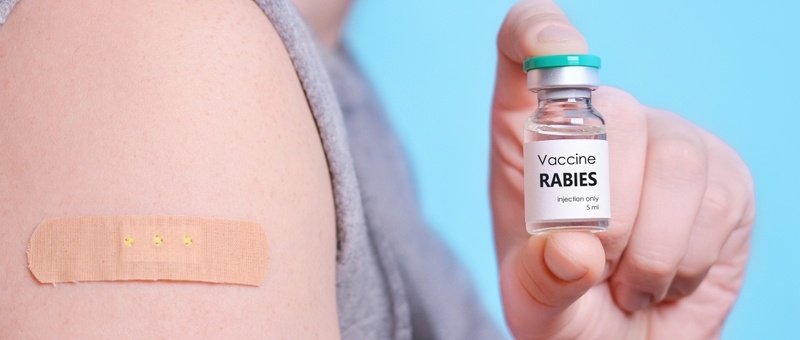
Tout ce que vous devez savoir sur le vaccin contre la rage
Revu par Dr Sarah JarvisRédigé par Glynis KozmaPublié à l'origine 12 Feb 2019
Respecte les directives éditoriales
- TéléchargerTélécharger
- Partager
- Language
- Discussion
- Version audio
- Ajouter aux sources préférées sur Google
Si vous voyagez à l'étranger, certaines vaccinations contre des maladies sont obligatoires. Il existe cependant une maladie qui est généralement mortelle sans traitement rapide et pour laquelle la vaccination avant le voyage n'est pas obligatoire : la rage.
Qu'est-ce que la rage ?
Rage is a viral disease which attacks the nervous system and is caught from infected animals. It's fatal unless treated promptly, something which can be impossible in remote areas of the world where medical facilities are scarce or inadequate.
There are over 150 countries in the world where the rabies virus exists. Around 55,000 people die annually in the world from the disease.
The UK has been rabies-free for more than a century, apart from one species of bat which may carry it. But recently a UK man died from rabies after being infected after being scratched by a cat in Morocco, highlighting the importance of taking proper precautions when travelling abroad.
How do you catch rabies?
Animals transfer the rabies virus through their saliva. It's carried by dogs, cats, bats, foxes, raccoons, mongooses and jackals.
Dr Mike Brown, consultant in Infectious Diseases and Tropical Medicine at University College London Hospitals says: "People often imagine a rabid animal to be foaming at the mouth and behaving aggressively, whereas you are just as likely to be infected by an 'Andrex puppy' lookalike.
"An infected animal can transfer rabies through a bite, scratch or even by licking an open wound or broken skin. Bats can pose a problem: it's possible to be bitten when you are sleeping and not notice the bite. Check your skin if you sleep in the open or where there are bats in countries with rabies."
Where are you most at risk of rabies?
If you are travelling overseas to a country which has a high incidence of rabies - for example, India - you can protect yourself by having a vaccination.
Before you travel, check if the country you are visiting is on the high-risk list. Asia, especially India, is a high-risk area, but so are countries like South America, Egypt and Turkey.
In the UK, there is a rare species of wild bat which can carry rabies. It's highly unlikely you'll contract the disease here, but if you ever have to handle a bat - even a dead one - take care and wear thick gloves.
Why the rabies vaccination is so important
Almost without exception, if you are infected, are not vaccinated and not able to access treatment quickly, rabies is fatal.
It's important to plan your la vaccination because the injections - up to three - are given several weeks apart. You should allow at least two months before you intend to travel to be fully vaccinated. But if eight weeks in advance isn't possible, having part of the vaccination treatment is still worthwhile.
The rabies jab is an inactive vaccine, so you cannot catch the virus by being vaccinated.
Side effects of the rabies vaccine are usually very mild, but some people experience a little soreness, redness and swelling at the injection site. Rarely patients might notice a mild fever, headache, vomiting or a rash.
Brown advises: "If you are visiting a country for longer than four weeks, or if it's a remote region, you should be vaccinated. The longer you are in a country where there is rabies, the greater the risk of being infected.
"If you are travelling off the beaten track and you are in contact with a rabid animal, it's unlikely you will be able to access the right treatment quickly enough. This is because there are few medical facilities in remote areas. Those which exist rarely have human rabies-specific immunoglobulin (HRIG). This offers very rapid, short-term protection for anyone who has been bitten and not vaccinated. Sometimes the only option is to be flown back to the UK or another country offering HRIG."
You will also need to be vaccinated against rabies with either two or five booster doses of vaccine, depending on your risk, as soon as possible.
What to do if you're bitten or scratched
If you are bitten, scratched or licked (on a skin lesion) by an unknown animal in a country where there is rabies, it's best to assume you could be infected.
Brown says: "Wash the wound well with soap and running water as soon as possible. You can also use alcohol-based disinfectant to wash it. Seek medical help. If you are not vaccinated or fully vaccinated, you may have to return to the UK for treatment, promptly; this means within hours."
But even if you have been vaccinated, you will still need to seek medical attention and further treatment.
Once the initial symptoms of rabies appear, anywhere from three to 12 weeks post-exposure: fever, des maux de tête, muscle aches and pains, treatment is unsuccessful. This is why you should always seek medical advice if there is a possibility you could have been infected, even if you have no symptoms.
Rabies is serious; it's important to be aware of how you may be at risk and plan your vaccination well in advance of your travel.
Sélections des patients pour Vaccinations
Infections
Pourquoi les vaccinations sont si importantes
Avec l'eau propre, la vaccination a permis de prévenir plus de décès infantiles que toute autre avancée en santé publique — mais elles ne sont pas réservées aux bébés. Il existe des vaccins pour vous protéger contre les infections les plus dangereuses à tout âge.
par Dr Sarah Jarvis
Infections
Comment parler à quelqu'un qui hésite à propos des vaccins
Malgré le succès du programme de vaccination contre la COVID-19, de nombreuses personnes ont des inquiétudes à l'idée de se faire vacciner. Voici comment aborder la conversation avec des membres de la famille ou des amis hésitants à se faire vacciner.
par Abi Millar
Questions fréquemment posées
Can I get rabies from a mouse, rat, or other rodent?
The article explicitly lists dogs, cats, bats, foxes, raccoons, mongooses, and jackals as carriers of the rabies virus. It does not mention mice, rats, or other rodents as animals that carry the disease. The UK is also rabies-free except for one species of bat.
If I am bitten by an animal, how quickly do I need to get treatment?
If you are bitten, scratched, or licked on broken skin by an unknown animal in a country where rabies is present, you should thoroughly wash the wound with soap and running water immediately, and apply an alcohol-based disinfectant. You need to seek medical help promptly, within hours, especially if you are not vaccinated or not fully vaccinated.
What are the common symptoms of rabies?
Initial symptoms of rabies, which appear anywhere from three to twelve weeks after exposure, include fever, headache, and muscle aches and pains. Once these symptoms appear, treatment is usually unsuccessful.
If I've had the rabies vaccine, do I still need to worry if I'm exposed to the virus?
Yes, even if you have been vaccinated against rabies, you will still need to seek immediate medical attention and further treatment if you are bitten, scratched, or licked on broken skin by a potentially infected animal. The vaccination provides protection but follow-up treatment is still necessary.
How long does the rabies vaccination protect me for?
The article states that if you have been vaccinated, you will still need either two or five booster doses of the vaccine as soon as possible after potential exposure, depending on your risk. This implies that the initial vaccination does not offer indefinite protection, and subsequent boosts are needed after exposure.
À propos de l'auteur

Glynis Kozma
À propos du critiqueVoir la biographie complète

Dr Sarah Jarvis
Consultant Clinique
MA (Cantab), BM, BCh (Oxon), DRCOG, FRCGP, MBE
Après avoir suivi une formation en médecine à Cambridge et Oxford, le Dr Sarah Jarvis MBE est devenue médecin généraliste.
Historique de l'article
Les informations sur cette page sont examinées par des cliniciens qualifiés.
Article également disponible en Anglais, Allemand, Espagnol, Français, Italien, Portugais, Hindi, Hébreu, Arabe, and Suédois.
12 Feb 2019 | Publié à l'origine
Écrit par :
Glynis Kozma
Revu par
Dr Sarah Jarvis

Demandez, partagez, connectez-vous.
Parcourez les discussions, posez des questions et partagez vos expériences sur des centaines de sujets de santé.

Vous ne vous sentez pas bien ?
Évaluez vos symptômes en ligne gratuitement
Inscrivez-vous à la newsletter Patient
Votre dose hebdomadaire de conseils de santé clairs et fiables - rédigés pour vous aider à vous sentir informé, confiant et maître de la situation.
En vous abonnant, vous acceptez notre Politique de confidentialité. Vous pouvez vous désabonner à tout moment. Nous ne vendons jamais vos données.
Plus sur les infections
- Puis-je me faire vacciner contre la grippe si ... ?
- Le vaccin contre la grippe peut-il vraiment vous donner la grippe ?
- Devez-vous vous inquiéter des effets secondaires des vaccins ?
- Le vaccin contre la grippe vous rend-il immunisé contre la grippe ?
- Comment meurt-on de la grippe ?
- À quelle fréquence devriez-vous visiter une clinique de santé sexuelle pour un bilan de santé ?
- Comment fonctionnera le nouveau programme de vaccination contre la grippe ?
- Est-il sûr de se faire vacciner contre la grippe pendant la grossesse ?
- Est-ce la coqueluche ou juste un rhume ?
- Sexe oral : ce que vous devez savoir pour rester en bonne santé
- Rire à en pleurer ? Comment le stand-up peut aborder l'incontinence
- Vaccination privée contre le MenB : qui peut la envisager et comment elle fonctionne
- Nous demandons à un médecin généraliste à quoi s'attendre après les vaccinations
- Que faire si vous pensez avoir été exposé à la méningite
- Ce que vous devez savoir sur la pneumonie
- Quelle est la différence entre une double pneumonie et une pneumonie ?
- Quand devrais-je me faire vacciner contre la grippe ?
- D'où vient la peur des vaccins ?
- Pourquoi certains virus sont-ils saisonniers ?
- Les vaccinations contre la grippe seront-elles disponibles après le Brexit ?