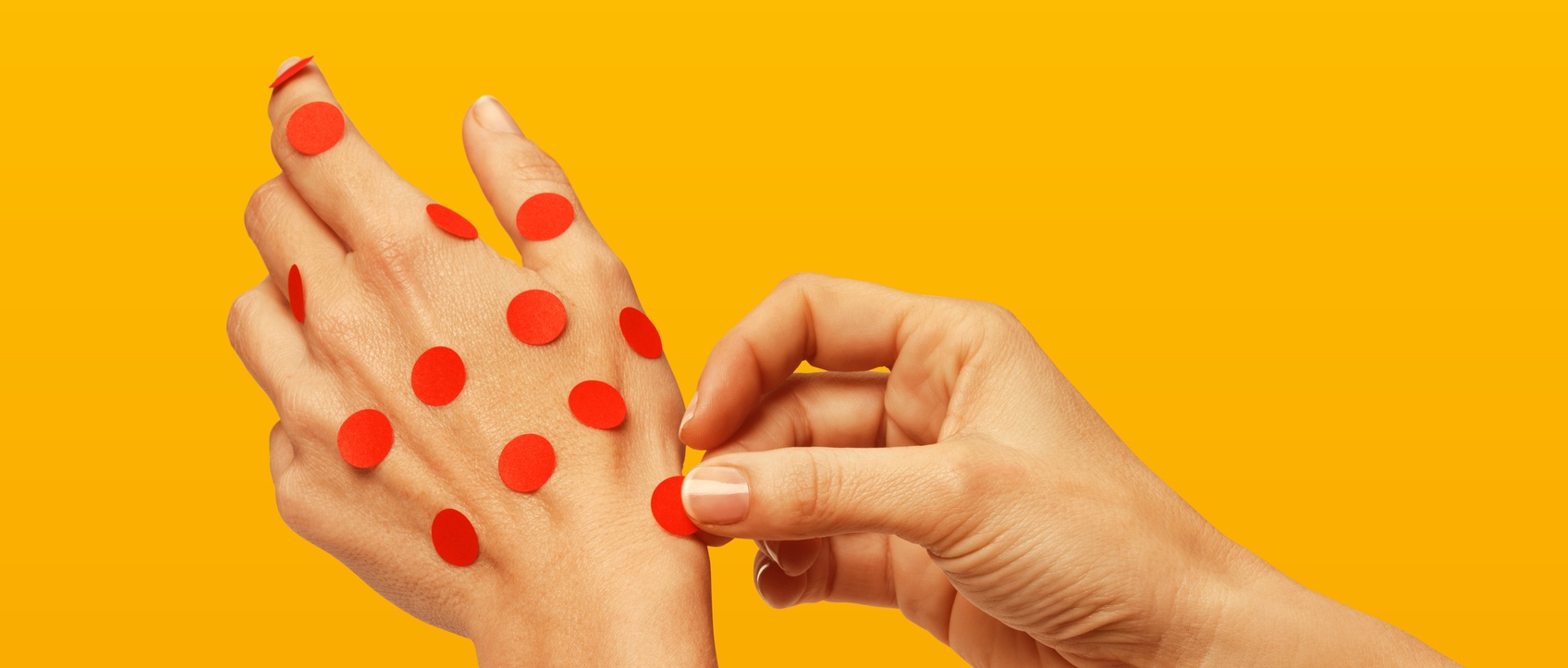
Que sont les acrochordons et comment puis-je m'en débarrasser ?
Revu par Dr Krishna Vakharia, MRCGPDernière mise à jour par Victoria RawDernière mise à jour 26 Jan 2025
Respecte les directives éditoriales
- TéléchargerTélécharger
- Partager
- Language
- Discussion
- Ask Patient
- Version audio
- Ajouter aux sources préférées sur Google
Skin tags are very common - but when should you worry about skin tags or look into removal options? We asked a consultant dermatologist for advice.
La ageing process has its downsides, the majority of them health-related. Skin tags, for example, tend to appear when people get over 50, and are commonplace, happening in around 1 in 2 adults.
The number of these small growths that may develop varies from one to hundreds, and skin tags can also differ in size.
What are skin tags?
Skin tags are growths on the skin usually suspended on a slender stalk. They consist of loose collagen (protein) fibres, and blood vessels surrounded by skin. They're harmless, and unlike, say, verrues, are non-contagious. However, they can be removed by a private skin specialist if you find them unsightly.
Dr Zainab Laftah, a consultant dermatologist and spokesperson for the British Skin Foundation explains that skin tags are benign lesions.
"They do not cause any pain or discomfort," she says. "Unless at places of friction - such as joints - where they may become inflamed."
What do skin tags look like?
Skin tags are smooth, soft, skin-coloured skin lesions frequently found on your neck, armpits, around your groin, under your breasts and on your eyelids.
Skin tags can vary in colour and size from a few millimetres up to 5 centimetres - around 2 inches - wide and hang off your skin.
What causes skin tags?
The cause of skin tags is unknown. However, because they tend to grow at sites where your skin rubs against itself. They more commonly affect overweight people, who may have too many skin folds and skin chafing.
Are skin tags from HPV?
Some studies suggest a possible link between the human papillomavirus (HPV) and the development of skin tags. However, further research is needed to confirm the specific role of HPV in their formation.
Can pregnancy cause skin tags?
The chance of developing skin tags increases during pregnancy. This is thought to be due to hormonal changes and increased levels of growth factors. In rare cases, multiple skin tags can be a sign of a hormone imbalance or an endocrine issue.
Are skin tags a sign of diabetes?
Skin tags are common in people with high resistance to insulin - the major factor underlying diabète de type 2. A 2010 study in Brazil, found that the presence of multiple skin tags was associated with insulin resistance, a high indice de masse corporelle (IMC), and high triglycerides - a type of fat in your blood.
Are skin tags dangerous?
Skin tags are harmless - they do not cause any pain and are not a sign of skin cancer. For some people, skin tags have an impact on their l'estime de soi, so skin tag removal is always an option.
How to remove skin tags
In general, skin tags don’t require treatment, and sometimes smaller skin tags fall off on their own. However, you may consider having your skin tags removed for either cosmetic reasons or if they snag on your clothing or jewellery.
If they are causing you problems, a private health care professional can discuss possible removal methods with you - these include:
Cutting them off.
Using heat.
Freezing them
Speak to a doctor about your best options.
Risks of removing skin tags at home
Whilst there is a range of skin tag removal products and techniques to buy over the counter - bands, creams, and, sprays - you should never attempt to remove skin tags yourself.
There are significant health hazards associated with trying to remove a skin tag at home - not least of all because there's no guarantee of the safety of the products.
"Removal, particularly of large skin tags, should not be attempted at home due to the high chances of infection and bleeding," warns Laftah. "There is also a likelihood of scarring and recurrence."
Speak to your doctor for additional information.
Surgical skin tag removal
Remember, you should always seek expert medical advice if you are concerned about a skin tag or any other skin lesion. If you have decided to have a skin tag removed, several straightforward procedures are available. However, they may not be available through the NHS, and you may need to go private.
Laftah says: "Skin tags are easily treated with common removal procedures such as cauterisation (burnt off), cryotherapy (frozen off) or excision (cut out). These procedures should be carried out by a trained medical professional. The potential health hazards include infection, bleeding, scarring and recurrence.
See your doctor or a skin specialist (dermatologist) if a skin tag starts to increase in size, becomes painful - especially if it bleeds - or you suddenly develop multiple skin tags.
Sélections des patients pour General skin conditions
Santé de la peau, des ongles et des cheveux
Quelles sont les causes des démangeaisons de la peau ?
Qui n'a pas ressenti le soulagement bienheureux de se gratter ? Tout le monde a des démangeaisons de temps en temps, généralement à cause de piqûres d'insectes, d'eczéma, d'allergies ou d'irritations dues à quelque chose qu'ils ont touché. Mais parfois, les démangeaisons peuvent être le signe d'une maladie plus grave - alors comment faire la différence ?
par Dr Sarah Jarvis

Santé de la peau, des ongles et des cheveux
Comment traiter un piercing infecté
All body piercings take time to heal. How can you tell the difference between the normal signs of temporary irritation and the signs of infection? And if you have an infection, what should you do?
par Amberley Davis
À propos de l'auteurVoir la biographie complète
Mis à jour par

Victoria Raw
Auteur de chroniques
Licence (Hons), Littérature anglaise
Victoria est rédactrice de contenu chez Patient, avec des intérêts particuliers couvrant le bien-être mental, les tendances sociétales et l'impact de la technologie sur notre santé.
Rédigé par

Julian Turner
Journaliste indépendant
Julian Turner est un journaliste indépendant et rédacteur en chef de Compelo Energy.
À propos du critiqueVoir la biographie complète

Dr Krishna Vakharia, MRCGP
Médecin-chef pour la santé, Optum UK
MBChB, MRCGP(2013), BMedSci (hons), DFSRH, DRCOG, PGDipDerm (Distn)
Le Dr Krishna Vakharia est un médecin généraliste du NHS. Elle est également examinatrice régulière pour le diplôme de troisième cycle en dermatologie pratique à l'Université de Cardiff, ainsi que médecin-chef pour la santé chez Optum UK.
Historique de l'article
Article également disponible en Anglais, Allemand, Espagnol, Français, Italien, Portugais, Hindi, Hébreu, Arabe, and Suédois.
Prochaine révision prévue : 27 janv. 2028
26 Jan 2025 | Dernière version
9 août 2019 | Publié à l'origine
Écrit par :
Julian Turner
Partagez vos pensées ou expériences avec les autres dans notre communautés de patients.
Accès simple à des traitements fiables et à des services de santé en ligne.
Common conditions
Get help with common conditions through the NHS, without a GP appointment.





Inscrivez-vous à la newsletter Patient
Votre dose hebdomadaire de conseils de santé clairs et fiables - rédigés pour vous aider à vous sentir informé, confiant et maître de la situation.
En vous abonnant, vous acceptez notre Politique de confidentialité. Vous pouvez vous désabonner à tout moment. Nous ne vendons jamais vos données.