surfactant protein C
Dernière mise à jour 18 Aug 2020
Respecte les directives éditoriales
- TéléchargerTélécharger
- Partager
- Language
- Discussion
- Version audio
- Ajouter aux sources préférées sur Google
La SFTPC gene provides instructions for making a protein called surfactant protein-C (SP-C). This protein is one of four proteins (each produced from a different gene) in surfactant, a mixture of certain fats (called phospholipids) and proteins that lines the lung tissue and makes breathing easy. Without normal surfactant, the tissue surrounding the air sacs in the lungs (the alveoli) sticks together after exhalation (because of a force called surface tension), causing the alveoli to collapse. As a result, filling the lungs with air on each breath becomes very difficult, and the delivery of oxygen to the body is impaired. Surfactant lowers surface tension, easing breathing and avoiding lung collapse. The SP-C protein helps spread the surfactant across the surface of the lung tissue, aiding in the surface tension-lowering property of surfactant.
Normal function
La SFTPC gene provides instructions for making a protein called surfactant protein-C (SP-C). This protein is one of four proteins (each produced from a different gene) in surfactant, a mixture of certain fats (called phospholipids) and proteins that lines the lung tissue and makes breathing easy. Without normal surfactant, the tissue surrounding the air sacs in the lungs (the alveoli) sticks together after exhalation (because of a force called surface tension), causing the alveoli to collapse. As a result, filling the lungs with air on each breath becomes very difficult, and the delivery of oxygen to the body is impaired. Surfactant lowers surface tension, easing breathing and avoiding lung collapse. The SP-C protein helps spread the surfactant across the surface of the lung tissue, aiding in the surface tension-lowering property of surfactant.
The phospholipids and proteins that make up surfactant are packaged in cellular structures known as lamellar bodies, which are found in specialized lung cells. The surfactant proteins must go through several processing steps to mature and become functional; some of these steps occur in lamellar bodies.
Conditions referring to this gene or chromosome
Other names
BRICD6
PSP-C
PSPC_HUMAN
pulmonary surfactant apoprotein-2 SP-C
pulmonary surfactant-associated protein C
pulmonary surfactant-associated proteolipid SPL(Val)
SFTP2
SMDP2
SP-C
SP5
Related patient information and medicines

Patient information leaflet
Bébés prématurés
This is very common in extremely premature babies born before 28 we... It is due to the lungs not being developed enough to be ready to breathe in air. This is partly due to lack of a substance called surfactant, produced by the lungs, which stops the air spaces from collapsing. An artificial surfactant product can be given to the baby's lungs to.

Patient information leaflet
Cataractes
Cataracts is when the lens of an eye becomes cloudy and affects vision. It commonly occurs in older people and develops gradually. The lens is made of water and protein, and is normally clear because of the way the protein is arranged. With ageing and other causes of cataract, some of the protein can 'clump together' and this starts to cloud the.

Patient information leaflet
Alimentation saine
Also, a main way of preventing obesity and overweight is to eat a healthy diet. If you are overweight or obese, eating a ... On the other hand, restricting the intake of meat can increase the risk of iron-deficiency anaemia. For this reason, the UK Government's Scientific Advisory Committee on Nutrition (SACN) recommend that your intake of red and.
Patient information leaflet
Test de bandelette urinaire
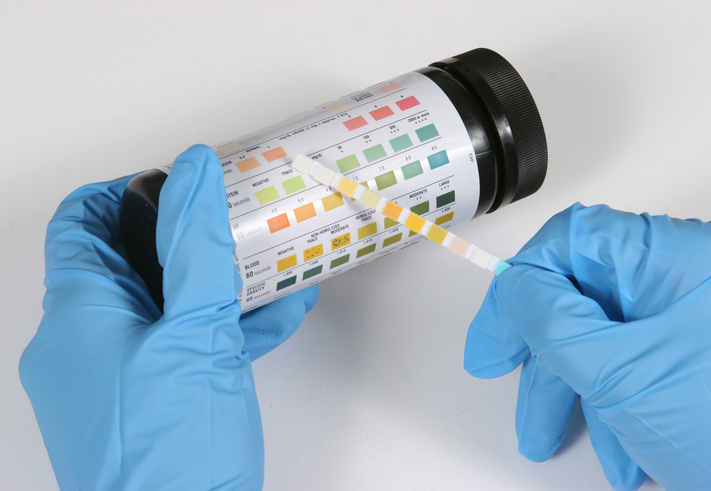
A urine dipstick test tests le urine using a special strip of paper that is dipped into a sample of urine. The result is available almost immediately. It is sometimes called a rapid urine test. Urine contains waste chemicals from all of the millions of chemical reactions that go on in the body all the time. However, in some conditions, chemicals.

Patient information leaflet
Malabsorption gastro-intestinale
Gastro-intestinal malabsorption syndrome means a failure to fully absorb digested foods from the gut (bowel) into your body. There are many different causes. Prolonged intestinal malabsorption may cause problems because of a lack of carbohydrates, proteins, fats, minerals and vitamins that are essential to keep you healthy. The treatment will.

Patient information leaflet
régime méditerranéen
General principles The Mediterranean Diet is not about quick fix superfoods. Nor is it a strict list of what you should not eat. Water is the best 'non-alcoholic beverage' (as opposed to sugary drinks), although h... Mediterranean Diet ingredients Vegetables and fruits The World Health Organization (WHO) - and the UK Government's Change4Life.
Lectures complémentaires et références
- surfactant protein C; MedlinePlus, National Library of Medicine.
- Guillot L, Epaud R, Thouvenin G, Jonard L, Mohsni A, Couderc R, Counil F, de Blic J, Taam RA, Le Bourgeois M, Reix P, Flamein F, Clement A, Feldmann D. New surfactant protein C gene mutations associated with diffuse lung disease. J Med Genet. 2009 Jul;46(7):490-4. doi: 10.1136/jmg.2009.066829. Epub 2009 May 13.
- Hamvas A, Nogee LM, White FV, Schuler P, Hackett BP, Huddleston CB, Mendeloff EN, Hsu FF, Wert SE, Gonzales LW, Beers MF, Ballard PL. Progressive lung disease and surfactant dysfunction with a deletion in surfactant protein C gene. Am J Respir Cell Mol Biol. 2004 Jun;30(6):771-6. doi: 10.1165/rcmb.2003-0323OC. Epub 2003 Dec 4.
- Mulugeta S, Maguire JA, Newitt JL, Russo SJ, Kotorashvili A, Beers MF. Misfolded BRICHOS SP-C mutant proteins induce apoptosis via caspase-4- and cytochrome c-related mechanisms. Am J Physiol Lung Cell Mol Physiol. 2007 Sep;293(3):L720-9. doi: 10.1152/ajplung.00025.2007. Epub 2007 Jun 22.
- Weaver TE. Synthesis, processing and secretion of surfactant proteins B and C. Biochim Biophys Acta. 1998 Nov 19;1408(2-3):173-9. doi: 10.1016/s0925-4439(98)00066-0.
Participez à la conversation
Partagez vos pensées ou expériences avec les autres dans notre communautés de patients.

Demandez, partagez, connectez-vous.
Parcourez les discussions, posez des questions et partagez vos expériences sur des centaines de sujets de santé.
Inscrivez-vous à la newsletter Patient
Votre dose hebdomadaire de conseils de santé clairs et fiables - rédigés pour vous aider à vous sentir informé, confiant et maître de la situation.
En vous abonnant, vous acceptez notre Politique de confidentialité. Vous pouvez vous désabonner à tout moment. Nous ne vendons jamais vos données.