Tabagisme passif
Revu par Prof Cathy Jackson, MRCGPDernière mise à jour par Dr Colin Tidy, MRCGPDernière mise à jour 29 mai 2018
Respecte les directives éditoriales
- TéléchargerTélécharger
- Partager
- Language
- Discussion
- Ask Patient
- Version audio
- Ajouter aux sources préférées sur Google
Dans cette série :TabagismeAvantages d'arrêter de fumerComment arrêter de fumerLes cigarettes électroniques sont-elles sûres ?Thérapie de substitution à la nicotineBupropion pour arrêter de fumer
Avis concernant le contenu
Cette page n’a pas été vérifiée récemment ; certaines informations ou certains liens externes ont donc peut-être changé.
You have an increased risk of lung cancer and heart disease if you are exposed to other people smoking for long periods of time.
En un coup d'œil
Le tabagisme passif consiste à inhaler la fumée de cigarette d'une autre personne.
Children exposed to passive smoke have an increased risk of infections, asthma, and cot death.
Adults exposed to passive smoke have an increased risk of lung cancer and heart disease.
De nombreux enfants souhaitent que leurs parents arrêtent de fumer, surtout à la maison ou dans la voiture.
Get support to stop smoking
Get expert healthcare advice from the comfort of home. Complete a quick online consultation, available 24/7, with your request reviewed by a UK-registered clinician. Next day delivery available on eligible treatments.

If you smoke, one good reason to give up smoking is to benefit those who live and work with you. If you can't give up, you should make every effort to keep cigarette smoke away from other people, ideally by smoking outside.
To read more facts about smoking, see the separate leaflet called Quit Smoking (Smoking Cessation).
Passive smoking risks
Enfants et bébés who live in a home where there is a smoker:
Are more prone to asthma, and ear, nose and chest infections.
Have an increased risk of dying from cot death (sudden infant death syndrome).
Are more likely than average to become smokers themselves when older.
On average, do less well at reading and reasoning skills compared to children in smoke-free homes, even at low levels of smoke exposure.
Are at increased risk of developing chronic obstructive pulmonary disease (COPD) and cancer as adults.
Nicotine and other toxins can seep into clothing, soft furnishing, etc; a child does not have to be in a room or a car, while someone is smoking, to be harmed from the effects of their smoke.
Passive smoking of adults. You have an increased risk of lung cancer and heart disease if you are exposed to other people smoking for long periods of time. For example, the risk of developing lung cancer is increased by about 20-30% in people who are regularly exposed to other people's cigarette smoke. Cigarette smoke is also an irritant and can make asthma and other conditions worse.
Passive smoking in pregnancy
Smoking when you are pregnant can harm your unborn baby. Voir la brochure séparée intitulée Grossesse et Tabagisme pour plus de détails.
How much passive smoking is dangerous
The overall health impact of passive smoking is large. Although the health risks from passive smoking are small for the individual in comparison with the health risks from active smoking, the public health consequences of passive smoking are high due to the large numbers of people exposed.
For example, passive smoking by people living with smokers in the UK increases the risk of death from coronary heart disease by 50-60%. It is estimated to cause around 2,700 deaths per year in people aged 20-64, and a further 8,000 deaths per year among people aged 65 or older.
It is estimated that children breathing in other people's cigarette smoke resulted in 300,000 GP visits and 9,500 hospital admissions in 2011 in the UK. Up to five million children are thought to be regularly exposed to second-hand smoke in the home.
The results of a survey on children's views on smoking were published on the Department of Health's website. The survey revealed that children want smoke-free lives.
The survey found that:
98% of children wished their parents would stop smoking.
82% of children wished their parents wouldn't smoke in front of them at home.
78% of children wished their parents wouldn't smoke in front of them in the car.
41% of children said cigarette smoke made them feel ill.
42% of children said cigarette smoke made them cough.
Get support to stop smoking
Get expert healthcare advice from the comfort of home. Complete a quick online consultation, available 24/7, with your request reviewed by a UK-registered clinician. Next day delivery available on eligible treatments.
Sélections des patients pour Tabagisme
Mode de vie sain
Comment arrêter de fumer
About 2 in 3 smokers want to stop smoking. Some people can give up easily. Willpower and determination are the most important aspects when giving up smoking. However, nicotine is a drug of addiction and many people find giving up a struggle. Help is available.
par Dr Toni Hazell, FRCGP
Mode de vie sain
Avantages d'arrêter de fumer
Arrêter de fumer peut avoir un impact considérable sur votre santé et votre mode de vie. Il n'est jamais trop tard pour arrêter de fumer et en tirer de grands bénéfices pour votre santé. Par exemple, si vous arrêtez de fumer à l'âge moyen, avant de développer un cancer ou une autre maladie grave, vous évitez la majorité du risque accru de mortalité lié au tabac. Une aide est disponible si vous trouvez difficile d'arrêter de fumer.
par Dr Toni Hazell, FRCGP
Questions fréquemment posées
Qu'est-ce que la 'fumée tertiaire' ?
La nicotine et d'autres toxines nocives de la fumée de cigarette peuvent persister dans les vêtements, les tissus d'ameublement et d'autres objets. Cela signifie qu'un enfant peut encore être exposé aux effets de la fumée et être affecté, même s'il n'était pas dans la pièce ou la voiture pendant que quelqu'un fumait activement.
Le tabagisme passif affecte-t-il uniquement la santé pulmonaire ?
Non, le tabagisme passif affecte divers aspects de la santé. Pour les adultes, il augmente le risque de cancer du poumon et de maladies cardiaques. Pour les enfants, il peut entraîner de l'asthme, des infections des oreilles, du nez et de la poitrine, et chez les bébés, il augmente le risque de syndrome de mort subite du nourrisson. Il y a aussi un impact sur le développement cognitif, les enfants vivant dans des foyers sans fumée obtenant de meilleurs résultats en lecture et en raisonnement.
Comment les enfants se sentent-ils à propos de leurs parents qui fument ?
Un sondage sur les opinions des enfants a montré que 98% souhaitaient que leurs parents arrêtent de fumer. La majorité (82%) souhaitait que leurs parents ne fument pas devant eux à la maison, et 78% ont exprimé le même souhait pour le tabagisme dans la voiture. De nombreux enfants ont signalé des symptômes physiques, 41% affirmant que la fumée de cigarette les rendait malades et 42% déclarant qu'elle les faisait tousser.
Existe-t-il des ressources disponibles pour aider quelqu'un à arrêter de fumer ?
Oui, pour des informations complètes sur la façon d'arrêter de fumer et les différents traitements disponibles pour vous aider à arrêter, vous pouvez vous référer à la brochure séparée intitulée 'Arrêter de fumer (Sevrage tabagique)'.
Lectures complémentaires et références
- Tabagisme : réduction des méfaits; NICE Public Health Guidance, June 2013
- Arrêt du tabac; NICE CKS, October 2012 (UK access only)
- Hughes JR, Stead LF, Hartmann-Boyce J, et al; Antidepressants for smoking cessation. Cochrane Database Syst Rev. 2014 Jan 8;1:CD000031. doi: 10.1002/14651858.CD000031.pub4.
- Wu J, Sin DD; Amélioration des résultats pour les patients avec l'arrêt du tabac : quand est-il trop tard ? Int J Chron Obstruct Pulmon Dis. 2011;6:259-67. doi: 10.2147/COPD.S10771. Epub 2011 May 2.
- Cahill K, Stevens S, Perera R, et al; Pharmacological interventions for smoking cessation: an overview and network meta-analysis. Cochrane Database Syst Rev. 2013 May 31;(5):CD009329. doi: 10.1002/14651858.CD009329.pub2.
- Hartmann-Boyce J, McRobbie H, Bullen C, et al; Electronic cigarettes for smoking cessation. Cochrane Database Syst Rev. 2016 Sep 14;9:CD010216.
- E-cigarettes: an evidence update; Public Health England, August 2015
- Cahill K, Lindson-Hawley N, Thomas KH, et al; Nicotine receptor partial agonists for smoking cessation. Cochrane Database Syst Rev. 2016 May 9;(5):CD006103. doi: 10.1002/14651858.CD006103.pub7.
- Anthenelli RM, Benowitz NL, West R, et al; Neuropsychiatric safety and efficacy of varenicline, bupropion, and nicotine patch in smokers with and without psychiatric disorders (EAGLES): a double-blind, randomised, placebo-controlled clinical trial. Lancet. 2016 Jun 18;387(10037):2507-20. doi: 10.1016/S0140-6736(16)30272-0. Epub 2016 Apr 22.
- Hackshaw A, Morris JK, Boniface S, et al; Faible consommation de cigarettes et risque de maladie coronarienne et d'accident vasculaire cérébral : méta-analyse de 141 études de cohorte dans 55 rapports d'étude. BMJ. 24 janvier 2018;360:j5855.
- Reid RD, Pritchard G, Walker K, et al; Managing smoking cessation. CMAJ. 2016 Dec 6;188(17-18):E484-E492. doi: 10.1503/cmaj.151510. Epub 2016 Oct 3.
- Cao S, Yang C, Gan Y, et al; The Health Effects of Passive Smoking: An Overview of Systematic Reviews Based on Observational Epidemiological Evidence. PLoS One. 2015 Oct 6;10(10):e0139907. doi: 10.1371/journal.pone.0139907. eCollection 2015.
À propos de l'auteurVoir la biographie complète
Mis à jour par

Dr Colin Tidy, MRCGP
Médecin généraliste, Auteur médical
MBBS, MRCGP, MRCP (Paediatrics), DCH
Le Dr Colin Tidy est un médecin du NHS, basé dans l'Oxfordshire.
À propos du critiqueVoir la biographie complète
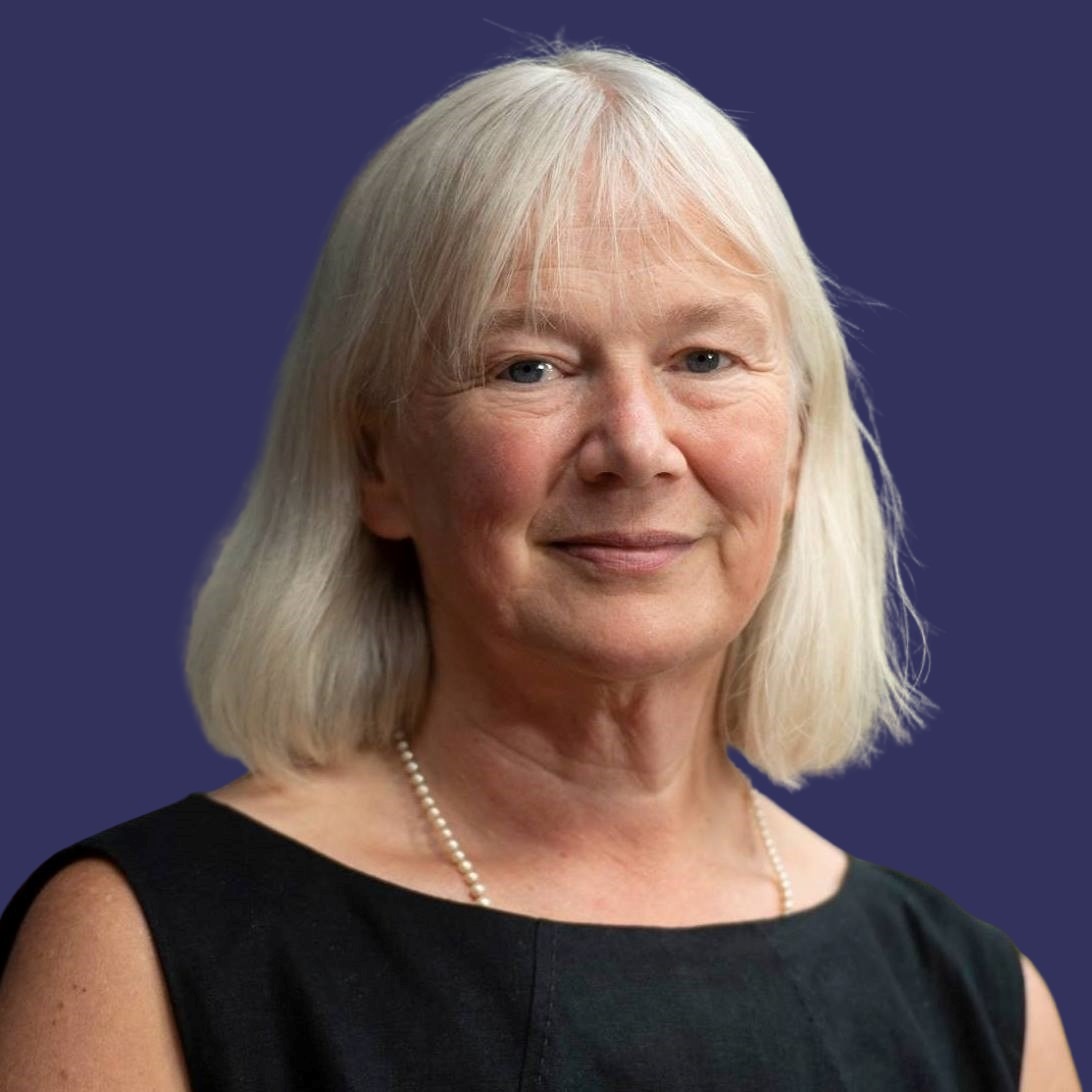
Prof Cathy Jackson, MRCGP
Auteur Médical
BSc (Hons) Physiology, MB, ChB, MRCGP, MD
La professeure Cathy Jackson a obtenu son diplôme de l'École de médecine de Manchester, ayant décroché au passage un diplôme avec mention très bien en physiologie.
Partagez vos pensées ou expériences avec les autres dans notre communautés de patients.
Accès simple à des traitements fiables et à des services de santé en ligne.
Common conditions
Get help with common conditions through the NHS, without a GP appointment.





Inscrivez-vous à la newsletter Patient
Votre dose hebdomadaire de conseils de santé clairs et fiables - rédigés pour vous aider à vous sentir informé, confiant et maître de la situation.
En vous abonnant, vous acceptez notre Politique de confidentialité. Vous pouvez vous désabonner à tout moment. Nous ne vendons jamais vos données.