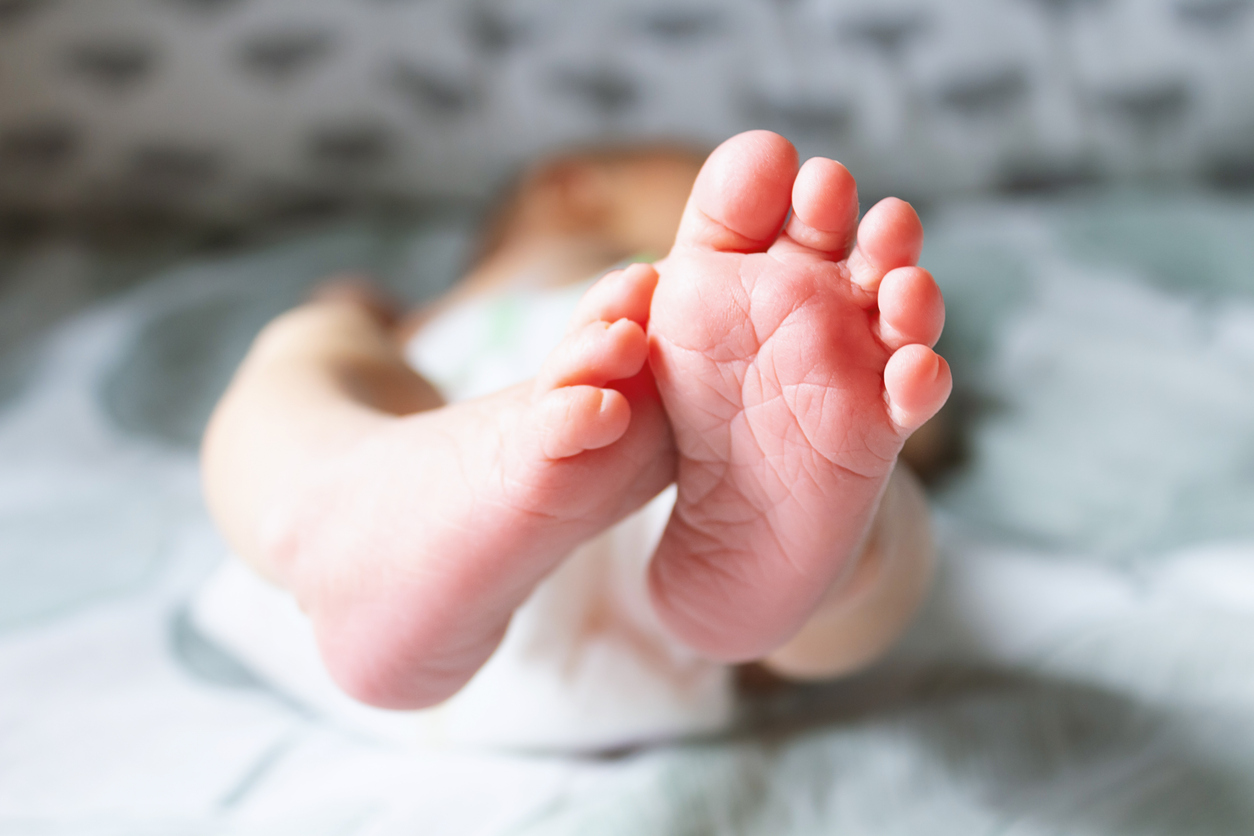
Accouchement sans assistance : la tendance de l'accouchement libre est-elle dangereuse ?
Revu par Dr Krishna Vakharia, MRCGPRédigé par Amberley DavisPublié à l'origine 21 avr. 2024
Respecte les directives éditoriales
- TéléchargerTélécharger
- Partager
- Language
- Discussion
- Ask Patient
- Version audio
- Ajouter aux sources préférées sur Google
La tendance à l'accouchement 'libre', - accoucher sans assistance médicale - suscite des inquiétudes parmi les sages-femmes et les médecins. Ici, nous discutons des accouchements non assistés, de vos droits et des risques qu'ils comportent.
Inscrivez-vous à notre cours gratuit de 8 semaines sur la grossesse en santé !
Chaque semaine, nous partagerons des informations utiles et des conseils essentiels sur des sujets tels que la nutrition, l'exercice, la santé mentale, les symptômes à surveiller et la préparation à l'accouchement, pour vous aider à naviguer dans votre parcours de grossesse, quel que soit le stade où vous en êtes.
En vous abonnant, vous acceptez notre Politique de confidentialité. Vous pouvez vous désabonner à tout moment. Nous ne vendons jamais vos données.
Sélections vidéo pour Travail et accouchementBibliothèque vidéo
What is free birth?
If you're pregnant and choose a free birth, this means you're deciding to go through l'accouchement outside a hospital and without medical assistance or supervision from a midwife, doctor, or any other health professional.
It can also be called an unassisted birth or sometimes wild birth, but not a home birth. While most free births take place at home, home births involve medical assistance - usually two midwives.
It's not a new practise, but free birthing is somewhat of a growing trend, and it's one that is causing concern. Experts are calling attention to the dangers of delivering without the help of someone trained to keep both mother and baby safe.
According to Professor Alison Fiander, clinical lead at the Royal College of Obstetricians and Gynaecologists (RCOG), "as the prevalence of free birthing continues to rise, it underscores the critical role of healthcare professionals, particularly midwives and obstetricians, in guaranteeing safe childbirth."
Why is free birthing on the rise?
Anecdotal reports from experts suggest that free birthing is becoming more popular, and the COVID-19 pandemic was a key driver1:
Many people were motivated by fears surrounding the spread of the virus in hospitals.
At the same time, many home birth services were unavailable in several regions.
More recently, social media influencers have been promoting the trend.
Another long-standing reason why women choose to free birth is having previously experienced a negative or traumatic birth. Personal beliefs also come into play, namely their faith in themselves, and the view that unassisted births are "more natural"1,2.
Is free birth safe?
Free birthing is a radical childbirth choice, because it does increase the risk of injury and even death for both mother and baby, compared with assisted births. Exactly how much this risk increases remains unclear, and the choice is ultimately yours - but health experts offer words of warning.
Melissa Dean - a midwife from California
Melissa has assisted in more than 1500 births over the past 20 years. She has supported a few mothers-to-be in the prenatal care months that were planning to have an unassisted birth. "Each time, I have their birthing partner attend several appointments and I ask them directly a few very important questions:"
Do you feel prepared to manage any complications that might arise during the birth?
Can you help the baby breathe if it needs it?
Can you manage excessive bleeding should that happen?
What is your clear game plan for when things aren't 'normal'?
"If they can answer my questions, and still feel strongly about their choice to birth on their own, then I will support them. After all, it is their birth, and most will unfold without complication."
It's true that, from the limited research on free births, many women report positive experiences. But, as with all natural phenomenon, you never know if childbirth will go to plan - without any issues or complications.
"However, after my many years of experience, I can attest to major bleeding, complications that weren't expected, placentas that didn't want to be born on their own, and babies that needed true life-saving breaths to make it. And, unless you are trained and know when and how to act, both mother and baby could be at risk," says Melissa.
Alison Fiander - a women's health specialist
As clinical lead at the Royal College of Gynaecologists (RCOG), Professor Fiander has an interest in preventable deaths related to pregnancy and childbirth.
"While it's understandable that women may feel compelled to explore different birthing methods, it's crucial to seek proper medical support," she believes.
"Childbirth is a complex process that requires specialised expertise. Women choosing unassisted births must be aware of the potential challenges and delays in getting urgent medical help if there are complications."
Is free birth riskier for some women?
As with home birthing, free birthing will be even riskier for some expectant mothers. This all comes down to your medical history, as well as anything that's picked up during your pregnancy scans that may make childbirth more complicated. For example, if you have a history of:
Ulcerative colitis (UC) and other forms of maladie inflammatoire de l'intestin (MII).
Pre-eclampsia or hypertension artérielle.
A high indice de masse corporelle (IMC).
Having had a caesarean section (c-section) previously.
Giving birth prematurely before.
Or if during your current pregnancy you find:
An abnormal scan.
You're having more than one baby.
Your baby is in the breech position.
Talking to your doctor or midwife, being aware of any extra risks, and understanding what these could mean is so important for your family's safety.
And for those of you without these extra considerations, Professor Fiander wants you to remember that "emergency intervention may be necessary, even for those of you at low risk."
Is free birth legal?
Legally in the UK, your choice is protected, although there are some exceptions and things to be aware of.
In rare cases, it may be deemed that some mothers don't have the mental capacity to make the decision themselves. You can find out more about consent and mental capacity.
Midwives and other health professionals can turn to social services, but only if they have concerns your baby is at risk of harm during or after its birth. You should not be referred solely because you decide not to have medical support during labour3.
What about doulas?
A birth doula is a non-medical person who specialises in providing emotional and spiritual support to mothers during childbirth.
While they can offer all-important reassurance and comfort during this time, doulas aren't trained to handle a medical problem, should it arise. This is why having a doula alone still counts as free birthing and carries the same risks. Legally, no one other than doctors and registered midwives can carry out the duties of trained clinical people in childbirth.
For Professor Fiander, midwife-led birthing units can often "serve as a middle ground, offering you close access to all medical care if needed while maintaining a more homely environment than a traditional hospital labour ward."
If you have your heart set on a doula, they should be welcome alongside your medical team wherever you have your baby.
Childbirth is a big time in your life, and what makes you feel comfortable needs to be considered alongside what will best keep both you and baby safe and well. No matter what you ultimately decide, speak to your doctor or midwife and get all the information and advice you can.
Pour en savoir plus
Sélections des patients pour Travail et accouchement
Grossesse
Comment aider votre rétablissement après une césarienne
Lorsque vous vous adaptez à la vie avec un bébé et jonglez avec le lait et les couches, il peut être facile d'oublier que vous avez subi une intervention chirurgicale majeure si vous avez eu une césarienne. Se remettre de n'importe quelle naissance peut être difficile, mais guérir après une césarienne présente des défis uniques. Alors, que pouvez-vous faire pour aider le processus de guérison ?
par Lawrence Higgins

Grossesse
Les femmes noires sont plus susceptibles de connaître une mortinaissance que les femmes blanches
De nouvelles recherches ont révélé que les femmes noires ont une probabilité une fois et demie à deux fois plus élevée de subir une mortinaissance que les femmes blanches.
par Milly Evans
À propos de l'auteurVoir la biographie complète
Rédigé par

Amberley Davis
Rédacteur senior
BA (Hons), CPD
Amberley est une rédactrice senior chez Patient et a écrit de manière approfondie sur une gamme de sujets liés à la santé et au bien-être.
À propos du critiqueVoir la biographie complète

Dr Krishna Vakharia, MRCGP
Médecin-chef pour la santé, Optum UK
MBChB, MRCGP(2013), BMedSci (hons), DFSRH, DRCOG, PGDipDerm (Distn)
Le Dr Krishna Vakharia est un médecin généraliste du NHS. Elle est également examinatrice régulière pour le diplôme de troisième cycle en dermatologie pratique à l'Université de Cardiff, ainsi que médecin-chef pour la santé chez Optum UK.
Historique de l'article
Article également disponible en Anglais, Allemand, Espagnol, Français, Italien, Portugais, Hindi, Hébreu, Arabe, and Suédois.
Next review due: 21 Apr 2027
21 avr. 2024 | Publié à l'origine
Écrit par :
Amberley DavisRevu par
Dr Krishna Vakharia, MRCGP
Partagez vos pensées ou expériences avec les autres dans notre communautés de patients.
Inscrivez-vous à la newsletter Patient
Votre dose hebdomadaire de conseils de santé clairs et fiables - rédigés pour vous aider à vous sentir informé, confiant et maître de la situation.
En vous abonnant, vous acceptez notre Politique de confidentialité. Vous pouvez vous désabonner à tout moment. Nous ne vendons jamais vos données.