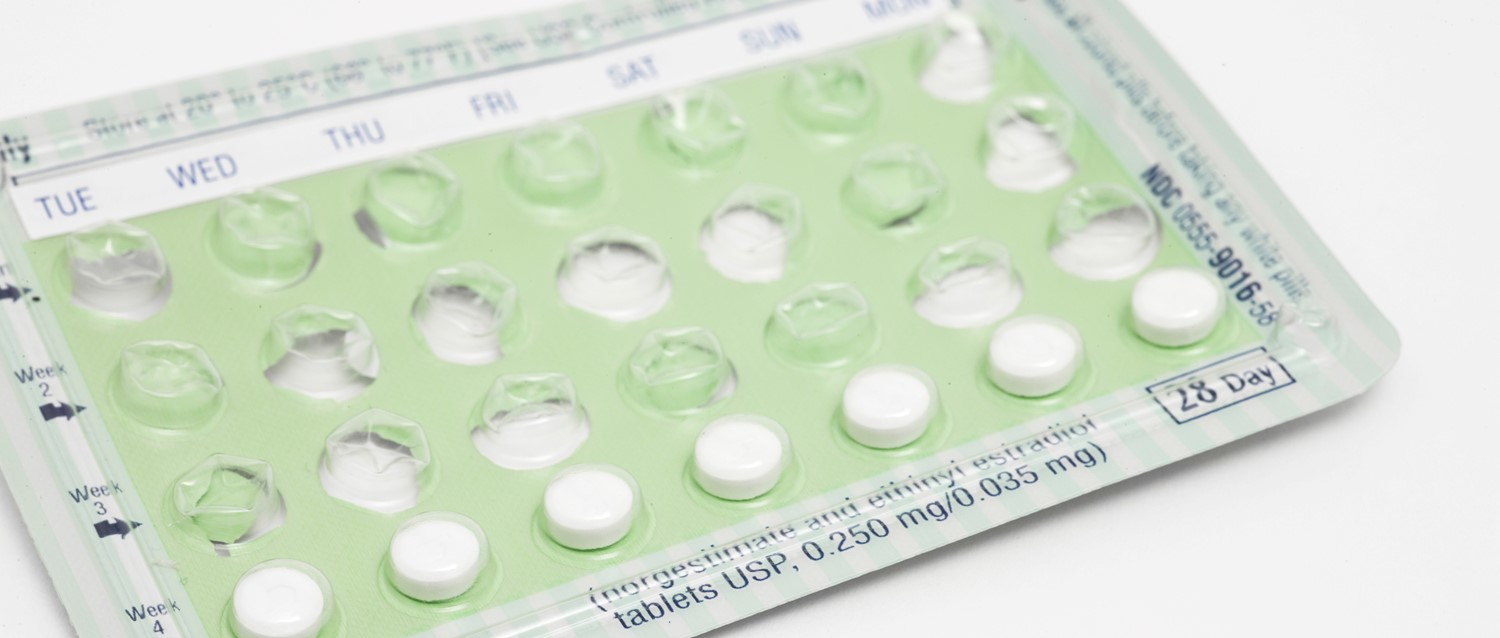
Devriez-vous éviter la pilule si vous avez des migraines ?
Revu par Dr Sarah JarvisDernière mise à jour par Georgia GallantDernière mise à jour 7 Mar 2019
Respecte les directives éditoriales
- TéléchargerTélécharger
- Partager
- Language
- Discussion
- Version audio
- Ajouter aux sources préférées sur Google
Depuis des décennies, les personnes souffrant de migraines avec aura ont été conseillées d'éviter la pilule contraceptive combinée en raison d'un risque légèrement accru d'accident vasculaire cérébral. Mais est-ce toujours le cas ? Nous interrogeons des experts sur les dernières recommandations et sur la meilleure forme de contraception pour ceux qui sont sujets aux migraines.

I've been fortunate that the combined pill hasn't caused me any issues in the eight years I’ve been on it. It can be a struggle to find a long-term contraceptive that works for you, so when you do, you tend to cling on to it for dear life. Which, admittedly, means I tell a white lie when I go for my biannual pill review and refill.
Unfortunately, many of the women in my family suffer from migraine (they're not classed as hereditary, but often occur in several family members). When being supplied with the pill, your healthcare professional will always ask you two questions, even if you've been taking it for years: “Do you smoke?” and “Do you experience migraines with aura?”.
I'm not a smoker but occasionally experience an aura migraine every four to six months for a day or two. As I don't consider this to be regular enough to risk changing my trusted contraception, it goes unmentioned against my better judgement. But that could be about to change.
Risky business
Auras act as a warning sign before the migraine headache begins. Most common is a visual aura, causing symptoms such as a temporary loss to one side of your vision, extremely bright zig-zag or kaleidoscope patterns or both. Numbness and pins and needles are also common, and it's even possible for auras to affect speech, smell and food cravings. So what does this have to do with the pill?
"There are different types of pill: the pilule progestative (or mini-pill), which as the name suggests contains only progesterone, and the combined pill, which contains both oestrogen and progesterone," explains Dr Caroline Cooper, associate specialist in sexual and reproductive health and spokesperson for the Faculté de Santé Sexuelle et Reproductive (FSRH) of Le Collège Royal des Obstétriciens et Gynécologues (RCOG).
The combined oral contraceptive pill is associated with a small increased risk of ischaemic stroke. Una Farrell of The Migraine Trust says the risk increases "when the pill is taken by women who have additional risks for stroke, such as smoking and migraine with aura".
"Statistics show that the risk is extremely small but nevertheless it is still a risk which can be avoided," she continues.
Cooper goes further, highlighting new guidance from the FSRH that states there is 'an unacceptable health risk' from taking the combined pill if you suffer with migraines with aura. So even if you only experience aura occasionally, you should never take the combined pill, according to these guidelines.
How the pill has changed
Although the dosage of hormones in the combined pill has significantly reduced since it was first introduced in the 1960s (in turn decreasing many of the associated risks), the increased risk of ischaemic stroke is still significant enough to advise against it for those who have migraines with aura.
"This advice also applies to other methods of combined hormonal contraception such as the ring and the patch," Cooper adds.
If you don't have aura with your migraines, your doctor may give you the go-ahead to take the combined pill. Farrell notes that as the dosage of hormones in the pill is now much lower, "unwanted effects like headaches and migraines are much less likely to occur".
"However," Cooper warns, "if your migraines do become more frequent whilst taking the combined pill, you should consider stopping it, as the risk of continuing generally outweighs any benefits."
Can the pill cause headaches?
Experiencing headaches around your period is common whether you use hormonal contraception or not.
"For those who have taken the pill for many months or years, it can be difficult to tell whether headaches are associated with contraception or other lifestyle factors," states Cooper.
"Around 50% of women with migraine say their menstrual cycle directly affects it," Farrell reveals, with attacks becoming more severe or frequent during the break week, potentially due to the drop in oestrogen or the release of prostaglandins (chemicals associated with pain).
There are solutions, however. Cooper suggests forgoing your period by taking the pill continuously if you find you suffer with headaches during the pill-free week.
"Alternatively, some women find changing to a different pill with a lower dose of oestrogen can help with headaches," she says.
As for the combined pill causing headaches, Cooper notes that there is a lack of evidence, with studies finding no consistent link.
A recent breakthrough
Traditionally you were advised to take a seven-day break in each pill packet to have a 'withdrawal bleed'. However, recently updated FSRH guidelines state there are actually no health benefits to this hormone-free interval for most people.
"Taking a continuous dose of hormones rather than stopping and starting is as safe and effective as the traditional way and can help to avoid headaches and mood changes during the break," assures Cooper. "And many women find their bleeds become lighter and may stop completely."
Do be aware that taking the pill continuously may cause breakthrough bleeding, so have spare menstrual products to hand just in case.
The right contraceptive for you
The pill has decreased in popularity over the last decade due to growing concerns about a link between the contraceptive and depression. If you feel the pill is no longer working for you, or you suffer from migraines, consider switching to contraceptifs réversibles à longue durée d'action (LARCs) such as the coil or implant. The main benefit is that you don't have to remember to take them every day so there's less risk of unwanted pregnancy.
If you have problems when coming off the pill after a long period of time, consult your GP. Many people find that it can affect your mood, skin and weight, which is unsurprising as your body will be used to a regular dose of synthetic hormones.
But it's not all bad news. If you do have migraines with or without aura and want to continue using hormonal contraception, Cooper assures that "the advantages of using the progestogen-only pill generally outweigh the risks" and it has not been associated with an increased risk of stroke or migraine.
"This makes the progestogen-only pill a good alternative for women with migraines who are unable to take the combined pill," she says.
Remember, other progestogen-only methods, such as the implant or contraceptive injection, are also available. Speak with your GP or local sexual health clinic for more advice and a one-to-one assessment.
Now I've spoken to the experts, I will definitely be choosing caution over convenience.
Sélections des patients pour Migraine
Cerveau et nerfs
Le Botox peut-il guérir vos migraines ?
Most of us suffer from a headache from time to time. But imagine having several debilitating migraines per week, often accompanied by nausea or vomiting. Janet Falcondale, 46, from North Yorkshire, has suffered from headaches and migraines since childhood. "My migraines often start with an aura - a visual problem that causes blind spots. I've had to take time off work, and have been laid up in bed for days at a time," she explains. Migraines are often debilitating, meaning sufferers of frequent attacks can experience a great deal of disruption to their daily lives. From lost opportunities at work, poor performance due to presenteeism and even hospital admission, having regular migraines can be a real pain.
par Gillian Harvey
Cerveau et nerfs
10 remèdes maison pour un soulagement rapide de la migraine
Migraines are more than ‘just a headache.’ They can be intense, throbbing, and often come with feeling sick, light sensitivity, and the need to shut out the world. If you’ve ever found yourself desperate for relief but unsure about what works - you’re not alone. Fortunately, there are several effective ways to manage migraines right at home.
par Heather Ainsworth
À propos de l'auteurVoir la biographie complète

Georgia Gallant
BA (Hons), MA
Georgia a obtenu son diplôme de l'Université de Bournemouth avec un BA (Hons) en Écriture de scénarios pour le cinéma et la télévision et un MA en Médias littéraires.
À propos du critiqueVoir la biographie complète

Dr Sarah Jarvis
Consultant Clinique
MA (Cantab), BM, BCh (Oxon), DRCOG, FRCGP, MBE
Après avoir suivi une formation en médecine à Cambridge et Oxford, le Dr Sarah Jarvis MBE est devenue médecin généraliste.
Historique de l'article
Les informations sur cette page sont examinées par des cliniciens qualifiés.
Article également disponible en Anglais, Allemand, Espagnol, Français, Italien, Portugais, Hindi, Hébreu, Arabe, and Suédois.
7 Mar 2019 | Dernière version

Demandez, partagez, connectez-vous.
Parcourez les discussions, posez des questions et partagez vos expériences sur des centaines de sujets de santé.

Vous ne vous sentez pas bien ?
Évaluez vos symptômes en ligne gratuitement
Inscrivez-vous à la newsletter Patient
Votre dose hebdomadaire de conseils de santé clairs et fiables - rédigés pour vous aider à vous sentir informé, confiant et maître de la situation.
En vous abonnant, vous acceptez notre Politique de confidentialité. Vous pouvez vous désabonner à tout moment. Nous ne vendons jamais vos données.
Plus sur le cerveau et les nerfs
- 10 remèdes maison pour un soulagement rapide de la migraine
- Alex Mitchell sur la comédie, le handicap - et pourquoi il refuse d'être qualifié d'inspirant
- Applications d'entraînement cérébral : fonctionnent-elles vraiment ?
- Un régime à base de plantes peut-il améliorer vos migraines ?
- L'ADHD peut-il causer de l'anxiété et de la dépression ?
- Remèdes maison pour soulager les maux de tête courants
- Comment les bactéries intestinales affectent l'humeur, la concentration et la santé cérébrale
- Comment gérer le TDAH : conseils pratiques pour la vie quotidienne
- Comment identifier vos déclencheurs de migraine
- Comment soutenir une personne atteinte de démence
- Votre période cause-t-elle vos migraines ?
- Vivre avec la maladie du motoneurone - L'histoire de Louise
- < h4>Des conseils simples pourraient améliorer la santé à long terme des personnes atteintes de SEP
- Le pouvoir de la nostalgie : qu'est-ce que la thérapie par réminiscence ?
- Quels sont les symptômes du TDAH et de l'autisme (AuDHD) ? Signes, différences et chevauchement
- Qu'est-ce qu'un mal de tête en coup de tonnerre et quelle sensation cela procure-t-il ?
- Qu'est-ce que la maladie d'Alzheimer précoce - et quelles en sont les causes ?
- Qu'est-ce que le syndrome de Tourette - et comment le gérer ?
- Qu'est-ce qui aggrave la maladie de Parkinson ?
- Ce que vous devez savoir sur le FND