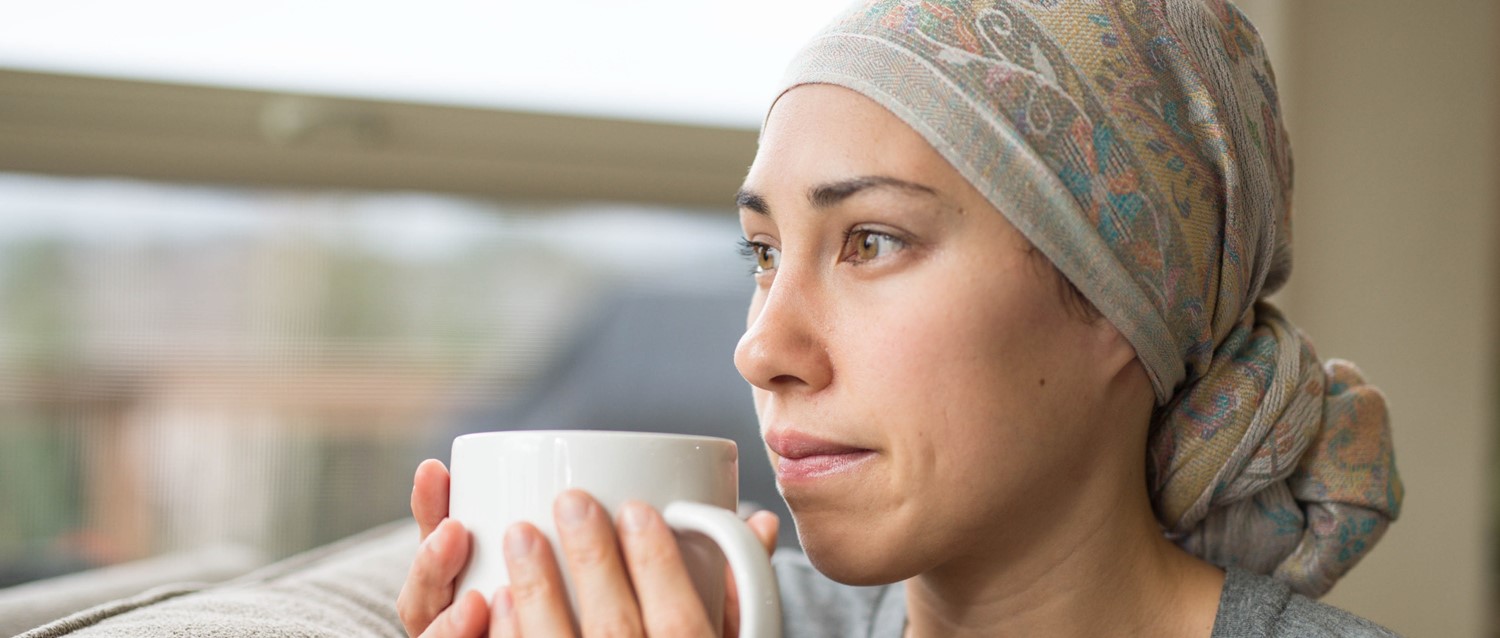
Comment le cancer peut affecter votre santé mentale
Revu par Dr Sarah JarvisDernière mise à jour par Lydia SmithDernière mise à jour 29 Jan 2018
Respecte les directives éditoriales
- TéléchargerTélécharger
- Partager
- Language
- Discussion
- Version audio
- Ajouter aux sources préférées sur Google
Being diagnosed with le cancer is life-changing and can have a significant impact on a person's emotional well-being, as well as those around them.
Thanks to medical advancements, we're constantly improving our ability to quickly diagnose and treat different cancers, which has greatly improved the chances of remission or living for longer with the disease. But what is often considered secondary to the physical impact of cancer is its effect on a person's bien-être mental. Fear, anxiety, sadness and anger are common reactions to a diagnosis, and dealing with these emotions properly is crucial to improve quality of life.
A state of shock
Fiona MacKinnon, 50, was diagnosed with cancer du sein shortly before her 44th birthday.
"I felt catapulted into a world I didn't want to be in; I felt like I'd been plunged into a state of shock - fear both of what was immediately in front of me and of what the future would hold, fear for my family and how they'd cope, confusion about everything, feelings, treatments,” she says.
"I can only liken it to going through a form of the grieving process, like when our son died during infancy," MacKinnon explains. "I was grieving for the loss of the life I had been living till the point of diagnosis, a life free from the regime and tie of surgery and treatments."
"When I got positive news, I felt elated when test results improved or were clear. But then the following day or even hours after, I'd wonder if the doctor actually got the results correct so then the feelings of positiveness and relief turned to fear and anguish and insecurity."
Feelings of uncertainty
Cancer can affect many different aspects of a person's life, from identity and body image to family roles and careers. It can bring feelings of hopelessness and uncertainty - which can have a detrimental impact on a person's mental health.
A 2016 study found more than 80% of women diagnosed with early-stage breast cancer had symptoms of le TSPT - including flashbacks, feelings of detachment and outbursts of anger.
Lesley Howells, research lead and consultant clinical psychologist at the charity Maggie's, which provides emotional and practical support for people with cancer, says negative feelings are natural for people going through a traumatic period.
What can help?
Although these emotions can be unexpected and overwhelming, there are a number of approaches to help people cope.
Mindfulness and relaxation
Meditation and mindfulness can give clarity and peace of mind, which may improve well-being and health.
MacKinnon says she tried relaxation classes, meditation and t'ai chi at her local Maggie's centre, which was an enormous help. "It allowed me to let my mind and body have some peace and relaxation," she says.
"People turn to mindfulness because it makes absolute sense," Howells explains. "You realise you can't take anything for granted and that can be a struggle for many people. What mindfulness does is it helps you move with reality rather than struggle against it."
Thérapie d'acceptation et d'engagement
ACT is a form of mindfulness-based therapy which helps people accept difficulties in life.
"It's ideal for people who know they have gone through cancer, and know they live with the reality the cancer might return, but they don't want to struggle with that reality because it is emotionally consuming," Howells says.
"ACT invites you to stay within the present moment, so instead of taunting yourself about the future or past, it helps you be within the here and now and not to get swept away with the anxiety or low mood."
Meeting other people
Support groups also allow you to share your feelings with others going through a similar experience or challenges, such as Macmillan's Online Community.
"During my surgery and treatments I met many people in a similar situation and as we got to know each other and share our feelings I realised what I was feeling and fearing was normal which was hugely reassuring and like a weight had been lifted," MacKinnon says.
Hobbies
Taking up art classes or other hobbies can be relaxing and fulfilling.
"When I felt well enough to I tried to immerse myself in new hobbies and interests," MacKinnon says. "I found taking up art and creativity classes very relaxing. I could allow my mind and body to relax. I also tried writing poetry which I'd never done before and took up photography.
"It also allows you to achieve a sense of normality away from the world of cancer, hospitals and treatments."
Writing
Writing down thoughts, emotions and feelings can also be therapeutic.
"I found writing a diary of my feelings and experiences helped me get the feelings out of my head and on to paper, which was very cathartic," MacKinnon says. "It allows the worry to escape your mind a bit on to paper."
Physical exercise
Keeping yourself in good physical health can positively affect your mental health - in fact, research published in the American Journal of Psychiatry in October 2017 found just one hour of exercise can help your mental well-being.
Graham Smith, 70, was diagnosed with cancer de la prostate in 2015 and has had chemotherapy and is receiving hormone therapy. Staying positive isn't always easy, but he enjoys keeping active.
"I try to keep busy and keep my mind on other things," he says. "I love cycling in the Cotswolds with friends and the physical exercise is a great help."
Look Good Feel Better
Appearance-related side effects of un traitement, tel que la perte de cheveux and changes to the skin, can knock a person's confidence.
"Often people will say that they don't recognise themselves in the mirror, so this feeling of lost identity can have a huge impact on mental health," says Carly Boyt, of the charity Look Good Feel Better, which provides free skincare and make-up workshops to help people feel more like themselves.
MacKinnon says she struggled to feel feminine after chemotherapy and a mastectomy. "I was offered a course which taught women to apply make-up to look good without hair or eyebrows, which helped me enormously."
Focusing on what you want to do
Recherche shows some people who go through a traumatic period of their lives can experience post-traumatic growth - a psychological phenomenon in which trauma puts life into perspective and allows people to focus on what really matters to them.
When MacKinnon was able to, she threw herself into voluntary media work for a national breast cancer charity to help raise awareness of signs and symptoms. "I felt by at least helping others it would feel to me as if some good had come out of all the bad," she says.
She also wrote a list of things she wanted to do or experience, such as visit Alaska. "I have learned not to put things off and to go for life 110%. I feel our futures are not guaranteed and that we are only in this world for a short time."
Aide professionnelle
Your GP, or cancer doctors and nurses will be aware of the feelings and reactions people have to the illness - so they can help you work out the best way to deal with your emotions and are a good first port of call.
If your emotions are stopping you living life normally, talking things through with a trained mental health professional, such as a conseiller or clinical psychologist, may also help. It's key to remember that talking to a professional doesn't mean something is terribly wrong - they are there to help you manage your feelings.
Sélections des patients pour Informations sur le cancer

Cancer
8 conseils pour réduire votre risque de cancer à tout âge
Le cancer chez les personnes de moins de 50 ans a augmenté depuis les années 1990 - et a augmenté de 79 % au cours des trente dernières années. Les changements dans l'alimentation et d'autres facteurs liés au mode de vie jouent un rôle important dans cette augmentation. Nous explorons les habitudes de vie considérées comme les plus importantes pour réduire votre risque de cancer.
par Lawrence Higgins

Cancer
Fatigue liée au cancer : ce que c'est et comment y faire face
Que ce soit la tension mentale liée à la maladie ou aux traitements, vivre avec un cancer peut être épuisant. Neuf personnes sur dix atteintes de cancer ressentent de la fatigue1 - et cela peut avoir un impact sérieux sur les relations, le travail et plus encore. Mais qu'est-ce qui la cause, et que pouvez-vous faire à ce sujet ?
par Lydia Smith
À propos de l'auteurVoir la biographie complète

Lydia Smith
Rédacteur de reportages
Licence, Master, MSc
Lydia Smith est une journaliste primée et rédactrice spécialisée qui a beaucoup écrit sur la santé des femmes et la santé mentale. Elle prépare actuellement un MSc en psychologie.
À propos du critiqueVoir la biographie complète

Dr Sarah Jarvis
Consultant Clinique
MA (Cantab), BM, BCh (Oxon), DRCOG, FRCGP, MBE
Après avoir suivi une formation en médecine à Cambridge et Oxford, le Dr Sarah Jarvis MBE est devenue médecin généraliste.
Historique de l'article
Les informations sur cette page sont examinées par des cliniciens qualifiés.
Article également disponible en Anglais, Allemand, Espagnol, Français, Italien, Portugais, Hindi, Hébreu, Arabe, and Suédois.
29 Jan 2018 | Dernière version

Demandez, partagez, connectez-vous.
Parcourez les discussions, posez des questions et partagez vos expériences sur des centaines de sujets de santé.

Vous ne vous sentez pas bien ?
Évaluez vos symptômes en ligne gratuitement
Inscrivez-vous à la newsletter Patient
Votre dose hebdomadaire de conseils de santé clairs et fiables - rédigés pour vous aider à vous sentir informé, confiant et maître de la situation.
En vous abonnant, vous acceptez notre Politique de confidentialité. Vous pouvez vous désabonner à tout moment. Nous ne vendons jamais vos données.
Plus sur le cancer
- 8 conseils pour réduire votre risque de cancer à tout âge
- Mis à jourPeut-on être trop âgé pour un test de dépistage ?
- Pilates clinique : un soutien à la récupération après un cancer du sein
- Faire face au deuil après la perte d'un être cher à cause d'un cancer du poumon
- Soins du cancer du sein précoce
- Soins de fin de vie : soutien médical, émotionnel et spirituel
- Est-ce un cancer de la prostate ou autre chose ?
- Les cancers moins curables sont plus susceptibles d'être diagnostiqués tardivement
- Traitement spécialisé du cancer dans le confort de votre propre maison
- Identifier les signes du cancer de l'ovaire : pourquoi agir tôt est important
- Histoires de Cancer et d'Espoir : donner la parole aux vies touchées par le cancer
- Soutenir un être cher avec un diagnostic de cancer
- Quels facteurs influencent vos chances de survie au cancer du col de l'utérus ?
- Quels sont les signes avant-coureurs du cancer de l'intestin ?
- Quelles sont les options pour les soins de fin de vie ?
- Qu'est-ce que Movember ?
- Ce que c'est d'avoir un cancer du sein quand on est un homme
- À quoi s'attendre lors d'un dépistage du sein
- Cartographie 3D des grains de beauté sur tout le corps : l'avenir de la santé de la peau ?
- Votre liste de contrôle essentielle pour le cancer de la peau