7 habitudes quotidiennes pour améliorer la santé de vos poumons
Revu par Dr Colin Tidy, MRCGPDernière mise à jour 22 oct. 2025
Respecte les directives éditoriales
- TéléchargerTélécharger
- Partager
- Language
- Discussion
- Version audio
- Ajouter aux sources préférées sur Google
Vos poumons sont la bouée de sauvetage de votre corps, fournissant l'oxygène dont vous avez besoin pour alimenter chaque respiration et battement de cœur. Prendre soin de vos poumons, c'est prendre soin de votre vie - c'est l'une des choses les plus importantes que vous puissiez faire pour protéger votre bien-être général. Nous explorons des choix de mode de vie approuvés par des experts pour aider à améliorer la santé de vos poumons et les maintenir en pleine forme.
Your lungs are two soft, spongy organs located on either side of your chest. They are responsible for drawing in the air (oxygen) that your body needs. This oxygen is then transferred into your bloodstream and circulated throughout your body.
At the same time, carbon dioxide - a waste from your body - moves from your blood to your lungs and is then breathed out. Your lungs also help protect you by filtering and expelling harmful substances.
Certain lifestyle choices or genetics can impair your lung function, which could lead to serious health conditions, such as maladie pulmonaire obstructive chronique (COPD), asthme, infections, and even lung cancer.
We asked a doctor for tips on how to keep them working at their best.
7 habitudes quotidiennes pour améliorer la santé de vos poumons
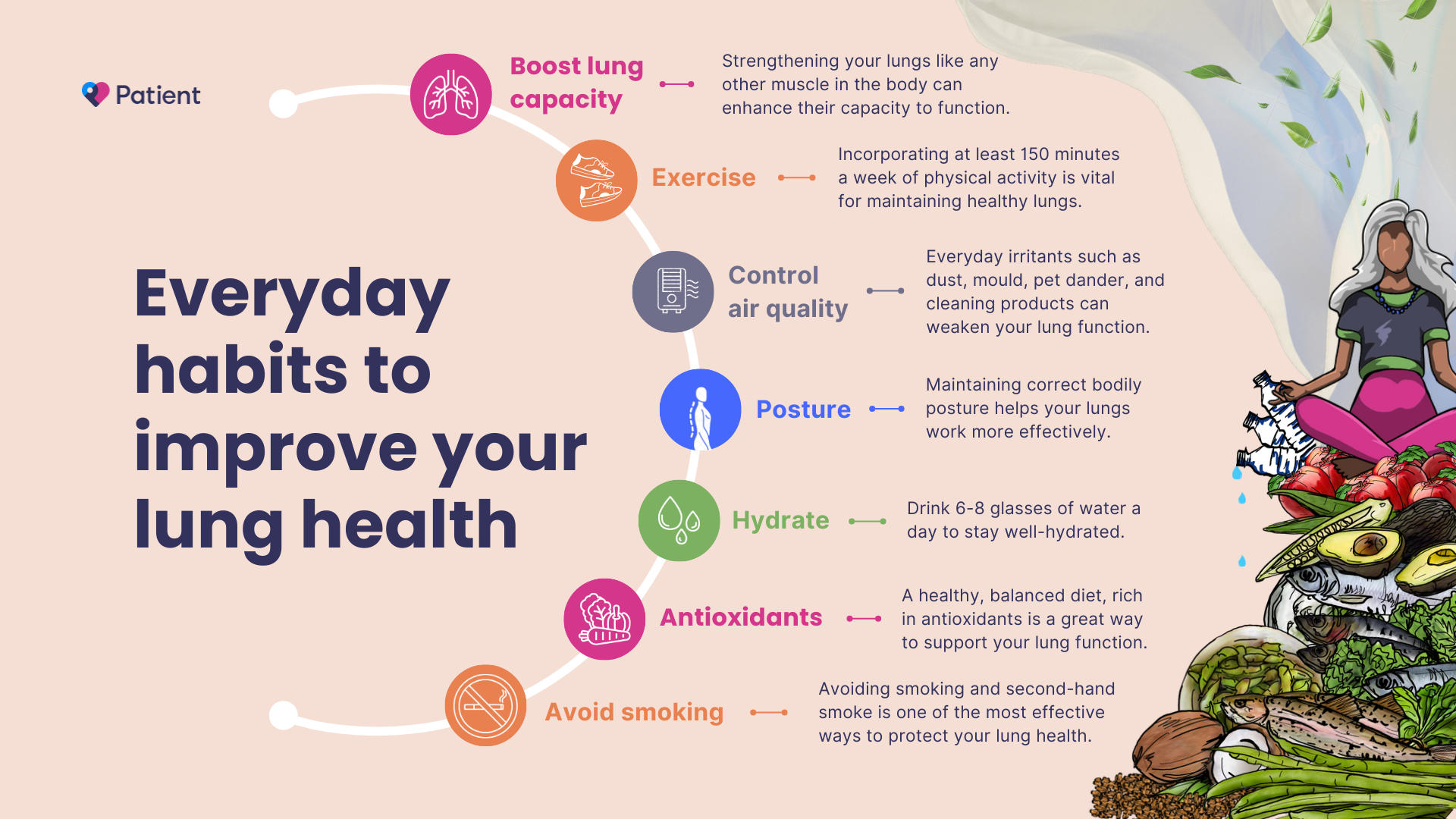
Graphique : Ben Hudson
1. Boost your lung capacity
Daily habits that fortify your lungs can improve how well they work and support your overall health.
Dr Ramit Singh Sambyal, Senior Consultant and Lead, Health City Cayman Islands, Western Caribbean, says that strengthening your lungs - like any other muscle in the body - can enhance their capacity to function.
"Many people don't realise how daily habits can either strengthen or weaken lung function," he says. "Breathing is automatic, but the way we breathe makes a big difference."
Sambyal advises you shift from shallow chest breathing to deep diaphragmatic breathing - also known as belly breathing. This technique can help you breathe better, make your lungs stronger, and increase your stamina.
2. Exercise for healthier lungs
Incorporating at least 150 minutes a week of physical activity a week is vital for maintaining healthy lungs.
"Movement plays a crucial role in lung health," Sambyal explains. "Your lungs thrive on activity, yet exercise is often overlooked as a way to improve breathing."
Sambyal recommends the following forms of exercise to encourage full lung expansion, better oxygen flow and improved circulation:
Cardio workouts - such as brisk walking, swimming, cycling.
Entraînement de force - a strong core supports your diaphragm, making every breath more efficient.
"Even simple activities, such as laughing or singing, help your lungs work harder, improving elasticity and clearing out stale air," he adds.
3. Control your air quality
The quality of the air you breathe is an important factor that shouldn't be overlooked.
Sambyal warns that everyday irritants such as dust, mould, pet dander, and chemicals from cleaning products can weaken your lung function over time.
He suggests the following ways to support your respiratory health:
Keep indoor spaces well-ventilated.
Use air purifiers.
Switch to non-toxic cleaning products.
4. Prioritise hydration
You should aim to drink 6-8 glasses of water a day to keep your body well-hydrated.
Sambyal explains that hydration plays a key role in your lung health as they need moisture to function properly.
Il dit : "Dehydration can lead to thickened mucus, making it harder for your lungs to expel irritants. Drinking enough water throughout the day helps prevent congestion and keeps them functioning at their best."
5. Practice good posture
Maintaining correct bodily posture can also help your lungs work more effectively.
Sambyal says that slouching compresses your lungs, limits oxygen intake and can lead to shallower breathing.
He recommends these tips to help your lungs expand better and get more oxygen to your body:
Sit up straight.
Stretch regularly.
Practice breathing-focussed exercises - such as yoga.
6. Nourish your body with antioxidants
A healthy, balanced diet, rich in antioxidants is a great way to support your lung function.
Sambyal advises you incorporate the following antioxidant-rich foods into your meals:
Acides gras oméga-3.
Vitamin C from leafy greens.
Fatty fish.
Fruits d'agrumes.
Noix.
"These will all help réduire l'inflammation and protect your lung tissue," he says. "On the other hand, processed foods and excessive dairy products can increase mucus production, making breathing more difficult."
7. Embrace a smoke-free life
As we get older, our lung function naturally declines. However, one significant step you can take to reduce these effects is to refrain from smoking.
Sambyal stresses that avoiding smoking and inhaling second-hand smoke is one of the most effective ways to protect your lung health.
He emphasises that even former smokers can take comfort in knowing their lungs remain highly resilient. Lung function can begin to improve within just weeks of quitting smoking.
Sambyal concludes that to keep your lungs healthy, they need daily care and attention.
"Small, consistent lifestyle changes such as deep breathing exercises, staying active, and improving indoor air quality can make a lasting impact on respiratory health," he says. "Eating a lung-friendly diet also plays a key role in supporting long-term lung function."
Sélections des patients pour Santé pulmonaire

Santé générale et mode de vie
L'effet de la pollution de l'air sur les personnes asthmatiques
L'asthme est une affection pulmonaire courante et de longue durée qui provoque une inflammation et un rétrécissement de vos voies respiratoires, entraînant des symptômes tels que l'essoufflement, la respiration sifflante, la sensation d'oppression thoracique et la toux. La pollution de l'air peut irriter vos voies respiratoires, aggravant ainsi votre asthme. Nous examinons ce que vous pouvez faire pour atténuer les symptômes et mieux gérer votre asthme lorsque la pollution est élevée.
par Lawrence Higgins

Poitrine et poumons
Comment gérer l'asthme pendant les mois d'hiver
De nombreuses personnes asthmatiques constatent que leurs symptômes s'aggravent pendant les mois d'hiver. Alors, comment gérer votre asthme lorsque les journées deviennent plus froides, et que pouvez-vous faire pour éviter les déclencheurs ?
par Victoria Raw
À propos de l'auteurVoir la biographie complète

Victoria Raw
Auteur de chroniques
Licence (Hons), Littérature anglaise
Victoria est rédactrice de contenu chez Patient, avec des intérêts particuliers pour le bien-être mental, les tendances sociétales et l'impact de la technologie sur notre santé.
À propos du critiqueVoir la biographie complète

Dr Colin Tidy, MRCGP
Médecin généraliste, Auteur médical
MBBS, MRCGP, MRCP (Paediatrics), DCH
Le Dr Colin Tidy est un médecin du NHS, basé dans l'Oxfordshire.
Historique de l'article
Les informations sur cette page sont examinées par des cliniciens qualifiés.
Article également disponible en Anglais, Allemand, Espagnol, Français, Italien, Portugais, Hindi, Hébreu, Arabe, and Suédois.
Prochaine révision prévue : 22 oct. 2028
22 oct. 2025 | Dernière version
27 avr. 2025 | Publié à l'origine
Écrit par :
Victoria RawRevu par
Dr Colin Tidy, MRCGP

Demandez, partagez, connectez-vous.
Parcourez les discussions, posez des questions et partagez vos expériences sur des centaines de sujets de santé.

Vous ne vous sentez pas bien ?
Évaluez vos symptômes en ligne gratuitement
Inscrivez-vous à la newsletter Patient
Votre dose hebdomadaire de conseils de santé clairs et fiables - rédigés pour vous aider à vous sentir informé, confiant et maître de la situation.
En vous abonnant, vous acceptez notre Politique de confidentialité. Vous pouvez vous désabonner à tout moment. Nous ne vendons jamais vos données.
Plus dans la poitrine et les poumons
- La pollution de l'air dans les grandes villes est aussi nocive pour les poumons que fumer 20 cigarettes par jour
- La pollution de l'air accélère le vieillissement des poumons
- Les pastilles de zinc peuvent-elles protéger contre la toux, le rhume, la grippe et la COVID-19 ?
- Comment la physiothérapie peut aider les personnes atteintes de maladies pulmonaires
- Comment gérer l'asthme pendant les mois d'hiver
- Comment garder vos poumons en bonne santé toute votre vie
- Comment gérer la BPCO en hiver
- Comment arrêter de tousser la nuit
- Journal de débit de pointe
- Devriez-vous aller travailler lorsque vous avez un rhume ?
- L'effet de la pollution de l'air sur les personnes asthmatiques
- Les signes avant-coureurs d'une crise cardiaque chez les femmes
- Quelles sont les meilleures formes d'exercice si vous avez de l'asthme ?
- Quels sont les différents types d'inhalateurs pour l'asthme ?
- Quelles sont les principales causes de l'asthme et des crises d'asthme ?
- Qu'est-ce que l'asthme éosinophilique et qu'est-ce qui le rend différent ?
- Qu'est-ce que la pneumonie ambulante ?
- Que faire en cas de crise d'asthme
- Que manger quand on a un rhume
- Quelle est la différence entre une double pneumonie et une pneumonie ?