
Qu'est-ce que l'inflammation et quels aliments la réduisent ?
Revu par Dr Sarah JarvisDernière mise à jour par Dr Carrie Ruxton, PhD, Nutrition InfantileDernière mise à jour 18 janv. 2018
Respecte les directives éditoriales
- TéléchargerTélécharger
- Partager
- Language
- Discussion
- Version audio
- Ajouter aux sources préférées sur Google
L'inflammation est une bonne chose dans les bonnes circonstances. Prenons un exemple comme se cogner l'orteil contre une pierre de pavage rebelle. L'orteil gonfle en raison de l'afflux de liquide et de substances immunitaires, comme les macrophages, qui se précipitent dans la zone pour évaluer et réparer les dommages. Votre orteil se raidit et devient douloureux, vous incitant à le reposer. Après plusieurs jours, le gonflement et la raideur diminuent et progressivement votre orteil se sent mieux. Maintenant, vous pouvez à nouveau sortir marcher.
Cette réponse à une blessure, des bactéries nuisibles ou des corps étrangers est appelée inflammation aiguë (à court terme). C'est la manière naturelle d'isoler et de guérir les zones du corps qui sont endommagées ou affectées par une maladie. Cependant, des problèmes peuvent survenir lorsque l'inflammation devient chronique, ou est causée par un système immunitaire hyperactif menant à des conditions dites auto-immunes. Dans cet article, nous examinerons comment votre alimentation pourrait aider à maintenir ces types d'inflammation moins utiles à distance.
Inflammation chronique
Les scientifiques croient maintenant que l'inflammation chronique de bas niveau est l'une des causes sous-jacentes de conditions telles que une maladie cardiaque, accident vasculaire cérébral, diabète de type 2 et le cancer. Nous ne savons toujours pas exactement ce qui cause l'inflammation chronique, mais les facteurs suivants peuvent être liés :
Consommation fréquente et excessive, en particulier des régimes riches en graisses et en protéines et faibles en vitamines et minéraux antioxydants.
Surstimulation régulière du métabolisme - par exemple, régimes riches en sucres et en glucides transformés (par exemple, pain blanc, riz blanc) qui augmentent les niveaux de sucre dans le sang et d'insuline.
Changements dans bactéries intestinales, généralement favorisé par un régime pauvre en fibres.
Expansion des cellules graisseuses corporelles en raison de l'obésité. Cela peut provoquer la rupture des cellules et une réponse inflammatoire.
Les cellules graisseuses se remplissent, entraînant une accumulation de graisse dans d'autres parties du corps, comme le foie.
L'inflammation chronique met les tissus corporels sous stress, provoquant des dommages cellulaires à long terme, des erreurs d'ADN, des vaisseaux sanguins congestionnés et la résistance à l'insuline (où l'insuline devient inefficace, entraînant des niveaux élevés de sucre dans le sang). Ce sont ces conséquences négatives de l'inflammation chronique qui augmentent notre risque de mauvaise santé.
Conditions auto-immunes
Comme une armée, le système immunitaire s'active lorsqu'il détecte une blessure ou des envahisseurs (comme des bactéries ou des corps étrangers). Malheureusement, chez certaines personnes, le système immunitaire est en alerte constante même lorsqu'il n'y a pas de véritable cause. Il peut à tort reconnaître une partie de votre corps comme un envahisseur ou un ennemi, se retournant contre elle et l'attaquant. Cela peut conduire à des conditions telles que maladie de Crohn, la colite ulcéreuse, polyarthrite rhumatoïde, lupus, sclérose en plaques, glande thyroïde hyperactive, diabète de type 1, and psoriasis.
Ces maladies auto-immunes varient en gravité mais sont souvent caractérisées par des périodes de rechute et de rémission. Les symptômes sont généralement gérés à l'aide de médicaments ou d'autres traitements prescrits par des professionnels de santé, bien que certaines conditions puissent bénéficier de changements de régime alimentaire et de mode de vie. Des exemples incluent l'utilisation de suppléments d'huile de poisson à haute dose pour le soulagement symptomatique de la polyarthrite rhumatoïde et du psoriasis, et suivre un faible en FODMAP ou régime élémentaire pour la maladie de Crohn.
Comment aborder l'inflammation chronique
Rester dans une fourchette de poids corporel saine, en évitant fumer, garder les collations et boissons malsaines au minimum, ainsi que faire de l'exercice régulièrement, peuvent tous aider à réduire l'inflammation chronique. Un étude a trouvé que les personnes avec diabète de type 2 qui ont remplacé une heure sédentaire par une heure d'activité physique ont réduit leurs niveaux de CRP (un marqueur d'inflammation) de 24% sur une période de six mois.
Nous entendons souvent dire que certains aliments sont anti-inflammatoires tandis que d'autres sont pro-inflammatoires. Cependant, les preuves à l'appui de cela font souvent défaut. Les histoires médiatiques blâmant de la viande rouge, les produits laitiers, la farine blanche, les édulcorants et les additifs sont à côté de la plaque. Pris individuellement, ces aliments auront peu d'effet sur l'inflammation, car c'est l'ensemble du régime alimentaire qui compte.
Alors, que montrent les preuves ? Tout d'abord, que les régimes qui surstimulent la glycémie et l'insuline sont mauvais pour l'inflammation. Cela inclut les régimes qui sont faibles en fibres et riche en aliments tels que le pain blanc, le riz blanc, la purée de pommes de terre, les gâteaux/biscuits, les boissons sucrées et les confiseries. Deuxièmement, que l'inflammation peut être augmentée par un excès d'alcool, graisses saturées (crème, beurre, saindoux, viandes grasses) et aliments frits.
De l'autre côté de l'équation, il existe une large gamme d'aliments pour aider à apaiser l'inflammation chronique. Dans un étude sur 772 personnes, les scientifiques ont découvert qu'un régime méditerranéen (huile d'olive, noix, fruits, légumes, poisson) était plus efficace pour réduire l'inflammation qu'un régime pauvre en graisses.
Aliments anti-inflammatoires
Il existe également des preuves que certains aliments, boissons et nutriments peuvent aider à réduire l'inflammation comme décrit dans un article de revue de l'Université de Southampton. Ceux-ci incluent :
Fruits et légumes
Riche en vitamines antioxydantes A et C, ainsi qu'en composés végétaux bénéfiques appelés polyphénols.
Poisson gras
La meilleure source de acides gras oméga-3 qui ont un puissant effet anti-inflammatoire. Essayez de manger du maquereau, du saumon, du hareng, de la truite ou du thon au moins une fois par semaine ou prenez un supplément quotidien d'huile de poisson si vous n'aimez pas le poisson.
Huiles insaturées
L'huile de colza ou d'olive peut être utilisée à la place des huiles de cuisson végétales moins bénéfiques ou du saindoux.
Noix et graines
Les noix et les graines sont riches en graisses insaturées saines et constituent une bonne source de fibres, ainsi que de la vitamine E antioxydante.
Quelques épices
Des études montrent que le curcuma et l'ail sont anti-inflammatoires. Ils peuvent être utilisés dans les currys ou les ragoûts.
Thé
Environ 2 à 4 tasses par jour ont été associées à une réduction de l'inflammation.
Aliments riches en fibres
Les grains entiers, les haricots et les légumineuses aident tous à stimuler les bactéries saines dans l'intestin, ce qui peut aider à rééquilibrer le système immunitaire.
Cacao
Riche en polyphénols, mais consommez le chocolat avec modération. Des études montrent que 20 g de chocolat noir tous les quelques jours peuvent réduire l'inflammation, mais plus que cela n'est pas utile.
Vitamine D
L'inflammation est réduite lorsque votre niveaux de vitamine D sont optimales. Essayez de sortir quotidiennement au soleil d'été pendant 15-20 minutes et prenez un supplément en automne et en hiver.
Alcool modéré
Bien que boire de manière excessive soit une mauvaise idée, de petites quantités de vin ou de bière peuvent être anti-inflammatoires. Suivez le Lignes directrices hebdomadaires du médecin-chef en buvant moins de 2 unités par jour (1 unité équivaut à une demi-pinte de bière ou un petit verre de vin).
Sélections des patients pour Alimentation saine

Régime et nutrition
Pourquoi cultiver vos propres aliments pour votre santé ?
Pour la famille britannique moyenne, la qualité et les prix des aliments achetés en magasin peuvent rendre difficile le suivi d'un régime alimentaire sain. Si vous pouvez cultiver vos propres légumes, fruits et herbes - même en petites quantités - vous pouvez soutenir votre santé physique et mentale.
par Amberley Davis
Régime et nutrition
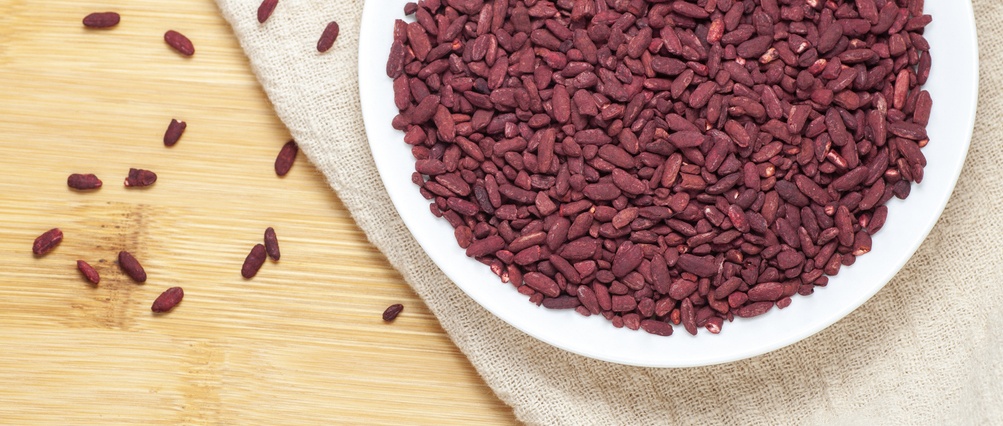
Le riz de levure rouge peut-il réduire votre cholestérol ?
L'extrait de levure de riz rouge est utilisé depuis des siècles dans la médecine traditionnelle chinoise. Avec une liste d'avantages pour le bien-être associés à son nom, il a récemment gagné en popularité en tant que complément alimentaire. Mais quels sont les avantages pour la santé du riz de levure rouge, et y a-t-il des effets secondaires ?
par Victoria Raw
À propos de l'auteurVoir la biographie complète

Dr Carrie Ruxton, PhD, Nutrition Infantile
Diététicien et Écrivain en Santé
Doctorat, Nutrition Infantile
Dr Carrie Ruxton a obtenu son diplôme de diététicienne à l'Université Queen Margaret, Édimbourg, avant de décrocher un doctorat en nutrition infantile.
À propos du critiqueVoir la biographie complète

Dr Sarah Jarvis
Consultant Clinique
MA (Cantab), BM, BCh (Oxon), DRCOG, FRCGP, MBE
Après avoir suivi une formation en médecine à Cambridge et Oxford, le Dr Sarah Jarvis MBE est devenue médecin généraliste.
Historique de l'article
Les informations sur cette page sont examinées par des cliniciens qualifiés.
Article également disponible en Anglais, Allemand, Espagnol, Français, Italien, Portugais, Hindi, Hébreu, Arabe, and Suédois.
18 janv. 2018 | Dernière version

Demandez, partagez, connectez-vous.
Parcourez les discussions, posez des questions et partagez vos expériences sur des centaines de sujets de santé.

Vous ne vous sentez pas bien ?
Évaluez vos symptômes en ligne gratuitement
Inscrivez-vous à la newsletter Patient
Votre dose hebdomadaire de conseils de santé clairs et fiables - rédigés pour vous aider à vous sentir informé, confiant et maître de la situation.
En vous abonnant, vous acceptez notre Politique de confidentialité. Vous pouvez vous désabonner à tout moment. Nous ne vendons jamais vos données.
Plus sur l'alimentation et la nutrition
- 5 repas végétariens riches en protéines pour maintenir votre force
- 7 bienfaits du cacao : le chocolat cru est-il le meilleur ?
- Une approche hybride de l'alimentation : votre guide du régime pegan
- Au-delà du raisin : découvrir les bienfaits du resvératrol pour la santé
- Changer vos habitudes alimentaires après un diagnostic de diabète de type 2
- Régime pour diabète : gérer le diabète de type 2
- Régime pour le foie gras : aliments à consommer et à éviter
- Régime de fertilité : quoi manger lorsque vous essayez de tomber enceinte
- Graines de lin : une arme secrète pour la santé des femmes ?
- Aliments sains pour Hanoucca pour votre poids, cœur et diabète
- Le miel peut être l'énergie naturelle dont vous avez besoin pour dynamiser vos entraînements
- Comment augmenter vos niveaux de vitamine D cet hiver
- Magnésium : Bienfaits pour la santé et risques
- Les protéines végétales pourraient aider à prévenir l'hypertension
- Deux boissons gazeuses par jour peuvent augmenter le risque de décès prématuré
- Toxicité de la vitamine D : 5 signes que vous en avez pris trop
- Qu'est-ce que la snackification, et pourquoi envahit-elle nos cuisines ?
- Qu'est-ce que le régime atlantique ?
- Pourquoi le fromage cottage est-il la nouvelle tendance diététique ?
- Pourquoi les aliments ultra-transformés sont-ils si addictifs - et comment réduire leur consommation