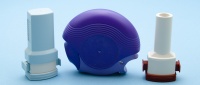
Comment fonctionnent les inhalateurs ?
Revu par Dr Colin Tidy, MRCGPDernière mise à jour par Josh AldermanDernière mise à jour 7 juil. 2026
Respecte les directives éditoriales
- TéléchargerTélécharger
- Partager
- Language
- Discussion
- Version audio
- Ajouter aux sources préférées sur Google
Millions of us use inhalers in the UK. For some, they're a lifesaver. For others, they provide welcome relief. For others still, they're more of a security blanket to be carried around in the bottom of your bag just in case.

Inhalers are the main way medicines are delivered directly into the lungs. They are most commonly used to treat conditions such as asthma and maladie pulmonaire obstructive chronique (MPOC), where the airways become narrowed or inflamed, making breathing difficult.
Because inhaled medicine goes straight to the lungs, only a small dose is needed compared with tablets or liquid medicines. This usually means fewer side effects and faster relief, provided the inhaler is used correctly.
What does an inhaler do?
An inhaler delivers medicine directly into your airways and lungs. The aim is to reduce symptoms such as wheezing, breathlessness, chest tightness, and coughing by either opening the airways or reducing swelling (inflammation) inside them.
Different inhalers contain different medicines, and they are used for different purposes depending on how often symptoms occur and how severe they are.
How do inhalers work inside the lungs?
Inhalateurs work by targeting the airways (bronchi), which can become narrow and inflamed in conditions such as asthme and COPD. The medicine acts locally, meaning it works where it is needed most.
Reliever inhalers
Reliever inhalers work quickly to relax the muscles around your airways, helping them open up. This makes breathing easier within minutes.
They are used when symptoms occur, such as sudden breathlessness, wheezing, or during exercise or a chest infection. Their effects usually last for a few hours.
Common examples include salbutamol (for example Ventolin®) et terbutaline (for example Bricanyl®). These are often blue inhalers.
Preventer inhalers
Preventer inhalers work more slowly but are essential for long-term control. They reduce inflammation inside the airways, making them less sensitive and less likely to react to triggers such as allergens, cold air, or exercise.
They need to be taken every day, even when you feel well. Over time, they help reduce symptoms, improve lung function, and lower your risk of severe asthma attacks or COPD flare-ups.
Most preventer inhalers contain a low dose of corticosteroid medicine.
Inhalateurs combinés
Combination inhalers contain two medicines in one device. A preventer - usually a steroid - and a long-acting reliever (bronchodilator). The preventer reduces inflammation, while the long-acting medicine helps keep your airways open for longer periods.
These are often used when symptoms are not fully controlled with a preventer alone.
How quickly do inhalers work?
The speed at which an inhaler works depends on the type of medicine it contains.
Blue reliever inhalers
Blue reliever inhalers usually start working within minutes. They are designed for quick relief of symptoms such as wheezing and breathlessness. However, their effects typically wear off after a few hours, so they do not provide long-term control.
Steroid preventer inhalers
Steroid preventer inhalers do not provide immediate relief. They build up their effect over days to weeks of regular use. With consistent use, they reduce inflammation in your airways and help prevent symptoms from developing in the first place.
Do all inhalers work in the same way?
No. Inhalers can look similar but work in different ways depending on how the medicine is delivered into the lungs.
Metered-dose inhalers
Metered-dose inhalers (MDIs) release a measured puff of medicine when the canister is pressed. They require good coordination between pressing the inhaler and breathing in.
If used incorrectly, much of the medicine can end up in your mouth and throat rather than your lungs.
Dry powder inhalers
Dry powder inhalers (DPIs) release medicine as a fine powder. These do not require you to press a canister at the same time as inhaling, but they do require a strong, fast breath in to draw the medicine into your lungs.
Breath-actuated inhalers
Breath-actuated inhalers automatically release a dose when you start to inhale. These can be helpful for people who struggle with coordination using standard inhalers.
Spacers
A spacer is a plastic chamber attached to a metered-dose inhaler. The medicine is sprayed into the spacer first, and then inhaled slowly and deeply.
Spacers make it easier to use inhalers correctly and improve how much medicine reaches your lungs, while also reducing side effects such as throat irritation.
What happens if an inhaler isn't used correctly?
If an inhaler is not used correctly, much of the medicine may not reach your lungs. Instead, it may stay in your mouth or throat, where it is far less effective and may cause side effects.
With metered-dose inhalers, common mistakes include pressing too early or too late during inhalation, which reduces the amount of medicine delivered to your lungs.
Using a spacer can significantly improve delivery, particularly for reliever inhalers. Healthcare professionals, including GPs and pharmacists, can check inhaler technique and help correct any issues.
Can your inhaler stop working?
Inhalers do not usually “stop working”.
However they may seem less effective if:
They are not being used correctly.
A reliever inhaler is being used more often than usual - which may suggest poorly controlled symptoms.
Preventer inhalers are not taken regularly.
The underlying condition is worsening.
If symptoms are getting worse or your inhaler is not controlling them as expected, it is important to review your treatment with a healthcare professional. This may involve checking technique, adjusting doses, or changing the type of inhaler used.
Résumé
Inhalers deliver medicine directly into your lungs to treat and prevent conditions such as asthma and COPD. Reliever inhalers work quickly to ease symptoms, while preventer inhalers reduce inflammation over time to help prevent symptoms.
Different inhaler types require different techniques, and using them correctly is essential for them to work properly. If symptoms are not well controlled you should speak to a healthcare professional.
Sélections des patients pour Asthme

Poitrine et poumons
Quelles sont les principales causes de l'asthme et des crises d'asthme ?
L'asthme est une affection pulmonaire chronique dont environ 12 % de la population britannique a été diagnostiquée, selon la British Lung Foundation. Bien que certaines personnes souffrant d'asthme pendant l'enfance finissent par en guérir, d'autres nécessitent une gestion continue à l'âge adulte. La bonne nouvelle est qu'il existe des moyens de mieux gérer l'asthme et d'améliorer considérablement la qualité de vie de quelqu'un.
par Amberley Davis

Allergies, sang et système immunitaire
Gérer le rhume des foins et l'asthme : conseils pour survivre à la saison pollinique
La saison du rhume des foins est officiellement arrivée. Bien que nous le considérions souvent comme une partie normale du printemps et de l'été, cela peut toujours vous faire sentir loin de votre meilleur. Pour beaucoup, le rhume des foins peut être perturbateur, durant des mois et rendant la vie quotidienne plus difficile - surtout si vous avez une affection respiratoire telle que l'asthme. St John Ambulance partage des conseils simples pour aider à gérer les symptômes du rhume des foins et limiter votre exposition au pollen gênant.
par Victoria Raw
À propos de l'auteurVoir la biographie complète

Dr Sarah Jarvis
Consultant Clinique
MA (Cantab), BM, BCh (Oxon), DRCOG, FRCGP, MBE
Après avoir suivi une formation en médecine à Cambridge et Oxford, le Dr Sarah Jarvis MBE est devenue médecin généraliste.
À propos du critiqueVoir la biographie complète

Dr Colin Tidy, MRCGP
Médecin généraliste, Auteur médical
MBBS, MRCGP, MRCP (Paediatrics), DCH
Le Dr Colin Tidy est un médecin du NHS, basé dans l'Oxfordshire.
Historique de l'article
Les informations sur cette page sont examinées par des cliniciens qualifiés.
Article également disponible en Anglais, Allemand, Espagnol, Français, Italien, Portugais, Hindi, Hébreu, Arabe, and Suédois.
Prochaine révision prévue : 7 juil. 2029
7 juil. 2026 | Dernière version
16 Apr 2018 | Publié à l'origine
Écrit par :
Dr Sarah Jarvis

Demandez, partagez, connectez-vous.
Parcourez les discussions, posez des questions et partagez vos expériences sur des centaines de sujets de santé.

Vous ne vous sentez pas bien ?
Évaluez vos symptômes en ligne gratuitement
Inscrivez-vous à la newsletter Patient
Votre dose hebdomadaire de conseils de santé clairs et fiables - rédigés pour vous aider à vous sentir informé, confiant et maître de la situation.
En vous abonnant, vous acceptez notre Politique de confidentialité. Vous pouvez vous désabonner à tout moment. Nous ne vendons jamais vos données.
Plus dans la poitrine et les poumons
- 7 habitudes quotidiennes pour améliorer la santé de vos poumons
- Pollution de l'air et asthme : comment se protéger cet été
- La pollution de l'air dans les grandes villes est aussi nocive pour les poumons que fumer 20 cigarettes par jour
- La pollution de l'air accélère le vieillissement des poumons
- Suis-je en train de faire une crise cardiaque ?
- Les produits de nettoyage sont-ils mauvais pour votre santé ?
- Un nouveau test sanguin peut-il détecter le cancer du poumon précocement ?
- Peut-on vraiment 'guérir' de l'asthme en grandissant ?
- Vidéos sur la poitrine et les poumons
- Comment l'asthme est-il géré et traité ?
- Comment gérer l'asthme pendant les mois d'hiver
- Comment gérer la BPCO en hiver
- Comment arrêter de tousser la nuit
- Est-ce une indigestion ou une crise cardiaque ?
- Journal de débit de pointe
- L'effet de la pollution de l'air sur les personnes asthmatiques
- Quels sont les risques d'une greffe de poumon ?
- Quelles sont les étapes du cancer du poumon ?
- Qu'est-ce que l'asthme éosinophilique et qu'est-ce qui le rend différent ?
- Ce que vous devez savoir sur la pneumonie