
COVID-19 : comment prendre soin de votre santé mentale pendant le confinement dû au coronavirus
Revu par Dr Sarah JarvisRédigé par Lydia SmithPublié à l'origine 2 Apr 2020
Respecte les directives éditoriales
- TéléchargerTélécharger
- Partager
- Language
- Discussion
- Ask Patient
- Version audio
- Ajouter aux sources préférées sur Google
Coronavirus has affected all aspects of our lives and the constant news about the pandemic can feel never-ending. Not only is it impacting our physical health but it is taking its toll on some people's mental health too.
Sélections vidéo pour articles sur la pandémieBibliothèque vidéo
Utiliser le patient outil de vérification du coronavirus si vous présentez des symptômes de fièvre ou une nouvelle toux. Jusqu'à ce que vous ayez utilisé l'outil et reçu des conseils sur les mesures à prendre, veuillez rester chez vous et éviter tout contact avec d'autres personnes.
Staying at home, distanciation sociale et self-isolating are crucial in stopping the spread of COVID-19, but they can affect us psychologically. So what can we do to support our mental well-being during this time?
Why can COVID-19 affect our mental health?
Not only is the threat of a new virus scary, many people are also facing stressful life challenges. Lots of people who were working in pubs and restaurants or who are self-employed have lost jobs or had their incomes cut. Social distancing and self-isolating mean avoiding seeing friends and family and many people are worried about vulnerable loved ones. And of course, for the 1.5 million people recommended to stay indoors entirely for three months as part of the shielding initiative, restrictions are even more extreme.
In addition, it can be hard to escape the constant barrage of bad news in the media too, which can add to feelings of niveaux de stress and despair.
"We know that coronavirus is causing worry and stress for many people," says Stephen Buckley, head of information at the mental health charity Mind. "If you already experience a mental health problem, it may be affecting this and how you are coping.
"Many people are being asked to stay at home and avoid others, which might feel difficult or stressful. But there are lots of things people can try to help with their well-being during the outbreak."
Looking after your mental health
To support your mental health at this time, you can try some of these steps.
Pratiquez l'auto-soin
It's easy to slip into the habit of sleeping late, spending all day in your pyjamas and eating junk food, but looking after yourself is essential for your mental health. Even simple tasks such as washing your face can feel difficult sometimes, but they can make a big difference to the way you feel.
"Ensure you are in a well-ventilated room and following basic soin de soi, so alimentation saine, sommeil, lots of hydration, and try to keep to a routine," says Pamela Roberts, a psychotherapist based at Priory's Woking Hospital.
Buckley adds that it's important to have supplies at home to avoid added stress. If you are self-isolating and unable to leave the house even to shop, you'll need to make plans. "Think about getting food delivered or asking someone else to drop food off for you," he says. "Being at home might impact your routine which can affect your appetite and when you drink water. It can help to create a new routine to make sure you are looking after yourself."
Exercise if you can
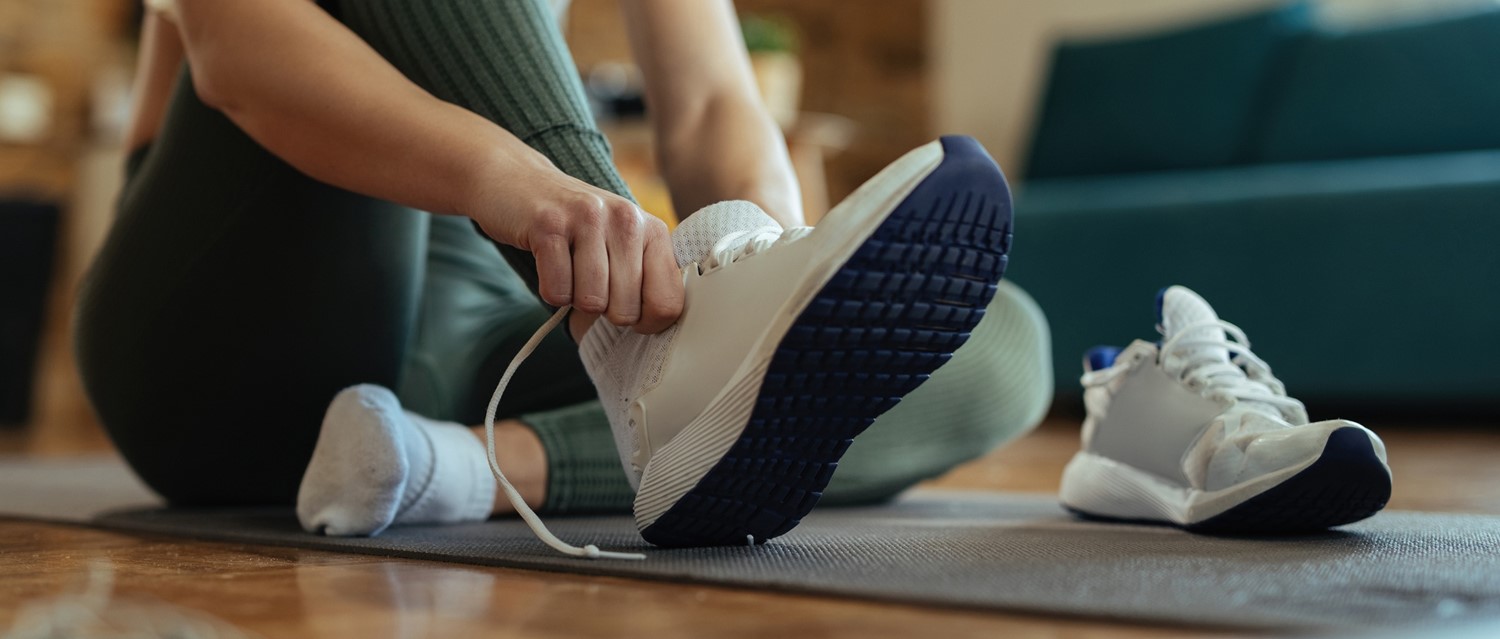
Getting moving is easier said than done when you feel low or anxious, but it can significantly boost your mood.
"If you are well enough, exercise is really good for mental as well as physical well-being. Find music that helps boost your mood. If you are able, get into your garden and get daily doses of sunshine," Roberts says,
Exercising at home can be simple and there are options for most ages and abilities, including yoga videos or cardio workouts.
Under the new government regulations, you are allowed to leave your house for one form of exercise (such as running, walking or cycling) per day but in addition, you're still able to use your garden as long as you don't come within two metres of anyone you don't live with. The only exception is people who are being 'shielded' because they are at the highest risk of severe complications. They should not leave their houses at all.
Set up buddy groups
Roberts advises setting up a "buddy group" with family or friends and regularly checking in with people, either online or by phone. That way, you can offer support to anyone struggling or reach out to others if you need to.
Even just sending daily updates can help us feel more connected and less alone during these difficult times.
Distrayez-vous
Writing down your thoughts and feelings can help offload any worries and fears you may have. It's also important to try to keep busy, whether that means going for a daily walk or learning a new skill. There are still plenty of activities you can engage with at home, including crafts, painting, reading, cooking and baking.
"If you feel low, keeping a journal can be a helpful way to unload emotions. Take things a day at a time - planning may have once been essential but projection can evoke fear and anxiety. Go with the flow," Roberts says. "If you feel well enough, maybe look at some free online courses offered by the Open University."
Although we want to know what's going on, it can help to turn off the news from time to time too.
Soyez bienveillant envers vous-même
If you don't feel up to doing anything, though, that's fine too. It's important to be kind to yourself and recognise when you need a break.
"Take care of yourself, focus on your recovery, and you'll get through this," Roberts says. "Tell yourself 'what I am doing is enough'. Be good to yourself.
"Try to relax and focus on positive things, knowing that every effort is being made globally to bring this situation to a close, but it will take time."
Obtenez de l'aide professionnelle
The mental health charity Mind has some very useful advice on self-isolating and your mental health. "For support with grief, anxiety, or mental well-being, you can call or text an organisation like the Samaritans, or you can access therapy online with a trained therapist," Roberts says.
It's also important to continue accessing treatment and support for existing mental health problems.
"If you are receiving ongoing treatment for a physical or mental health problem and don't feel you need to be seen face to face, some GP services are available via online or telephone consultations. Check with your GP to see what they offer," Buckley says.
"Keep taking your medication. If you have a repeat prescription you might be able to order it by phone, online or using an app. You can also ask your pharmacy about getting your medication delivered or asking someone to collect it for you."
You can collect a prescription on behalf of someone else. If the prescription is electronic, the person who the prescription is for can choose the pharmacy or dispenser where the prescription is sent. You can collect the medicine on their behalf if the person has told the pharmacy that they are happy for you to do so.
You can collect a paper prescription from a GP surgery for a friend or relative if that person has told the surgery they're happy for you to collect it. You will usually be asked to give the name and address of the person the prescription is for - and you may need ID. If you're collecting a 'controlled medicine' for someone else - such as morphine - the pharmacist may ask you for proof of identity.
Sélections des patients pour articles sur la pandémie

COVID-19
Comment les Britanniques ont-ils négligé leur santé bucco-dentaire pendant la pandémie ?
De nouvelles recherches révèlent qu'un Britannique sur trois a négligé sa santé bucco-dentaire depuis le début de la pandémie, en raison d'un manque de routine et d'autres problèmes de santé ayant pris le pas sur le soin de leurs dents et gencives.
par Emily Jane Bashforth
COVID-19
Conseils pour reprendre votre routine d'exercice après le confinement
Le confinement nous a tous affectés de différentes manières. En ce qui concerne la forme physique, certains d'entre nous ont intensifié leurs efforts — en courant pour la première fois ou en faisant de longues promenades. D'autres ont été malades, ont dû s'occuper des autres ou ont tout simplement trouvé cela trop difficile. À mesure que le confinement se relâche, quelle est la meilleure façon de retrouver notre forme ou même de devenir en forme pour la première fois ?
par Gillian Harvey
À propos de l'auteurVoir la biographie complète
Rédigé par

Lydia Smith
Rédacteur de reportages
Licence, Master, MSc
Lydia Smith est une journaliste primée et rédactrice spécialisée qui a beaucoup écrit sur la santé des femmes et la santé mentale. Elle prépare actuellement un MSc en psychologie.
À propos du critiqueVoir la biographie complète

Dr Sarah Jarvis
Consultant Clinique
MA (Cantab), BM, BCh (Oxon), DRCOG, FRCGP, MBE
Après avoir suivi une formation en médecine à Cambridge et Oxford, le Dr Sarah Jarvis MBE est devenue médecin généraliste.
Historique de l'article
Article également disponible en Anglais, Allemand, Espagnol, Français, Italien, Portugais, Hindi, Hébreu, Arabe, and Suédois.
2 Apr 2020 | Publié à l'origine
Écrit par :
Lydia SmithRevu par
Dr Sarah Jarvis
Partagez vos pensées ou expériences avec les autres dans notre communautés de patients.
Inscrivez-vous à la newsletter Patient
Votre dose hebdomadaire de conseils de santé clairs et fiables - rédigés pour vous aider à vous sentir informé, confiant et maître de la situation.
En vous abonnant, vous acceptez notre Politique de confidentialité. Vous pouvez vous désabonner à tout moment. Nous ne vendons jamais vos données.