
Is losing your sense of taste and smell a symptom of coronavirus?
Peer reviewed by Dr Colin Tidy, MRCGPAuthored by Dr Sarah JarvisOriginally published 6 Apr 2020
Meets Patient’s editorial guidelines
- DownloadDownload
- Share
- Language
- Discussion
- Audio Version
- Add to preferred sources on Google
Hopefully everyone now knows at least two of the key symptoms of coronavirus which mean you need to self-isolate - fever above 37.8°C and 'new, continuous cough'. But as of the 18th May, loss of smell or taste have been added to this list of key indicators of the virus.
Change to guidance since publication of this article
On 18th May 2020, the Chief Medical Officers of England, Northern Ireland, Scotland and Wales announced that everyone should self-isolate if they develop the loss of, or a change in, their normal sense of smell. This is in addition to the previous guidance about the need to self-isolate if new cough or fever develop.
Use Patient's coronavirus checker tool if you have any symptoms of fever, loss of sense of smell or a new cough. Until you have used the tool and been advised what action to take, please stay at home and avoid contact with other people.
In late March, ENT UK (a UK body of Ear, Nose and Throat specialists) circulated a letter to Public Health England about the frequency with which their members were seeing patients with 'anosmia' - loss of sense of smell - since the rise of coronavirus infections. Because most of these patients had no other symptoms, they were unable to refer them for testing.
However, the specialists highlighted reports from South Korea, China and Italy that many patients with confirmed coronavirus infection had developed loss of sense of smell. The finding did not surprise them - in 2 in 5 people with the symptom, they reported, viral infection was the cause. Indeed, other coronaviruses were to blame for 10-15% of cases of anosmia.
The reason for the letter was to warn clinicians to beware the risk of infection when they saw patients with unexplained loss of smell, as well as identify patients who should be advised to self-isolate.
What do we know about symptoms so far?
The most comprehensive source of data we have for coronavirus comes from China, which had over 80,000 confirmed cases in just three months. A World Health Organization review of over 55,000 people with confirmed cases concluded the most common symptoms included:
Fever (88%).
Dry cough (68%).
Tiredness (38%).
Bringing up sputum (33%).
Shortness of breath (19%).
Muscle or joint aches (15%).
Sore throat (14%).
Headache (14%).
Following the trail
A team of researchers at King's College London has developed an app allowing people in the UK with suspected coronavirus to report their symptoms. The idea is that by identifying patterns of geography and age, we can all help identify high-risk areas, speed of spread in a given region and people at risk sooner. This will help government and regional health services to plan for and, hopefully, contain the spread.
Between 24th and 29th March alone, 400,000 people reported symptoms. It's important to remember that these represent people who think they might have coronavirus - not those who actually do.
This may account for the fact that only 1 in 10 reported fever and 3 in 10 had persistent cough, while a similar number complained of shortness of breath, over half were unusually tired and 1 in 5 complained of loss of sense of smell or taste. These symptoms are similar to those of confirmed cases in China but the proportions are very different.
When the app drilled down to look at people who had been formally diagnosed with coronavirus, the proportions changed significantly - 3 in 5 of people with a positive test for coronavirus described losing their sense of smell or taste.
Why might coronavirus lead to loss of smell and taste?
Our senses of smell and taste are inextricably intertwined - in fact, the majority of what we think is our taste sensation actually comes from our sense of smell. In the back of your nose lies a layer of sensitive nerves which detect chemicals - so-called chemoreceptors. These receptors, once activated, send specific messages to the brain, allowing them to interpret them as smell or flavour. They are found on a thin layer of cells right at the top of the inside of the nose, called the olfactory epithelium.
The delicate layer of cells which contains the smelling nerves is easily interfered with. It is thought that many viral infections which affect the upper airways (including the common cold) cause inflammation of this layer of cells, interfering with their ability to detect smells or to pass on messages to the brain. The theory is that coronavirus works in a similar way to affect smell.
The good news is that where sense of smell is lost due to other viral infections, it recovers without treatment in between 1 in 3 and 2 in 3 people.
Hay fever - the confounding factor
It's not just viral infections which lead to loss of sense of smell. Hay fever season may be at its peak in May-June, but thousands of people are already suffering itchy eyes, nose and throat; blocked or runny nose and loss of sense of smell as a result.
Hay fever mostly affects people:
From early to late spring for people allergic to tree pollens.
From late spring to early summer for those allergic to grass pollen (the most common reason for hay fever symptoms).
Right through from spring to autumn for anyone allergic to weed pollen.
At any time of year for people allergic to house dust mites or tiny scales shed from animal skin or hair, called dander.
While most people with hay fever will have other symptoms, loss of sense of smell is a common feature, and may concern many sufferers during this pandemic.
Is loss of sense of smell alone an indicator of coronavirus?
There are several questions we don't know about loss of sense of smell and taste with coronavirus:
Does it happen regularly in people who don't have the 'standard' symptoms of cough and fever?
Does it start before, at the same time or after other symptoms?
Would listing loss of sense of smell as a key symptom increase the chance that people with coronavirus would self-isolate early, reducing the spread?
Would listing it result in thousands of people who actually have hay fever unnecessarily self-isolating?
Are the figures reported in the app an accurate reflection of its true frequency?
As more information has emerged, scientific modelling has suggested that by adding sense of smell to the existing symptoms (fever and new continuous cough) requiring self-isolation, the proportion of people with coronavirus being asked to self-isolate (the sensitivity of the key symptoms) will rise from 91% to 93%.
As a result, as of 18th May 2020, people should self-isolate if they develop a loss of sense of smell or a change to their normal sense of smell. People who live with someone who develops anosmia should also self-isolate. You can find out what actions you need to take from our coronavirus symptom checker.
Editor’s note
This article was updated on 18th May 2020 following an update in government guidance which recommended that loss of sense of smell should be considered a key symptom of coronavirus infection.
Patient picks for General information
COVID-19
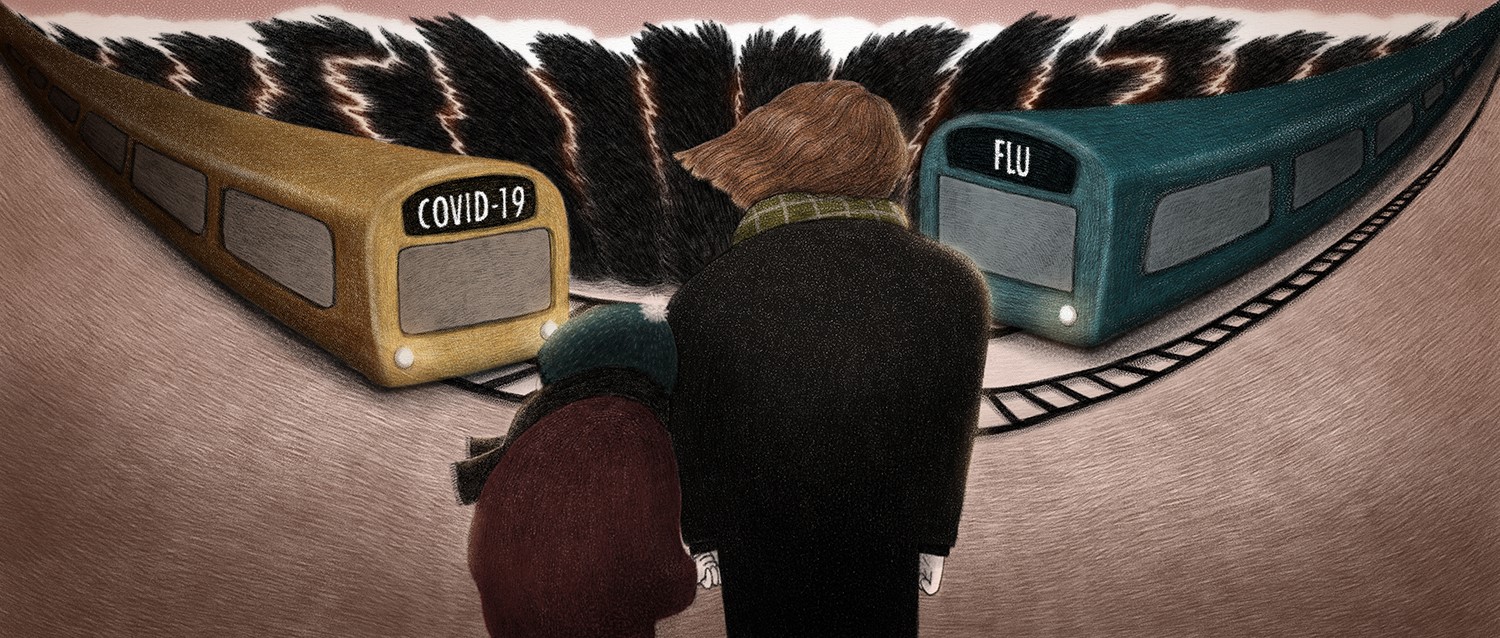
What happens if you catch flu and COVID-19 at the same time?
Thousands of people across the UK are living with tougher COVID-19 restrictions in a bid to curb infection rates ahead of winter. But each year winter also means a spike in flu cases, so what happens if you catch the flu and COVID-19 at the same time?
by Andrea Downey

COVID-19
How to protect yourself from COVID-19 and flu in pregnancy
With unvaccinated pregnant women making up almost 20% of the most critically ill COVID-19 patients in England, it is more important than ever for women to protect themselves against COVID-19 and flu in pregnancy. There are many protective measures that can be taken at home, in work, and through health services.
by Amberley Davis
About the authorView full bio
Authored by

Dr Sarah Jarvis
Clinical Consultant
MA (Cantab), BM, BCh (Oxon), DRCOG, FRCGP, MBE
After training in medicine at Cambridge and Oxford, Dr Sarah Jarvis MBE became a GP.
About the reviewerView full bio

Dr Colin Tidy, MRCGP
General Practitioner, Medical Author
MBBS, MRCGP, MRCP (Paediatrics), DCH
Dr Colin Tidy is an NHS Doctor, based in Oxfordshire.
Article history
Article also available in English, German, Spanish, French, Italian, Portuguese, Hindi, Hebrew, Arabic, and Swedish.
6 Apr 2020 | Originally published
Authored by:
Dr Sarah JarvisPeer reviewed by
Dr Colin Tidy, MRCGP
Join the conversation
Share your thoughts or experiences with others in our patient communities.

Ask, share, connect.
Browse discussions, ask questions, and share experiences across hundreds of health topics.

Feeling unwell?
Assess your symptoms online for free
Sign up to the Patient newsletter
Your weekly dose of clear, trustworthy health advice - written to help you feel informed, confident and in control.
By subscribing you accept our Privacy Policy. You can unsubscribe at any time. We never sell your data.