Vitamin D toxicity: 5 signs you’ve taken too much
Peer reviewed by Dr Colin Tidy, MRCGPAuthored by Heather AinsworthOriginally published 26 Oct 2025
Meets Patient’s editorial guidelines
- DownloadDownload
- Share
- Language
- Discussion
- Audio Version
- Add to preferred sources on Google
With the days getting shorter and sunlight in short supply, many of us reach for vitamin D supplements to stay healthy and avoid deficiency. However, taking more than you should isn't good for you and can lead to vitamin D toxicity.
Here’s how to recognise the signs of excess vitamin D and how to keep your levels safe.
What is vitamin D toxicity?
Vitamin D toxicity happens when your body has too much vitamin D, usually caused by taking too many supplements. It’s rare from sunlight or diet alone but taking high-dose supplements over time, especially during the darker winter months to avoid a deficiency, can put you at risk1.
Excess vitamin D raises calcium levels in the blood, causing symptoms such as feeling sick, tiredness, frequent peeing, kidney problems, and, in severe cases, heart issues.
Adults typically need 10 micrograms (400 international units) daily, with a safe upper limit of 100 micrograms (4,000 international units)2. While vitamin D is essential for bone and immune health, exceeding this without medical guidance can result in vitamin D toxicity.
Spotting the warning signs early helps ensure vitamin D continues to support your health - not harm it.
Signs of vitamin D toxicity
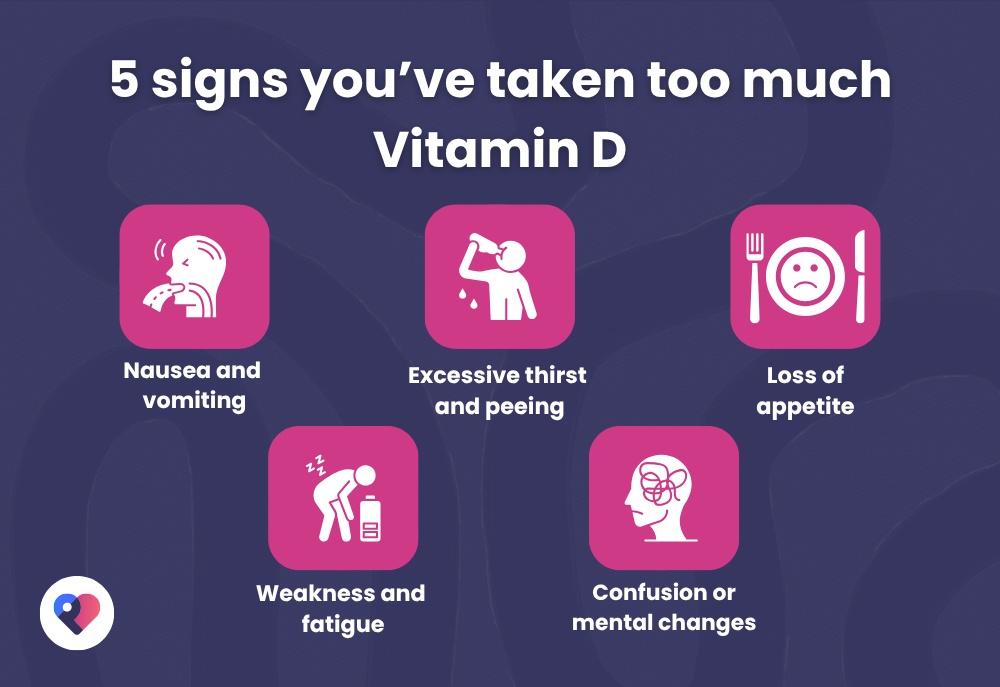
Signs you've taken too much vitamin D
1. Nausea and vomiting
One of the earliest signs of vitamin D toxicity is feeling sick (nausea) or being sick (vomiting). When your body has too much vitamin D, it increases calcium absorption in the gut - and that excess calcium can upset your stomach3.
You might feel queasy after meals, lose your appetite, or even experience bouts of being sick. If this sounds familiar and you’ve been taking high-dose supplements, it may be time to have your vitamin D and calcium levels checked.
2. Loss of appetite
A decreased appetite is another subtle but important warning sign that your vitamin D levels are too high. This happens because excess vitamin D raises calcium in the blood, which can affect how your body processes food and energy1.
You might notice you’re eating less without trying to, or that food simply doesn’t appeal to you like it used to. Over time, this can lead to unintended weight loss or nutritional deficiencies.
3. Frequent peeing and excessive thirst
Feeling unusually thirsty or running to the bathroom more often than usual? That could be your body’s way of trying to flush out excess calcium caused by too much vitamin D.
This combination of frequent peeing and constant thirst can mimic the symptoms of other conditions, such as diabetes, which is why it’s important not to ignore it.
If your water intake has suddenly skyrocketed but you still feel dehydrated, it’s worth talking to your doctor about a possible vitamin D overload.
4. Weakness, fatigue, or muscle pain
While vitamin D is known for supporting muscle and bone health, too much of it can cause muscle pain and fatigue1. High calcium levels can interfere with normal muscle contraction, leaving you feeling weak, sluggish, or sore.
If you’re waking up tired despite getting enough sleep or your muscles ache for no clear reason, it might not just be stress or overexertion - it could be a sign that your vitamin D supplement is doing more harm than good.
5. Confusion or mental changes
In severe cases of vitamin D toxicity, high calcium levels can affect your brain, leading to confusion, irritability, or trouble concentrating2. Some people describe it as 'brain fog' or a feeling of being mentally off-balance.
These neurological symptoms can be alarming and often indicate that calcium levels are dangerously high. If you notice sudden changes in mood, memory, or focus - especially alongside other symptoms - seek medical advice immediately.
What to do if you've taken too much vitamin D
Stop taking vitamin D immediately – discontinue any supplements until you’ve spoken with a healthcare provider.
Contact a healthcare professional – call your doctor or 111 for guidance.
Monitor for symptoms of toxicity – watch for nausea, vomiting, excessive thirst, frequent peeing, weakness, or confusion.
Stay hydrated – drink plenty of water unless your doctor advises otherwise, as hydration helps reduce high calcium levels.
Review all supplements – check other supplements or fortified foods to prevent further excess.
How to safely take vitamin D
When taking vitamin D supplements, always stick to the recommended daily dose of 10 micrograms (400 international units) for most adults.
Take your supplement with meals that include healthy fats for better absorption, and aim for short, safe sun exposure - around 10-30 minutes - a few times a week.
Avoid taking multiple high-dose supplements, and when using vitamin D long-term, have your blood levels checked regularly by your doctor.
Summary
Vitamin D is vital for your overall health - but more isn’t always better. While deficiency is common, overdoing it with supplements can push your calcium levels too high and lead to uncomfortable, even dangerous, side effects.
To stay safe, stick to recommended dosages, watch out for signs you’ve taken too much, and monitor your blood levels.
Further reading
1. Asif et al: Vitamin D Toxicity
2. Marcinowska-Suchowierska et al: Vitamin D Toxicity-A Clinical Perspective
3. P Lee et al: Vitamin D Toxicity: A 16-Year Retrospective Study at an Academic Medical Center
Patient picks for Vitamins and supplements
Diet and nutrition
Do ZMA supplements really work?
The ZMA supplement - also known as zinc magnesium aspartate - is used by people looking to improve their sleep and also by fitness enthusiasts who want to build muscle and increase their stamina. Yet there is little evidence to support the use of ZMA in individuals who aren't nutrient deficient. The best way to absorb and benefit from the nutrients in ZMA is to eat a healthy, well-balanced diet.
by Amberley Davis

Diet and nutrition
Vitamin A-rich foods could protect against skin cancer
People who consume foods rich in vitamin A are 17% less likely to develop a common form of skin cancer, according to experts at Brown University.
by Ashwin Bhandari
About the authorView full bio

Heather Ainsworth
SEO Manager
BA (Hons) Business and Marketing, IDM Cert DDM, MHFAider®
Heather is the SEO Manager at Patient and a trained Mental Health First Aider. She is also a regular health writer, covering a wide range of topics with a particular interest in mental wellbeing, women's health, and holistic health.
About the reviewerView full bio

Dr Colin Tidy, MRCGP
General Practitioner, Medical Author
MBBS, MRCGP, MRCP (Paediatrics), DCH
Dr Colin Tidy is an NHS Doctor, based in Oxfordshire.
Article history
Article also available in English, German, Spanish, French, Italian, Portuguese, Hindi, Hebrew, Arabic, and Swedish.
Next review due: 26 Oct 2028
26 Oct 2025 | Originally published
Authored by:
Heather AinsworthPeer reviewed by
Dr Colin Tidy, MRCGP
Join the conversation
Share your thoughts or experiences with others in our patient communities.

Ask, share, connect.
Browse discussions, ask questions, and share experiences across hundreds of health topics.

Feeling unwell?
Assess your symptoms online for free
Sign up to the Patient newsletter
Your weekly dose of clear, trustworthy health advice - written to help you feel informed, confident and in control.
By subscribing you accept our Privacy Policy. You can unsubscribe at any time. We never sell your data.
More in diet and nutrition
- Can vitamins really prevent hair loss?
- Coeliac disease diet sheet
- Coffee and lemon: fact-checking the TikTok trend
- Does my diet really affect my immune system?
- Fatty liver diet: foods to eat and avoid
- Honey may be the natural buzz you need to fuel your workouts
- How to boost your energy levels and feel less tired in winter
- How to build muscle on a vegan diet
- How to have a healthy Christmas party
- How to make healthier choices without missing out
- How to make healthy mince pies
- How your gut affects your overall health
- Mindful eating: how to slow down and enjoy your food
- Nutrition and diet videos
- Simple ways to follow a Mediterranean diet
- Vitamin A-rich foods could protect against skin cancer
- What are the health benefits of a vegan diet?
- UpdatedWhat is the carnivore diet and is it healthy?
- What's the recommended calorie intake for women?
- Why fibre is your friend