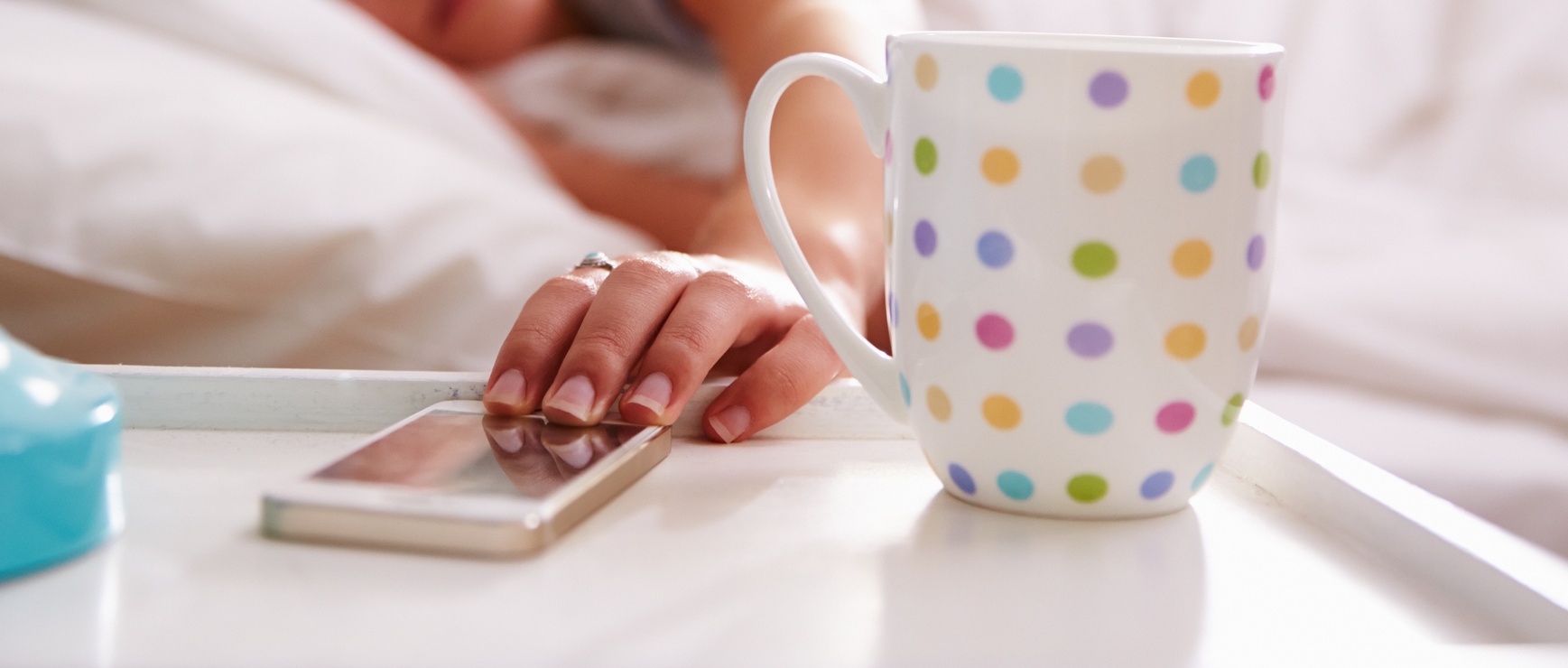
Pourquoi les téléphones devraient être interdits dans la chambre
Revu par Dr Laurence KnottDernière mise à jour par Dr Laurence KnottDernière mise à jour 26 sept. 2017
Respecte les directives éditoriales
- TéléchargerTélécharger
- Partager
- Language
- Discussion
- Version audio
- Ajouter aux sources préférées sur Google
If human evolution goes the way it has over the past few thousand years, it won’t be long before the first few babies are born with mobile phones in their hands. The relationship we have with our phones goes far beyond any reasonable need to establish telephonic communication. The theory is that what we have in our hands are not phones but syringes, ready to inject little packets of dopamine, the ‘pleasure chemical’.
Researchers found that the use of information technology, particularly smart phones, causes chemical changes in the brain similar to those we experience when we drink alcohol, have sex or are given money. The use of smart phones is addictive, especially when we share details of our lives on social media.
Getting a digital dose
So every time we get a like on Facebook, a text message or an email, our dopamine level is given a boost and we feel good. Simon Sinek, author, motivational speaker and marketing consultant, believes this is a particular problem of the millennial generation (those born from 1984) who were brought up with a sense of entitlement. Denied nothing by their parents, they grew up to believe that their every need should be instantly satisfied. Finding the real world was not like that, they needed to find coping strategies to deal with the inevitable drop in self-esteem that followed.
Some used alcohol, some drugs and others turned to their smart phones. There’s nothing like that little ping on your phone notifying you that someone somewhere is making contact.
The theory holds out so far but has its detractors. Every generation has its problems and many believe this is over-generalising. Animal studies suggest that dopamine is not quite the pleasure chemical it was once thought to be.
Nevertheless, whatever neurobiochemical high jinks are going on, the evidence that smart phone use is addictive continues to grow. Studied measuring the part of the brain associated with pleasure, gratification and reward (the mesolimbic system) show that activity does increase whenever we use smart phones, particularly to access social media.
Why is smart phone addiction important?
It’s not as if people have needed organ transplants from smart phone dependency or catch nasty infections from sharing phones. The fact is that smart phone addiction has been shown to damage finances, destroy relationships and prevent people from achieving their full potential in the workplace and in society as a whole.
Taking a smart phone into the bedroom raises the problem to a whole new level. Studies suggest that the use of smart phones in the bedroom is associated with a delay in the sleep cycle, so people go to sleep later and wake later. Not good news if you have to get up in the morning.
If it’s your partner who’s taking their mobile phone into the bedroom, it might be worth mentioning that the glow eminating from their side of the bed isn't doing either of you any good.
Like celebrities that hate each other (see British Journal of Gwyneth Paltrow and Madonna) it has long been known that dopamine and melatonin are mutually antagonistic.
Explaining our device vice
Whatever the link between dopamine and addiction, it’s known that levels rise when the mesolimbic system is activated. It’s tempting to suggest that anything which stimulates the mesolimbic system is going to inhibit melatonin production. So the last thing you need is a huge boost of mesolimbic activity before you try to sleep.
There is of course another issue; LED screens. Studies with e-readers showed that exposure to blue light (which looks white but is perversely in the blue spectrum) is known to affect the
levels of melanopsin, a photopigment with many functions, including those associated with sleep.
Taking a smart phone into the bedroom is not in itself harmful. If it’s switched off, and you don’t use it.
But add in the availability and addictive potential of the technology, the chances are that the phone will get switched on sooner or later. Having just closed down your laptop in the living room, your mesolimbic system is already in overdrive. You can’t sleep, you’re bored, and maybe a little bit down after underperforming at work (because you were tired from your lack of sleep the night before). Is anybody still awake? Might as well check out what your Facebook friends in Australia are up to.
So what’s the solution?
It’s simple. Don’t take your smart phone into the bedroom.
This is where the voice of the true addict pipes up. ‘But I charge my phone in the bedroom’. So charge your phone in the living room. ‘Someone might need me in an emergency.’ Be honest. When did anyone last need you at night in an emergency? Best of all, ‘I use my phone as an alarm clock’. So buy an alarm clock. You can get them for a fiver - just don't choose one with a huge glowing screen if you actually want to sleep.
I’m not one of those doctors who’s under the illusion that just because advice is good, it will be taken. There will be people who would rather lose an eye than an iPhone.
In that case, you’re in a damage limitation scenario. Apps which enable your phone to adjust to ambient lighting are available, some shipped free with the phone. The theory is that reduced LED lighting will maintain your melanopsis levels, and people do find them helpful.
For those who genuinely have to take emergency phone calls at night there are apps which unplug you from the internet whilst keeping the phone function working, and ‘dumb’ retro-phones which have no internet connection at all.
Sélections des patients pour Sommeil et insomnie
Mode de vie sain
Le divorce de sommeil est-il la clé pour un meilleur repos ?
Un divorce de sommeil, c'est lorsque deux personnes qui partagent habituellement un lit décident mutuellement de dormir séparément pour préserver la qualité de leur repos. Bien que ce ne soit pas pour tout le monde, certains trouvent que c'est la meilleure solution si leur santé est affectée par un sommeil perturbé. Nous expliquons ce qu'implique réellement un divorce de sommeil, les avantages potentiels pour la santé, et les meilleures façons de le faire fonctionner. En fin de compte, c'est à vous de décider si les effets d'un meilleur sommeil valent le coût de dormir séparément de votre partenaire.
par Victoria Raw
Mode de vie sain
Un bon sommeil améliore-t-il vraiment votre peau ?
Le sommeil est le moment où votre corps et votre esprit se rechargent, se restaurent et se guérissent. Pendant un bon sommeil, votre corps prévient et répare les dommages aux cellules de la peau, améliorant ainsi non seulement l'apparence de votre peau, mais aussi sa force et sa capacité à se protéger contre les éléments externes nuisibles. En revanche, un mauvais sommeil peut augmenter l'inflammation, ce qui peut aggraver certaines affections cutanées.
par Amberley Davis
À propos de l'auteurVoir la biographie complète

Dr Laurence Knott
Médecin généraliste, Auteur médical
Licence (Hons) Biochimie, MBBS
Le Dr Laurence Knott a obtenu son diplôme en 1973 et a acquis une vaste expérience en tant que médecin généraliste.
À propos du critiqueVoir la biographie complète
Dr Laurence Knott
Médecin généraliste, Auteur médical
Licence (Hons) Biochimie, MBBS
Le Dr Laurence Knott a obtenu son diplôme en 1973 et a acquis une vaste expérience en tant que médecin généraliste.
Historique de l'article
Les informations sur cette page sont examinées par des cliniciens qualifiés.
Article également disponible en Anglais, Allemand, Espagnol, Français, Italien, Portugais, Hindi, Hébreu, Arabe, and Suédois.
26 sept. 2017 | Dernière version

Demandez, partagez, connectez-vous.
Parcourez les discussions, posez des questions et partagez vos expériences sur des centaines de sujets de santé.

Vous ne vous sentez pas bien ?
Évaluez vos symptômes en ligne gratuitement
Inscrivez-vous à la newsletter Patient
Votre dose hebdomadaire de conseils de santé clairs et fiables - rédigés pour vous aider à vous sentir informé, confiant et maître de la situation.
En vous abonnant, vous acceptez notre Politique de confidentialité. Vous pouvez vous désabonner à tout moment. Nous ne vendons jamais vos données.
Plus sur la vie saine
- 6 bienfaits de la natation pour la santé
- Les suppléments de créatine peuvent-ils aider à développer la masse musculaire ?
- TCC pour l'insomnie : comment ça fonctionne ?
- Comment éviter les blessures lors de l'entraînement en force
- Comment gérer le stress d'être un nouveau parent
- Comment réduire votre consommation d'alcool pendant Noël et le Nouvel An
- Comment débuter le CrossFit en toute sécurité en tant que débutant
- Comment améliorer votre santé mentale en travaillant à domicile
- Comment prendre soin de votre santé mentale pendant votre cycle menstruel
- Comment arrêter de fumer sans prendre de poids
- Devenir sobre devient-il une tendance ?
- Le jeûne intermittent est-il une méthode saine pour perdre du poids ?
- Votre routine d'exercice vous donne-t-elle de l'acné ?
- Les avantages de varier vos exercices
- Quelle est la différence entre la santé mentale et la maladie mentale ?
- Que faire si votre poids vous déprime
- Quels sports sont les pires pour votre santé ?
- Pourquoi vous devriez adopter un passe-temps créatif cette année
- La mise à disposition des cigarettes électroniques sur ordonnance encouragera-t-elle les adolescents à fumer ?
- Les jeunes qui cherchent un soutien en santé mentale contraints de se débrouiller seuls