Comment traiter une piqûre de taon
Revu par Dr Krishna Vakharia, MRCGPDernière mise à jour par Amberley DavisDernière mise à jour 18 juin 2024
Respecte les directives éditoriales
- TéléchargerTélécharger
- Partager
- Language
- Discussion
- Version audio
- Ajouter aux sources préférées sur Google
L'été a de nombreux avantages, mais les piqûres de taon n'en font pas partie. Savez-vous comment prévenir ces piqûres d'insectes désagréables, ce qui peut apaiser votre douleur et votre inconfort, et quels symptômes indiquent une possible infection ou réaction allergique ?
What is a horsefly?
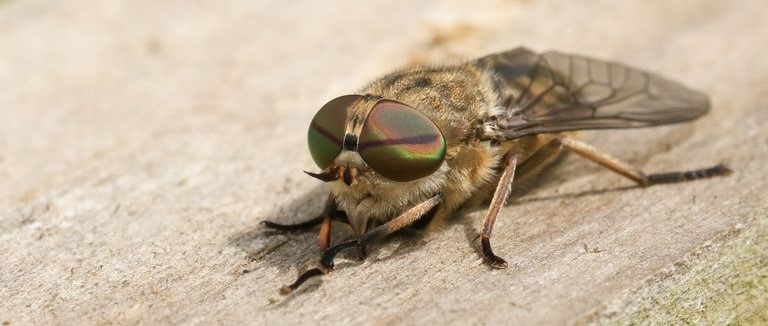
If you've spent a lot of time outdoors this summer, you may have spotted the short, sturdy horsefly, a member of the Tabanidae insect family.
Like houseflies, horseflies have large eyes and rather thick bodies, but they are larger in size - ranging from around 6-20 millimetres in length.
It's the female horsefly that's most intimidating, with a jaw shaped like scissor blades, called a mandible, which the fly uses to latch on to large animals and feed on blood. Horseflies are drawn to big, dark-coloured animals like horses, but this doesn't stop them from biting humans during the warm summer daylight hours, when they're most active1.
What does a horsefly bite look like?
Skin specialist Sreedar Krishna says: "A horsefly bite can look very similar to a mosquito bite, or any other form of piqûre d'insecte, so it can be difficult to identify the exact offender.
"Typically, a horsefly bite will be a raised, itchy, and tender lump. The pain, redness and swelling can often expand a distance away from the initial bite."
What does a horsefly bite feel like?
Like other insect bites and stings, a horsefly bite can be painful and irritating. Common symptoms include:
A sharp, burning sensation.
Démangeaisons.
Redness and swelling around the bite.
Sometimes, bruising around the bite.
The good news is these symptoms should disappear within a few hours or days.
Why are horsefly bites so painful?
On the downside, these typically short-lived symptoms often hurt more than other insect bites: "In contrast to other insects, horseflies bite through the skin using their sharp jaws rather than simply piercing the skin," says Krishna.
"Moreover, mosquitoes release a mild anaesthetic into the skin during bites which numbs the area. Horseflies do not, and so are appreciably more painful."
Are horsefly bites dangerous?
Aside from disrupting your summer with temporary pain and discomfort, a horsefly bite is generally not something to worry about. In fact, they are much more of a problem for their preferred target - horses - because horseflies can carry a disease that's life threatening to them (equine infectious anaemia, also known as 'swamp fever'2).
Horseflies do not transmit severe diseases to humans, but sometimes being bitten by a horsefly may cause an réaction allergique3 or lead to an infection.
Horsefly bite symptoms of concern
"You should seek medical attention immediately if you feel unwell after a horsefly bite - this can include feeling light-headed or dizzy," warns Krishna.
Infection - the small puncture wound of a horsefly bite can also increase the risk of infection. Be sure to look out for signs of infection such as pus or a foul smell.
Anaphylaxie - this severe allergic reaction requires urgent medical attention - call for an emergency ambulance (999 in the UK). Signs include worsening pain, wheezing, difficulté à respirer, a rash that spreads, and swelling of the lips.
How to avoid horsefly bites
Apply insect repellent before going outside.
Wear light-coloured clothing - horseflies are attracted to darker colours.
Cover up your arms and legs and wear closed-toed shoes.
Don't wear any perfume - scents attract these flying insects.
Be wary during strenuous outdoor activities - horseflies love the scent of carbon dioxide, which you exhale in greater amounts during exercise3. Of course, exercise is important, so if you're going to be active ensure you use other protective measures in high-risk areas.
Know the high-risk horsefly bite areas - frequent hot spots include farms - as horseflies are attracted to horses and cattle - and warm water sources like ponds, streams, and rivers - as many horseflies lay their eggs near water and are most active during hot and humid conditions.
Avoid walking through long grass with exposed feet, ankles, and legs.
Comment traiter une piqûre de taon
"Remember, in most cases time is a healer, although you will want something to help control the pain and irritation."
Krishna's advice on treating a horsefly bite:
Effective home remedies include applying an ice pack or a bag of frozen peas to the area. If the horsefly bite is on an area of skin you can elevate (such as your foot or hand), it would be worthwhile keeping it raised - for example, by lying down and propping it up with a cushion - as this will reduce swelling.
Over-the-counter antihistaminiques such as cetirizine can help reduce itching and swelling.
Simple painkillers such as paracétamol, and anti-inflammatory medication such as ibuprofen, can help to reduce pain. You may wish to check with your doctor if you are allowed to take ibuprofen. For example, some people with asthma are advised to avoid anti-inflammatory medication.
Try your very best not to scratch the bite as this can break the skin and lead to infections.
How long do horsefly bites last?
"Assuming that the skin does not become infected, I would expect a horsefly bite to settle within seven days," advises Krishna. "If it does not, or the pain is worsening, I would recommend seeing your doctor for further guidance."
In most cases, the irritation and pain of horsefly bites are short-lived. Avoid spending the summer months worrying about these critters by following our prevention and treatment tips when you can and enjoying the warm weather!
Pour en savoir plus
Sélections des patients pour Piqûres et morsures

Santé de la peau, des ongles et des cheveux
Quand devrais-je m'inquiéter d'une piqûre d'insecte ?
Les piqûres d'insectes sont courantes à cette période de l'année - mais quels sont les signes indiquant qu'une piqûre peut nécessiter une attention médicale, et comment savoir quel insecte est responsable de quelle démangeaison ?
par Heather Ainsworth
Santé de la peau, des ongles et des cheveux
Comment traiter une piqûre de guêpe
L'anxiété liée à la piqûre d'une guêpe est la raison pour laquelle tant d'entre nous les craignent. Nous avons tous vécu cela, criant hystériquement et courant en cercles pour échapper à une guêpe lorsqu'elle commence à bourdonner autour de nos têtes. Mais saviez-vous que la personne moyenne se fait piquer par un insecte pas plus de cinq fois dans sa vie ?
par Victoria Raw
À propos de l'auteurVoir la biographie complète

Amberley Davis
Rédacteur senior
BA (Hons), CPD
Amberley est une rédactrice senior chez Patient et a écrit de manière approfondie sur une gamme de sujets liés à la santé et au bien-être.
À propos du critiqueVoir la biographie complète

Dr Krishna Vakharia, MRCGP
Médecin-chef pour la santé, Optum UK
MBChB, MRCGP(2013), BMedSci (hons), DFSRH, DRCOG, PGDipDerm (Distn)
Le Dr Krishna Vakharia est un médecin généraliste du NHS. Elle est également examinatrice régulière pour le diplôme de troisième cycle en dermatologie pratique à l'Université de Cardiff, ainsi que médecin-chef pour la santé chez Optum UK.
Historique de l'article
Les informations sur cette page sont examinées par des cliniciens qualifiés.
Article également disponible en Anglais, Allemand, Espagnol, Français, Italien, Portugais, Hindi, Hébreu, Arabe, and Suédois.
Prochaine révision prévue : 17 juin 2027
18 juin 2024 | Dernière version
16 août 2022 | Publié à l'origine
Écrit par :
Amberley Davis

Demandez, partagez, connectez-vous.
Parcourez les discussions, posez des questions et partagez vos expériences sur des centaines de sujets de santé.

Vous ne vous sentez pas bien ?
Évaluez vos symptômes en ligne gratuitement
Inscrivez-vous à la newsletter Patient
Votre dose hebdomadaire de conseils de santé clairs et fiables - rédigés pour vous aider à vous sentir informé, confiant et maître de la situation.
En vous abonnant, vous acceptez notre Politique de confidentialité. Vous pouvez vous désabonner à tout moment. Nous ne vendons jamais vos données.
Plus sur la santé de la peau, des ongles et des cheveux
- 4 problèmes capillaires courants en hiver - et comment les traiter
- 8 causes de l'acné du dos
- Les remèdes naturels sont-ils vraiment efficaces contre l'acné ?
- Le maquillage provoque-t-il de l'acné ?
- Comment traiter un piercing infecté
- L'aloe vera est-il bon pour votre peau ?
- Y a-t-il un lien entre l'alimentation et l'acné ?
- Votre routine d'exercice vous donne-t-elle de l'acné ?
- Neurocosmétiques : un changement cérébral pour votre santé ?
- Acné de grossesse : pourquoi cela se produit et comment la traiter
- Effets du tabagisme sur la peau : du vieillissement à la maladie
- Mis à jourLes meilleurs aliments et nutriments à consommer pour une peau saine
- Les ingrédients de la crème cicatrisante à surveiller
- Les signes avant-coureurs de l'insolation et de l'épuisement dû à la chaleur
- Qu'est-ce que la dermatite vulvaire ?
- Que faire si vous avez un poil incarné infecté
- Que faire lorsque votre enfant a une éruption cutanée
- Pourquoi l'eczéma démange - et comment l'arrêter
- Pourquoi la calvitie peut sérieusement affecter votre santé mentale
- Pourquoi les cheveux deviennent gris - et comment le mode de vie peut jouer un rôle