
Les meilleurs sports à essayer si vous avez le diabète de type 2
Revu par Dr Sarah JarvisRédigé par Abi MillarPublié à l'origine 25 Jan 2018
Respecte les directives éditoriales
- TéléchargerTélécharger
- Partager
- Language
- Discussion
- Version audio
- Ajouter aux sources préférées sur Google
Si vous avez diabète de type 2, you probably already know the benefits of getting active. Regular exercise will help you maintain a healthy weight and regulate your blood glucose levels, as well as helping reduce your risk of diabetes-related complications.
Inscrivez-vous à notre cours gratuit de 10 semaines sur le diabète !
Chaque semaine, nous explorerons un sujet différent pour vous aider à mieux comprendre et gérer votre diabète, y compris la vie quotidienne et les médicaments, le bien-être mental, les dernières technologies en matière de diabète et la nutrition.
En vous abonnant, vous acceptez notre Politique de confidentialité. Vous pouvez vous désabonner à tout moment. Nous ne vendons jamais vos données.
For people who don't yet have diabetes, but have been told they're at high risk, there is an even greater incentive. According to the UK Chief Medical Officers’ Guidelines, physical activity can slash your chance of type 2 diabetes by up to 40%.
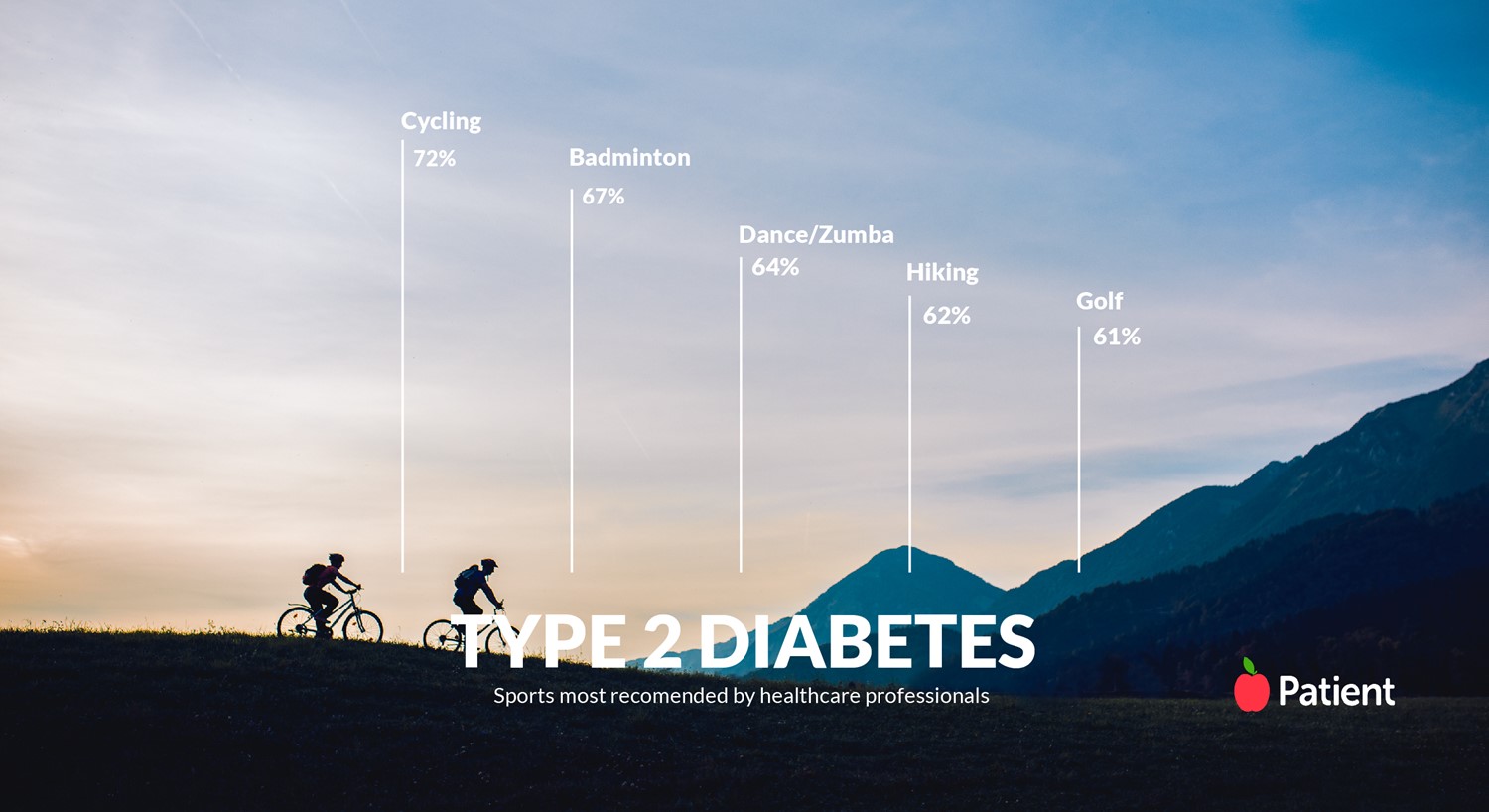
In our recent survey of 281 health professionals, a number of different physical activities were highly recommended by doctors. Top of the list were cycling (recommended by 71% of doctors), badminton (67%), and gymnastics/dance/Zumba® (64%). All of these are fun aerobic exercises likely to get your heart rate up.
The least recommended sports were skiing/snowboarding (40%), skateboarding/rollerblading (38%) and rugby (37%) - perhaps because older adults with type 2 diabetes are at particular risk of falls.
We asked healthcare professionals which are the best sports for type 2 diabetes
Get individualised advice
As Kathryn Kirchner, clinical advisor at Diabetes UK, explains, people with type 2 diabetes should be encouraged to do any sport or activity they enjoy, within the parameters of what is safe for them.
"Certain activities or movements might need to be avoided in the case of some diabetes complications or other medical conditions," she says. "Getting individualised exercise advice from a physiotherapist can be helpful, especially if you have existing injuries or medical conditions that make it hard to exercise."
If you’re planning on exercising vigorously, it is important to think about how this will affect your blood sugar levels. Diabetes UK advises that, if your blood sugar levels are below 7 mmol/L before exercising, you might need some extra carbohydrates to stave off hypoglycaemia (an episode of low blood sugar). Conversely, if your blood sugar levels are above 13 mmol/L, you probably need to increase your de l'insuline dose. This only applies if you're treated with insulin or tablets that can cause hypoglycaemia, such as sulfonylureas or glinides.
"Exercise can affect blood sugar levels both during and after exercise," says Kathryn Kirchner. "If you take medication which could lead to a hypo, it's a good idea to check your blood glucose levels before during and after exercise, and carry hypo treatment when exercising. People should check with their diabetes team about what are safe blood glucose levels for exercise and how to manage this."
Give yourself time to adapt
Although many people with type 2 diabetes are en surpoids, this does not need to be an impediment to getting fit. Have a chat with your GP first, to assess your overall health and fitness and work out an exercise plan that's right for you. For most adults, a good target to aim for is 150 minutes of moderate activity a week, plus two sessions of muscle-strengthening exercises.
However, this needs to be taken at your own level. If you haven't exercised in a while, it's crucial to ease into the new programme gradually, giving your body time to adapt.
"It's important to know if any complications of diabetes like retinopathy ou maladie cardiovasculaire, or other medical conditions, might impact on exercising safely," says Kathryn Kirchner. We recommend speaking to your healthcare team before starting any new activity."
How cycling can help
The leading activity in our survey, cycling, is ideal for many people with diabetes, not least because it can be easily interwoven into your day-to-day life. One étude showed that people with type 2 diabetes may be better off choosing cycling for exercise than walking, as it is associated with lower levels of pressure in the feet.
"Cycling is a fantastic activity for people to get active and improve their physical and mental health," says Rob Mace, development manager at British Cycling. "People with a pre-existing health condition like diabetes can access a lot of support to get active, and should consult their health professional for advice on how they can maintain or enhance their continual care through the activity."
If you’re cycling for a reasonable duration (longer than about 30 minutes) and take medicine that could cause hypoglycaemia, you will need to check your blood sugar regularly, consuming small amounts of sugar at frequent intervals. You'll also need to remain vigilant in the hours after your ride. However, if you take the appropriate precautions, cycling can be a great way to improve your overall health. There is even a professional cycling team, Team Novo Nordisk, all of whom have diabetes.
"Begin within your capabilities and gradually explore what you can do. You can access support through some of British Cycling’s clubs or programmes where you will be able to discuss your needs with staff and trained volunteers, and access activities of the appropriate intensity and duration," says Rob Mace.
Sélections des patients pour Diabète de type 2
Diabète
Pourquoi les contrôles du diabète de type 2 sont-ils si importants
Plus de 4,9 millions de personnes vivent actuellement avec le diabète au Royaume-Uni, dont environ 90 % avec le diabète de type 2. Cependant, la perturbation causée par la pandémie a conduit de nombreuses personnes à arrêter leurs contrôles réguliers du diabète de type 2, ce qui les expose à un risque accru de complications graves pour la santé.
par Dr Sarah Jarvis

Diabète
Gérer le diabète de type 2 avec l'exercice
L'exercice aide à abaisser le taux de sucre dans le sang, améliore l'efficacité de l'insuline et favorise l'atteinte d'un poids santé - tous des éléments essentiels pour gérer le diabète de type 2. Être régulièrement actif contribue également à améliorer votre bien-être mental et vos niveaux d'énergie. Lisez la suite pour découvrir comment faire de l'exercice en toute sécurité et efficacité avec le diabète de type 2.
par Lawrence Higgins
À propos de l'auteurVoir la biographie complète

Abi Millar
Journaliste indépendant
BA (Hons), MA
Abi est une journaliste indépendante avec un intérêt particulier pour l'écriture sur la santé et la médecine.
À propos du critiqueVoir la biographie complète

Dr Sarah Jarvis
Consultant Clinique
MA (Cantab), BM, BCh (Oxon), DRCOG, FRCGP, MBE
Après avoir suivi une formation en médecine à Cambridge et Oxford, le Dr Sarah Jarvis MBE est devenue médecin généraliste.
Historique de l'article
Les informations sur cette page sont examinées par des cliniciens qualifiés.
Article également disponible en Anglais, Allemand, Espagnol, Français, Italien, Portugais, Hindi, Hébreu, Arabe, and Suédois.
25 Jan 2018 | Publié à l'origine
Écrit par :
Abi MillarRevu par
Dr Sarah Jarvis

Demandez, partagez, connectez-vous.
Parcourez les discussions, posez des questions et partagez vos expériences sur des centaines de sujets de santé.

Vous ne vous sentez pas bien ?
Évaluez vos symptômes en ligne gratuitement
Inscrivez-vous à la newsletter Patient
Votre dose hebdomadaire de conseils de santé clairs et fiables - rédigés pour vous aider à vous sentir informé, confiant et maître de la situation.
En vous abonnant, vous acceptez notre Politique de confidentialité. Vous pouvez vous désabonner à tout moment. Nous ne vendons jamais vos données.
Plus sur le diabète
- Peut-on inverser le diabète de type 2 ?
- Changements dans les soins du diabète de type 2 - ce que cela signifie pour vous
- Changer vos habitudes alimentaires après un diagnostic de diabète de type 2
- Surveillance continue de la glycémie dans le diabète de type 1
- Le diabète augmente le risque d'insuffisance cardiaque, particulièrement chez les femmes
- Mythes et idées fausses sur le diabète
- Aliments sains pour Hanoucca pour votre poids, cœur et diabète
- Comment j'ai inversé mon diabète de type 2 - L'histoire de Matt
- Comment la technologie change le diabète
- Comment manger au restaurant avec le diabète
- Gérer le diabète de type 2 avec l'exercice
- Adopter un régime à base de plantes réduit le risque de diabète de type 2
- L'avenir du traitement du diabète
- Le lien entre le diabète et les troubles de santé mentale
- Comprendre le jargon du diabète
- Qu'est-ce qu'une « hypo » et peut-on en avoir une si on n'a pas de diabète ?
- Qu'est-ce que la diabulimie ?
- Qu'est-ce que la surveillance du glucose en continu et comment peut-elle aider les personnes atteintes de diabète ?
- Pourquoi prendre soin de vos pieds est si important si vous êtes diabétique
- Pourquoi les contrôles du diabète de type 2 sont-ils si importants