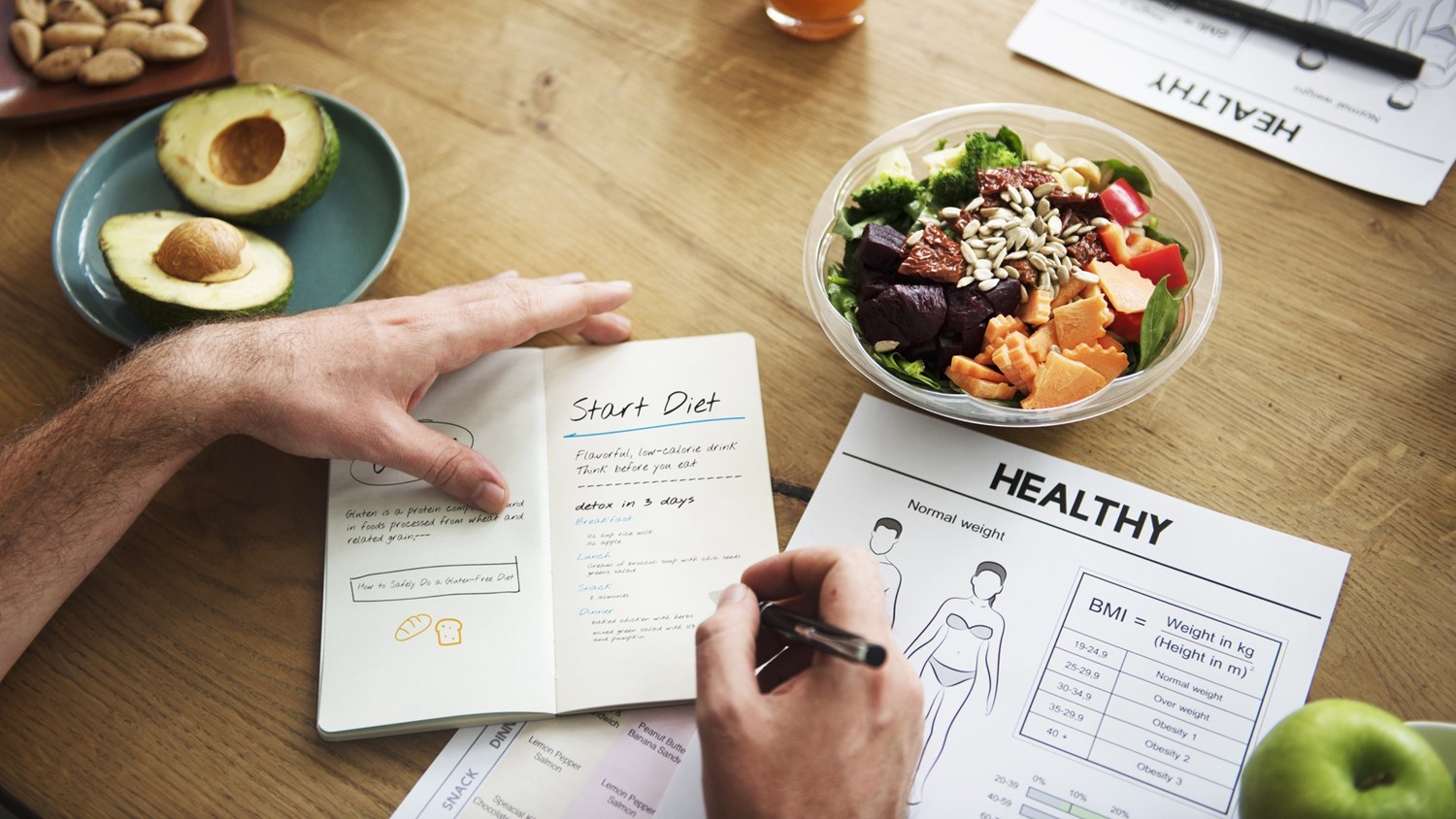
Feuille de régime pauvre en graisses
Revu par Dr Krishna Vakharia, MRCGPDernière mise à jour par Amberley DavisDernière mise à jour 30 Apr 2024
Respecte les directives éditoriales
- TéléchargerTélécharger
- Partager
- Language
- Discussion
- Version audio
- Ajouter aux sources préférées sur Google
A diet that is generally low in fat can help you to lose weight, or to maintain a healthy weight. This is important, because by maintaining a healthy weight, you reduce your chances of heart disease, stroke, diabetes and certain types of cancer. A low fat diet can also help other conditions, such as gallstones.
Explore oral weight loss treatments
Get expert healthcare advice from the comfort of home. Complete a quick online consultation, available 24/7, with your request reviewed by a UK-registered clinician. Next day delivery available on eligible treatments.

Is fat bad for me?
For several decades, the standard advice to people who want to lose weight has been to eat a low-fat diet. A diet which is low in fat and high in fruit, vegetables whole grain fibre is likely to be healthy. This is why it is the basis of many weight loss programmes such as Weightwatchers and Slimming World.
However, evidence suggests that a diet high in carbohydrates - particularly sugar - is a common trigger for obesity in many people and that eating fat is not what makes us gain weight. In this case, a low carbohydrate diet may be an effective way to lose weight - if approached in a healthy way.
So which should you choose? Research shows both low-fat and low-carbohydrate diets can be effective1. You should find an eating pattern that works well for you, taking into account your lifestyle and what sort of foods you like.
Fat content by food type
The following table is a rough guide to which foods are higher or lower in fat. Different brands may vary in their fat content - get into the habit of looking at labels when you shop and learn which brands are lower in fat. Fat consumption will also depend on portion size.
Food type | Low-fat foods | Medium-fat foods | Higher-fat foods |
Cereal foods | Bread and flour, oats, breakfast cereals (though most are high in sugar), rice and pasta are all low in fat but the higher-fibre varieties have other benefits too. | Plain biscuits. Plain or fruit scones. | Croissants. Fried bread. Most cakes and biscuits. Pâtisseries. Suet pudding. |
Fruit, vegetables and nuts | All fresh, frozen or tinned vegetables and fruit. Dried beans and lentils. Baked or boiled potatoes. Dried fruit. | Oven chips are lower in fat than fried chips.
| Chips. Fried or roast potatoes. Fried, creamed, buttered or cheesed vegetables. Crisps and potato snacks. Coconut. Brazils. Roasted peanuts. |
Poisson | All white fish. Fruits de mer. | Oily fish such as tuna (fresh, not tinned), herring, mackerel, sardines, kippers, pilchards, or salmon. These contain healthy omega-3 fats. | Fish roe. Caviar. |
Viande | Lean white meat such as chicken and turkey breast (without skin). | Lean ham, beef, pork and lamb. Lean mince. Liver and kidney. | Visible fat on meat. Crackling. Sausages. Pâtés. Duck, goose. Meat pies and pasties. |
Eggs, dairy foods | Skimmed or semi-skimmed milk. Cottage or curd cheese. Low-fat yoghurt. Egg whites. | Feta cheese Camembert. Œufs. | Whole milk. Cream. Glace. Most hard cheeses. Chocolat. Cream cheese. |
Fats and spreads | None. | Low-fat spreads. Margarine high in polyunsaturates. Corn oil, sunflower oil and olive oil. | Butter. Dripping and lard. Margarine not high in polyunsaturates. |
Drinks and soups | Tea and coffee. Mineral water. Fruit juices. | Packet soups. | Cream soups. Milky drinks. |
Low-fat diets and your weight
Energy in food is measured in calories - also known as kcal. It was thought that if you want to lose weight, you need to eat fewer calories per day than you burn off. However, the science around losing weight is changing and we know there are a lot of factors involved in weight gain and weight loss.
Foods which are high in fat contain a lot of calories, so cutting down on fatty foods is one way of helping perdre du poids. Very sugary foods also contain quite a lot of calories, but fat contains around twice as many calories as sugar per 100g. If you have gallstones, cutting out fats is incredibly important, which is where a low fat diet will be useful.
Voir Alimentation Saine et Weight Reduction - How to Lose Weight for more information.
More about fats
Not all fat is bad. Although all fats are high in calories, we need some fat in our diet as some types are good for our health. For example, vitamins A,D,E and K dissolve in fat, which helps our bodies absorb them. A low-fat diet might affect our intake of these vitamins.
The different types of fat include the following:
1. Saturated fats - bad for your heart
Saturated fats are mainly found in animal products such as meat, in lard, and in dairy products such as butter and full-cream milk. Meat and produits laitiers products have a useful role in a healthy diet - however, it's better to avoid the fattier cuts of meat and use semi-skimmed or skimmed milk. Eating less saturated fat may reduce your risk of having a heart attack.
Some cheeses are high in fat - particularly cream cheese and hard cheeses such as cheddar and parmesan. But you may find that a smaller portion of a more strong-tasting cheese is more satisfying than a larger amount of softer cheese which may be lower in fat.
2. Trans fats - generally bad
Trans fats are oils which have come from vegetables but have been processed to make them hard, so that they are easier to use in food. They are often used in processed foods, and in commercially made cakes, biscuits and pastries. Food labels may call them partially hydrogenated oils. Trans fats are generally bad for you and there is no place for them in a régime alimentaire sain.
3. Unsaturated fats - good for you
These mainly come from légumes, nuts and fruits. They are divided into:
Polyunsaturated fats, such as sunflower oil and corn oil.
Mono-unsaturated fats, such as olive oil and rapeseed oil.
Omega-3 fatty acids. These come mainly from oily fish such as pilchards, sardines, salmon, mackerel and fresh (not tinned) tuna. Omega-3 fatty acids are also present in some nuts and seeds, especially linseeds.
Omega-3 fatty acids may help prevent heart disease and improve your health in other ways.
See our Cholestérol page for more details about reducing your cholesterol level.
Unsaturated fats contain as many calories as saturated fats, but can form part of a healthy diet. If you are trying to lose weight, just make sure that you are not eating too much unsaturated fat.
Food labels
Foods contain a mixture of saturated and unsaturated fats. Food labels often list the amounts of each type of fat in the food - or at least how much of the fat in the food is saturated.
As a rule, we should aim to limit our intake of saturated fats and, when we use fats and oils, mainly choose those high in unsaturated fats.
Food labels also show how many calories are in the food. So, it is good to get into the habit of reading food labels when you shop.
Pour en savoir plus
Explore oral weight loss treatments
Get expert healthcare advice from the comfort of home. Complete a quick online consultation, available 24/7, with your request reviewed by a UK-registered clinician. Next day delivery available on eligible treatments.
Sélections des patients pour Régime alimentaire
Régime et nutrition
Les régimes du Nouvel An fonctionnent-ils vraiment ?
Nous connaissons tous l'expression « nouvelle année, nouvelle moi ». Janvier est le moment où beaucoup de personnes prennent des résolutions pour faire plus d'exercice et manger plus sainement. Cependant, si vous commencez un régime pour la nouvelle année, quelles sont les chances qu'il soit réellement couronné de succès ? Peut-il améliorer votre santé globale à long terme et être durable ?
par Emily Jane Bashforth
Régime et nutrition
Le régime keto : qu'est-ce que c'est et est-ce efficace ?
Les régimes pauvres en glucides deviennent de plus en plus établis dans le monde de la nutrition, mais qu'en est-il de leur cousin plus extrême, le régime cétogène ? Prôné par les célébrités hollywoodiennes pour brûler les graisses, réduire l'appétit et gérer la glycémie, est-il vraiment à la hauteur de sa réputation ? Et qu'en est-il des risques ?
par Dr Carrie Ruxton, PhD, Nutrition de l'enfant
À propos de l'auteurVoir la biographie complète
Mis à jour par

Amberley Davis
Rédacteur senior
BA (Hons), CPD
Amberley est une rédactrice senior chez Patient et a écrit de manière approfondie sur une gamme de sujets liés à la santé et au bien-être.
Rédigé par

Dr Jan Sambrook, MRCGP
Médecin généraliste, Auteur médical
MBChB, MRCGP
Le Dr Jan Sambrook a obtenu son diplôme de l'Université de Sheffield en 1992.
À propos du critiqueVoir la biographie complète

Dr Krishna Vakharia, MRCGP
Médecin-chef pour la santé, Optum UK
MBChB, MRCGP(2013), BMedSci (hons), DFSRH, DRCOG, PGDipDerm (Distn)
Le Dr Krishna Vakharia est un médecin généraliste du NHS. Elle est également examinatrice régulière pour le diplôme de troisième cycle en dermatologie pratique à l'Université de Cardiff, ainsi que médecin-chef pour la santé chez Optum UK.
Historique de l'article
Article également disponible en Anglais, Allemand, Espagnol, Français, Italien, Portugais, Hindi, Hébreu, Arabe, and Suédois.
Prochaine révision prévue : 2 mai 2027
30 Apr 2024 | Dernière version
10 oct. 2017 | Publié à l'origine
Écrit par :
Dr Jan Sambrook, MRCGP
Participez à la conversation
Partagez vos pensées ou expériences avec les autres dans notre communautés de patients.

Demandez, partagez, connectez-vous.
Parcourez les discussions, posez des questions et partagez vos expériences sur des centaines de sujets de santé.

Vous ne vous sentez pas bien ?
Évaluez vos symptômes en ligne gratuitement
Inscrivez-vous à la newsletter Patient
Votre dose hebdomadaire de conseils de santé clairs et fiables - rédigés pour vous aider à vous sentir informé, confiant et maître de la situation.
En vous abonnant, vous acceptez notre Politique de confidentialité. Vous pouvez vous désabonner à tout moment. Nous ne vendons jamais vos données.