
Qu'est-ce qu'un régime pauvre en glucides et est-il sain ?
Revu par Dr Colin Tidy, MRCGPDernière mise à jour par Heather AinsworthDernière mise à jour 2 juin 2025
Respecte les directives éditoriales
- TéléchargerTélécharger
- Partager
- Language
- Discussion
- Version audio
- Ajouter aux sources préférées sur Google
En matière d'alimentation saine, chaque groupe alimentaire est important. Cela inclut les glucides, le groupe alimentaire riche en énergie qui alimente tout ce que nous faisons, de la respiration à la course. Cependant, comme les aliments riches en glucides fournissent beaucoup d'énergie, les régimes pauvres en glucides ont été adoptés par des personnes souhaitant perdre du poids de manière significative.
What is a low-carb diet?
A low-carb diet limits your consumption of foods that are high in carbohydrates (carbs) such as bread, pasta, rice, and sugary foods. When you digest carbs they turn into glucose, a type of sugar that your body uses for energy. For this reason, a low-carb diet might be used to aid general régime amaigrissant, or to help people with diabète manage their blood sugar levels.
How does a low-carb diet work?
When you consume less energy through food than your body needs, it takes and burns the energy it requires from stores of fat - a process known as ketosis1. You can trigger fat burning by reducing your intake of carbs and, therefore, energy. This may result in you losing a significant amount of weight.
Types of low-carb diets
Popular low-carb diets include:
Régime Atkins - a low-carb, high protein and fat diet.
Ketogenic diet - a low-carb, high-fat diet.
Régime Dukan - a low-carb, high-protein diet.
régime paléo - a low-carb, high-protein, high fibre diet.
The popularity of such diets - helped in part by the celebrities who promote them - has given carbs a bad reputation, but it's important to understand that there are healthy high-carb foods. The fact of the matter is everyone needs carbs in order to perform essential bodily functions and physical activities.
What are the benefits of a low-carb diet?
Perte de poids
Low-carb diets help with weight loss by triggering fat burning instead of storing it. These diets also typically include more protein and healthy fats which help keep you fuller for longer - meaning you'll naturally consume fewer calories as your appetite reduces.
However, it is still possible to gain weight when eating low-carb food. Registered dietitian Rachel Ball explains:
"Reducing carbohydrates in your diet may lead to you increasing your intake of fat, which is actually higher in calories than carbohydrates, gram for gram. If you are looking into a low-carb diet for weight loss alone, remember that it is the total calorie intake that is most important, and that there are risks of nutritional deficiency when cutting down a whole food group."
"A low-carb diet is not special or superior to any other method of reducing calorie intake. Some people may find that limiting their carbohydrate intake helps them lose weight, but you should not cut out all carbohydrates. A better method is to base meals on vegetables and low-fat proteins in order to maintain a calorie deficit."
Gérer le diabète de type 2
Carbohydrates are one of the main reasons for a rise in blood sugar levels. By eating fewer carbs you can reduce your blood glucose and HbA1c levels, allowing for better management of type-2 diabetes.
Ball further explains "If your goal is to reverse diabète de type 2, a low-carb diet is one strategy for rapid and significant weight loss. However, this must be with the support of your doctor and dietitian, as your medication doses may need to be changed."
Improved heart health
Low-carb diets can lower blood pressure and triglyceride levels - the amount of fat in blood, and improve cholesterol levels - which are all important for maintaining a healthy heart.
Fat loss - particularly visceral fat - can have a significant impact on your heart health by reducing the risk of high blood pressure and high cholesterol whilst helping to improve blood vessel function.
How many carbs are in a low-carb diet?
A low-carb diet isn't itself a meal plan with a rigid set of rules. This said, the Scientific Advisory Committee on Nutrition (SACN) has produced a report2 on lower carbohydrate diets for adults with type 2 diabetes in which it uses the following categories:
Very low-carb/keto diet - 20-50 grams of carbs per day (g/day).
Low-carb - 50-130 g/day.
Moderate-carb - 130-230 g/day.
High-carb - more than 230 g/day.
Ball recommends that people who have type 2 diabetes and are en surpoids should aim for around 50 - 130g of carbs per day.
"However, many low-carb diet plans fail to define the actual foods you're allowed, and so it is unclear how you can get to these results. Some plans may have a target of total carbs in grams, while others may exclude or limit all grains, potatoes, and rice. This is another reason there is no robust agreement in terms of recommended amounts of carbohydrates."
What foods can you eat on a low-carb diet?
Foods that you can eat on a low-carb diet typically include:
Fish and seafoods - salmon, tuna, cod, and mackerel.
Lean meats - chicken breast and pork.
Nuts and seeds - peanuts, walnuts, and pumpkin seeds.
Low-carb fruits - blueberries, strawberries, and watermelon.
Leafy greens - kale, spinach, and cabbage.
Dairy products - cheese, unsweetened yoghurts, and cream.
Œufs.
What to eat on a low-carb diet
What foods should you avoid on a low-carb diet?
Foods you should limit on a low-carb diet typically include:
Breads - white bread, whole wheat bread, multigrain bread, bagels, baguettes, and sourdough.
White pasta and noodles.
Rice - white, brown, basmati, and jasmine.
Sugary cereals and cereal bars.
Baked goods - pastries, pies, muffins, and cakes.
Sugar foods - sweets, chocolate, ice-cream, sweetened yoghurts, honey, and syrup.
Sugary drinks - full-fat soda, fruit juices, smoothies, and energy drinks.
Is a low-carb diet healthy?
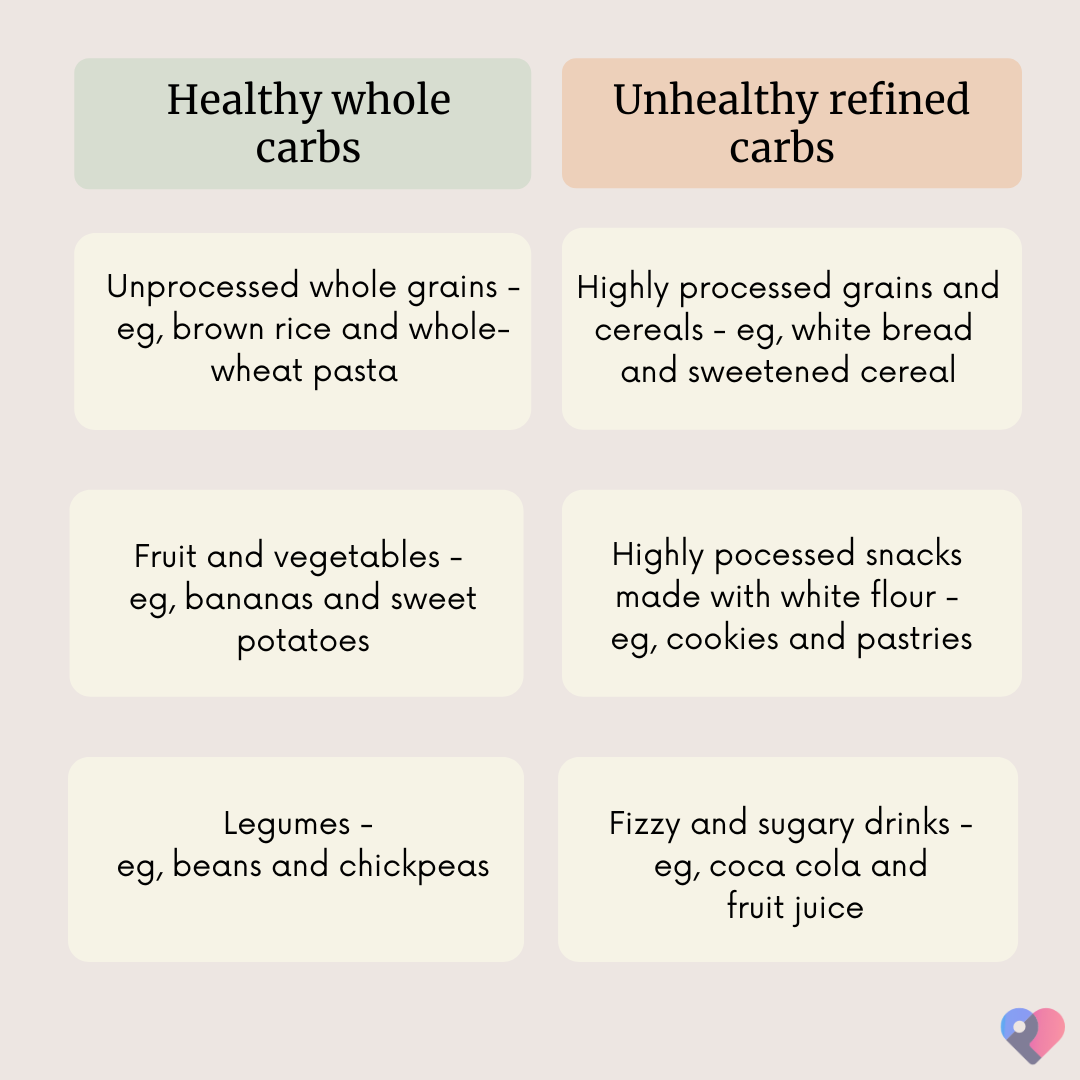
A healthy, well-balanced diet should include all food groups, and so it's important not to take carb restrictions too far. If you are limiting high-carb foods, make sure that you are making healthy carb food choices. The most common forms are sugars, fibres, and starches. These are further divided into:
Whole and complex carbs - these are considered healthy because they are minimally processed and are naturally high in fibre as well as other important vitamins and minerals.
Refined and simple carbs - these have been processed more which removes fibre. Highly processed foods generally lack other nutrients and contain added sugar, which can cause spikes in blood glucose levels. Simple carbs also contain easily digested carbohydrates, making weight gain more likely.
As far as research goes, the safety and risk factors of following a low-carb diet have been a subject of controversy. In part, this is because these diets are often poorly defined, making it hard to compare studies.
What's more, while there is clear evidence that a low-carb diet can aid weight loss, and help to manage blood glucose levels in diabetes, the long-term health effects of following this diet are unknown3.
Many experts believe that a side effect of a low or very low intake of carbs can result in a nutritionally poor diet, and this may affect a person's overall health4.
When is a low-carb diet not always recommended?
Si vous êtes insuffisance pondérale - you should avoid all restrictive diets, including low-carb diets, as this can seriously damage your health, including health problems related to nutritional deficiencies and to your body functions working properly.
If you have experienced an eating disorder - you should avoid all diets as this could cause a relapse of your condition.
Si vous avez diabète de type 1 - the most important factor for managing blood glucose for this form of diabetes is the appropriate insulin dose. Low-carb diets could be dangerous if you are taking insulin, so always discuss dietary changes with your diabetes healthcare professionals.
It's not always appropriate if you have type 2 diabetes - your healthcare professional will advise on the best treatment options for you, including other lifestyle factors and medications.
It's not always appropriate if you are overweight or obese and at a high risk of developing type 2 diabetes - making certain lifestyle changes while maintaining a diet relatively rich in good carbs is generally considered to be a safe and effective strategy in the prevention of type 2 diabetes4. If you have been told you are at risk of type 2 diabetes, always follow the medical advice of your healthcare professional.
Pour en savoir plus
Sélections des patients pour Régime alimentaire
Régime et nutrition
Votre alimentation pourrait-elle être votre meilleur secret anti-âge ?
When we think about anti-ageing, our attention often turns to outward signs - fewer wrinkles, a trimmer figure, and hair less touched by grey. However, by prioritising what's happening inside our bodies, we can live a longer, healthier life, both inside and out.
par Victoria Raw

Régime et nutrition
Qu'est-ce que le régime Ornish et peut-il transformer votre santé ?
The Ornish diet is a plant-based plan, originally developed by Dr Dean Ornish as a way of preventing and reversing heart disease. It promotes a diet low in fat, and high in fibre, alongside significant lifestyle changes. It encourages you to reduce your intake of sugar and processed foods, while incorporating regular exercise, and managing stress.
par Victoria Raw
À propos de l'auteurVoir la biographie complète

Amberley Davis
Rédacteur senior
BA (Hons), CPD
Amberley est une rédactrice senior chez Patient et a écrit de manière approfondie sur une gamme de sujets liés à la santé et au bien-être.
À propos du critiqueVoir la biographie complète

Dr Colin Tidy, MRCGP
Médecin généraliste, Auteur médical
MBBS, MRCGP, MRCP (Paediatrics), DCH
Le Dr Colin Tidy est un médecin du NHS, basé dans l'Oxfordshire.
Historique de l'article
Les informations sur cette page sont examinées par des cliniciens qualifiés.
Article également disponible en Anglais, Allemand, Espagnol, Français, Italien, Portugais, Hindi, Hébreu, Arabe, and Suédois.
Prochaine révision prévue : 2 juin 2028
2 juin 2025 | Dernière version
25 Jun 2022 | Publié à l'origine
Écrit par :
Amberley Davis

Demandez, partagez, connectez-vous.
Parcourez les discussions, posez des questions et partagez vos expériences sur des centaines de sujets de santé.

Vous ne vous sentez pas bien ?
Évaluez vos symptômes en ligne gratuitement
Inscrivez-vous à la newsletter Patient
Votre dose hebdomadaire de conseils de santé clairs et fiables - rédigés pour vous aider à vous sentir informé, confiant et maître de la situation.
En vous abonnant, vous acceptez notre Politique de confidentialité. Vous pouvez vous désabonner à tout moment. Nous ne vendons jamais vos données.
Plus sur l'alimentation et la nutrition
- 9 bienfaits des graines de chia pour la santé
- Les suppléments de collagène peuvent-ils améliorer votre santé ?
- Le régime alimentaire peut-il affecter votre TDAH ?
- Le jus d'aloe vera aide-t-il vraiment à la santé intestinale ?
- Régime de fertilité : quoi manger lorsque vous essayez de tomber enceinte
- Passez un Ramadan heureux et en bonne santé
- Les bienfaits de l'ail pour la santé
- Comment être vegan pendant la grossesse ou l'allaitement
- Comment se débarrasser des gaz intestinaux : remèdes maison efficaces
- Comment votre alimentation peut aider à prévenir le diabète de type 2
- Le curcuma est-il bon pour vous ?
- Jus : Est-ce que presser des fruits et légumes est bon pour nous ?
- Kimchi et choucroute : Quels sont les bienfaits de la consommation d'aliments fermentés ?
- Régime pour le SOPK : Que manger pour gérer les symptômes
- Le dernier superaliment - pourquoi tout ce tapage autour des micro-pousses ?
- Quels sont les dangers d'un régime détox ?
- Quels sont les bienfaits pour la santé des aliments épicés ?
- Ce que vous devez savoir sur les aliments malsains
- Pourquoi l'estomac pour le dessert pourrait être réel
- Pourquoi cultiver vos propres aliments pour votre santé ?