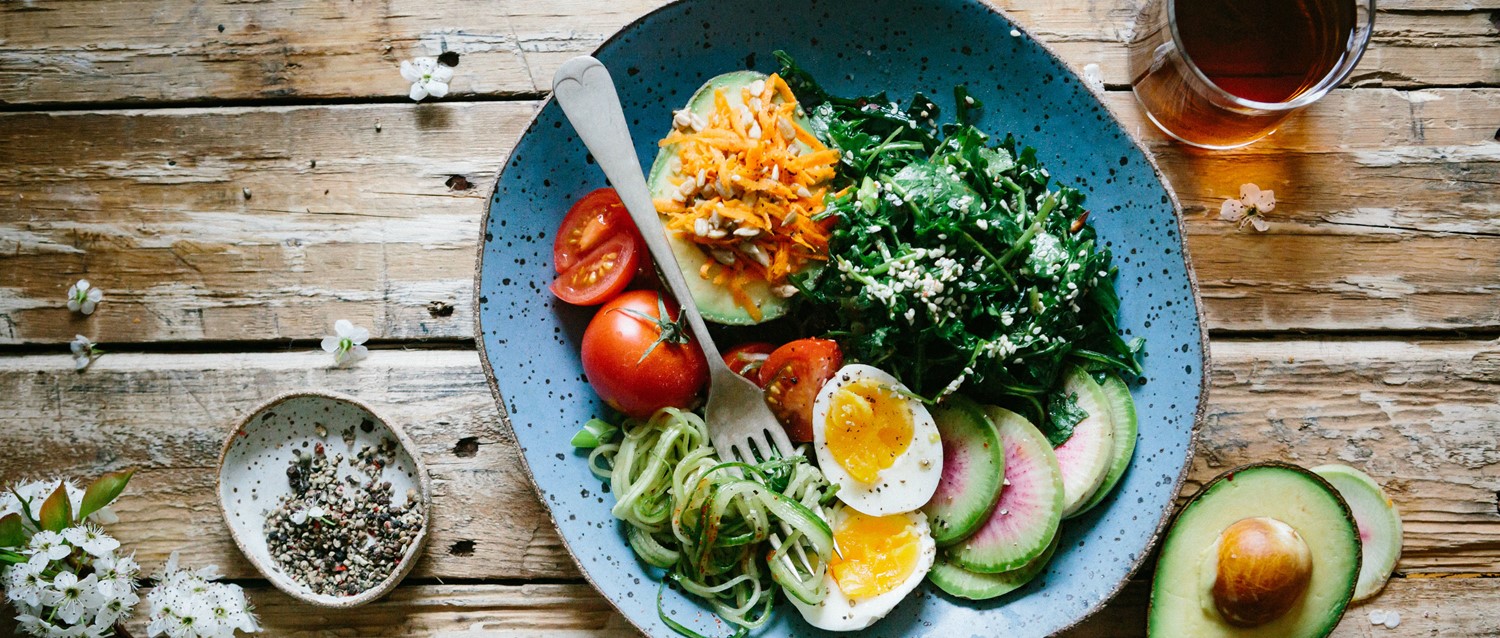
Comment manger plus de légumes sans effort
Revu par Dr Sarah JarvisRédigé par Natalie HealeyPublié à l'origine 5 janv. 2018
Respecte les directives éditoriales
- TéléchargerTélécharger
- Partager
- Language
- Discussion
- Version audio
- Ajouter aux sources préférées sur Google
Trying to eat more fruit and veg is a promise most of us make to ourselves on a regular basis. But it doesn't often feel like the easiest (or most appealing) undertaking. Luckily, we ask an expert how to sneakily up your tally.
Veg benefits
We all know that fruit and vegetables are good for us, but why? Well, if we go back to that recent study, researchers found that a plate piled high with greens boosts your chances of living a long life and reduces your risk of many chronic conditions, from cancer to diabète de type 2.
GP and nutrition expert Jan Sambrook explains further:
"Having a low intake of fruit and vegetables is estimated to cause about 19% of cancers of the digestive system, 31% of heart disease and 11% of les AVC."
GP Dr Rupy Aujla agrees. In his recipe book The Doctor's Kitchen, he says: "You can lower your risk of stroke, cancer and maladies cardiaques by increasing your fruit and vegetable intake. Eat mostly plants and you'll stand a better chance of living a healthier, more vibrant and fulfilling life, free of disease."
But how do fruit and vegetables prevent disease?
Antioxidants
Fruit and vegetables are rich in vitamins and minerals which keep the body healthy. They also contain chemicals called antioxidants which are thought to protect the body against damaging chemicals.
Fibre
Fruit and vegetables are packed with fibres. This can help to control cholestérol levels and keep blood sugar levels steady. Plus, fibre helps to keep you regular and avoid constipation.
You eat less of the bad stuff
Eating fruit and vegetables can help to replace other foods that are high in fat, salt and sugar, which further helps to reduce our risk of these diet-related diseases.
What counts as a portion?
Sambrook suggests the following guide for those confused about what really counts as one of your five a day.
One large fruit such as an apple, pear, banana, orange, or a large slice of melon.
Two smaller fruits such as plums, kiwis, satsumas, clementines.
One cup of small fruits such as grapes, strawberries, raspberries, cherries.
Two large tablespoons of fruit salad, stewed fruit or canned fruit.
Une cuillère à soupe de fruits secs.
One glass of fresh fruit juice (150 ml).
A normal portion of any vegetable (about two tablespoons).
Un bol à dessert de salade.
Three heaped tablespoons of beans, pulses or lentils.
A word on fruit juice
Sambrook points out that a 150 ml glass of fruit juice counts as only one of your 'five a day', even if you have more than one glass.
"This is because during processing much of the fibre has been removed and the sugar is released from the plant cells, meaning there are higher levels of 'free sugars'."
However, fruit juice still has many benefits not found in fizzy drinks, squashes and 'fruit juice drinks' and nectars. These all have added sugar, while by definition pure fruit juice isn't allowed to have any sugar added. In addition, fruit juice helps with absorption of iron if it's taken as part of a meal. A glass of juice provides 25% of your RDA (recommended daily allowance) of folate and contributes to the potassium in your diet. It contains a wide variety of phytonutrients, which aren't affected by processing. A glass of orange juice provides 100% of the RDA of vitamin C.
How much is enough?
The UCL team found that although the recommended five portions of fruit and vegetables a day reduced the risk of disease, the greatest benefit came from eating roughly ten portions. However, while this study and other research suggests that the more fruit and vegetables you eat, the better, five a day is still a much more realistic target for most people
Dr Alison Tedstone, chief nutritionist at Public Health England, explained to the BBC that, "Whilst consuming more than five portions of fruit and vegetables a day may be desirable, adding pressure to consume more fruit and vegetables creates an unrealistic expectation."
Don't feel too dismayed if ten just doesn't seem quite achievable and work on more generally boosting your vegetable intake.
How to sneak more veg into your meals
It's easier than you think. You'll soon see that fruit and veg add colour, flavour and texture to any dish and make it go a lot further too. Here are some easy ways to include more nutrients in your diet:
Taste the rainbow
No one fruit or vegetable contains all the nutrients you need, so it is good to have a variety and include fruit and vegetables of all different colours. Ditch the beige and embrace the rainbow.
"Different colours of fruits mean different combinations of vitamins, minerals and antioxidants," Sambrook reveals.
Branch out
Variety is the spice of life - so try a fruit or vegetable you've never tasted before. You might find something you absolutely love. Perhaps try one new fruit or vegetable each week.
Pimp up your porridge
Try adding chopped bananas, apples, or dried fruits to breakfast cereals. And instead of a fruit yoghurt, have a piece of fruit with a dollop of natural yoghurt.
Stock up on tinned tomatoes
Aim to include at least two different vegetables with most main meals. Add tomato purée and/or tinned chopped tomatoes as a pasta sauce or in casseroles and stews.
Get steamy
Sometimes nutrients are lost or destroyed during cooking, so Sambrook suggests eating fruit and vegetables raw when possible, and try to avoid over-cooking them.
"Try poaching, steaming or microwaving rather than boiling. These methods help to reduce the amounts of nutrients lost or destroyed. If you do boil vegetables, the water can be used in stocks, sauces or soups."
Packed lunch fun
Ditch those soggy sarnies. How about cherry tomatoes, carrot sticks, dried apricots, or other fruits as part of packed lunches? A pot of hummus counts too! A banana and peanut butter sandwich is another idea. And another easy fix when making sandwiches is to add in cucumber, tomato, lettuce or avocado to accompany the main filling.
Take the pulse
Bulk out meals with vegetables, beans (yes, that includes baked beans!) and pulses. For example, when making a Bolognese, add in chopped mushrooms, red peppers and some kidney beans. This also helps to make meals go further.
What doesn't count?
Sometimes, we might think something counts as a portion of fruit and vegetables, but we can be mistaken. Boo! Here are some common misunderstandings, according to Sambrook.
Pommes de terre
"Potatoes, yams, cassava and plantain: these contain more starch than anything else, so they don't count as a portion." Sweet potatoes do count though.
Fruitcake/fruit yoghurts
"These contain little fruit and also have added sugar, fat and other ingredients. So we should be trying to keep these to a minimum in the diet."
Fruit-flavoured soft drinks
"These usually contain minimal fruit and are high in sugar."
Tomato ketchup, jam and chutneys
"These have high salt/sugar content." Try tomato purée instead.
How to eat 'five a day' on a budget
Eating healthily doesn't always feel like bang for your buck, especially when supermarkets tempt you with 'buy one get one free' offers on confectionery and ready meals. But getting at least five portions of fruit and vegetables each day doesn't have to be expensive. Remember, vegetables are almost always going to be cheaper than meat.
Sambrook suggests: "Make use of markets. You can often get bargains there. And always choose loose fruit in the supermarkets - it's often much cheaper than buying pre-packaged."
Try to buy in season - that's when fruit and vegetables tend to be cheaper. And don't dismiss frozen veg - it's often cheaper, just as nutritious and you don't need to worry about it going off too quickly. What's more, tinned vegetables and fruit also count - although you should choose fruit preserved in juice rather than syrup. What's more, they retain their vitamin content for longer than fresh vegetables.
Adding beans and pulses to stews can eke out the more expensive meat. Even better, slow-cooked stews with added pulses allow you to choose cheaper cuts of meat as well as boosting your vegetable intake.
Finally, if you haven't managed to eat your vegetables fast enough, and they're looking a little sad at the back of your fridge, turn them into soup! You can even freeze it to eat later.
Suddenly, 10 a day doesn't seem so impossible after all. For starters, give our baked cod with ratatouille recipe a whirl.
Sélections des patients pour Alimentation saine

Régime et nutrition
Comment avoir un barbecue plus sain
With its unbroken stretch of sunny days, this has truly been a barbecue summer. How better to spend a hot weekend than in a friend's back garden, burgers sizzling on the grill and a jug of Pimms at the ready?
par Abi Millar

Régime et nutrition
Le jeûne intermittent est-il sain ?
Intermittent fasting is a popular way to lose weight, with recipe collections, diet plans and apps dedicated to it. Going between periods of fasting and eating may help people manage their weight and health, according to research - and may even help to reduce the risk of diseases such as type 2 diabetes. But how does it work and is it safe?
par Lydia Smith
À propos de l'auteurVoir la biographie complète
Rédigé par

Natalie Healey
Journaliste indépendante
Licence (Hons) en Sciences Biomédicales
Elle est une journaliste de santé basée à Londres qui écrit sur la science et la médecine depuis plusieurs années. Elle est l'ancienne responsable éditoriale chez Patient.
À propos du critiqueVoir la biographie complète

Dr Sarah Jarvis
Consultant Clinique
MA (Cantab), BM, BCh (Oxon), DRCOG, FRCGP, MBE
Après avoir suivi une formation en médecine à Cambridge et Oxford, le Dr Sarah Jarvis MBE est devenue médecin généraliste.
Historique de l'article
Article également disponible en Anglais, Allemand, Espagnol, Français, Italien, Portugais, Hindi, Hébreu, Arabe, and Suédois.
5 janv. 2018 | Publié à l'origine
Écrit par :
Natalie HealeyRevu par
Dr Sarah Jarvis
Participez à la conversation
Partagez vos pensées ou expériences avec les autres dans notre communautés de patients.

Demandez, partagez, connectez-vous.
Parcourez les discussions, posez des questions et partagez vos expériences sur des centaines de sujets de santé.

Vous ne vous sentez pas bien ?
Évaluez vos symptômes en ligne gratuitement
Inscrivez-vous à la newsletter Patient
Votre dose hebdomadaire de conseils de santé clairs et fiables - rédigés pour vous aider à vous sentir informé, confiant et maître de la situation.
En vous abonnant, vous acceptez notre Politique de confidentialité. Vous pouvez vous désabonner à tout moment. Nous ne vendons jamais vos données.