
Qu'est-ce que le bain de forêt et peut-il améliorer votre santé ?
Revu par Dr Colin Tidy, MRCGPRédigé par Hannah Boynton-ForshawPublié à l'origine 28 Jul 2026
Respecte les directives éditoriales
- TéléchargerTélécharger
- Partager
- Language
- Discussion
- Version audio
- Ajouter aux sources préférées sur Google
Life can feel pretty busy and overwhelming. We spend so much time looking down at our phone screens, that our minds, and our necks, have little opportunity to rest. This is where forest bathing can help - a gentle practice of slowing down and immersing yourself in nature, which can also support your mental and physical wellbeing.
We spoke to a clinical therapist to demystify what forest bathing is, and how you can get involved.
What is forest bathing?
Forest bathing - also known as ‘shinrin-yoku’ - originated in Japan in the 1980s. It was developed as a response to rises in anxiety and stress-related illness, due to increases in urbanisation and technological advancements of the time.
To help with this, the Japanese government launched a series of studies examining the physiological and psychological effects of being in a forest environment. Their findings suggested that spending time in nature could have a positive impact on your health and wellbeing.
In recent years, forest bathing has gained international recognition as an immersive therapy - with further studies exploring its benefits to mental and physical wellbeing. It is seen as a popular natural response to the stresses of modern life.
Cory Reid-Vanas, a Licensed Marriage and Family Therapist (LMFT) at Rocky Mountain Counseling Collective, Colorado, USA, explains how powerful a walk in nature can be.
“A forest bath involves immersing yourself in a forest atmosphere, allowing all five senses into the experience and practicing mindfulness,” he says. “The idea is to be present and steeped in nature as much as possible - it doesn’t involve reaching a destination or exercising, and has no goal orientation.”
Cory Reid-Vanas

What does 'shinrin-yoku' mean?
The Japanese term ‘shinrin-yoku’ literally translates as ‘forest’ and ‘bath’ in English. The focus is to bathe in nature, by engaging all your senses and being present - consciously observing the atmosphere around you.
How is forest bathing different from hiking?
When you go for a walk or hike, the focus is often on physical effort and getting to a chosen destination. Reid-Vanas explains that hiking differs from forest bathing in that it is often goal-oriented - reaching a summit, completing a trail, covering a certain distance, or getting a workout.
“Forest bathing is without a fitness objective tied to it,” he says.
Forest bathing is more of a sensory experience. It requires you to slow down, walk leisurely, and connect with your surroundings. Distance isn’t important - it’s about being intentional.
What does the research say about forest bathing?
Japanese studies support forest bathing as an effective therapeutic practice that provides measurable physical and mental health benefits.
Being in a nature environment has shown to reduce the stress hormone cortisol - which also helps to reduce your heart rate and lower your blood pressure.
“A lot of the research comes from Japan's ‘forest medicine'," explains Reid-Vanas. "The effects it has include immune system benefits, reduced blood pressure and heart rate, lower stress hormones and adrenaline.”
He goes on to say that other health effects include improvements to sleep, anxiety, anger, depression, cognitive function, and more.
Can forest bathing improve mental wellbeing?
Walking mindfully can shift thoughts from a fight-or-flight response towards a rest-and-digest response. Reid-Vanas advises that this can alleviate symptoms of anxiety, depression, and mental burnout.
“This shift away from flight-or-fight is a great coping skill,” he says.
Could forest bathing benefit physical health?
A combination of gentle movement and fresh air can reduce both heart rate and blood pressure - which can also help with hypertension. Your immune system may receive a boost from naturally released antimicrobial plant compounds, called phytoncides. Once inhaled, these could increase your body's immune cells - providing an improved protective effect against infections.1
How do you practice forest bathing?
It’s important to remember that forest bathing isn’t a strenuous outdoor pursuit - it’s an opportunity to intentionally unplug from distractions and focus on being in the moment.
“There are a variety of techniques in the action of it,” says Reid-Vanas. “It involves moving slowly without a route or pace in mind. You are leaving technology behind or silencing it.
“Respiration profonde is a strategy. Pausing often and sitting and standing for periods of time are as well. It is an effort to reach a para synthetic state - rest and digest instead of fight-or-flight.”
Slow down and engage your senses
Here are some simple suggestions for a mindful experience:
Put away your devices - this will allow you to relax without any distractions.
Move slowly and intentionally - so you can take notice of your surroundings.
Slow down your breathing - taking deep breaths and long exhalations.
Stand or sit quietly for a moment - and observe nature more closely.
Actively use all your five senses and connect with your surroundings - bringing each sense to your attention to create a new experience.
Sight - look for patterns, colours, textures, changes in light.
Sound - listen for sounds of wildlife, wind rustling through trees, your feet moving against the ground.
Touch - feel the texture of a stone, the bounce of moss, the bark of a tree, the feeling of sun or a breeze on your skin.
Taste - notice the nature of the air, is it dry or damp on your tongue?
Smell - take some deep breaths and relax, notice what scents surround you.
“Forest bathing involves thinking about your five senses and engaging with them throughout the process,” says Reid-Vanas. “Touching a tree, looking for specific colours, listening for sounds and other ways to creatively engage with nature are examples.”
Who might benefit most from forest bathing?
Anyone can find value in forest bathing. However, it’s especially helpful if you are facing mental or physical health challenges. It can lower stress and strengthen support for your body.
“A person managing everyday stress and burnout, people with mild to moderate depression and anxiety, and older people with hypertension or recovering from strokes can benefit,” says Reid-Vanas.
What are the effects of forest bathing in different seasons?
The seasons of spring, summer, autumn, and winter, offer unique all year-round experiences. Spending time outside amongst the elements may counter seasonal fatigue.
There are so many distinctive things to explore in each season - from climate, to wildlife, to trees, and plants. The same walk you take in summer can be a completely different experience in autumn.
Reid-Vanas adds: “There are seasonal effects based on the amount of sunlight and how that impacts sleep and mood.”
You don't need a forest
Unlike the name suggests, you don’t need to be in a forest to practice forest bathing. Any green space that allows you to have a mindful, sensory experience - such as a nature reserve, your local park, or even a garden can work. The importance is to unplug, slow down, and engage your senses.
As Reid-Vanas points out: “Forest bathing is a practice that is fully accessible without a forest. It can be done at a city park or in an urban park and still have benefits.”
The most important thing to remember - it’s not the location, or the amount of time. It’s being intentional and immersing your senses by spending time in nature.
Sélections des patients pour Bien-être mental

Santé générale et mode de vie
Qu'est-ce qu'une « coolcation » - et pourrait-elle être meilleure pour votre santé ?
You may have heard the term ‘coolcation’ circulating online. It refers to a growing travel trend in which holidaymakers are swapping traditional sunny destinations for cooler climates and experiences. We spoke to an expert to find out more about the benefits of choosing colder weather for a holiday, and why this shift in travel habits might be gaining popularity.
par Victoria Raw
Mode de vie sain
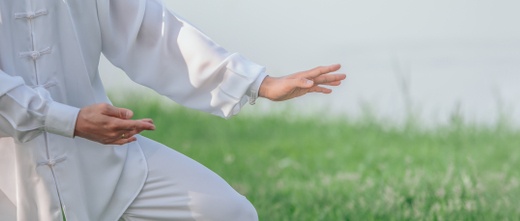
Qu'est-ce que la marche Tai Chi - et cela vaut-il la peine d'essayer ?
L'art martial du Tai Chi existe depuis des siècles. Initialement développé comme une forme de combat défensif, il est toujours aussi populaire aujourd'hui - bien que sa plus grande force réside désormais dans sa capacité à soutenir la santé et le bien-être général. Pour quelque chose d'aussi ancien, il est impressionnant que le Tai Chi continue de trouver une nouvelle pertinence dans le monde du bien-être d'aujourd'hui. L'une des dernières façons dont il est adopté - notamment sur les plateformes en ligne - est à travers une adaptation plus accessible de la pratique connue sous le nom de Tai Chi en marchant.
par Victoria Raw
Lectures complémentaires et références
- Li Q; Effects of forest environment (Shinrin-yoku/Forest bathing) on health promotion and disease prevention -the Establishment of "Forest Medicine". Environ Health Prev Med. 2022;27:43. doi: 10.1265/ehpm.22-00160.
À propos de l'auteurVoir la biographie complète

Hannah Boynton-Forshaw
BA (Hons) Communications & Cultural Studies and Media
Hannah is a content writer who specialises in authentic, and engaging writing that tells a story.
She is committed to creating content that has clarity and purpose, and most importantly, engages with an audience. She has worked with a variety of brands, including IKEA, NHS Protect, University of Leeds, ASDA, Marks and Spencer, Tesco, Waitrose, Morrisons, Next, and British Gas.
À propos du critiqueVoir la biographie complète

Dr Colin Tidy, MRCGP
Médecin généraliste, Auteur médical
MBBS, MRCGP, MRCP (Paediatrics), DCH
Le Dr Colin Tidy est un médecin du NHS, basé dans l'Oxfordshire.
Historique de l'article
Les informations sur cette page sont examinées par des cliniciens qualifiés.
Article également disponible en Anglais, Allemand, Espagnol, Français, Italien, Portugais, Hindi, Hébreu, Arabe, and Suédois.
Next review due: 28 Jul 2029
28 Jul 2026 | Publié à l'origine
Écrit par :
Hannah Boynton-ForshawRevu par
Dr Colin Tidy, MRCGP

Demandez, partagez, connectez-vous.
Parcourez les discussions, posez des questions et partagez vos expériences sur des centaines de sujets de santé.

Vous ne vous sentez pas bien ?
Évaluez vos symptômes en ligne gratuitement
Inscrivez-vous à la newsletter Patient
Votre dose hebdomadaire de conseils de santé clairs et fiables - rédigés pour vous aider à vous sentir informé, confiant et maître de la situation.
En vous abonnant, vous acceptez notre Politique de confidentialité. Vous pouvez vous désabonner à tout moment. Nous ne vendons jamais vos données.
Plus sur la santé mentale
- Augmentation alarmante de l'automutilation chez les jeunes
- Construire des habitudes plus saines avec Holly Health
- Faire face au deuil après la perte d'un être cher à cause d'un cancer du poumon
- Démystifier les mythes et stéréotypes sur les troubles alimentaires
- Le stress provoque-t-il une prise de poids ?
- Comment le chagrin peut-il nuire à votre estime de soi ?
- Comment le changement climatique affecte-t-il la santé mentale ?
- Comment gérer la grossesse lorsque vous avez un trouble alimentaire
- Comment gérer votre santé mentale si vous avez été licencié
- Comment rester positif envers son corps pendant Noël
- Pas tout à fait 'retour à la normale' : un guide pour la guérison familiale post-pandémique
- NouveauSyndrome de Pearson : comment une famille a appris à vivre dans le présent
- Cerveau popcorn : ce que c'est, pourquoi cela arrive, et comment réinitialiser votre concentration
- L'impact de l'ennui sur notre santé
- Ce que c'est de travailler pour une ligne d'assistance à la prévention du suicide
- Ce que vous devez savoir sur les pensées intrusives et le TOC
- D'où vient la peur des vaccins ?
- Pourquoi ressentons-nous de l'anxiété à l'idée d'appeler pour dire que nous sommes malades au travail lorsque nous sommes réellement souffrants ?
- Pourquoi nos cerveaux sont accros aux mauvaises nouvelles
- Les jeunes qui cherchent un soutien en santé mentale contraints de se débrouiller seuls