
Les villes et villages du futur se concentreront-ils sur la forme physique ?
Évalué par des pairs Dr Sarah JarvisDernière mise à jour par Ross DaviesDernière mise à jour 24 janv. 2018
Respecte les directives éditoriales
- TéléchargerTélécharger
- Partager
- Language
- Discussion
- Version audio
- Ajouter aux sources préférées sur Google
Lors d'un discours en 2017, la baronne Tanni Grey-Thompson a accusé les lois d'urbanisme au Royaume-Uni de favoriser l'ouverture de fast-foods plutôt que de nouveaux gyms et centres de remise en forme. La Paralympienne a sans aucun doute raison, mais il faudra plus que la fermeture des boutiques de poulet frit pour lutter contre la crise croissante de santé publique dans nos villes et nos villages.
When one thinks of the Industrial Revolution, it tends to conjure up images of huge machinery, workhouses, dirt and disease.
Such was the horrendous impact of the latter - especially cholera, typhoid and typhus - the period provoked a profound change in Britain's approach to town planning and public health.
It marked the first time a connection was made between the impact of the built environment on our well-being.
Fast-forward a couple of centuries, and the Dickensian, grime-laden workhouses synonymous with that period have thankfully now gone. But in their place has sprung up an urban scourge almost as damaging to our health: fast food shops.
According to Cambridge University's Centre for Diet and Activity Research (CEDAR), in England alone there are now 56,638 takeaways - an 8% increase over the past three years. The data indicate the greatest concentration of outlets can be found in areas with high unemployment levels and deprivation.
Such is the level of concern over takeaway culture in London - where close to 40% of children are believed to obese or overweight by the time they are 11 - Mayor Sadiq Khan recently revealed plans to introduce la nouvelle législation that would ban new fast food outlets from opening within 400 metres of a school in the capital.
But going on CEDAR's research alone, this would suggest it is becoming easier to open fast food shops on our high streets - despite the promises of some local authorities in the past to impose restrictions and do the very opposite.
Gyms not Greggs
In addition to her damning comments on town planning laws, Baroness Grey-Thompson, speaking at a conference hosted by the health body she chairs, ukactive, called for: "more flexible planning regulations and business rates to maximise the transformational health impact these venues can have on communities."
Can this be true? Are councils and town planners really more predisposed to greenlighting a Greggs over a gym?
"To an extent, Baroness Grey-Thompson is right in her assertion that it's easier to get planning permission for takeaways and betting shops than it is for gyms and fitness centres," says one former town councillor in charge of planning, who asked to remain anonymous.
"There's a whole host of factors that people granting planning permission within councils will consider when looking at a planning application. This will range from noise and parking, to transport and accessibility.
"In many cases, takeaways and betting shops tick more of these boxes due to them operating at a lower volume and providing a relatively straightforward proposition."
The former councillor believes governments need to exercise "a greater deal of common sense" in prioritising the social and physical benefits of gyms and fitness centres.
Balancing act
Others, however, aren't entirely in agreement with Grey-Thompson's assertions. According to Harry Burchill, England policy officer at the Royal Town Planning Institute (RTPI), public health now forms a major plank of modern planning policy in the UK.
While he agrees that relaxing business rates for fitness centres could be a benefit, Burchill also isn't sure how effective the wholesale closure of takeaways might be in tackling the root causes of poor health levels in disadvantaged areas.
"Planning should be playing a much wider role in promoting healthy lifestyles than simply making it difficult for people to open hot food takeaways," he explains.
"It is about ensuring new development takes place in sustainable locations and designing places so that physical activity becomes much more part of our day-to-day lives - such as making cycling and walking a more attractive option than driving. We are getting better at this."
Burchill also believes giving rubber-stamped precedence to fitness centres over places of retail might, in some instances, hurt the vibrancy of some town centres - which, in turn, could have an adverse effect on both the physical and mental health of citizens.
"We mustn't lose sight of the fact that the planning system is there to achieve balance," he says.
"We could go down the road of changing permitted development rights to make it easier for gyms to open in town centres without planning permission, but that is no guarantee that we will get more of them.
"This will also make it less likely for achieving a healthy mix of retail and business so vital to the vibrancy of our town centres."
Healthy architecture
For Dr Louis Rice, senior lecturer in healthy architecture and urbanism at UWE Bristol, the UK might lag behind the likes of Scandinavian countries in terms of policies and implementation, but there is evidence that 'healthy architecture' here is on the rise.
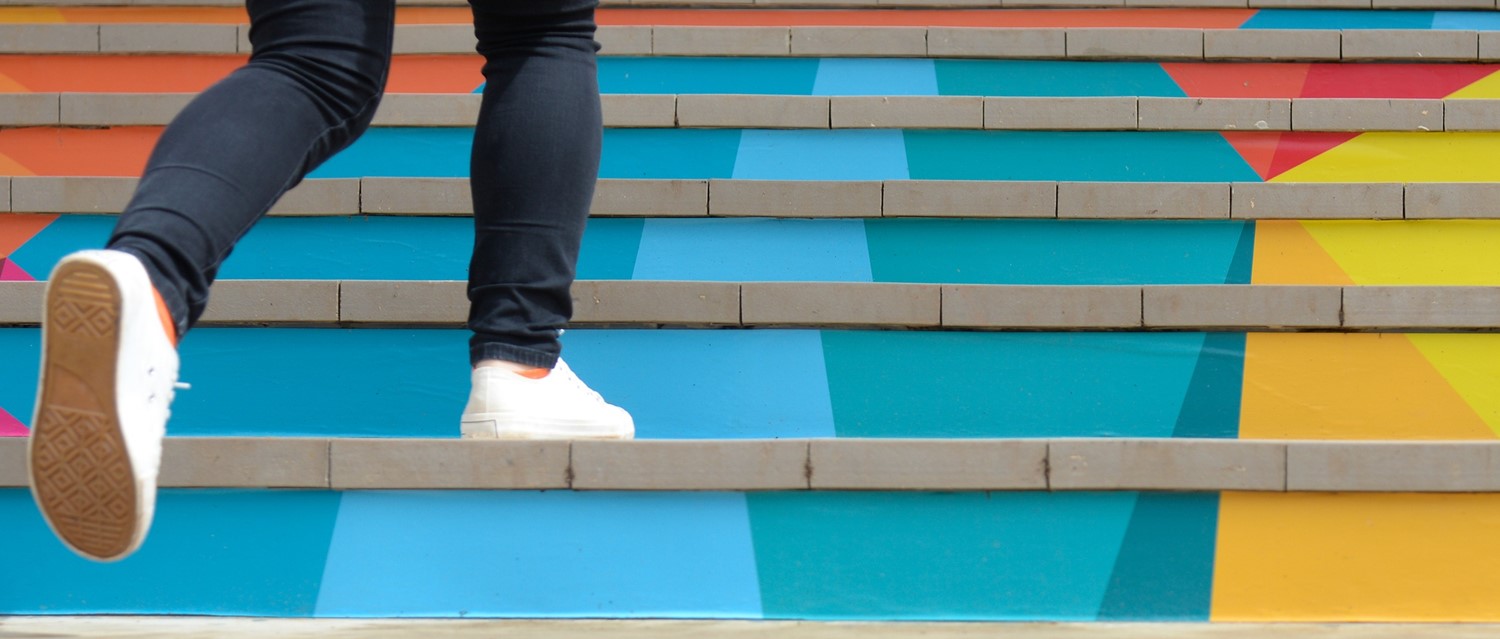
He cites the introduction of the National Institute for Health and Care Excellence (NICE), which advocates local authorities create healthier spaces for incidental and planned physical activity - for instance, designing buildings that encourage people to walk up stairs rather than take the lift.
"This is part of a wider trend whereby medical agencies shift from prescribing medicines for illness towards prescribing healthier lifestyles, particularly through the design of the built environment," says Rice.
As well as encouraging people to walk more, NICE guidelines also highlight the benefits of being able to get around by bike. Should British cities strive to emulate the likes of Copenhagen where over 41% of commutes across the city are made on two wheels?
There are indications that we are catching up in this regard; London, in particular, has seen a boom in the creation of cycle lanes in recent years. There could be more to come, too. In September, Mayor Khan revealed plans for a new segregated cycle 'superhighway' across South East London to improve safety for cyclists on one of the city's busiest routes.
More people are likely to be swayed to not drive to work if the route is easier on the eye, believes Dr Jenna Panter, a senior research associate at CEDAR. This is where town planning can make a big difference, she says.
"There are ways to design neighbourhoods that encourage activity. People are more likely to walk and cycle in their neighbourhood if it is safe, well connected and has good local amenities."
In 2015 the NHS launched 'Healthy New Towns', an experimental initiative, which aims to build ten new housing developments from scratch across England. In essence, the project - carried out in collaboration with property developers - aims to place healthy living at the heart of home building in the future.
Although singling the initiative out for praise, Rice isn't sure widespread implementation is practical in the long run.
"Whilst building from scratch might be ideal, the majority of the UK towns and cities will require retrofitting to improve health," he says.
In other words, our cities will need to adapt their existing infrastructures. Limiting the number of fast food joints on the high street is just the start.
Sélections des patients pour Exercice et activité physique

Mode de vie sain
Qu'est-ce que l'exercice somatique ? Explorer la connexion corps-esprit
Introduite dans les années 1970 par le philosophe Thomas Hanna, la somatique se réfère à une discipline qui explore la relation entre votre esprit et votre corps à travers le mouvement. L'exercice somatique est une pratique sensorielle qui favorise des mouvements conscients pour améliorer votre conscience des sensations internes de votre corps.
par Victoria Raw
Mode de vie sain
Avez-vous vraiment besoin de marcher 10 000 pas par jour ?
Are you wearing a device like a smartwatch to track your steps? If so, the goal of 10,000 steps a day may have become a bit of an obsession. But is focusing on this number the best way to improve your health? We ask an expert whether all this counting is really doing us any good.
par Lawrence Higgins
À propos de l'auteurVoir la biographie complète

Ross Davies
Journaliste indépendant
Ross Davies est un journaliste indépendant.
À propos du critiqueVoir la biographie complète

Dr Sarah Jarvis
Consultant Clinique
MA (Cantab), BM, BCh (Oxon), DRCOG, FRCGP, MBE
Après avoir suivi une formation en médecine à Cambridge et Oxford, le Dr Sarah Jarvis MBE est devenue médecin généraliste.
Historique de l'article
Les informations sur cette page sont examinées par des cliniciens qualifiés.
Article également disponible en Anglais, Allemand, Espagnol, Français, Italien, Portugais, Hindi, Hébreu, Arabe, and Suédois.
24 janv. 2018 | Dernière version

Demandez, partagez, connectez-vous.
Parcourez les discussions, posez des questions et partagez vos expériences sur des centaines de sujets de santé.

Vous ne vous sentez pas bien ?
Évaluez vos symptômes en ligne gratuitement
Inscrivez-vous à la newsletter Patient
Votre dose hebdomadaire de conseils de santé clairs et fiables - rédigés pour vous aider à vous sentir informé, confiant et maître de la situation.
En vous abonnant, vous acceptez notre Politique de confidentialité. Vous pouvez vous désabonner à tout moment. Nous ne vendons jamais vos données.
Plus sur la vie saine
- 5 avantages de la lecture
- Les 5 meilleures applications pour un Dry January en 2024
- Briser le stigmate de la santé mentale
- Les siestes comptent-elles comme du sommeil ?
- Manger des aliments épicés aide-t-il à perdre du poids ?
- Mis à jourComment devenir plus flexible
- Comment soutenir votre enfant transgenre
- Mis à jourComment s'entraîner sans avoir l'impression de faire de l'exercice
- La dégradation cérébrale est-elle réelle - voici ce que disent les experts en santé cérébrale
- Existe-t-il un écart de santé pour la communauté LGBTQ+ ?
- Projecteur sur Movember : la santé mentale des hommes noirs
- Entretenir l'intimité : 6 conseils pour des relations à long terme
- Repenser la solitude pendant la période des fêtes de Noël
- Effets du tabagisme sur la peau : du vieillissement à la maladie
- Les meilleures applications de pleine conscience, selon les experts
- Marche, jogging, répétition : qu'est-ce que le Jeffing ?
- Quels sont les bienfaits pour la santé mentale de faire son lit le matin ?
- Que fait le tabagisme à votre cœur ?
- La stratégie du gouvernement contre l'obésité sera-t-elle efficace ?