Comment le soutien par les pairs peut améliorer votre santé mentale
Revu par Dr Sarah JarvisDernière mise à jour par Lydia SmithDernière mise à jour 26 Oct 2021
Respecte les directives éditoriales
- TéléchargerTélécharger
- Partager
- Language
- Discussion
- Version audio
- Ajouter aux sources préférées sur Google
Parler de nos problèmes n'est pas toujours facile. Parfois, les émotions peuvent sembler si accablantes qu'il est difficile de trouver la motivation pour en parler, ou nous pouvons craindre d'être ignorés ou jugés. Cependant, parler à quelqu'un en qui vous avez confiance - et être écouté dans un environnement empathique comme un groupe de soutien entre pairs - peut avoir des bénéfices psychologiques puissants.

What is peer support?
When people use their own experiences to help each other, it is known as 'peer support'. There are different types of peer support, but they all aim to bring people together to share experiences to help each other through any worries, problems or difficulties.
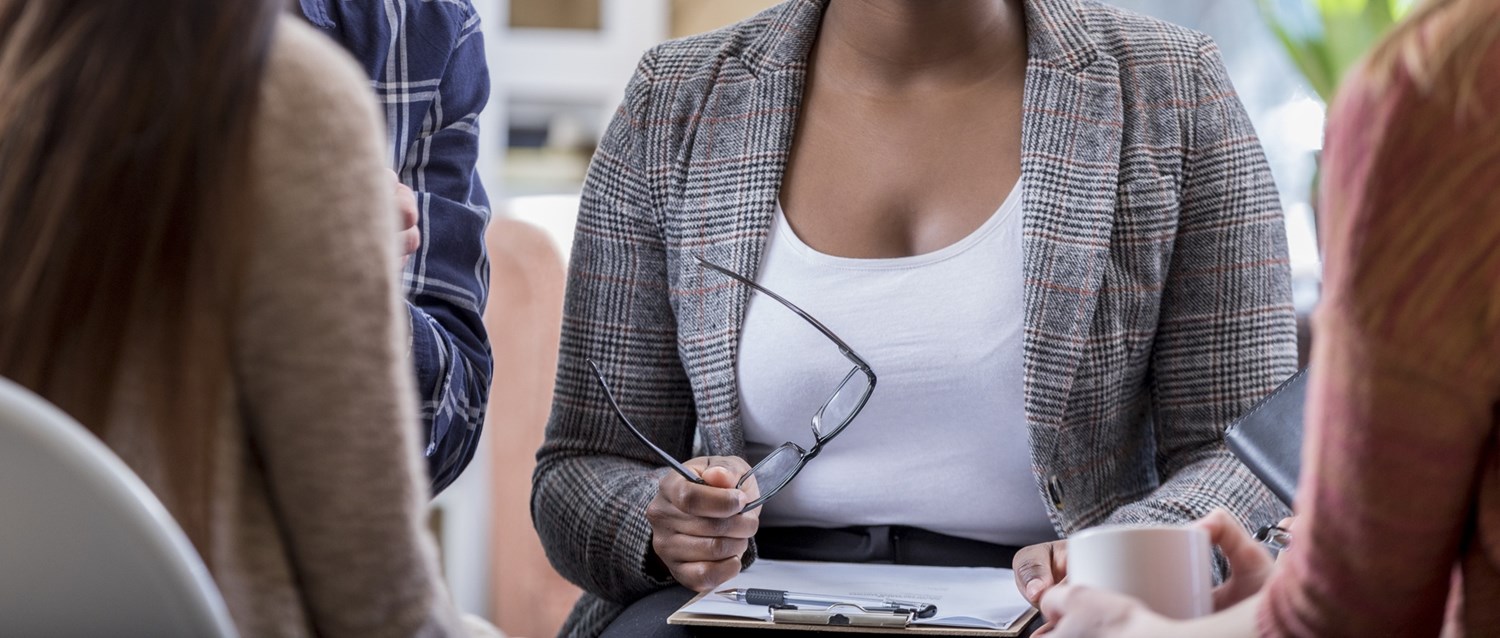
Crucially, peer support groups provide a space where everyone feels accepted and understood - and each problem is treated equally. "Peer support is a system where people in the same kind of situation get together and share their experience to help each other," says Yuko Nippoda, a psychotherapist and spokesperson for the Conseil britannique pour la psychothérapie.
"It is normally carried out one-to-one or in groups. If it is one-to-one, both parties share their experience and give feedback to each other. If it is a group setting, normally a small number of people get together and share their experiences."
Trained in active listening
Peer support can be casual and carried out with people you know. However, it can also take place with a peer support worker, who will have training in active listening. A skill often employed by counsellors, this involves listening attentively to someone while paraphrasing and reflecting back their feelings and emotions. This aims to help them gain a deeper understanding of their problem, while feeling supported.
Although a trained peer support worker may have un accompagnement psychologique skills, they are not always accredited counsellors.
"Counselling or talking therapy is more explorative. Counsellors who use specific impact psychologique knowledge not only give support to their clients but also work on their fundamental issues in order to help the client change and grow," explains Nippoda. "Also, counsellors and therapists rarely share their own experiences, so the dynamics of the relationship are very different."
Honing in on mental health
In recent years, peer support groups have become a popular way to help people with their mental health. In 2020, a charity called It's Worth Talking About was formed to provide peer support groups for men and women across the region and the rest of the UK. It was created at the start of the pandemic after the le suicide of a local 25-year-old man in Keighley, West Yorkshire.
"The simple definition used by It's Worth Talking About is 'everyday people supporting everyday people'," says Ryan Anderson, one of the charity's founders. "We use this because while we have trained facilitators, the main component of peer support is through the sharing of life's experiences.
"We noticed a lack of accessible mental health support in the local area. The charity now provides many women's groups too, including in Leeds."
What are the benefits of peer support?
A problem shared is often said to be a problem halved and recherche suggests this is true. Often, talking to others about a difficulty can help you think it through, while making the emotions and feelings associated with a problem seem less overwhelming.
Des études have shown peer support, particularly within mental health services, can lead to an increased sense of hope and a feeling of empowerment, and diminish feelings of isolation.
"Peer support is very effective for people who suffer with santé mentale issues. First, they discover that they are not alone with the issues they have. Knowing there are other people having similar experiences means they do not feel lonely. They feel they have others with whom they can walk the difficult path together," says Nippoda.
"This is important because it can reduce self-blame as they can acknowledge that it is not their fault to feel that way. Also, they can obtain information about their situation and this can broaden their knowledge, which can help them better understand their issues."
"The greatest benefit I see in running groups is the emotional support participants feel through talking with people who have similar santé mentale experiences," says Counselling Directory member Shelley Treacher, a BACP-accredited counsellor. "Peer support helps people to normalise emotions, feelings and mental health and to find self-compassion."
However, it's important for peer support to be carried out carefully. Those who want to offer peer support need to be non-judgemental and empathetic, and ensure people feel heard and respected. In a group setting, it's also key for everyone to be given a chance to speak.
"If the group has too many people, the group members might not feel safe, as the intimacy and warmth can be lost, so a small number is more appropriate," says Nippoda.
How to access peer support
Find local groups
Many charities offer local and online general peer support groups, including It's Worth Talking About, Mind et Rethink Mental Illness. Often, these groups are facilitated by trained volunteers.
Some organisations host specific support groups, such as Bipolar UK, which has support groups hosted by staff or volunteers who are affected by the condition. Carers UK has a directory of local support groups.
Start slowly
Before finding peer support, it's important to think about whether it's right for you. It's also helpful to consider how you are feeling and whether hearing other people's experiences may be triggering or upsetting.
If peer support doesn't work for you, that's fine - it might just not be the right support for you now. Sharing your thoughts, feelings and experiences can be difficult and it's normal to feel nervous beforehand. However, you can choose how much you want to share with other people. Peer support groups will be happy for you just to attend and listen until you are comfortable speaking.
Speak to your GP
If you're struggling with your mental health, it's important to speak to your GP, who will be able to advise the best course of action for you. They may recommend la thérapie par la parole - for which you can be referred or self-refer on the NHS - or médication. Peer support can help alongside other treatments.
"Peer support and counselling complement each other beautifully," says Treacher. "One is likely to bring out the benefits of the other, as people process what comes up in peer support, and gain support for the subjects that surface in la thérapie."
Sélections des patients pour Bien-être mental
Santé mentale
Santé mentale : suivre vos symptômes et interventions précoces
Mental health can often go through a little seasonal 'dip' in autumn and winter, and given extra stressors this year, the risk of mental health problems is higher for all of us. Prepare for tough days by finding out how to track and treat mild symptoms, and knowing when to seek help.
par Ellie Broughton

Santé mentale
Plus que du simple divertissement : Jeanie Y. Chang sur les K-dramas et la santé mentale
Jeanie Y. Chang, thérapeute agréée en mariage et en famille, est une autorité de premier plan en matière de santé mentale. Elle est une source fréquemment sollicitée par les médias du monde entier et est récemment apparue dans Made in Korea: The K-Pop Experience de la BBC. La culture sud-coréenne a connu une montée en popularité depuis le début des années 2000, captivant le monde avec une gamme diversifiée d'exportations telles que la nourriture, la mode, les jeux, la musique et - plus particulièrement - les K-dramas. Inspirée par ses propres expériences, Chang croit que les K-Dramas peuvent offrir une validation et un sentiment d'appartenance en reflétant les luttes de la vie réelle. Nous avons parlé avec Jeanie pour explorer l'attrait de ces émissions de télévision populaires - pourquoi elles valent la peine d'être regardées et comment elles pourraient avoir un impact positif sur notre santé mentale.
par Victoria Raw
À propos de l'auteurVoir la biographie complète

Lydia Smith
Rédacteur de reportages
Licence, Master, MSc
Lydia Smith est une journaliste primée et rédactrice spécialisée qui a beaucoup écrit sur la santé des femmes et la santé mentale. Elle prépare actuellement un MSc en psychologie.
À propos du critiqueVoir la biographie complète

Dr Sarah Jarvis
Consultant Clinique
MA (Cantab), BM, BCh (Oxon), DRCOG, FRCGP, MBE
Après avoir suivi une formation en médecine à Cambridge et Oxford, le Dr Sarah Jarvis MBE est devenue médecin généraliste.
Historique de l'article
Les informations sur cette page sont examinées par des cliniciens qualifiés.
Article également disponible en Anglais, Allemand, Espagnol, Français, Italien, Portugais, Hindi, Hébreu, Arabe, and Suédois.
26 Oct 2021 | Dernière version
26 Oct 2021 | Publié à l'origine

Demandez, partagez, connectez-vous.
Parcourez les discussions, posez des questions et partagez vos expériences sur des centaines de sujets de santé.

Vous ne vous sentez pas bien ?
Évaluez vos symptômes en ligne gratuitement
Inscrivez-vous à la newsletter Patient
Votre dose hebdomadaire de conseils de santé clairs et fiables - rédigés pour vous aider à vous sentir informé, confiant et maître de la situation.
En vous abonnant, vous acceptez notre Politique de confidentialité. Vous pouvez vous désabonner à tout moment. Nous ne vendons jamais vos données.
Plus sur la santé mentale
- 9 conseils pour profiter et bien gérer votre budget ce Noël
- Pollution de l'air liée aux problèmes de santé mentale
- Est-ce que je fais une crise de panique ou une crise cardiaque ?
- Les massages réguliers peuvent-ils améliorer votre santé mentale ?
- Comment les stéréotypes empêchent-ils les personnes noires de demander de l'aide pour les troubles alimentaires ?
- Comment les étudiants et les enseignants peuvent surmonter le stress des examens
- Comment surmonter la déprime de fin d'été
- Comment gérer le stress d'être un nouveau parent
- Comment surmonter la peur des prises de sang
- Comment améliorer votre santé mentale en travaillant à domicile
- Gérer le deuil lors de votre premier Noël sans un être cher
- Jouer avec des chats et des chiens réduit le niveau de stress
- Les techniques de respiration à essayer si vous avez de l'anxiété
- L'impact de l'ennui sur notre santé
- Guérison non conventionnelle : l'essor des thérapies alternatives
- Ce que c'est de travailler pour une ligne d'assistance à la prévention du suicide
- Pourquoi la ménopause peut-elle déclencher de l'anxiété ?
- Pourquoi trouvons-nous réconfortant de revoir nos films préférés ?
- Pourquoi le trouble affectif saisonnier (TAS) nous fait-il désirer des glucides ?
- Pourquoi les appels vidéo peuvent vous laisser anxieux et épuisé