
Spotting the signs of fibroids
Peer reviewed by Dr Krishna Vakharia, MRCGPAuthored by Victoria RawOriginally published 10 Jun 2024
Meets Patient’s editorial guidelines
- DownloadDownload
- Share
- Language
- Discussion
- Audio Version
- Add to preferred sources on Google
Many women develop fibroids at some point in their lives - often between the ages of 30 and 50. They are surprisingly common, and affect up to two-thirds of women. Fibroids can sometimes run in families, so if a close relative has them, you may be more likely to as well.
When Adrienne Noble - an artist from Whithorn, Scotland - was first diagnosed, she knew nothing about fibroids. She only knew she was experiencing pain and heavy periods, which she put down to simply getting older. It took two years before she finally discovered not only that she had fibroids but that she needed immediate surgery.
"Given my age and history of bad periods, I assumed it was due to early menopause. So, I kept postponing seeking medical advice. By the time I was diagnosed with fibroids, they'd grown so large I needed major surgery." - Adrienne Noble, on her diagnosis of subserosal fibroids
What are fibroids?
Uterine fibroids - also called uterine myomas or leiomyomas - are non-cancerous growths that develop in the muscles or tissues of the womb (uterus). These growths can grow in size, shrink, or even disappear on their own.
There are four main types of fibroids - each named after their location in the uterus.
Intramural fibroids: The most common type, these develop within the muscular wall of the uterus.
Subserosal fibroids: These develop on the outer wall of the uterus and can project into the pelvis. They have the potential to grow quite large.
Submucosal fibroids: Forming within the muscular wall in the inner lining of the uterus, these grow into the womb cavity.
Pedunculated fibroids: A subtype of either subserosal or submucosal fibroids, they grow from the uterine wall, attached by a narrow stalk.
How do you get fibroids?
It's hard to know if you have fibroids and their medical cause is still unclear. However, their growth is closely tied to oestrogen levels, as they usually develop during a woman's reproductive years - between 16 and 50. This is when oestrogen levels are at their peak. Fibroids often shrink in size after menopause, as oestrogen production declines. Obesity is believed to contribute because excess weight can raise oestrogen levels. If you've given birth to children, your likelihood of developing fibroids is reduced.
Adrienne - mum of one - first noticed fibroid symptoms around the age of 48 when her periods changed and she started getting tummy pain.
"My periods were heavy, painful, and impacting my daily routine. This, along with the fear of leaks, often left me feeling restricted, both physically and emotionally," she explains. "It was exhausting. Some days, the thought of managing a heavy flow kept me from going out. I felt self-conscious about leaks and could only wear certain clothes. These worries might seem trivial to some, but they had a real impact on my confidence and mental health."
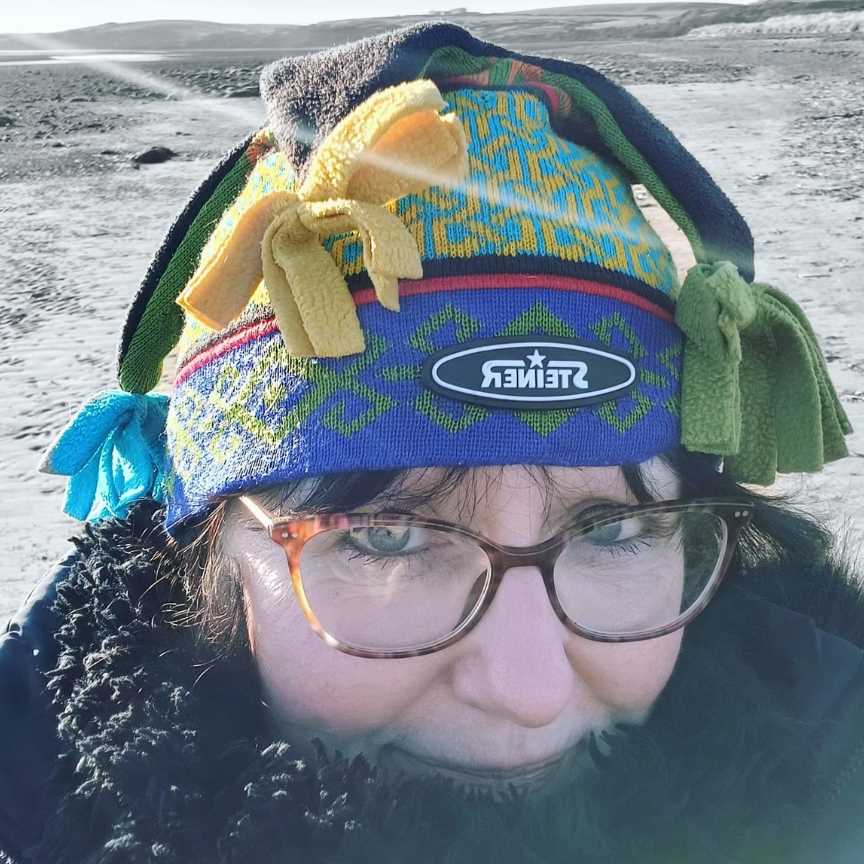
Adrienne in her home county of Dumfries and Galloway
What are the symptoms of fibroids?
It's worth noting that only 1 in 3 women with fibroids experience any symptoms, so they often go unnoticed and don't need any treatment. They are usually found during a pelvic exam - if large - or routine ultrasound scan.
You may be wondering how to check for fibroids at home. But in truth, you won't be able to because they develop in the uterus, and the symptoms and signs mimic other conditions such as endometriosis. Women with symptoms of uterine fibroids may experience the following:
Heavy or painful periods: While fibroids themselves don't alter your menstrual cycle, they can cause heavier bleeding and sometimes increased pain. This heavy blood loss can lead to iron deficiency and anaemia. These conditions are diagnosed with a blood test and usually treated with iron supplements in most cases.
Back pain and bloating: A large fibroid may cause a feeling of heaviness or pressure in your lower belly (abdomen), and pain in your lower back. All women with new and persistent bloating should be reviewed by a doctor.
Bladder and bowel problems: Fibroids pressing on your bladder can make you need a wee more often. If they're pressing on your bowel - which sits behind the womb - this can cause constipation.
Discomfort or bleeding during sex: Fibroids growing near the vagina or neck of the womb (cervix) can cause pain during sex.
Fertility and pregnancy: While uncommon, fibroids that grow into the womb cavity can cause problems in getting pregnant by blocking the fallopian tubes or disrupting implantation. In rare cases, they may also be linked to miscarriage.
Most women with fibroids have healthy pregnancies. Fibroids may slightly increase the chance of needing a caesarean section. However, if you're pregnant and have fibroids, your doctor will talk things through with you and offer some advice.
The symptoms above all need investigating by a doctor as many conditions have the same symptoms as fibroids, including gynaecological cancers such as ovarian and uterine cancers. If you are experiencing any of these, contact your doctor.
In Adrienne's case, she experienced severe menstrual cramps and heavy bleeding, which caused her to become anaemic.
"My first blood test was to see if I was pre-menopausal, which showed that I wasn’t. My second revealed I had anaemia because I was bleeding so much - even outside of my normal menstrual cycle," she describes. "I was probably bleeding for about three weeks out of every four, which aggravated the anaemia and left me feeling very unwell. I had to continue working, to try and lead as normal a life as possible. However, by the end of the work day, I had no energy for anything else. I didn't want anyone touching or talking to me because I felt so tired and ill."
Can I feel fibroids myself?
After six months of iron tablets to treat her anaemia, Adrienne's condition remained unchanged, so she went back to her doctor. After a pelvic exam that confirmed the above symptoms, an ultrasound scan was recommended. When the scan results came back, they showed she had large subserosal fibroids.
Because fibroids form in the uterus - deep inside the pelvis - they can't be felt externally. However, larger fibroids like Adrienne's can sometimes be detected during a pelvic or internal (vaginal) exam by a healthcare professional.
What size of fibroids are dangerous?
Fibroids aren't generally dangerous and often don't require treatment if your symptoms are mild and manageable. They may even shrink naturally after menopause. If your fibroids are causing symptoms, your specialist doctor will likely first prescribe a course of treatment to help bring relief.
Medicine
For larger fibroids, gonadotrophin-releasing hormone analogues (GnRHas) may be an option. These injections work by temporarily reducing oestrogen production which helps shrink the fibroids. They target the pituitary gland in your brain, which controls hormone levels in the ovaries.
Medicines such as anti-inflammatory tablets, tranexamic acid, the contraceptive pill, intrauterine devices (IUDs), and oral or injected progestogen may be prescribed to help with heavy periods. However, they may not be effective, depending on the location, size and number of your fibroids.
If medicine has not improved your symptoms, there are alternative treatment options to remove the fibroid or fibroids.
Surgical procedures
Hysteroscopic resection: This involves using a thin telescope (hysteroscope) and tiny surgical instruments to remove the fibroids located inside the womb (submucosal). There are no external cuts because the hysteroscope reaches the fibroids through your vagina and your cervix
Hysteroscopic morcellation: Here, the doctor guides the hysteroscope into the womb through the cervix. A specialised instrument (morcellator) is then used to cut the fibroid tissue into smaller pieces for easier removal.
Myomectomy: This procedure removes the fibroids from your womb, leaving it intact. It may involve either keyhole surgery with small incisions or open surgery with a larger incision. However, depending on the location, size and number of your fibroids, it's not necessarily suitable for everyone.
Hysterectomy: This means having your womb surgically removed. It is sometimes considered for women who have large fibroids, heavy bleeding and who no longer wish to get pregnant.
Non-surgical procedures
Uterine artery embolisation (UAE): This blocks the fibroids' blood supply, causing them to shrink. It is minimally invasive and performed by a radiologist who inserts a small tube (catheter) into a blood vessel in your leg. A special solution is injected through the catheter to block the blood vessels feeding the fibroids.
Endometrial ablation: This procedure is also less invasive and thins or destroys the lining of the womb. It's usually used to reduce heavy menstrual bleeding in women who don't have fibroids. However, it can also treat small fibroids in the womb lining. Techniques include laser energy, a heated wire loop, or hot fluid delivered through a balloon.
MRI-guided percutaneous laser ablation: This method uses a laser inserted through a thin needle to heat and destroy the fibroid.
MRI-guided transcutaneous focused ultrasound: This approach focuses sound waves through the skin to target and wear away the fibroid.
Transcervical ultrasound-guided radiofrequency ablation: A long, thin device with an ultrasound probe is inserted through your cervix, and into your womb. The ultrasound provides images to guide your doctor, who then applies heat to shrink the fibroid.
Magnetic Resonance Imaging (MRI) and ultrasound guidance are relatively new methods of treating fibroids. While both are less invasive, they may not be suitable for every type of fibroid. The long-term effects of this type of treatment also require further investigation.
When should I see a doctor for fibroids?
It's important to see a doctor if you experience any or all of the fibroid symptoms. They can check and investigate for underlying causes. They will often do blood tests to check for anaemia, ovarian cancer and other tests, as well as ordering an ultrasound scan to look for the cause. If fibroids are diagnosed - they may refer you to a specialist for further treatment. For symptomatic fibroids, medication to manage symptoms is usually the first course of action.
Adrienne's fibroid tumours were subserosal which means they had formed outside the uterus, where there was more space for them to grow. Because of their large size and location near vital organs, less invasive procedures were not a safe option. As a result, a full hysterectomy was necessary.
"Being told you have tumours in your body is a scary thing to hear - even if you're told they're not cancerous," says Adrienne. "But in a way, I was relieved when I got the diagnosis, even if it meant I needed major surgery. Thankfully infertility wasn't an issue for me, but it could be for others. I wish I'd found the courage to speak up sooner, as maybe things wouldn't have got so serious."
Her hysterectomy as a result of large fibroids meant a lengthy recovery, that took around 6 to 8 weeks. Complications with hormone replacement therapy (HRT) following the surgery contributed to her developing fibromyalgia syndrome (FMS) - a condition that can cause widespread pain.
"It took me too long to listen to my body. Everyone's journey is different, but ignoring my fibroid symptoms made the diagnosis and treatment a long, difficult road. Recovering from my operation was physically and emotionally challenging. The trauma my body went through left me with fibromyalgia, which I'll manage for the rest of my life. But through it all, I've learned a lot about my strength and perseverance.
"My advice to anyone who thinks they might have fibroid symptoms is to book a doctor's appointment right away. It's important to get any changes in your body checked out - no matter how big or small. Talking to a friend or family member beforehand can be a great first step to seeking help. Even if you're anxious about waiting for scan results, having someone by your side can provide emotional support. Open communication about women's health is essential. By talking openly about these issues, we can all learn and empower each other."
Patient picks for General women's health
Women's health
Video: Are fibroids cancerous?
Any growth in your womb can be worrying, but fibroids are generally not a cause for major concern. However, they can lead to many questions - which our expert Dr Sarah Jarvis has answered below.
by Lydia Smith

Women's health
What is inflammaging - and why should women care?
Inflammaging sounds less like a scientific term and more like the next big TikTok craze. Maybe it involves posting artsy photos of beach bonfires or eating lots of chilli peppers in the quest for glowing skin? In reality, it’s neither of those things - and please don’t try the latter. Inflammaging is a blend of ‘inflammation’ and ‘ageing’, referring to the low-grade, chronic inflammation that gradually develops in your body as you get older. Unlike many social media buzzwords, this is one worth paying attention to because, if left unchecked, it can seriously damage your health, particularly for women.
by Victoria Raw
About the authorView full bio
Authored by
Victoria Raw
Feature Writer
BA (Hons), English Literature
Victoria is a content writer at Patient, with special interests spanning mental wellbeing, societal trends and the impact of technology on our health.
About the reviewerView full bio

Dr Krishna Vakharia, MRCGP
Chief Medical Officer for Health, Optum UK
MBChB, MRCGP(2013), BMedSci (hons), DFSRH, DRCOG, PGDipDerm (Distn)
Dr Krishna Vakharia is an NHS GP. She is also a regular examiner for the postgraduate Diploma in Practical Dermatology at Cardiff University as well as being the Chief Medical Officer for health at Optum UK.
Article history
Article also available in English, German, Spanish, French, Italian, Portuguese, Hindi, Hebrew, Arabic, and Swedish.
Next review due: 10 Jun 2027
10 Jun 2024 | Originally published
Authored by:
Victoria RawPeer reviewed by
Dr Krishna Vakharia, MRCGP
Join the conversation
Share your thoughts or experiences with others in our patient communities.

Ask, share, connect.
Browse discussions, ask questions, and share experiences across hundreds of health topics.

Feeling unwell?
Assess your symptoms online for free
Sign up to the Patient newsletter
Your weekly dose of clear, trustworthy health advice - written to help you feel informed, confident and in control.
By subscribing you accept our Privacy Policy. You can unsubscribe at any time. We never sell your data.