Albinism
Peer reviewed by Dr Colin Tidy, MRCGPLast updated by Dr Hayley Willacy, FRCGP Last updated 15 Sept 2024
Meets Patient’s editorial guidelines
- DownloadDownload
- Share
- Language
- Discussion
- Audio Version
- Add to preferred sources on Google
Albinism is a rare inherited (genetic) condition which reduces the amount of of melanin pigment in the skin, hair and/or eyes. People with albinism are often pale, with light-coloured irises. However, there are many types of albinism and people can be affected to different degrees.
At a glance
Albinism is an inherited condition causing very light skin, hair, and eyes due to reduced melanin.
Signs include pale skin, very light hair, distinct eye colours, and sensitivity to light.
Vision problems such as nystagmus (repetitive eye movements) and squints are common.
People with albinism have increased risk of sunburn and skin cancers.
Regular eye checks and strong sun protection are important for people with albinism.
While vision is affected, intellect and life expectancy are usually normal.
What is albinism?
Albinism is an inherited condition that leads to someone having very light skin, hair, and eyes. It happens because they have less melanin than usual in their body. Melanin gives skin, hair, and eyes their colour.
Except for vision problems, most people with albinism are just as healthy as anyone else.
Symptoms of albinism
Signs and symptoms include:
Pale skin (or paler than expected).
Hair that is very light blonde, brown, or reddish.
Eyes that are pink, light blue, green, grey, or light brown. In certain light conditions there is a reddish tint reflected through the iris and pupil from the retina and the eyes appear red (similar to the 'red eye' in flash photography).
Eyes that are sensitive to light.
A “lazy eye”.
Repetitive horizontal movements of the eyes (called nystagmus).
Vision problems.
While most people with albinism have very light, pale skin and hair, levels of pigmentation can vary depending on the type of albinism.
Oculocutaneous albinism (OCA) involves the eyes, hair and skin. Ocular albinism (OA), which is much less common, involves only the eyes, while skin and hair may appear similar or slightly lighter than that of other family members.
How common is albinism?
Approximately 1 in 17,000 people in Europe and the USA have one of the types of albinism, although in some parts of the world it is more common than this. In sub-Saharan Africa cultural norms permit marriages between family members. This lack of genetic mixing means the prevalence increases up to 1 in 1000. Albinism can affect all races and also affects other species, such as mice.
Most children with albinism are born to parents who have normal hair and eye colour for their ethnic backgrounds.
Types of albinism
Albinism is divided into OCA (which is more common and has many forms) and ocular albinism (OA), which is rare.
Oculocutaneous albinism (OCA)
Seven forms of OCA are now recognised - OCA1, OCA2, OCA3, OCA4, OCA5, OCA6 and OCA7. Some are further divided into subtypes:
OCA1
OCA1 results from a genetic defect in an enzyme called tyrosinase. This enzyme helps the body to make melanin pigment. There are two subtypes of OCA1.
In OCA1A, the enzyme is completely inactive and absolutely no melanin is produced, leading to white hair and very light skin.
In OCA1B, the enzyme is minimally active and a small amount of melanin is produced. This leads to hair that may darken to blond, yellow/orange or even light brown, as well as slightly more pigment in the skin.
OCA2
OCA2, results from a genetic defect in a different protein that helps the tyrosinase enzyme to function. People with OCA2 make a tiny amount of melanin pigment and can have hair colour ranging from very light blond to brown.
OCA3
OCA3 is rare and results from a genetic defect in a related protein. People with OCA3 can have normal pigmentation.
OCA4
OCA4 results from a genetic defect in a protein that helps the tyrosinase enzyme to function. It is similar to OCA2.
OCA 5-7
OCA5-7 were recognised in humans in 2012 and 2013. Currently, these types of albinism are considered to be uncommon.
Ocular albinism (OA)
OA is much less common and only involves the eyes. The person's skin and hair may appear similar or slightly lighter than that of other family members.
Researchers have also identified several other genes that result in albinism with other features. These include Hermansky-Pudlak syndrome (patients have albinism with bleeding problems and bruising). Other albinism-related syndromes include Chédiak-Higashi syndrome and Griscelli's syndrome.
How is albinism inherited?
The genes for occulocutaneous albinism (OCA) are located on 'autosomal' chromosomes. These are the 22 pairs of chromosomes that contain genes for our general body characteristics, compared to the one pair of sex chromosomes.
We normally have two copies of these chromosomes - one inherited from our father, the other inherited from our mother. For a recessive condition (like most types of albinism) to occur, both of the person's chromosomes must carry that trait - that is, the one from the mother and the one from the father.
That means that most types of albinism result from inheriting an albinism gene from both the mother and the father (who often have normal pigmentation themselves, as their OTHER gene is normal). When both parents carry the albinism gene (and neither parent has albinism) there is a one in four chance at each pregnancy that the baby will be born with albinism.
If a parent has albinism then they will pass on one affected gene to their child. The child will still only develop albinism if they also inherit an albinism gene from the other parent.
How is albinism diagnosed?
Diagnosis is based on examination and observation. The only type of albinism with white hair at birth is OCA1.
Hair bulbs plucked from the scalp can be tested to check for the ability to make melanin. This can detect OCA type 1A but does not rule out other types of albinism.
The most accurate test is a genetic test. The test is useful only for families which contain people with albinism and even then, not all cases can be detected.
What other conditions might it be? (Differential diagnosis)
Based on hair and skin having less pigmentation:
Hermansky-Pudlak syndrome.
Chediak-Higashi syndrome.
Angelman syndrome and Prader-Willi syndrome.
Vici syndrome.
Waardenburg syndrome type II.
Tietz albinism-deafness syndrome.
Griscelli syndrome.
What problems do people with albinism have?
People with albinism typically experience vision problems, skin problems and social problems.
Vision problems
Eye problems in albinism result from the abnormal development of the eye because of a lack of pigment.
The most common ones include:
Nystagmus (regular horizontal back and forth movement of the eyes).
Squint (muscle imbalance of the eyes).
Sensitivity to bright light or glare.
Problems with vision and focus.
People with albinism are sensitive to glare as extra light gets into their eyes through the thinner iris. However, they do not prefer to be in the dark, as they need light to see just like anyone else.
They may be either far-sighted or near-sighted and usually have astigmatism. Because the retina (the surface inside the eye that receives light) does not develop normally, the nerve pathways transmitting vision to the brain also don't develop normally.
Skin problems
People with albinism are very susceptible to burning and subsequent skin cancer. High-factor sun protection cream and avoidance of sunlight are essential.
In tropical countries, people with albinism may not have access to adequate skin protection and may develop life-threatening skin cancers. They need to use sunscreens rated 20 SPF or higher, together with opaque clothing, in order to enjoy outdoor activities in summer.
Social difficulties
Children with albinism can experience difficulty with bullying and social relationships because their condition is so visible. They look different from their families, friends and other members of their ethnic group.
In some ethnic groups the difference may be dramatic, especially within communities of colour, where the race or paternity may be questioned. Support of family and friends and contact with other affected people can be helpful.
Treatments for albinism
Vision treatments
Treatment of albinism is mainly with support and help with vision:
Surgery
Surgery can be used to correct squint, which may improve the appearance of the eyes. However, surgery cannot improve eyesight or depth (binocular) vision. Eye specialists usually start to treat squint in infants of about 6 months of age. They may recommend a patch over one eye, or the wearing of glasses.
Surgery can also help reduce nystagmus, if severe. Nystagmus may reduce over time. People with albinism may find ways of reducing nystagmus while reading, such as placing a finger by the eye, or tilting the head at an angle where nystagmus is reduced.
Sunglasses
Sunglasses or tinted contact lenses may help with light sensitivity. Indoors, it is important to place lights for close work over a shoulder rather than in front.
Glasses
Some people with albinism use glasses which have small telescopes mounted on, in or behind their regular lenses (bioptics). This enables them to look through either the regular lens or the telescope. Some patients wear contact lenses with a special iris tint.
Various classroom aids help children with albinism
High-contrast written material with large text can help children to read: black on white high-contrast material is the easiest to read. Because children with albinism often have difficulty keeping track of their place on the page if copying text, it may help to allow them to write in the textbook. Audio tapes may be helpful. Computers with large text display will make reading easier.
Giving the child copies of the teacher's notes may be useful; sometimes magnifying devices can also be helpful.
Can albinism be prevented?
Albinism cannot be prevented, as it is an inherited (genetic) condition rather than an illness.
Gene testing can be used to determine if a baby in the womb has albinism. Amniocentesis is performed at 16 to 18 weeks of gestation in pregnancy. Those considering testing of this sort should be made aware that, whilst children with albinism are usually severely visually impaired, they are otherwise healthy and have a normal lifespan.
What is the outlook (prognosis)?
Life expectancy is normal for a person with albinism. Although vision is usually severely impaired, intellect and development are normal.
People with albinism have an increased risk of sunburn and of skin cancers as their skin is not protected by pigment.
Dr Mary Lowth is an author or the original author of this leaflet.
Patient picks for Other skin conditions

Skin, nail and hair health
Skin ulcers
An ulcer is a break in the skin, through which the underlying tissues can be seen. There is usually a problem affecting the normal healing of the skin. There are a number of different types of skin ulcers. Treatment may vary depending on the type of ulcer.
by Dr Doug McKechnie, MRCGP
Skin, nail and hair health
Acne
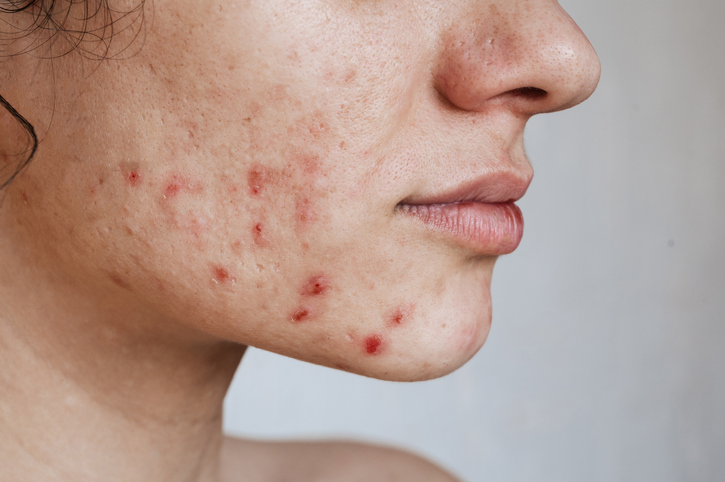
Acne (also called 'zits', spots or pimples) is a common condition, particularly in teenagers. It can also occasionally affect middle-aged people and babies. It often causes a lot of worry and distress but can usually be cleared up, or at least improved a lot, with the right treatment. The treatment can take about a month to work and may need to continue for a while, even after the spots have cleared.
by Dr Colin Tidy, MRCGP
Frequently asked questions
Can albino people dye their hair?
The article mentions that hair colour can vary depending on the type of albinism, from white to light blonde, brown, or reddish. However, it does not state anything about whether people with albinism can dye their hair.
Can albinism affect health beyond vision and skin problems?
Except for vision problems, most people with albinism are described as being 'just as healthy as anyone else'. Some rare types of albinism, like Hermansky-Pudlak syndrome, can be associated with additional health issues such as bleeding problems and bruising, but these are specific syndromes that include albinism as one feature.
Can a person with albinism have normal parents?
Yes, most children with albinism are born to parents who have normal hair and eye colour for their ethnic backgrounds. This is because albinism is often a recessive condition, meaning both parents can carry the gene without having albinism themselves, and then pass one copy each to their child, who will then develop the condition.
What is the life expectancy for someone with albinism?
The life expectancy for a person with albinism is considered normal. While they may experience severe visual impairment and have an increased risk of skin cancers due to sun sensitivity, their intellect and development are typically normal.
How can people with albinism manage light sensitivity indoors?
To help with light sensitivity indoors, it is recommended to place lights for close work over a shoulder rather than directly in front of them. Sunglasses or tinted contact lenses can also be helpful for light sensitivity.
Further reading and references
- Federico JR, Krishnamurthy K; Albinism.
- Arveiler B, Michaud V, Lasseaux E; Albinism: An Underdiagnosed Condition. J Invest Dermatol. 2020 Jul;140(7):1449-1451. doi: 10.1016/j.jid.2019.12.010. Epub 2019 Dec 26.
- Marcon CR, Maia M; Albinism: epidemiology, genetics, cutaneous characterization, psychosocial factors. An Bras Dermatol. 2019 Sep-Oct;94(5):503-520. doi: 10.1016/j.abd.2019.09.023. Epub 2019 Sep 30.
About the authorView full bio

Dr Hayley Willacy, FRCGP
General Practitioner, Medical Author
MBChB (1992), DRCOG, DFFP, MRCOG (Part 1) MRCGP (2007), DFSRH (2013), MSc - medical education (2020)
Dr Hayley Willacy was an NHS GP working in northwest England, who retired from clinical practice in 2022 after 30 years.
About the reviewerView full bio

Dr Colin Tidy, MRCGP
General Practitioner, Medical Author
MBBS, MRCGP, MRCP (Paediatrics), DCH
Dr Colin Tidy is an NHS Doctor, based in Oxfordshire.
Article history
The information on this page is written and peer reviewed by qualified clinicians.
Article also available in English, German, Spanish, French, Italian, Portuguese, Hindi, Hebrew, Arabic, and Swedish.
Next review due: 14 Sept 2027
15 Sept 2024 | Latest version
Join the conversation
Share your thoughts or experiences with others in our patient communities.

Ask, share, connect.
Browse discussions, ask questions, and share experiences across hundreds of health topics.

Feeling unwell?
Assess your symptoms online for free
Sign up to the Patient newsletter
Your weekly dose of clear, trustworthy health advice - written to help you feel informed, confident and in control.
By subscribing you accept our Privacy Policy. You can unsubscribe at any time. We never sell your data.