Oreillons
Revu par Dr Colin Tidy, MRCGPDernière mise à jour par Dr Philippa Vincent, MRCGPDernière mise à jour 16 mars 2023
Respecte les directives éditoriales
- TéléchargerTélécharger
- Partager
- Language
- Discussion
- Version audio
- Ajouter aux sources préférées sur Google
Les oreillons sont une infection causée par un virus. Elle affecte principalement les glandes salivaires, situées autour du visage. Parfois, d'autres parties du corps sont également touchées. Les oreillons touchent généralement les enfants, mais peuvent survenir à tout âge. Les oreillons sont désormais rares au Royaume-Uni car les enfants sont systématiquement vaccinés contre cette maladie.
En un coup d'œil
Mumps is a contagious viral infection causing painful swelling of the salivary glands below the ears.
Other symptoms can include a high temperature, headache, tiredness, and mild tummy pain.
The MMR vaccine protects against mumps and is routinely offered to all children in the UK.
There is no cure for mumps; treatment focuses on easing symptoms.
Most people recover in about a week, but complications can occur, especially in teenagers and adults.
It is important to stay home for five days from when gland swelling starts to prevent spreading the virus.
See a doctor if you suspect complications are developing.
What is mumps?
Mumps is a contagious viral infection caused by a type of virus called a paramyxovirus. It is spread in saliva, the same way as a cold or other upper respiratory tract infection. This means it can be caught from an infected person coughing, sneezing, etc or from touching infected objects, such as door handles.
Cases of the mumps infection have been less common since the introduction of the vaccin contre la rougeole, les oreillons et la rubéole (ROR) in the UK. Mumps infection is now most common in children who have not received the vaccine. The MMR vaccine is given in two doses, one at a year old and the other in the "pre-school booster" at about 3 years 4 months. Both doses are essential to reduce risks. Whilst the risk of measles is reduced by 96% by the MMR vaccine, the risk of mumps is reduced by 86%.
It is very unusual for children aged under 1 year to have mumps.
Mumps symptoms
The most common symptoms of mumps are:
Painful swellings of one or both parotid glands are the usual main symptoms. The parotid glands are the main salivary glands which are just below the ears; they make saliva which drains into the mouth. They cannot normally be seen or felt but swelling of these glands can be very dramatic and make the face look puffy, sometimes called a 'hamster face'. These swollen glands usually last for 4-8 days.
The mouth may feel dry.
Chewing and swallowing may be sore.
Température élevée (fièvre), des maux de tête, feeling tired and being off food may develop for a few days. These symptoms may occur before you develop swelling of your parotid gland.
Mild tummy (abdominal) pain may occur.
It is thought that about 3 in 10 people who contract the mumps virus have no symptoms.
Mumps is usually a mild illness but complications sometimes occur. This is why immunisation is important. Rarely, complications can develop without the usual symptoms occurring first.
The immune system makes antibodies during the infection. These clear the virus and then provide lifelong immunity. It is therefore rare to have more than one episode of mumps.
Is mumps contagious?
Mumps is very infectious. It takes 14-25 days to develop symptoms after being infected. Affected people are infectious from about six days before until about five days after a parotid gland begins to swell.
Although children immunised against mumps are much less likely to catch mumps, some adults may not be immune and some children may have a poor immune system (immunosupression).
Donc people with mumps should stay off school, nursery, college or work and avoid other people as much as possible. This is from as soon as mumps is suspected and for five days from the onset of parotid gland swelling.
How is mumps diagnosed?
Mumps is most commonly diagnosed by your symptoms and the type of glands that are swollen. However, since the introduction of the MMR vaccine, all cases should be confirmed by a sample (swab) taken from the mouth to obtain some saliva. This will be arranged by the Health Protection Agency - mumps is a "notifiable disease" which means they are informed of all suspected cases.
Mumps treatment
There is no medicine that kills the mumps virus. For most people infected by the mumps virus, their condition improves over a week with no long-term problems.
Treatment for mumps aims to ease symptoms until the body's immune system clears the virus:
Treatment is not needed if the symptoms are mild.
Paracétamol ou ibuprofène can ease fever and pain.
Children should be encouraged to drink plenty of fluids, particularly if they have a high temperature (fever). Fruit juice may stimulate the parotid gland to make more saliva, and cause more pain. Water is best if this occurs.
A warm flannel held against a painful parotid gland can be soothing.
Complications of mumps
The outlook for young children with mumps is very good. Teenagers and adults with mumps are more likely to develop complications, which may include one (or more) of the following:
The testicles (testes) are sometimes affected. One testicle (testis) may become inflamed, swollen and painful for about a week. This is uncommon in young children. However, about 1 in 4 males who get mumps over the age of 12 years will develop a painful swollen testis. Occasionally, both testes are affected. Half of these males affected will have a reduction in the size of the affected testicle and 1 in 10 will have a reduction in their sperm count (though infertility is uncommon).
Brain inflammation (encéphalite ou méningite) is an uncommon complication. It typically causes drowsiness, headache, stiff neck, wanting to keep out of the light and being sick (vomissements). Although alarming, meningitis caused by the mumps virus usually clears without any treatment after a few days, without any long-term problems.
Hearing loss can sometimes occur in people with mumps. This is usually only transient and usually improves with time. Very rarely, mumps can cause permanent deafness.
Inflammation of the pancreas, heart and other organs are rare complications.
Developing mumps in the first 12 weeks of a pregnancymay increase the risque de fausse couche. However, the mumps virus is pas thought to cause malformations or defects in an unborn baby.
When to contact a doctor
Most children are back to normal within 7-10 days. Medical help should be requested if a complication is suspected.
Preventing mumps
Mumps vaccine
An effective vaccine to prevent mumps is available. It is part of the MMR vaccine. This is routinely offered to all children aged 12-13 months in the UK. A second dose is offered as part of the routine preschool booster programme at between 3 years and 4 months to 5 years of age.
Catch-up programmes for older children have been offered during outbreaks.
A previous history of having mumps does pas mean that you do not need an MMR vaccine because the clinical diagnosis may have been incorrect. (Mumps can sometimes be confused with other viral illnesses.) There is no harm from having the MMR vaccine if you have had mumps in the past.
Immunisation gives good protection, and so mumps is now rare in the UK. See the separate leaflet called MMR Immunisation for more details.
Sélections des patients pour Infections infantiles
Santé des enfants
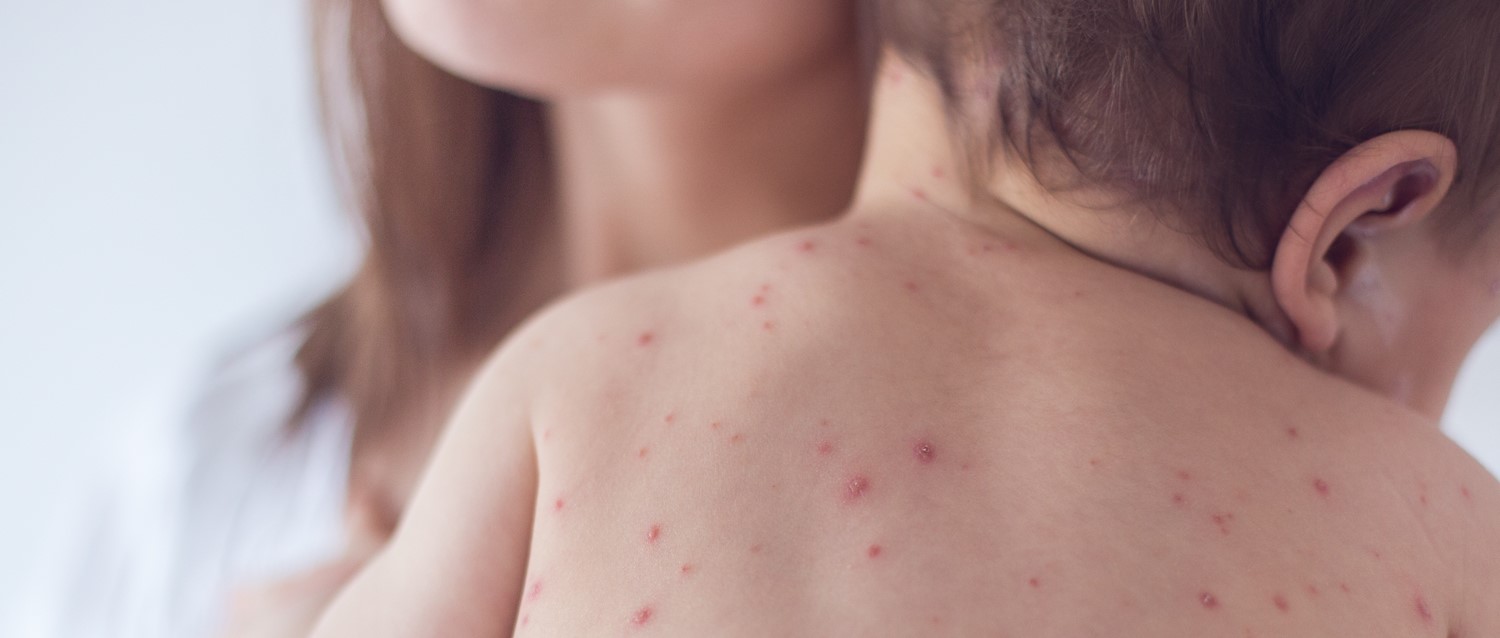
Varicelle chez les enfants
Varicelle provoque des boutons (une éruption cutanée) et peut rendre un enfant généralement mal à l'aise. Le traitement vise à soulager les symptômes jusqu'à ce que la maladie passe. La récupération complète est habituelle chez les enfants de moins de 12 ans. Les complications graves sont rares, mais plus susceptibles de survenir chez les enfants dont le système immunitaire est affaibli, comme ceux sous chimiothérapie.
par Dr Colin Tidy, MRCGP

Santé des enfants
Poux de tête et lentes
Les poux de tête sont de petits insectes qui vivent dans les cheveux humains et se nourrissent de sang du cuir chevelu. Leurs œufs sont appelés lentes.
par Dr Colin Tidy, MRCGP
Questions fréquemment posées
Can mumps affect adults differently than children?
Yes, adults and teenagers who get mumps are more likely to experience complications compared to young children. While mumps is generally a mild illness, complications can include inflammation of the testicles, brain inflammation, or hearing loss, which are more common in older individuals.
How long does lifelong immunity from mumps last after infection?
Once you have had mumps, your immune system creates antibodies that clear the virus and typically provide lifelong immunity. This means it is very rare to get mumps more than once.
If I suspect my child has mumps, should I keep them home from school immediately?
Yes, if you suspect mumps, the affected person should stay off school, nursery, college, or work and avoid contact with others as much as possible. This should continue from the moment mumps is suspected and for five days after the swelling of the parotid gland begins.
What is a 'notifiable disease' in the context of mumps?
Mumps is classified as a 'notifiable disease,' which means that all suspected cases must be reported to the Health Protection Agency. This allows public health authorities to monitor and manage the spread of the infection.
What kind of drinks are best for someone with mumps, especially if they have a fever?
It is important to drink plenty of fluids, especially if you have a high temperature. However, fruit juice may stimulate the parotid glands to produce more saliva and cause increased pain. Plain water is the best choice if this happens.
Lectures complémentaires et références
- Mumps: guidance, data and analysis; Public Health England (now UKHSA), April 2013 - last updated 2022
- Mumps: The Green Book, Chapter 23; Public Health England (now UKHSA)
- Oreillons; NICE CKS, décembre 2023 (accès réservé au Royaume-Uni)
À propos de l'auteurVoir la biographie complète

Dr Philippa Vincent, MRCGP
Médecin généraliste, Auteur médical
MB BS, Bsc, MRCGP (2000), DCH, DFSRH, DRCOG
Dr Philippa Vincent est un médecin généraliste du NHS travaillant dans le nord de Londres.
À propos du critiqueVoir la biographie complète

Dr Colin Tidy, MRCGP
Médecin généraliste, Auteur médical
MBBS, MRCGP, MRCP (Paediatrics), DCH
Le Dr Colin Tidy est un médecin du NHS, basé dans l'Oxfordshire.
Historique de l'article
Les informations sur cette page sont rédigées et examinées par des cliniciens qualifiés.
Article également disponible en Anglais, Allemand, Espagnol, Français, Italien, Portugais, Hindi, Hébreu, Arabe, and Suédois.
Prochaine révision prévue : 14 mars 2028
16 mars 2023 | Dernière version

Demandez, partagez, connectez-vous.
Parcourez les discussions, posez des questions et partagez vos expériences sur des centaines de sujets de santé.

Vous ne vous sentez pas bien ?
Évaluez vos symptômes en ligne gratuitement
Inscrivez-vous à la newsletter Patient
Votre dose hebdomadaire de conseils de santé clairs et fiables - rédigés pour vous aider à vous sentir informé, confiant et maître de la situation.
En vous abonnant, vous acceptez notre Politique de confidentialité. Vous pouvez vous désabonner à tout moment. Nous ne vendons jamais vos données.
Plus sur la santé des enfants
- Déficit en alpha-1 antitrypsine
- Harcèlement
- Cancers infantiles
- Cri du chat syndrome
- Nourrir les bébés prématurés
- Traitement et prévention des poux de tête
- Immunisation
- Invagination intestinale et volvulus chez les enfants
- Douleur abdominale du côté gauche chez les enfants
- Syndrome de Marfan
- Méningite
- Infection méningococcique
- dystrophie musculaire
- Érythème fessier
- Rhabdomyosarcome
- Rubéole
- Dermatite séborrhéique chez les bébés
- Spina bifida
- Strabisme chez les enfants