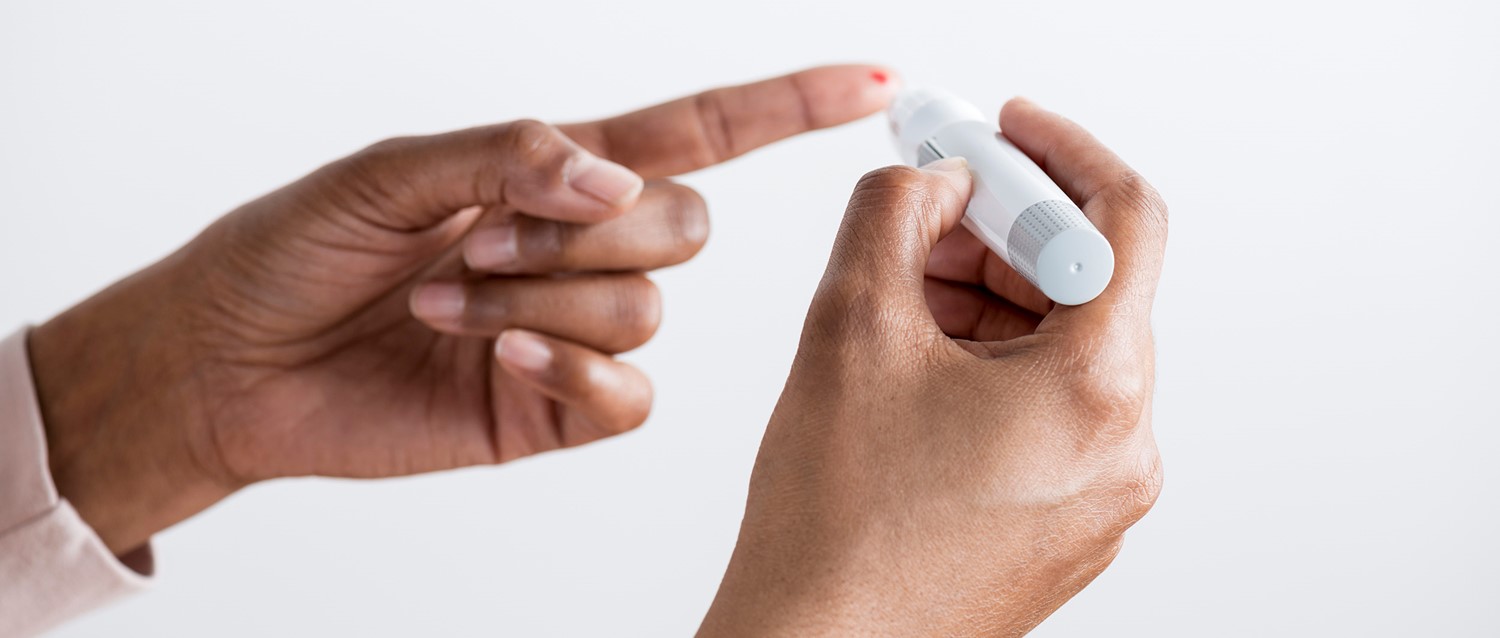
L'avenir du traitement du diabète
Revu par Dr Sarah JarvisDernière mise à jour par Danny ChadburnDernière mise à jour 28 sept. 2017
Respecte les directives éditoriales
- TéléchargerTélécharger
- Partager
- Language
- Discussion
- Version audio
- Ajouter aux sources préférées sur Google
How might the landscape of diabetes have changed by 2050? We asked leading diabetes physician Dr David Cavan, author of Reverse Your Diabetes et Reverse Your Diabetes Diet, for his predictions.
Inscrivez-vous à notre cours gratuit de 10 semaines sur le diabète !
Chaque semaine, nous explorerons un sujet différent pour vous aider à mieux comprendre et gérer votre diabète, y compris la vie quotidienne et les médicaments, le bien-être mental, les dernières technologies en matière de diabète et la nutrition.
En vous abonnant, vous acceptez notre Politique de confidentialité. Vous pouvez vous désabonner à tout moment. Nous ne vendons jamais vos données.
Will rates of diabetes continue to rise?
Unfortunately, yes. In the UK, numbers rose from 1.4 million to almost 3.5 million between 1996 and 2016. Globally, diabetes is predicted to affect 642 million by 2040 – that’s one in 10 people.
Diabète de type 2 is driving the increase. It affects over 90% of those diagnosed and is directly linked to modern day diet and lifestyles; 50 years ago, it was relatively uncommon. We’ve seen a significant increase in cases over the past decade, so a significant change in the way we live our lives is needed to slow its growth.
Diabète de type 1, which affects less than 10% of sufferers, is also on the rise but more slowly - and we’re not sure why. It’s an autoimmune condition, not linked to diet or lifestyle, but autoimmune conditions in general seem to be on the increase.
What does this mean for the NHS?
Vast expense – the total cost associated with diabetes in the UK stands at £23.7 billion and is predicted to rise to £39.8 billion by 2035/6. It’s not just treatment costs but also wider economic implications, such as time off work. Treating the complications of diabetes, such as cardiovascular problems or damage to the nerves, kidneys, eyes or feet, is the biggest expense.
The solution? Prevention, reversal, and better management of symptoms, so people don’t get to the stage where they have complications. It needs a huge public health drive to raise awareness, change habits and prevent type 2 developing in the first place.
Is there a cure on the horizon?
Currently, type 2 diabetes is mainly treated with medication, such as metformin, to improve insulin sensitivity and normalise blood sugar. If these stop working effectively, insulin may be needed.
However, the exciting news is we now know that weight-loss surgery, also known as bariatric surgery, can lead to remission in type 2. The effects have also been replicated in studies using a very low-calorie diet for rapid and significant weight loss.
Although this works in the short term, there also needs to be a long-term lifestyle change, so I have been developing a low-carbohydrate eating plan to promote weight loss and reduce blood glucose levels. Following a low-fat, low-calorie diet - which is often high-carb - traditionally recommended by doctors doesn’t make sense if you can’t tolerate carbohydrates.
Dr David Unwin, a GP in Southport, has already saved his surgery tens of thousands of pounds in drug costs by advising those with type 2 diabetes to follow a low-carb diet, and has published papers on his findings. Of course, it’s not a cure if people revert to poor habits - it needs to be a complete and lasting change.
What about a cure for type 1 diabetes?
There’s certainly potential for a cure by 2050. One theory is that type 1 is an autoimmune condition process triggered by an infection of some sort, along with a genetic predisposition. If scientists could identify the infection or trigger, they could potentially vaccinate against it.
The other major discovery could be stem cell technology – using the body’s own stem cells to prevent or treat certain conditions. If we could use stem cells to get the body to start producing insulin again, this would effectively be a cure.
How might treatment for type 1 develop?
The latest advance is continuous glucose monitoring, via a sensor implanted just under the skin, which gives minute-by-minute feedback on blood glucose levels rather than insulin users having to do regular pinprick tests. At the moment these are expensive and not widely available on the NHS, but I think their use will become more widespread.
The recent introduction of insulin pumps, rather than injections, has been a life-changing development for many with type 1 diabetes. These are worn continuously and deliver fast-acting insulin throughout the day and night, removing the need for injections and giving the user very fine control over how much they receive and when. The pump is made up of a small, battery-operated pack, attached to a thin, flexible tube (cannula) that inserts just beneath the skin, usually on the abdomen.
We’ll see insulin pumps further refined, to the point where artificial intelligence, or AI, is delivering treatment via sensors. If a sensor can interpret information and make intelligent decisions to instruct the pump, it’s acting as an artificial pancreas. This is already in research stages and looking highly possible.
The European Conference on Artificial Intelligence (ECAI) in 2016 even included a workshop on AI for diabetes. This makes sense because the core of type 1 diabetes management is pattern recognition - machine-learning algorithms could make light work of analysing all the variables, such as weight, food intake and activity levels, that are needed to tailor a patient’s insulin dose.
Other areas of research are looking at delaying the onset of treatment by targeting the immune system, and slowing the destruction of insulin-producing cells.
So is there hope on the horizon?
The future is looking brighter for those with type 1, or a predisposition to diabetes, but when it comes to type 2 we all need to act. There’s no medical vaccination yet, but a healthy diet and lifestyle is a vaccine.
Sélections des patients pour Diabète sucré
Diabète
Qu'est-ce que la surveillance du glucose en continu et comment peut-elle aider les personnes atteintes de diabète ?
La technologie change la façon dont nous vivons nos vies et facilite la gestion des conditions de santé telles que le diabète. Un lecteur de glycémie flash, également appelé flash, utilise un capteur placé à l'arrière du haut du bras et porté à l'extérieur par l'utilisateur. Il est attaché à une petite aiguille qui se trouve juste sous la peau. Cela permet de surveiller les informations sur le glucose rapidement et facilement. Mais que sont exactement ces appareils et quels en sont les avantages ?
par Lydia Smith
Diabète
Qu'est-ce qu'une « hypo » et peut-on en avoir une si on n'a pas de diabète ?
Hypoglycémie - souvent appelée familièrement une « hypo » - survient lorsque le taux de sucre dans le sang d'une personne chute trop bas. Bien qu'elle affecte principalement les personnes diabétiques, en particulier si elles prennent de l'insuline, il est également possible pour celles qui ne sont pas diabétiques de faire une hypo. Mais pourquoi la hypoglycémie se produit-elle exactement - et quels en sont les risques ?
par Lydia Smith
À propos de l'auteur

Danny Chadburn
Responsable du Contenu
Danny était le précédent responsable du contenu chez Patient.
À propos du critiqueVoir la biographie complète

Dr Sarah Jarvis
Consultant Clinique
MA (Cantab), BM, BCh (Oxon), DRCOG, FRCGP, MBE
Après avoir suivi une formation en médecine à Cambridge et Oxford, le Dr Sarah Jarvis MBE est devenue médecin généraliste.
Historique de l'article
Les informations sur cette page sont examinées par des cliniciens qualifiés.
Article également disponible en Anglais, Allemand, Espagnol, Français, Italien, Portugais, Hindi, Hébreu, Arabe, and Suédois.
28 sept. 2017 | Dernière version

Demandez, partagez, connectez-vous.
Parcourez les discussions, posez des questions et partagez vos expériences sur des centaines de sujets de santé.

Vous ne vous sentez pas bien ?
Évaluez vos symptômes en ligne gratuitement
Inscrivez-vous à la newsletter Patient
Votre dose hebdomadaire de conseils de santé clairs et fiables - rédigés pour vous aider à vous sentir informé, confiant et maître de la situation.
En vous abonnant, vous acceptez notre Politique de confidentialité. Vous pouvez vous désabonner à tout moment. Nous ne vendons jamais vos données.
Plus sur le diabète
- Les applications peuvent-elles vraiment aider à gérer le diabète ?
- Un meilleur sommeil peut-il aider à gérer le diabète ?
- Les probiotiques peuvent-ils traiter l'obésité et le diabète ?
- Peut-on inverser le diabète de type 2 ?
- Surveillance continue de la glycémie dans le diabète de type 1
- Diapression : démêler le lien entre le diabète et la dépression
- Comment la technologie change le diabète
- Comment manger au restaurant avec le diabète
- Comment grignoter quand on a le diabète
- Le diabète est-il considéré comme un handicap ?
- Gérer le diabète de type 2 avec l'exercice
- Vidéo : Comment savoir si vous avez un diabète de type 2 ?
- Vidéo : Quelle est la différence entre le diabète de type 1 et le diabète de type 2 ?
- Qu'est-ce que la diabulimie ?
- Qu'est-ce que la surveillance du glucose en continu et comment peut-elle aider les personnes atteintes de diabète ?
- Qu'est-ce que le syndrome métabolique ?
- Quel est le lien entre le diabète et les troubles alimentaires ?
- Pourquoi prendre soin de vos pieds est si important si vous êtes diabétique
- Pourquoi une hypoglycémie est dangereuse
- Vos médicaments contre le diabète expliqués