Comment la technologie change le diabète
Revu par Dr Sarah JarvisDernière mise à jour par Dr Colin Tidy, MRCGPDernière mise à jour 29 sept. 2017
Respecte les directives éditoriales
- TéléchargerTélécharger
- Partager
- Language
- Discussion
- Version audio
- Ajouter aux sources préférées sur Google
Le rôle de la technologie dans la prise en charge du diabète continue de croître rapidement. Les développeurs et chercheurs travaillent à créer de nombreux outils technologiques pour aider dans plusieurs aspects du diabète, y compris le diagnostic, l'information des patients, le traitement, la surveillance des niveaux de glucose, la détection des complications et même la fourniture de soins personnalisés aux patients via la télémédecine.
Inscrivez-vous à notre cours gratuit de 10 semaines sur le diabète !
Chaque semaine, nous explorerons un sujet différent pour vous aider à mieux comprendre et gérer votre diabète, y compris la vie quotidienne et les médicaments, le bien-être mental, les dernières technologies en matière de diabète et la nutrition.
En vous abonnant, vous acceptez notre Politique de confidentialité. Vous pouvez vous désabonner à tout moment. Nous ne vendons jamais vos données.
Many of the emerging technologies for diabetes are mainly for diabète de type 1 - for example, continuous glucose monitoring and insulin pumps. However, some of the new technologies are also very important for diabète de type 2 - for example, sensors for early diagnosis of diabetes and the early diagnosis of some of the complications of diabetes.
Improving diabetes diagnosis
There are now emerging technologies that are being used to create sensors for early diagnosis of diabetes and for the diagnosis of some of the complications of diabetes such as nerve damage (neuropathie).
There are also analytical tools that can be used, such as a tool to analyse photographs of the back of the eye (retina) and so enable earlier diagnosis of rétinopathie diabétique.
Improving monitoring of glucose and ketones
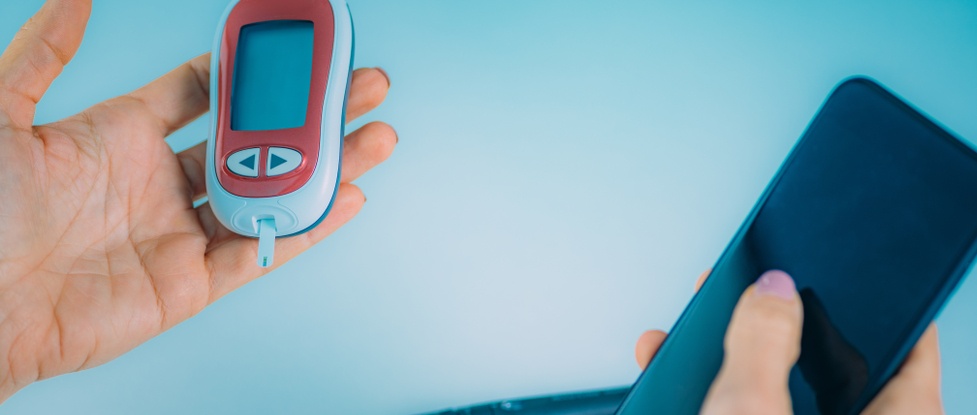
Traditionally glucose monitoring has required using lancets to get a drop of blood on to a test strip. Continuous glucose monitoring has become available to provide a more complete picture of blood glucose levels. This measures blood sugar levels throughout the day and night using a tiny electrode or glucose sensor inserted under the skin. The monitor alerts you if your reading is too high or low. This ongoing monitoring makes it easier to make adjustments before your blood sugar levels become very high or very low.
Glucose monitors have tended to be big and bulky in the past but modern devices have become much more streamlined and much easier to use, as well as providing much more accurate monitoring. Most of these devices are also compatible with Apple and other widely used devices. As an example, the iHealth Smart Gluco-Monitoring System connects wirelessly with your smartphone to provide more accurate information that can easily be exported and shared with your healthcare professional.
Technology is also making it much easier to keep an accurate record of your daily blood sugar levels, food intake, physical activity and medication. For example, the iHealth Smart Glucose Meter functions with the iHealth Gluco App, a mobile health app, to allow users to log their daily activities and other information.
Apple has announced that a new Bluetooth application programming interface will allow users of Apple Watch to link the device directly with a glucose sensor from Dexcom.
A small glucose monitoring patch (Freestyle Libre system) is available in the UK. The patch, with a sensor placed under the skin, can be applied to the back of the arm and each patch lasts for two weeks. The blood glucose readings can also be transferred to a smartphone. It offers fingerprick-free glucose testing but, unlike continuous glucose monitoring systems, does not automatically alert you if your sugar is low or high.
Research into future sensors is getting even more exciting. A sensor being developed in South Korea monitors blood sugar levels by analysing the sweat on your skin. Also in development are 'smart socks' which use temperature sensors to detect areas of swelling on the feet and send an alert to a mobile app, preventing further injury if you have any nerve damage with loss of sensation in your feet.
There is also now a range of available biosensors to measure and quantify ketone levels to help people with type 1 diabetes become aware of possible ketoacidosis much sooner.
Insulin pens and pumps
Smart insulin pens are becoming available which not only calculate your dosage but also track and record the doses to help ensure you don’t forget your insulin injections.
Although insulin pumps have been available since the 1990s, technology is improving and making them more accurate and effective to use. Pumps are worn close to the body and release insulin as needed via a catheter located under the skin. Modern insulin pumps contain a range of sensors to ensure the safe and controlled delivery of insulin.
Progression in both glucose monitoring and insulin delivery technologies is allowing the delivery of insulin in the same way as a normal pancreas. This effectively produces an 'artificial pancreas' system that can deliver controlled insulin doses based on the blood glucose levels indicated by accurate sensors.
In July 2015, Dr Edward Damiano introduced the iLet, a bionic pancreas. The iLet is a single hand-held unit. The user wears a continuous glucose sensor on the body. This sends glucose levels directly to the iLet device, which has two built-in pumps that deliver insulin and glucagon. This has the potential of bringing average glucose levels down to levels that would reduce the risk of long-term complications and reduce the risk of hypos.
'Smart Insulin' is being researched in the UK. This involves capsules which travel through the body and release insulin when they come into contact with high levels of blood sugar.
Inhaled insulins
Although inhaled insulins remove the need for using needles, they have so far failed to make any significant impact.
In 2006, the US Food and Drug Administration (FDA) approved the use of Exubera, a form of inhalable insulin. In 2007, Pfizer announced that it would no longer manufacture or market Exubera.
In June 2014, the FDA approved Afrezza, another fast-acting inhaled insulin. In 2014 Mannkind and Sanofi agreed that Sanofi would take over manufacturing and marketing of Afrezza, but Sanofi said it was dropping the effort in January 2016 due to poor sales. However, Afrezza continues to be available.
In general, inhaled insulins have been more rapidly absorbed than subcutaneous injected insulin, with a faster peak concentration. Therefore inhaled insulins must be used with long-acting insulin injections.
Creating new care possibilities
Technology is also improving the way doctors collect, track and analyse data to provide more effective care. Telemedicine can be provided remotely to give more patients access to care. This type of care provides more immediate responses to concerns.
Sélections des patients pour Diabète sucré
Diabète
Le lien entre le diabète et les troubles de santé mentale
Les symptômes physiques du diabète nécessitent une gestion 24 heures sur 24, 7 jours sur 7. Selon Diabetes UK, 2 personnes sur 5 se sentent mentalement dépassées par les exigences de vivre avec cette condition.
par Lawrence Higgins

Diabète
Diapression : démêler le lien entre le diabète et la dépression
Le diabète peut perturber votre glycémie et votre humeur - cela peut être fatigant et exigeant. Vivre avec le diabète signifie que vous devez accorder une attention particulière à votre santé mentale et physique.
par Victoria Raw
À propos de l'auteurVoir la biographie complète

Dr Colin Tidy, MRCGP
Médecin généraliste, Auteur médical
MBBS, MRCGP, MRCP (Paediatrics), DCH
Le Dr Colin Tidy est un médecin du NHS, basé dans l'Oxfordshire.
À propos du critiqueVoir la biographie complète

Dr Sarah Jarvis
Consultant Clinique
MA (Cantab), BM, BCh (Oxon), DRCOG, FRCGP, MBE
Après avoir suivi une formation en médecine à Cambridge et Oxford, le Dr Sarah Jarvis MBE est devenue médecin généraliste.
Historique de l'article
Les informations sur cette page sont examinées par des cliniciens qualifiés.
Article également disponible en Anglais, Allemand, Espagnol, Français, Italien, Portugais, Hindi, Hébreu, Arabe, and Suédois.
29 sept. 2017 | Dernière version

Demandez, partagez, connectez-vous.
Parcourez les discussions, posez des questions et partagez vos expériences sur des centaines de sujets de santé.

Vous ne vous sentez pas bien ?
Évaluez vos symptômes en ligne gratuitement
Inscrivez-vous à la newsletter Patient
Votre dose hebdomadaire de conseils de santé clairs et fiables - rédigés pour vous aider à vous sentir informé, confiant et maître de la situation.
En vous abonnant, vous acceptez notre Politique de confidentialité. Vous pouvez vous désabonner à tout moment. Nous ne vendons jamais vos données.
Plus sur le diabète
- Les applications peuvent-elles vraiment aider à gérer le diabète ?
- Un meilleur sommeil peut-il aider à gérer le diabète ?
- Les boissons diététiques peuvent-elles causer le diabète de type 2 ?
- Pouvez-vous demander des prestations d'invalidité si vous avez le diabète ?
- Changer vos habitudes alimentaires après un diagnostic de diabète de type 2
- Régime pour diabète : gérer le diabète de type 2
- Le diabète augmente le risque d'insuffisance cardiaque, particulièrement chez les femmes
- Technologie du diabète
- Conseils pour faire ses courses alimentaires pour les personnes diabétiques
- Comment j'ai inversé mon diabète de type 2 - L'histoire de Matt
- Comment gérer le diabète pendant le Ramadan
- Comment grignoter quand on a le diabète
- Le diabète est-il considéré comme un handicap ?
- Quiz : Ai-je du diabète ?
- L'avenir du traitement du diabète
- Qu'est-ce que la diabulimie ?
- Qu'est-ce que la surveillance du glucose en continu et comment peut-elle aider les personnes atteintes de diabète ?
- Qu'est-ce que le syndrome métabolique ?
- Que manger à Noël si vous avez le diabète de type 2
- Ce que vous devez savoir sur l'épuisement lié au diabète