
How to lower cortisol levels: 10 proven ways
Revu par Dr Colin Tidy, MRCGPRédigé par Heather AinsworthPublié à l'origine 17 mars 2026
Respecte les directives éditoriales
- TéléchargerTélécharger
- Partager
- Language
- Discussion
- Version audio
What if lowering your cortisol levels was simpler than you think?
This powerful stress hormone helps your body respond to pressure, but when it remains high it can affect both mental and physical health.
Fortunately, research-backed habits can help lower cortisol and get you feeling like yourself again.
Sign up for our free 10-week Healthy Ageing course
Take the first step to feeling your best as you grow older. Each week, we'll focus on different areas to help you age well and maintain a healthy body and mind, including exercise, diet, anti-ageing supplements, healthy brain ageing, and bone and joint health.
En vous abonnant, vous acceptez notre Politique de confidentialité. Vous pouvez vous désabonner à tout moment. Nous ne vendons jamais vos données.
Dans cet article:
Sélections de vidéos pour Autres problèmes hormonaux
Cortisol is designed to help you handle short bursts of stress. But too much of it keeps your body on high alert, which wears it down and affects overall health.
Chronically high cortisol levels can disrupt sleep, increase appetite, and contribute to weight gain - especially around the stomach. It can weaken the immune system, making you more likely to get sick, and it can raise blood pressure, putting extra strain on the heart.
High cortisol can also cause mood changes such as l'anxiété, irritability, or low mood, and it may lead to fatigue because the body stays in “stress mode” for too long.
Over time, it can even affect memory, slow healing, and interfere with digestion.
The good news? Cortisol levels are highly responsive to lifestyle changes. Here are 10 proven ways to help lower them.
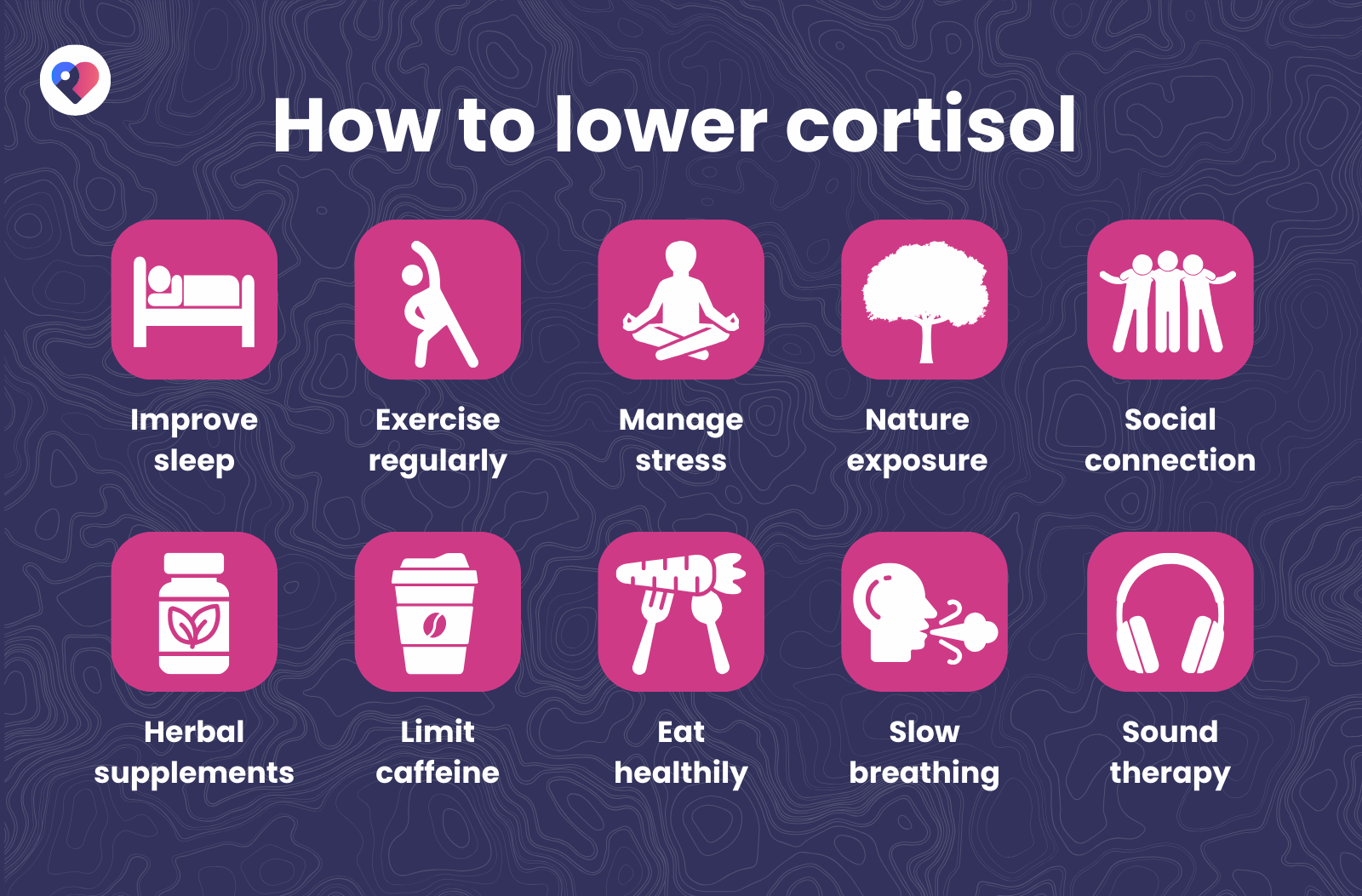
© Patient / Heather Ainsworth
Continuez à lire ci-dessous
1. Improve sleep
Poor or insufficient sleep can disrupt the natural daily rhythm of cortisol, which normally peaks in the morning and falls at night.
When sleep is disrupted, cortisol may stay elevated in the evening1 - a pattern linked with chronic stress and a range of health problems.
Getting enough good-quality sleep helps restore this natural rhythm, supporting emotional regulation and allowing the body to recover from stress.2
2. Exercise regularly
Retour au sommaireRegular exercise can help the body manage stress more effectively. Over time, exercise may lower baseline cortisol levels and improve how quickly the body recovers after periods of physical or emotional stress.3
Exercises such as marcher, l'entraînement en force, et yoga provide a simple, enjoyable way to stay active regularly.
Continuez à lire ci-dessous
3. Manage stress
Retour au sommaireStress-management techniques such as meditation and la pleine conscience can help reduce cortisol levels and improve stress regulation.4
Practicing these techniques helps turn on the body’s ‘rest and digest’ system, which calms the stress response and can gradually lower cortisol levels over time.
4. Connect with nature
Retour au sommaireSpending time in nature has been shown to lower cortisol and other stress responses such as blood pressure, and heart rate.5
This effect may be due to a combination of gentle physical activity, sensory engagement with nature, and reduced mental strain.
Activities such as walking in parks or practising 'forest bathing' have been associated with lower salivary cortisol compared with time spent in urban environments.6
Continuez à lire ci-dessous
5. Stay socially connected
Retour au sommaireSocial support, emotional closeness, and meaningful connections help buffer stress responses and reduce hypothalamic-pituitary-adrenal (HPA) axis activation - the system that regulates cortisol release.
Larger social integration and higher emotional support have been linked to healthier daily cortisol patterns, with levels declining more naturally throughout the day.7
6. Take herbal supplements
Retour au sommaireSome herbal supplements known as adaptogens are thought to help the body adapt to stress. One example is ashwagandha, which may influence the body’s stress response and potentially lower cortisol levels.
Adults taking ashwagandha extract have experienced significantly lower cortisol levels after eight weeks compared with those taking a placebo.8
7. Limit caffeine
Retour au sommaireCaffeine stimulates the central nervous system, increasing alertness but also triggering cortisol release, especially in sensitive individuals or when consumed later in the day.9
Drinking large amounts of caffeine may lead to stronger cortisol responses, so moderating intake can help keep levels more stable.
8. Eat healthily
Retour au sommaireEating a alimentation équilibrée rich in whole foods, antioxidants, healthy fats, and fibres can support steady energy levels and overall metabolic health.
This may help reduce chronic physiological stress, which in turn can contribute to healthier cortisol regulation.10
Limiting highly processed foods and excessive sugar may also help stabilise energy and stress responses.
9. Practice slow breathing
Retour au sommaireSlow, controlled breathing techniques - such as diaphragmatic breathing - have been associated with decreases in cortisol levels and stress markers.11
Deep breathing activates the parasympathetic nervous system - which is responsible for relaxing your body after periods of stress, calming the body’s stress response and helping reduce short-term cortisol production.
To practice diaphragmatic breathing, simply breathe in slowly through your nose and exhale through pursed lips.
10. Try music therapy
Retour au sommaireListening to relaxing music can promote a sense of calm and trigger the body’s relaxation response. This may help reduce stress and the associated release of cortisol.12
Pour beaucoup de gens, la musicothérapie can be a simple and accessible way to unwind and support stress management.
Which foods help lower cortisol?
Retour au sommaireCertain foods can help your body manage stress and support healthy cortisol levels by reducing inflammation, stabilising blood sugar, and supporting the body’s stress response.
Ceux-ci incluent :
Fatty fish – salmon, mackerel, sardines.
Légumes à feuilles – spinach, kale, Swiss chard.
Fruits high in vitamin C – oranges, kiwis, berries.
Wholegrains – oats, quinoa, brown rice.
Nuts and seeds – almonds, walnuts, pumpkin seeds.
Herbs and spices – turmeric, ginger, garlic.
Dark chocolate – in moderation.
Add these foods to your daily meals for a simple, delicious way to help your body manage stress and maintain healthy cortisol levels.
Quand consulter un médecin
If lifestyle changes haven’t improved your symptoms, you should see a doctor - particularly if you continue to experience:
Ongoing fatigue or low energy.
Unexplained weight gain, particularly around the stomach.
Trouble sleeping or insomnia.
Hypertension artérielle.
Significant mood changes such as anxiety, irritability, or low mood.
Frequent illness or a weakened immune system.
A doctor can help determine if elevated cortisol is linked to an underlying condition, such as Syndrome de Cushing, and recommend tests or treatments to support your health.
Résumé
Retour au sommaireHigh cortisol can affect both physical and mental health, causing symptoms such as poor sleep, weight gain, fatigue, anxiety, and a weakened immune system.
Research shows that simple lifestyle changes can help lower cortisol naturally.
The most effective ways to lower cortisol levels include improving sleep, exercising regularly, managing stress with techniques such as mindfulness or breathing exercises, spending time in nature, maintaining social connections, limiting caffeine, and eating a balanced diet rich in whole foods.
If symptoms continue despite these changes, it’s important to speak with a doctor to rule out underlying health conditions.
Sélections de patients pour Autres problèmes hormonaux
Hormones
Cortisol élevé : symptômes, causes et tests
If you’ve been feeling unusually tired, noticing stubborn weight gain, or seeing changes in your skin, it could be your body’s way of trying to tell you that cortisol - your stress hormone - is running high. While cortisol is essential for managing stress, too much can quietly disrupt your body. Recognising symptoms of high cortisol is key to protecting your health and helping you stay balanced, resilient, and healthy.
par Heather Ainsworth

Hormones
Avez-vous besoin d'un test de déséquilibre hormonal ?
If your hormones are out of balance, your body may show certain symptoms or changes. The best way to check for a hormone imbalance is by talking to your doctor, who may recommend you for a test. In this article, we look at what a hormone imbalance test involves, the common symptoms, and explore potential health issues linked to hormonal imbalances.
par Victoria Raw
Lectures complémentaires et références
- Leproult et al: Sleep loss results in an elevation of cortisol levels the next evening
- O'Byrne et al: Sleep and Circadian Regulation of Cortisol: A Short Review
- Caplin et al: The effects of exercise intensity on the cortisol response to a subsequent acute psychosocial stressor
- Rogerson et al: Effectiveness of stress management interventions to change cortisol levels
- Fan & Baharum: The effect of exposure to natural sounds on stress reduction
- Kobayashi et al: Combined Effect of Walking and Forest Environment on Salivary Cortisol Concentration
- Chin et al: Age moderates the association between social integration and diurnal cortisol measures
- Lopresti et al: An investigation into the stress-relieving and pharmacological actions of an ashwagandha (Withania somnifera) extract
- Lovallo et al: Caffeine stimulation of cortisol secretion across the waking hours in relation to caffeine intake levels
- Soltani et al: Increasing Dietary Carbohydrate as Part of a Healthy Whole Food Diet Intervention Dampens Eight Week Changes in Salivary Cortisol and Cortisol Responsiveness
- Hopper et al: Effectiveness of diaphragmatic breathing for reducing physiological and psychological stress in adults
- Linnemann et al: Music listening as a means of stress reduction in daily life
Continuez à lire ci-dessous
Historique de l'article
Les informations sur cette page sont examinées par des cliniciens qualifiés.
Prochaine révision prévue : 17 mars 2029
17 mars 2026 | Publié à l'origine
Écrit par :
Heather AinsworthRevu par
Dr Colin Tidy, MRCGP

Demandez, partagez, connectez-vous.
Parcourez les discussions, posez des questions et partagez vos expériences sur des centaines de sujets de santé.

Vous ne vous sentez pas bien ?
Évaluez vos symptômes en ligne gratuitement
Inscrivez-vous à la newsletter Patient
Votre dose hebdomadaire de conseils de santé clairs et fiables - rédigés pour vous aider à vous sentir informé, confiant et maître de la situation.
En vous abonnant, vous acceptez notre Politique de confidentialité. Vous pouvez vous désabonner à tout moment. Nous ne vendons jamais vos données.