Comment repérer les signes d'une dent morte
Revu par Dr Krishna Vakharia, MRCGPRédigé par Amberley DavisPublié à l'origine 24 nov. 2022
Respecte les directives éditoriales
- TéléchargerTélécharger
- Partager
- Language
- Discussion
- Version audio
- Ajouter aux sources préférées sur Google
Une dent morte peut faire plus que gâcher votre sourire - elle peut être une source de douleur, d'inconfort et de gêne qui perturbe votre vie quotidienne. Comment savoir si vous avez une dent en train de mourir ou morte et quelles sont les options de traitement ?
What is a dead tooth?
A dead tooth, also called a non-vital tooth or pulpless tooth, is a tooth that's no longer receiving a fresh supply of blood. Cosmetic dentist Dr Sam Jethwa explains how a tooth can die:
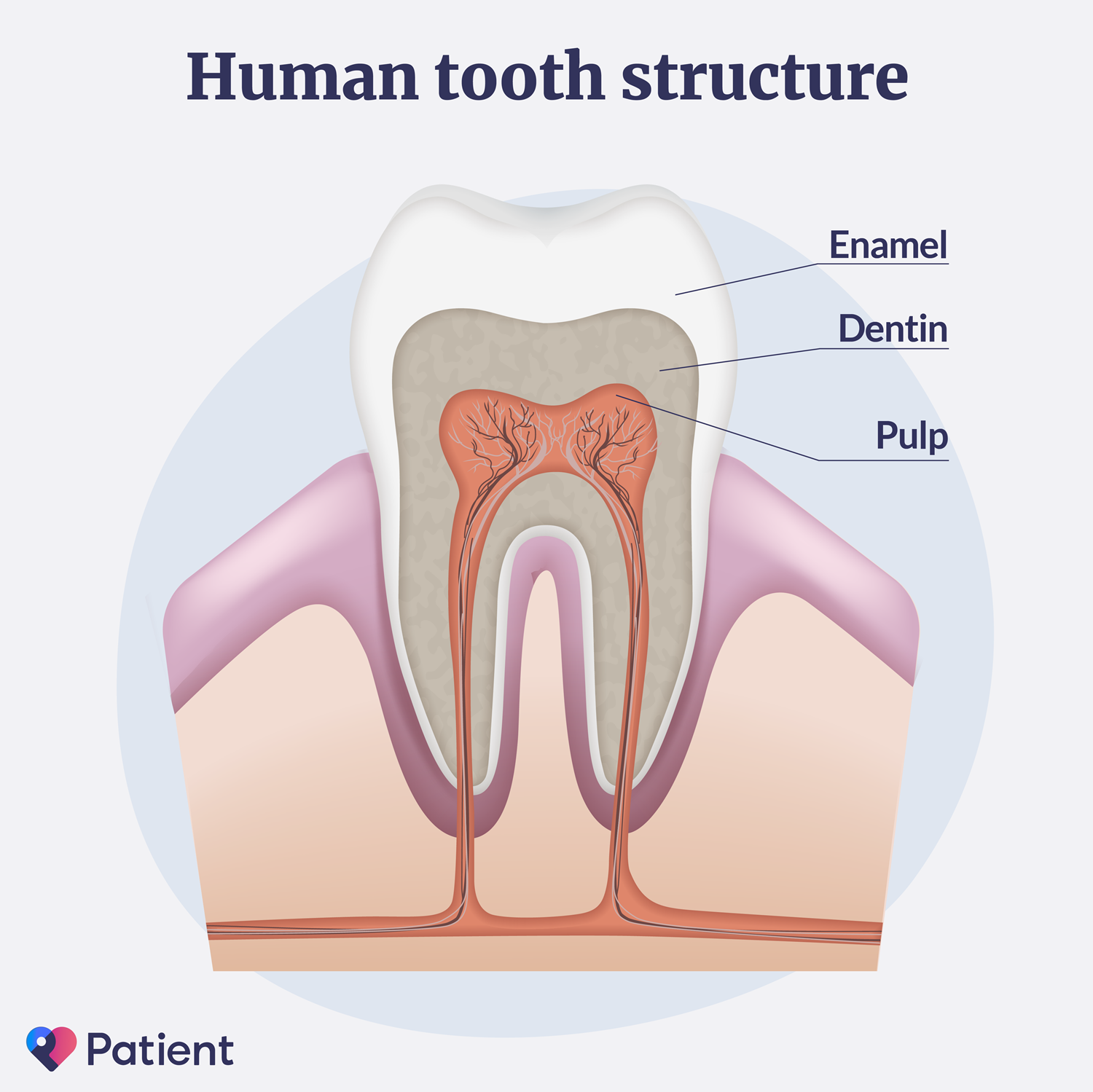
"Our teeth are made up of three layers; the enamel on the outside, the dentin on the inside, and in the middle the pulp. The pulp, a rich source of nerves and blood vessels, keeps a tooth alive and healthy. When these blood vessels and nerves die, then the tooth dies as well."
The three layers
What causes a dead tooth?
According to Dr Jethwa, there are three reasons that can cause these vessels and nerves to die; physical trauma and damage - usually from an injury or sometimes even the process of having a filling - or from la carie dentaire.
Tooth decay tends to be the result of poor hygiène dentaire or a diet that's high in sugar. This prevents bacteria from building up, infecting the pulp, and cutting off its blood flow.
What does a dead tooth look like?
You can often identify a dying or dead tooth by the way it looks. This is because the tooth becomes discoloured, turning grey or black in appearance. This discolouration will continue to grow more obvious as the tooth continues to decay and the nerve dies.
Other dead tooth symptoms
Other signs of a dead tooth include:
Mal de dents - this can be constant or happen at certain times, such as when the tooth comes into contact with hot or cold things.
Tooth sensitivity or a loss of sensation.
Swelling around the gum.
An abscess - a swollen, pus-filled bump.
Mauvaise haleine - sometimes a little bad breath is normal, especially morning breath, but it can be a sign of a dental problem.
How to treat a dead tooth
"It is possible to save a tooth that is dying, but time is of the essence," says Dr Jethwa. "For the tooth to be saved, you need an early diagnosis."
Can a dead tooth be saved?
This means you should visit a dental professional as soon as you notice the signs of a dead tooth. According to Dr Jethwa, your dentist may have materials that can be placed inside the tooth to regenerate the tooth tissue around the nerve and avoid root canal treatment.
He also explains the other treatment options:
Des un traitement de canal is a procedure that drills into a tooth to remove the dead pulp and replace it with a man-made substance. It's then sealed to prevent further infection.
The third treatment option is extraction - the total removal of the dead tooth if it's too damaged to repair. It's your choice if you then want to fill in this gap with an implant, denture, or bridge.
The cost is one consideration - NHS dentists have fixed priced treatment plans but costs at private dentists can vary depending on the pratice, and the type and size of the replacement. The Oral Health Foundation recommends getting a written estimate and treatment plan before starting any dental treatment, to avoid any financial surprises1.
Possible reasons for replacing your extracted dead tooth:
Aesthetics - you may not like how having a gap looks.
More strain - a missing tooth could place more strain on the remaining teeth.
Your bite - over time, your teeth may lean into the gap, changing the way your upper and lower teeth bite together. This could then lead to a build-up of food particles in the gap, increasing the risk of les maladies des gencives et la carie dentaire1.
Can you whiten a dead tooth?
"If the damage has already affected the tooth enamel and caused discolouration and brittleness, then an ultra-thin veneer could be an ideal way to hide the discoloration and protect the tooth from further damage," says Dr Jethwa.
However, this depends on how early the problem is identified. Your dentist will advise on the dental care options available to you, both in terms of your dental health and wellbeing, and also your cosmetic options.
Pour en savoir plus
Sélections des patients pour Soins dentaires
Soin bucco-dentaire
Ce que vos dents révèlent sur votre santé
La plupart d'entre nous connaissent l'importance de prendre soin de nos dents. Se brosser les dents deux fois par jour, utiliser du fil dentaire et maintenir une bonne hygiène dentaire peuvent aider à garder notre sourire éclatant, avec peu de besoin de soins dentaires coûteux. Mais saviez-vous que les problèmes dentaires peuvent également indiquer des problèmes dans le reste du corps ?
par Lynn Stephen

Soin bucco-dentaire
Comment protéger les dents de votre enfant
Les enfants d'aujourd'hui doivent de plus en plus se faire extraire plusieurs dents cariées, selon les données récentes sur les dépenses du NHS. C'est une situation préoccupante. Bien que l'accès aux dentistes soit considéré comme partiellement responsable, la plupart des autorités estiment que l'explosion de la teneur en sucre des aliments et des boissons est le principal facteur. Des mesures urgentes doivent être prises pour sauver les dents de nos enfants.
par Dr Laurence Knott
À propos de l'auteurVoir la biographie complète

Amberley Davis
Rédacteur senior
BA (Hons), CPD
Amberley est une rédactrice senior chez Patient et a écrit de manière approfondie sur une gamme de sujets liés à la santé et au bien-être.
À propos du critiqueVoir la biographie complète

Dr Krishna Vakharia, MRCGP
Médecin-chef pour la santé, Optum UK
MBChB, MRCGP(2013), BMedSci (hons), DFSRH, DRCOG, PGDipDerm (Distn)
Le Dr Krishna Vakharia est un médecin généraliste du NHS. Elle est également examinatrice régulière pour le diplôme de troisième cycle en dermatologie pratique à l'Université de Cardiff, ainsi que médecin-chef pour la santé chez Optum UK.
Historique de l'article
Les informations sur cette page sont examinées par des cliniciens qualifiés.
Article également disponible en Anglais, Allemand, Espagnol, Français, Italien, Portugais, Hindi, Hébreu, Arabe, and Suédois.
24 nov. 2022 | Publié à l'origine
Écrit par :
Amberley DavisRevu par
Dr Krishna Vakharia, MRCGP

Demandez, partagez, connectez-vous.
Parcourez les discussions, posez des questions et partagez vos expériences sur des centaines de sujets de santé.

Vous ne vous sentez pas bien ?
Évaluez vos symptômes en ligne gratuitement
Inscrivez-vous à la newsletter Patient
Votre dose hebdomadaire de conseils de santé clairs et fiables - rédigés pour vous aider à vous sentir informé, confiant et maître de la situation.
En vous abonnant, vous acceptez notre Politique de confidentialité. Vous pouvez vous désabonner à tout moment. Nous ne vendons jamais vos données.
Plus en soins bucco-dentaires
- Les exercices faciaux sont-ils bénéfiques pour le sommeil, la parole et la santé bucco-dentaire ?
- Inégalité dentaire : qu'est-ce que c'est et pourquoi existe-t-elle ?
- Combien de temps faut-il pour qu'une aphte guérisse ?
- Comment brosser et prendre soin des dents de votre enfant
- Comment faire face à la sensibilité dentaire
- Comment surmonter votre peur du dentiste
- Comment protéger les dents de votre enfant
- Mis à jourComment repérer les signes du cancer de la bouche
- Comment prendre soin des lèvres gercées cet hiver
- Le blanchiment des dents est-il sûr ?
- Mis à jourLe nettoyage interdentaire par jet d'eau est-il efficace ?
- Les scientifiques ont peut-être trouvé un moyen de régénérer l'émail dentaire
- Faits surprenants que tout le monde devrait connaître sur les boutons de fièvre
- Les meilleurs en-cas pour des dents saines
- La raison pour laquelle vos gencives saignent
- Le guide ultime du fil dentaire
- Qu'est-ce qui cause une bosse sur la langue ?
- Quelles sont les causes des aphtes et comment les traiter
- Qu'est-ce qu'un sourire prosecco ? Conseils pour protéger vos dents à Noël
- Ce que vos dents révèlent sur votre santé