L'impact des affections cutanées sur la santé mentale
Évalué par des pairs Dr Sarah JarvisDernière mise à jour par Milly EvansDernière mise à jour 6 Feb 2020
Respecte les directives éditoriales
- TéléchargerTélécharger
- Partager
- Language
- Discussion
- Version audio
- Ajouter aux sources préférées sur Google
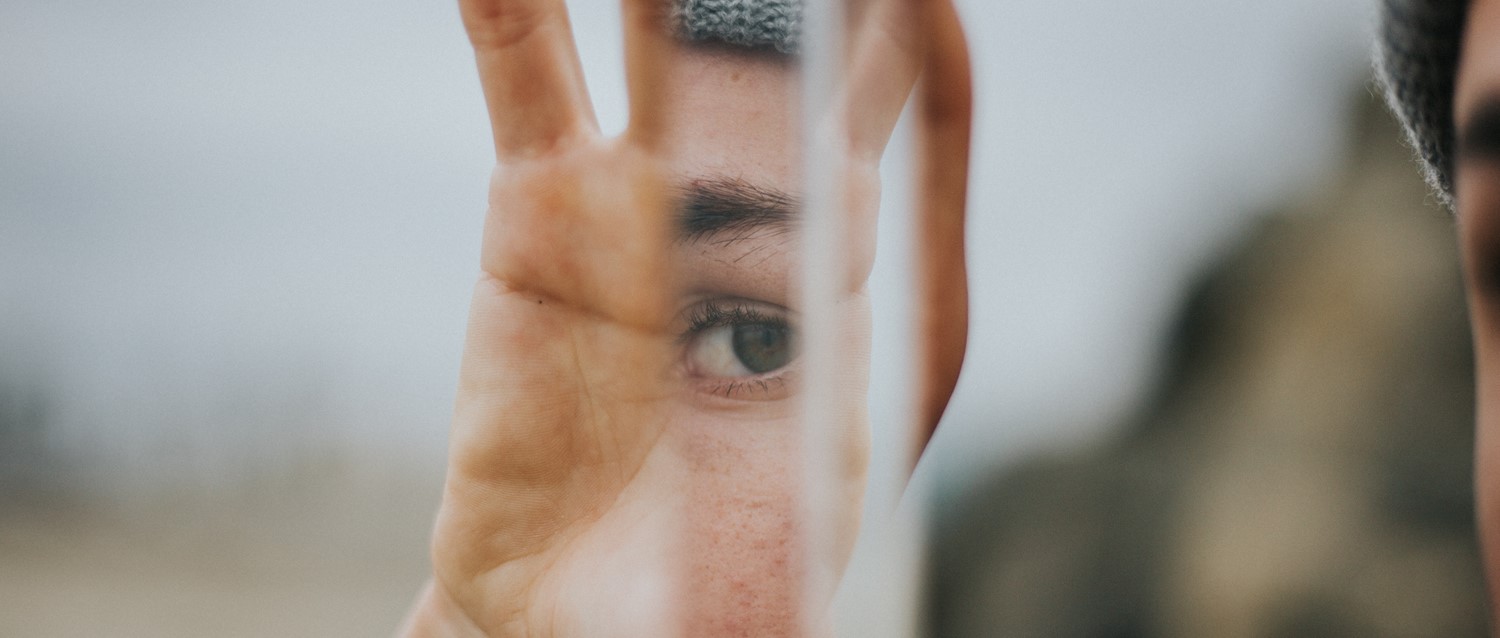
En tant que plus grand organe du corps, la peau est essentielle à notre bien-être. Et comme pour d'autres organes, elle peut être affectée par une gamme de conditions, dont beaucoup peuvent être à la fois physiques et émotionnellement invalidantes.

"Chronic skin conditions are well recognised to cause problems with l'estime de soi and low confidence," says Dr Anjali Mahto, consultant dermatologist and British Skin Foundation spokesperson. Those with visible skin conditions may find themselves becoming withdrawn or avoiding certain social situations or types of clothing as a result of their appearance, she explains.
"As issues with the skin are so outwardly visible to others, it is not surprising that those who suffer may also feel embarrassment and psychological distress. That's in addition to potential physical pain that skin conditions like eczéma et l'acné can cause."
More than appearance
"The symptoms of skin disease, which can be severe, are often underestimated by those not directly affected. The preoccupation society and les réseaux sociaux have with self-image, and their stigmatisation of perceived imperfections, only creates further pressure," says Mahto.
Liam, who has been living with eczema since he was a baby, knows all too well how a skin condition impacts various areas of your life. During his teenage years both the eczema and its impact on his mental health were particularly acute, he explains.
"I'd avoid looking at myself in the mirror. I couldn't bring myself to do PE lessons - I used to hate doing country dancing at school because then you'd have to hold someone's hand. My skin would hurt so much, my self-esteem would be so low. At times my eczema was so bad that I couldn't actually pick up a pen in school."
Eczema became a source of discomfort, embarrassment and shame for Liam. "I'd go to school and insist on wearing a jumper even when it was very warm because my arms would be covered in scratch marks. Sometimes I'd sit in class and scratch my arms so much they would end up bleeding. Having a jumper on top was the only way I could hide those marks," he says.
Scratching his eczema to relieve the itch caused Liam to become withdrawn, even from his parents, he explains.
"I would have that initial relief - the itch would be gone - which would last for about five minutes. Then there'd be this wave of physical pain, then emotional pain about what I'd just done. There'd be weekends when my parents wouldn't see me because I couldn’t bring myself to leave my bedroom. In other cases, I wouldn't want to look at myself in the mirror. There are still times to this day where I struggle to look at myself in the mirror if I still have eczema on my face."
Over the years, his skin has even impacted Liam's ability to be stay at friends' or partners' houses when his eczema has been worse. "What will they think of me, lying next to someone scratching until they're bleeding? There'd be times where I'd just want to avoid having someone around," he says.
Trapped in a cycle
The link between skin and mental health is so profound that a whole field of scientific interest, called psychodermatology, exists to understand it. Yet, according to a survey, nine in ten dermatologists don't think enough importance is placed on the psychological effects of skin conditions.
As well as skin conditions affecting mental health, mental health affects skin too. Stress, in particular, possibly caused by a skin condition, may make some skin conditions worse. "There is a lot of anecdotal evidence that stress will make inflammatory skin disorders such as eczema, psoriasis, acne, and la rosacée worse," says Mahto.
For Heather, who also has eczema, the state of her skin is an indicator of her mental well-being. "My eczema is usually the first physical sign my l'anxiété is flaring up. I'll be scratching a lot more, especially at night," she says. "My skin is usually a good way to track my mood. When things become too difficult to manage, my skincare routine is the first to go out of the window, so the problem gets worse quickly, which then becomes a stick to beat myself with.
"Having bad skin can also lead to worsening anxiety. It makes me feel so out of control and trapped within a 'misbehaving' and painful body."
Scratching or damaging her eczema has become a form of auto-mutilation for Heather, one which she says doesn't register in the same way as other methods, both for her and for healthcare professionals. "Sometimes I feel a bit dismissed when I talk to GPs about my misuse of my skin condition in a way I feel they wouldn't with other forms of self-harm. It's one of the many reasons I really want access to therapy, with someone who sees the holistic impact my anxiety disorder has on my body."
Apprendre à faire face
It's important to come up with personal coping mechanisms to make living with a skin condition easier.
Myra, who has epidermolysis bullosa (EB), has found ways to deal with the emotional effects of her rare, very severe skin condition which causes the skin to become extremely fragile. "I have the equivalent of second-degree burns all over my body that never heal," she explains. "This, of course, impacts my mental health. At times you feel really down and think: Will I ever be pain-free? Why do I have to go through this?"
A change of mindset has helped her to live with the day-to-day effects of EB. "The condition makes me quite dependent on people as I've lost the dexterity of my hands due to scarring, so I need a lot of help from my family or nurses who come to my house every day," she says.
"I have coped by acknowledging that my condition could always be worse and practising gratitude. Despite the difficulties associated with my skin condition, I manage to live a good life doing a job I love as a journalist. I'm grateful I have a supportive family and incredible medical team."
Seeking the right help
When it comes to distress caused by a skin condition, should you be looking for support from your dermatologist or a therapist? Depending on the person, both may be necessary.
"I've had counselling in the past when, in my 20s, I became déprimé due to my condition and it really helped," says Myra. "I feel it's so important to get the right help and support to get you through the periods where you feel low. Alongside professional counsellors, even talking to a priest or an Imam (Muslim religious leader) has helped me a lot too."
Your GP and dermatologist are integral to helping you find the right support, be that treatment for your skin condition or talking therapy to copy with the emotional impact, says Mahto. You can even self-refer to talking therapies in your area if you think you may have a mental health problem or find private sessions on Patient Access.
"Do not suffer in silence. If your skin condition is making you feel low, stopping you doing things or holding you back from the things you want, it is vital to let your doctor or dermatologist know. They will work things through with you or enlist the help of a clinical psychologist with an interest in skin disease."
Sélections des patients pour Bien-être mental

Santé mentale
Pas tout à fait 'retour à la normale' : un guide pour la guérison familiale post-pandémique
Lorsque la nouvelle a éclaté à la fin de 2019 concernant un virus se propageant rapidement à travers le monde, le mot « sans précédent » est rapidement devenu une partie du vocabulaire quotidien dans les mois qui ont suivi. L’épidémie de Covid-19 a marqué la crise de santé publique la plus importante au monde en au moins un siècle, ébranlant les fondations du seul endroit où nous nous sentons généralement le plus en sécurité — la maison. Il n’est pas surprenant que des années de routines perturbées aient laissé une marque durable sur l’unité familiale. De la perte soudaine de réseaux de soutien à l’effacement des frontières entre la maison, l’école et le travail, la pandémie a remodelé le fonctionnement des familles. Nous avons parlé avec un psychothérapeute pour explorer ces répercussions psychologiques à long terme et pourquoi réfléchir à cette période est essentiel pour comprendre — et guérir — la dynamique familiale aujourd’hui.
par Victoria Raw
Santé mentale
Santé mentale : suivre vos symptômes et interventions précoces
Mental health can often go through a little seasonal 'dip' in autumn and winter, and given extra stressors this year, the risk of mental health problems is higher for all of us. Prepare for tough days by finding out how to track and treat mild symptoms, and knowing when to seek help.
par Ellie Broughton
À propos de l'auteurVoir la biographie complète

Milly Evans
Rédactrice
Milly écrit sur une gamme de sujets liés à la santé, avec un intérêt particulier pour les inégalités en santé et la santé sexuelle.
À propos du critiqueVoir la biographie complète

Dr Sarah Jarvis
Consultant Clinique
MA (Cantab), BM, BCh (Oxon), DRCOG, FRCGP, MBE
Après avoir suivi une formation en médecine à Cambridge et Oxford, le Dr Sarah Jarvis MBE est devenue médecin généraliste.
Historique de l'article
Les informations sur cette page sont examinées par des cliniciens qualifiés.
Article également disponible en Anglais, Allemand, Espagnol, Français, Italien, Portugais, Hindi, Hébreu, Arabe, and Suédois.
6 Feb 2020 | Dernière version

Demandez, partagez, connectez-vous.
Parcourez les discussions, posez des questions et partagez vos expériences sur des centaines de sujets de santé.

Vous ne vous sentez pas bien ?
Évaluez vos symptômes en ligne gratuitement
Inscrivez-vous à la newsletter Patient
Votre dose hebdomadaire de conseils de santé clairs et fiables - rédigés pour vous aider à vous sentir informé, confiant et maître de la situation.
En vous abonnant, vous acceptez notre Politique de confidentialité. Vous pouvez vous désabonner à tout moment. Nous ne vendons jamais vos données.
Plus sur la santé mentale
- Les personnes sourdes peuvent-elles suivre une thérapie ?
- Regarder des films d'horreur peut-il réduire le stress ?
- Peut-on suivre une thérapie si l'on n'a pas de problème de santé mentale ?
- Faire face au deuil après la perte d'un être cher à cause d'un cancer du poumon
- La lune nous affecte-t-elle vraiment ?
- Comment éviter le stress pendant Noël et le Nouvel An
- Comment être un parent calme quand vous êtes stressé
- Comment combattre la dépression hivernale et augmenter votre sérotonine
- Comment gérer l'anxiété liée aux examens
- Comment prendre du poids après un trouble alimentaire
- Comment aider votre enfant à gérer l'anxiété de la rentrée scolaire
- Conseils de planification des repas pour la guérison des troubles alimentaires
- Mis à jourSymptômes physiques du deuil : Comment le deuil affecte le corps
- Thalassophobie : comment gérer votre peur de l'océan
- Les signes avant-coureurs du stress
- Quelle est la différence entre une alimentation désordonnée et un trouble alimentaire ?
- Pourquoi un film de Noël peut nous faire sentir bien
- Pourquoi les étudiants britanniques sont-ils les plus stressés par l'étude des mathématiques ?
- Pourquoi nous devrions prendre des résolutions du Nouvel An pour la santé mentale