Nasoendoscopy
Peer reviewed by Dr Philippa Vincent, MRCGPLast updated by Dr Doug McKechnie, MRCGPLast updated 9 Jun 2023
Meets Patient’s editorial guidelines
- DownloadDownload
- Share
- Language
- Discussion
- Audio Version
- Add to preferred sources on Google
A nasoendoscopy is a test to look inside the nose (nasal passage), the back of the throat (pharynx) and the voice box (larynx). It's sometimes called a flexible nasal endoscopy or FNE.
Note: the information below is a general guide only. The arrangements and the way tests are performed may vary between different hospitals. Always follow the instructions given by your doctor or local hospital.
At a glance
A nasoendoscopy examines the inside of the nose, throat, and voice box.
A thin, flexible tube with a camera is gently placed into your nostril.
It is often done while you are awake, sometimes with a local anaesthetic spray.
The procedure usually takes only a few minutes.
It can help identify problems like nosebleeds, polyps, or suspected cancer.
After the procedure, do not eat or drink until any local anaesthetic wears off.
Minor side-effects like discomfort or sneezing can occur, but serious complications are rare.
What is a nasoendoscopy?
Head and neck showing larynx
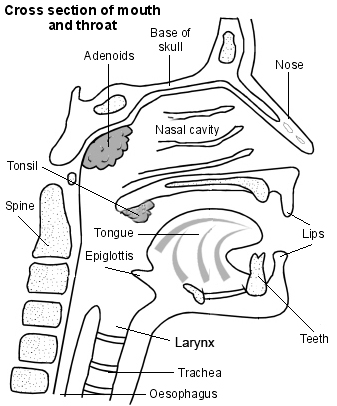
A nasoendoscopy is a procedure to examine the inside of the nose (nasal passage), throat (pharynx) and voice box (larynx).
It's very commonly used by ear, nose, and throat (ENT) specialists.
An endoscope is a thin, flexible telescope. The endoscope is passed into the nose, to the space at the back of the nose (the nasopharynx). It then passes down through the space at the back of the mouth (the oropharynx), stopping just above the voice box at the bottom of the throat.
The tip of the endoscope contains a light and a tiny camera so the operator can see inside the nose, throat and voice box.
Images from the endoscopy are either seen on an eyepiece attached to the endoscope, or projected onto a screen using a video camera.
Some endoscopes have a 'side channel' down which various instruments can pass. These can be used to take a small sample (biopsy) from the inside lining of the nose, throat or voice box.
Sometimes a rigid endoscope is used instead. This is sometimes better at looking inside the nose and the entrances to the sinuses, but - because it can't bend - it can't be used to look at the voice box.
What is a nasoendoscopy used for?
A nasoendoscopy may be recommended by an ENT specialist if you have symptoms in your nose or throat.
Things which can be assessed using nasoendoscopy include:
Growths in the nose (nasal polyps).
Suspected cancer of the nose, throat (nasopharyngeal or oropharyngeal) or voice box (larynx).
A foreign body in the nose or throat (eg, a piece of food that has stuck in the throat).
Problems with speaking (dysphonia).
Problems with swallowing (dysphagia).
Breathing problems during sleep (obstructive sleep apnoea).
What happens during a nasoendoscopy?
A nasoendoscopy is a routine procedure that is very commonly done by ENT specialists. It can be done in an outpatient clinic, on a ward, or in an Emergency Department, depending on the situation.
Nasoendoscopy is done whilst fully awake. It doesn't need a general anaesthetic. You are likely to be offered a local anaesthetic. This usually comes as a spray which is sprayed into both nostrils. Within a few minutes, it numbs the nose, the back of the nose, and the back of the throat.
Some people find the sensation and taste of the local anaesthetic unpleasant. A nasal endoscopy can be done without local anaesthetic if you prefer.
You will be asked to sit upright with a headrest behind your head.
The endoscope is inserted gently into one of your nostrils. The endoscope is then pushed slowly up through your nasal cavity, down through your throat (pharynx) and to just above your voice box (larynx). The clinician looks at the images from the endoscope (with an eyepiece or on a screen) to spot any abnormal areas in the nose, throat, or voice box.
During the test you may be asked to perform several movements. These may include puffing out your cheeks, talking, swallowing some coloured water or poking out your tongue. These can make it easier to spot some types of abnormalities in the nose, throat, or voice box.
Sometimes, the clinician may take one or more small samples (biopsies) of parts of the inside lining of the nose, throat or voice box - depending on why the test is done and what they see.
Once all of the important areas have been inspected, the nasoscope is then gently pulled out of the nose.
A nasoendoscopy can be done in less than a minute, but may take a few minutes longer in some cases.
Having a nasoendoscopy can be uncomfortable. It doesn't usually hurt. Tell the clinician if you are in pain during the procedure, or if you want them to stop.
What preparation do I need to do?
Apart from the local anaesthetic, there is no other preparation needed for the test.
What can I expect after a nasoendoscopy?
You will be able to go home immediately after the doctor or nurse has discussed the findings of the nasoendoscopy (unless you need to stay in hospital for another reason).
If you've had local anaesthetic, your throat (pharynx) will usually feel numb for about one hour after the test. Don't eat or drink until your throat feels normal again.
You can return to other normal activities (including driving) straight after the test.
Is nasoendoscopy reliable?
A nasoendoscopy is a good test for seeing abnormalities in the nose, throat (pharynx) and voice box (larynx). It often gives enough information to make a diagnosis.
Sometimes, it may not be able to see everything with a nasoendoscope. Further tests might be required if it is inconclusive.
Are there any side-effects or complications from having a nasoendoscopy?
A nasoendoscopy is a very safe procedure. Most people have no side-effects or complications.
Minor side-effects which occasionally happen include:
Slight discomfort in the nose and throat for a day or two.
Sneezing during the test.
A minor nosebleed.
Serious side-effects, like damage to the inside of the nose or throat, or severe bleeding, are very rare.
Patient picks for Endoscopy

Surgery and procedures
Hysteroscopy
Hysteroscopy is a procedure which uses a thin tube-like telescope to see inside the womb (uterus). It can also allow doctors to do some minor operations to the uterus.
by Dr Philippa Vincent, MRCGP

Surgery and procedures
Colonoscopy
A colonoscopy is a test to assess your colon (large intestine). Note: the information below is a general guide only. The arrangements, and the way tests are performed, may vary between different hospitals. Always follow the instructions given by your doctor or local hospital.
by Dr Claudia Berty, MRCGP
Frequently asked questions
What happens if a biopsy is taken during the procedure?
If a small sample (biopsy) is taken from the lining of the nose, throat, or voice box, it is usually because the clinician saw something during the nasoendoscopy that they need to examine further. The biopsy would then be sent for analysis to help make a diagnosis.
Can I request to have the procedure without local anaesthetic?
Yes, if you prefer not to have the local anaesthetic spray, the nasoendoscopy can be performed without it. Some people find the sensation or taste of the local anaesthetic unpleasant.
How soon will I get the results of my nasoendoscopy?
You will usually be able to discuss the findings of the nasoendoscopy with the doctor or nurse immediately after the procedure, before you go home. If biopsies were taken, results from those samples might take longer to come back and would be communicated separately.
What should I do if I experience discomfort in my nose or throat after the procedure?
Some slight discomfort in the nose and throat for a day or two after a nasoendoscopy is an occasional minor side-effect. This generally resolves on its own.
Will I be able to drive home after a nasoendoscopy?
Yes, you can return to normal activities, including driving, straight after the test, provided you feel well. If you had local anaesthetic, you should wait until your throat feels normal again before eating or drinking, but driving is generally fine.
Further reading and references
- Flexible Nasal Endoscopy; ENT UK
About the authorView full bio

Dr Doug McKechnie, MRCGP
Medical Writer
MA, MBBS, MSc, DRCOG, MRCP(UK), MRCGP(2021), FHEA
Dr Doug McKechnie is an NHS GP working in London. He works full-time clinically and is also the Deputy Lead for the Clinical and Professional Practice module at University College London Medical School.
About the reviewerView full bio

Dr Philippa Vincent, MRCGP
General Practitioner, Medical Author
MB BS, Bsc, MRCGP (2000), DCH, DFSRH, DRCOG
Dr Philippa Vincent is an NHS GP working in North London.
Article history
The information on this page is written and peer reviewed by qualified clinicians.
Article also available in English, German, Spanish, French, Italian, Portuguese, Hindi, Hebrew, Arabic, and Swedish.
Next review due: 12 May 2028
9 Jun 2023 | Latest version
Join the conversation
Share your thoughts or experiences with others in our patient communities.

Ask, share, connect.
Browse discussions, ask questions, and share experiences across hundreds of health topics.

Feeling unwell?
Assess your symptoms online for free
Sign up to the Patient newsletter
Your weekly dose of clear, trustworthy health advice - written to help you feel informed, confident and in control.
By subscribing you accept our Privacy Policy. You can unsubscribe at any time. We never sell your data.
More in surgery and procedures
- Anaesthesia
- Biopsy
- Botox
- Breast uplift
- Coronary artery bypass graft
- Cystoscopy
- Death or brain damage from anaesthesia
- Deep vein thrombosis
- Endometrial biopsy
- Epidural pain relief after surgery
- ERCP
- Facelifts
- Female sterilisation
- Fever
- Laser eye surgery
- Laser hair removal
- Post-dural puncture headache
- Pulmonary embolism
- Surgical drains
- Weight loss surgery