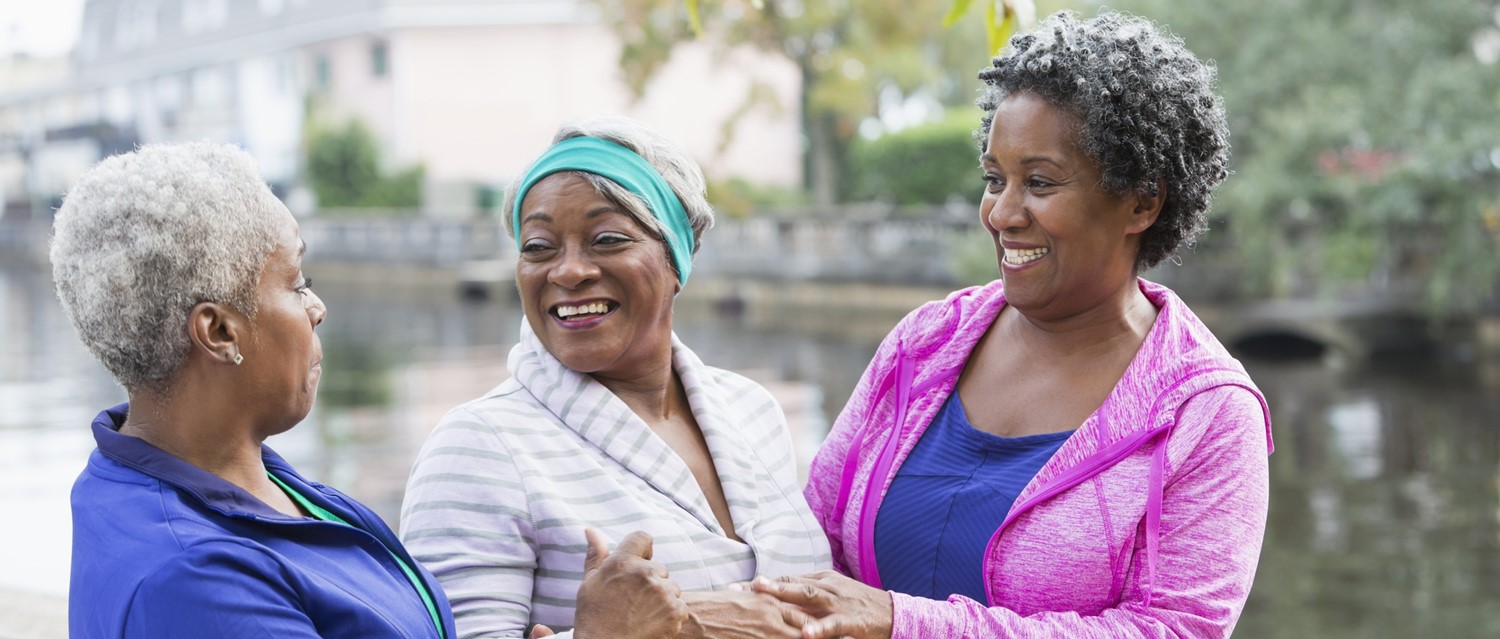
Comment aborder la mauvaise image corporelle chez les femmes âgées
Revu par Dr Sarah JarvisDernière mise à jour par Lydia SmithDernière mise à jour 22 Nov 2020
Respecte les directives éditoriales
- TéléchargerTélécharger
- Partager
- Language
- Discussion
- Version audio
- Ajouter aux sources préférées sur Google
We're often told that with age comes confidence and that as we grow older, we will feel more self-assured and comfortable in our own skin. In reality, though, women of all ages can struggle with poor body image, particularly as we age.

The relationship we have with our self-esteem can be a tricky one. Some days you feel great, but at other times, you are your own worst enemy.
Popular opinion suggests that poor body image is a problem most acutely felt by teenagers and millennials - in part, because they have grown up with the damaging effects of social media - but this isn't always the case.
Recherche shows women over 40 face a myriad of factors which influence the way they feel about their appearance, from seeing their bodies change, to feeling under pressure to rid themselves of lines or grey hairs.
"As I've got older, I actually feel less confident about the way I look," says Jane*, 41. "I'm confident when it comes to my work and other aspects of my life, but I feel more conscious of my weight and lines on my face. I'm also busy working and looking after my family, so it's difficult to make time for soin de soi."
Why does body image change as we age?
Andrea Huttly, a psychotherapist, eating disorder therapist and service manager at Priory Arthur House, a residential service in south-west London for clients with eating disorders, explains that having a negative body image is a common problem among women as they grow older.
She says there are three main factors that can impact the way women experience their bodies in later life: ageing, life stages and the underrepresentation of older women in the media.
"As we go through life, our bodies experience constant change, which means that the way we see ourselves, and the relationship we develop with our bodies, will also change - and adjust - to the new you," Huttly explains.
Over time, our bodies go through hormonal, physiological, psychological and environmental transformations that can impact our relationships with our bodies. We go through puberty, pregnancy, changes in family dynamics, ménopause, retirement, health problems and more. In particular, menopausal symptoms such as hot flushes, low libido, sècheresse vaginale et sueurs nocturnes can alter how we feel about ourselves.
"All these pivotal points in our lives will have an impact on our overall well-being, ability to manage niveaux de stress, self-esteem and our perception of ourselves, which of course includes the bodies that we live in," Huttly says.
Societal ideals of beauty
Often, beauty is equated with youthfulness and thinness in our society. Models in magazines, newspapers and adverts are often young and slim, which alters our perception of what beauty is supposed to be. Even the phrase 'anti-ageing' on cosmetic products reinforces the message that ageing is a condition we should be fighting.
"Underrepresentation of beauty at any age in the media and an emphasis on the 'young ideal' can leave women feeling unable to meet expectations," Huttly says. "In turn, this can cause high levels of stress and anxiety. It can make women feel undesirable, and there is a risk of them 'disconnecting' from their own body."
Paradoxically, though, women also face added pressure to 'act their age' - and failing to fit into these narrow parameters can contribute to our insecurities.
"It simply makes women feel a lot of pressure and as if they cannot win. Women have to walk this fine line between the two concepts and find the perfect balance," Huttly explains. "If they dress to look 'youthful', women are often judged for trying too hard. If they 'act their age', they can be unfairly judged as being boring. Society does not give women enough room to express themselves but instead puts many unrealistic demands on them."
Ultimately, this can negatively affect our sense of who we are and our ability to feel attractive. "This can make women feel overwhelmed or that they are constantly failing," Huttly says. "Overall, it is a contributing factor to increased body image negativity, which can lead to low l'estime de soi, auto-mutilation, anxiety and dépression."
How to improve your body image
Accepting yourself and developing a positive body image isn't a simple task. However, there are steps we can take to help us understand our bodies and improve how we treat ourselves.
See beauty ideals for what they are
The first step is to accept that this is a long journey and that the way we see our bodies will not change overnight. "We need to deconstruct the 'beauty ideal' that society is selling us. It is unrealistic and unachievable in many cases," Huttly says.
Have a think about what beauty means to you and where these thoughts come from. "Are these beliefs yours or what you heard from others as you were growing up?" Huttly says. "What thoughts come to mind when you think about your body as a whole, or specific parts of your body? How can you challenge those thoughts and reframe them?"
Practise gratitude
For all of our perceived 'faults', our bodies do incredible things every day. Practising gratitude can help us recognise and appreciate these things more. Think about your abilities, skills and achievements and how your body has helped you fulfil these.
"Have positive messages around your mirror or anywhere in your room or house," Huttly says. "Always be patient and gentle with yourself."
Consultez un professionnel
If body image concerns are having a seriously negative impact on your day-to-day life, it's worth making an appointment with your GP. Your doctor will be able to advise on the best course of action to help you, which may be a form of therapy or medication.
Talking therapies such as cognitive behavioural therapy (CBT) may be recommended for poor body image. This can help you manage symptoms such as constantly worrying about your appearance by helping you identify triggers and altering the way you think.
Cut down on social media
Social media can also be problematic for our body confidence. Whether it's fitness gurus on Instagram or carefully curated photos of friends on Facebook, we are constantly invited to compare and critique ourselves against others.
Spending less time on social media reduces the opportunity to compare yourself with others. You don't have to delete your accounts, but limit the time you spend scrolling instead.
Have a good support network
It's important not to suffer in silence. Surrounding yourself with supportive friends or family who you can talk to about worries or concerns is essential. And if you do struggle with poor body image, it's helpful to remember that you aren't alone.
Sélections des patients pour Anxiété
Santé mentale
Comment repérer les symptômes de l'anxiété sociale
L'anxiété sociale commence généralement à l'adolescence, mais peut être déclenchée à n'importe quel stade de la vie. C'est une condition sérieuse qui peut affecter tous les aspects de votre vie, mais il existe des conseils d'auto-soins et des thérapies professionnelles qui peuvent aider et même guérir l'anxiété sociale. Parler à un proche, à un groupe de soutien ou à un professionnel de la santé mentale est également important.
par Amberley Davis
Santé mentale
Le magnésium peut-il aider à soulager l'anxiété ?
TikTok regorge de revendications sur les bienfaits du magnésium pour la santé, notamment qu'il peut aider à soulager l'anxiété - un problème auquel beaucoup d'entre nous sont confrontés, surtout pendant Noël. Comme l'anxiété est si courante, il est compréhensible que les gens cherchent différentes méthodes pour y faire face. Mais les affirmations faites sur les réseaux sociaux sont-elles étayées par la science ?
par Lydia Smith
À propos de l'auteurVoir la biographie complète

Lydia Smith
Rédacteur de reportages
Licence, Master, MSc
Lydia Smith est une journaliste primée et rédactrice spécialisée qui a beaucoup écrit sur la santé des femmes et la santé mentale. Elle prépare actuellement un MSc en psychologie.
À propos du critiqueVoir la biographie complète

Dr Sarah Jarvis
Consultant Clinique
MA (Cantab), BM, BCh (Oxon), DRCOG, FRCGP, MBE
Après avoir suivi une formation en médecine à Cambridge et Oxford, le Dr Sarah Jarvis MBE est devenue médecin généraliste.
Historique de l'article
Les informations sur cette page sont examinées par des cliniciens qualifiés.
Article également disponible en Anglais, Allemand, Espagnol, Français, Italien, Portugais, Hindi, Hébreu, Arabe, and Suédois.
22 Nov 2020 | Dernière version

Demandez, partagez, connectez-vous.
Parcourez les discussions, posez des questions et partagez vos expériences sur des centaines de sujets de santé.

Vous ne vous sentez pas bien ?
Évaluez vos symptômes en ligne gratuitement
Inscrivez-vous à la newsletter Patient
Votre dose hebdomadaire de conseils de santé clairs et fiables - rédigés pour vous aider à vous sentir informé, confiant et maître de la situation.
En vous abonnant, vous acceptez notre Politique de confidentialité. Vous pouvez vous désabonner à tout moment. Nous ne vendons jamais vos données.
Plus sur la santé mentale
- Les problèmes de santé mentale chez les nouvelles mères sont-ils négligés ?
- Établir des limites saines pour un nouveau départ en début d'année
- L'exercice peut-il aider à surmonter le chagrin ?
- Le football peut-il s'attaquer à la stigmatisation de la santé mentale ?
- La crise énergétique pourrait-elle alimenter une urgence en santé mentale ?
- Le stress aggrave-t-il les problèmes de peau ?
- Les survivants de violences domestiques plus susceptibles de développer une maladie mentale grave
- Quelle est la fréquence du trouble de l'hyperphagie boulimique et comment affecte-t-il les gens ?
- Combien de temps le deuil est-il censé durer ?
- Comment empêcher la 'culpabilité maternelle' d'affecter votre santé mentale
- Le terme 'bien-être' est-il problématique ?
- Surmonter votre peur des aiguilles
- Quiz : Suis-je déprimé(e) ?
- Choses que les personnes atteintes de TSPT aimeraient que vous sachiez
- Vidéo : Le stress peut-il provoquer une fausse couche ?
- Qu'est-ce que la 'bonne santé mentale' ?
- Ce que c'est vraiment d'avoir un TOC
- Pourquoi utilisons-nous l'humour noir comme mécanisme d'adaptation ?
- Pourquoi y a-t-il encore une stigmatisation autour des antidépresseurs ?
- Pourquoi le soin de soi pour les hommes est si important