Lipome
Revu par Dr Hayley Willacy, FRCGP Dernière mise à jour par Dr Doug McKechnie, MRCGPDernière mise à jour 13 Jul 2023
Respecte les directives éditoriales
- TéléchargerTélécharger
- Partager
- Language
- Discussion
- Version audio
Un lipome est une masse graisseuse non cancéreuse (bénigne) qui ne cause généralement aucun symptôme ni problème. La plupart des lipomes sont petits et peuvent être laissés tels quels. Cependant, un lipome qui se développe sous la peau peut parfois être inesthétique. Si nécessaire, il peut être retiré par une simple opération réalisée sous anesthésie locale.
Dans cet article:
Sélections de vidéos pour Autres problèmes de peau
Continuez à lire ci-dessous
Qu'est-ce qu'un lipome ?
A lipoma is a soft fatty lump. It is a non-cancerous (benign) growth made up from fat cells that clump together. A lipoma can occur in any part of the body where there are fat cells.
Lipome sous-cutané superficiel
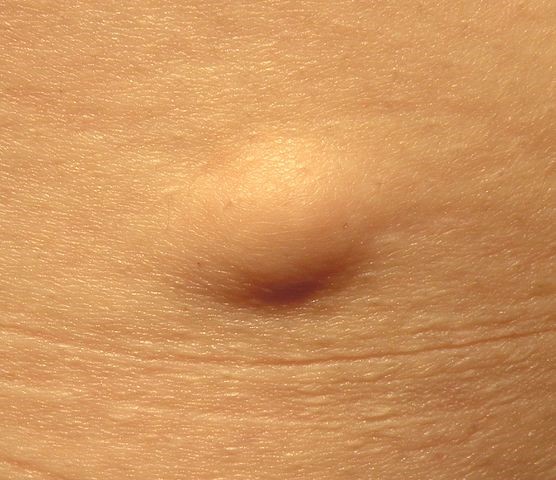
© Par Jmarchn (Travail personnel), via Wikimedia Commons
Lipomas typically feel soft and can be felt to move slightly under your skin when you press on them.
Lipomas under the skin are the most common
Lipomas often form in the fatty tissue under the skin. These are also the most noticeable ones, as they look and feel like soft, dome-shaped lumps under the skin. They vary in size from pea-sized to several centimetres in diameter.
The most common sites where lipomas develop are on the shoulders, the chest and the back. However, other areas of the skin can develop a lipoma.
Other parts of the body
Lipomas can less commonly form inside the body too. However, in most of these cases you will not be aware that you have a lipoma, as you cannot see them and they rarely cause any problems.
What are the symptoms of a lipoma and are they harmful?
Retour au sommaireIn themselves, lipomas are not serious and most lipomas cause no symptoms or problems. Usually if you have a lipoma, it does not cause any symptoms but you notice a painless lump. Lipomas grow very slowly.
Sometimes a lipoma under the skin can be unsightly if it grows to be several centimetres across. Rarely, a lipoma may press on another structure and cause problems. For example, if one presses on a nerve it may cause pain.
Also, rarely, a lipoma may develop in the gut wall and cause problems such as pain or a blockage of the gut.
Sometimes a scan or other investigation that is done for other reasons may detect a lipoma inside the body by chance. There is a condition called familial multiple lipoma in which groups of fat cells occur under the skin and then produce multiple fatty lumps. This is an uncommon condition and runs in families.
When to see your doctor about a lipoma
If you are concerned about a lipoma which has started to increase in size you should consult your doctor.
Remarque: lipomas are benign (non-cancerous).
There is a type of cancer, called a liposarcoma, which can sometimes be difficult to tell apart from a lipoma. Liposarcomas tend to be large (over 5cm in size) and grow rapidly.
There is some debate amongst researchers about whether or not lipomas have the potential to turn into cancers (such as liposarcomas) over time.
Generally, it's felt that the risk of a lipoma turning into a cancer is exceptionally low. Many researchers believe that lipomas can't turn into cancers at all.
Continuez à lire ci-dessous
What causes lipoma?
Retour au sommaireWe don't know exactly what causes lipomas to form.
Some people think that injuries to the skin might occasionally cause a reaction in the skin that leads lipomas to form.
In some people, lipomas seem to be linked to genetics. There are several - fairly rare - genetic conditions where people develop multiple lipomas in their body.
Most people with lipomas, though, don't have any underlying genetic condition.
How common are lipomas?
Retour au sommaireAnyone can develop a lipoma at any age. Lipomas are common. Some people inherit a tendency to develop lipomas and may have several on different parts of the body. Sometimes as many as 20 or more develop. However, it is more common to develop just one or two.
Lipomas can occur in people who are normal weight as well as in people who are overweight.
Continuez à lire ci-dessous
Diagnosing lipoma
Retour au sommaireOften your doctor will be able to diagnose a lipoma from its typical appearance, and no tests will be needed. In some cases, a scan may be needed to confirm whether your lump is a lipoma. This may be:
Do I need any treatment for a lipoma?
Retour au sommaireUsually not. If you are not bothered by a lipoma that develops then it is best just to leave it alone. However, some people want lipomas that are unsightly to be removed for cosmetic reasons. For example, if they occur on the face.
Removal of a lipoma for cosmetic reasons alone is usually not funded on the NHS.
Occasionally, a lipoma needs to be removed if it is causing symptoms - for example, by pressing on another part of the body. Sometimes if the diagnosis is not clear, a lipoma is removed to look at under the microscope. This is to make sure the growth that has been detected is a lipoma and not something more serious. For example, rapidly-growing or very large lipomas might be removed to ensure they aren't actually a type of cancer, called a liposarcoma.
For a lipoma that forms under the skin, usually it can be removed by a simple minor operation. Some local anaesthetic is injected into the skin over the lipoma. Once the overlying skin is numbed by the local anaesthetic, a cut (an incision) is made over the lipoma. The lipoma is then removed and cut away from the underlying tissue. The wound is then stitched up. A fine scar will be left.
Injections de stéroïdes and liposuction are sometimes used as alternatives to surgery.
Sélections de patients pour Autres problèmes de peau

Santé de la peau, des ongles et des cheveux
Albinisme
Albinism is a rare inherited (genetic) condition which reduces the amount of of melanin pigment in the skin, hair and/or eyes. People with albinism are often pale, with light-coloured irises. However, there are many types of albinism and people can be affected to different degrees.
par Dr Hayley Willacy, FRCGP
Santé de la peau, des ongles et des cheveux
Psoriasis
Psoriasis is a long-term skin condition that can also affect the nails and joints. It tends to flare up from time to time. Treatment with various creams or ointments can often clear or reduce patches (plaques) of psoriasis. Special light therapy and/or powerful medication are treatment options for severe cases where creams and ointments have not worked very well. People with psoriasis are more likely than usual to develop cardiovascular disease (heart disease and strokes).
par Dr Doug McKechnie, MRCGP
Lectures complémentaires et références
- Weerakkody Y et al; Liposarcoma, Radiopaedia.org
- Abd Rabou A et al; Lipome; Radiopaedia.org
Continuez à lire ci-dessous
Historique de l'article
Les informations sur cette page sont rédigées et examinées par des cliniciens qualifiés.
Next review due: 11 Jul 2028
13 Jul 2023 | Dernière version

Demandez, partagez, connectez-vous.
Parcourez les discussions, posez des questions et partagez vos expériences sur des centaines de sujets de santé.

Vous ne vous sentez pas bien ?
Évaluez vos symptômes en ligne gratuitement
Inscrivez-vous à la newsletter Patient
Votre dose hebdomadaire de conseils de santé clairs et fiables - rédigés pour vous aider à vous sentir informé, confiant et maître de la situation.
En vous abonnant, vous acceptez notre Politique de confidentialité. Vous pouvez vous désabonner à tout moment. Nous ne vendons jamais vos données.