
Activités quotidiennes qui peuvent causer des douleurs dorsales
Revu par Dr Sarah JarvisDernière mise à jour par Gillian HarveyDernière mise à jour 1 juil. 2018
Respecte les directives éditoriales
- TéléchargerTélécharger
- Partager
- Language
- Discussion
- Version audio
- Ajouter aux sources préférées sur Google
Most of us have experienced the odd twinge in our lower back when we've carried something a little too heavy, or a dull ache across the shoulders when we've been sitting at our computer for too long. For most of us, this pain is fleeting; but it serves as a reminder that some of the activities we engage in could be harming our back. So how do we protect our back from damage?
Unfortunately, the fact is that some of us may be genetically disposed to develop a mauvais dos.
"There are a lot of variables that contribute to whether you end up with back pain," explains Dr Moein Tavakkoli, back pain specialist from The London Spine Clinic. "One is a genetic predisposition. There are people who have very good posture but end up with back pain, and others who have poor posture but never experience back pain."
However, despite the fact we may be genetically inclined to develop problems, there are ways in which we can reduce the risk. We look at the everyday ways you could be harming your back and how to avoid unintentional damage.
Repetitive movement
We all know that lifting something heavy incorrectly could be damaging. But did you know almost any repetitive movement or position could have a negative impact on our back health? Whether it's sitting at the computer, hunching over your smartphone or carrying out a physical action, repeating the same movement can create an imbalance and lead to bad posture.
"With any repetitive task, you will build up muscle disproportionately," says Dr Stefaan Vossen, clinical director of Core Clinics. "This can alter posture and lead to back pain."
"Poor posture changes the way that you carry weight on your spine," explains Tavakkoli. "By leaning forward, for example, you are offloading the elements on the back of the spine to the front of the spine. You are compressing the discs more frequently and, as a result, you may experience earlier-onset disc degeneration.”
The problem is, as we all know, the solution may not be simple - we can't necessarily quit our job just because it involves frequent bending or eight hours of desk work a day. However, according to Vossen we can mitigate the problem by using targeted exercise.
"What you need to do is develop an exercise regime that compensates for your repetitive movement," he explains. “So, if you do a lot of stooping, you need to build core strength and work on your abdominal wall. If you do a lot of standing, you need to do a lot of running or swimming. These are things that are essentially the opposite of your repetitive movement."
Excess stress
In addition to physical stress, emotional stress can also wreak havoc on our health, including our back.
"Many of us develop a lot of stress in our working day, but there's no physical response to it," explains Vossen. "All the adrenaline and all the sympathetic responses - for example, increased blood supply to the muscles - are not being put to use. This can cause a number of problems, including le syndrome du côlon irritable, which may radiate to the back."
In addition, stress can cause muscle tension, which may throw the back out of alignment.
"When people get stressed, the hip flexors become tight as part of the fight or flight response," explains Vossen. "This tilts the pelvis forward and can cause back pain."
To avoid the build-up of stress in our bodies, it's important to engage in some cardiovascular activity.
"Anything that gets the heart rate up to 75-80% of its maximum is great for burning off those excess chemicals," agrees Vossen.
Tabagisme
It's no secret that fumer is bad for our health. But did you know that smoking can also lead to or exacerbate chronic back pain?
"As well as being associated with stress, smoking reduces the quality of the blood supply to the discs and the joints in your lumbar spine (lower back), thereby causing you to heal less efficiently and deteriorate more rapidly," explains Vossen.
Of course, for many smokers, quitting can be a struggle. However, there is lots of help available. Read our guide to quitting for information on how to access the right support.
Working out
Core strength can be important for supporting your spine and keeping back problems at bay. So it makes sense to strengthen your core through exercise. Unfortunately, when working the core, it can be hard to perform certain exercises correctly and with sufficient precision. This means that the core workout you’ve developed to avoid back problems might actually make back pain more likely.
"People who have done a lot of gym work may develop one group of muscles that is drastically bigger than the other group," agrees Tavakkoli. "So, you develop an unnatural posture. If your core muscle is strong but imbalanced, you can end up leaning forward too much for example."
But rather than quit your core work, it's better to invest in getting it right by joining a class or speaking to a trainer at your local gym.
"Lots of people think they do their exercises right, but it's really hard to get the form right unsupervised. Invest in doing it well," advises Vossen. "Get yourself supervised by someone who will take you through it correctly."
Liste de lecture : Back Pain Exercises
3 vidéos
Étirements du bas du dos (Routine assise)
Lilly Sabri, MHPC
Étirements du bas du dos (Routine assise)
Lilly Sabri, MHPC
Lower Back Stretches (Standing Routine)
Lilly Sabri, MHPC
Spinal Stretches
Lilly Sabri, MHPC
Focusing on your back
As with most health problems, back pain is less likely to occur if you are generally fit and healthy. It's easy to focus solely on the area causing us discomfort, but if you want to reduce the risk of back problems, you'd do well to look at your body as a whole.
"As well as focusing on specific activities - for example, reducing bad habits, trying to sit correctly - it's important to consider your overall health and how fit you are," explains Tavakkoli. "Factors such as l'obésité, bad diet and poor lung function can all raise the risk of back pain."
Everything in moderation
Anyone who's had a bad back has probably been offered advice about moving correctly, avoiding certain footwear or ditching that heavy handbag. But activities that put our back under stress may not be as harmful as we're sometimes led to believe.
"There are a lot of stories about things you should or shouldn't do," explains Vossen. "The reality is that if you have a healthy spine, none of these are relevant as long as you don't do them to excess."
Sélections des patients pour Douleur dorsale

Os, articulations et muscles
Douleur dorsale : est-ce dû au stress ou à une blessure ?
La douleur dans le bas du dos est une plainte très courante, avec environ un tiers des adultes qui en souffrent chaque année au Royaume-Uni. Bien que la douleur elle-même soit facilement diagnostiquée, déterminer la cause du problème peut être plus difficile. Certaines blessures au dos sont causées par un événement spécifique et facilement identifiable, mais d'autres peuvent être liées à des mouvements répétitifs, une mauvaise posture ou même le stress.
par Gillian Harvey
Os, articulations et muscles
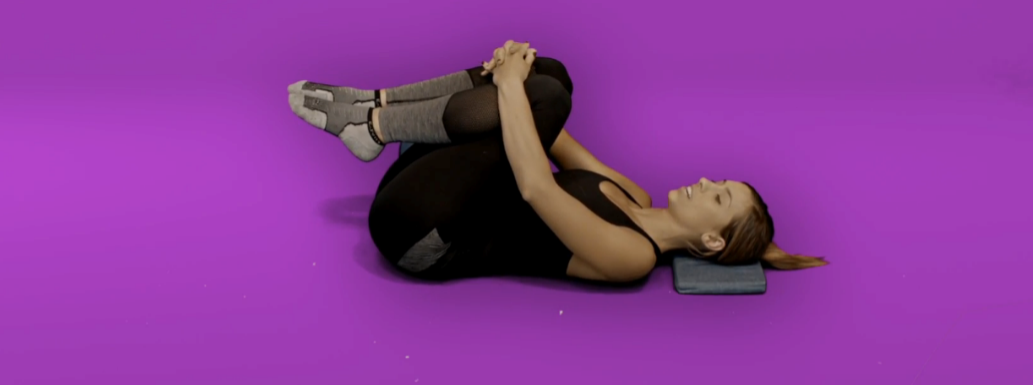
Vidéo : Exercices pour le mal de dos
Le mal de dos est très courant, mais dans la plupart des cas, il n'est pas causé par un problème grave. La plupart des cas de mal de dos se résolvent d'eux-mêmes en deux semaines, et une guérison complète est obtenue en quatre à six semaines.
par Lilly Sabri, MHPC
À propos de l'auteurVoir la biographie complète

Gillian Harvey
Rédacteur Indépendant
Licence (Hons) en Anglais
Gillian est une écrivaine indépendante et chroniqueuse pour divers journaux et magazines nationaux.
À propos du critiqueVoir la biographie complète

Dr Sarah Jarvis
Consultant Clinique
MA (Cantab), BM, BCh (Oxon), DRCOG, FRCGP, MBE
Après avoir suivi une formation en médecine à Cambridge et Oxford, le Dr Sarah Jarvis MBE est devenue médecin généraliste.
Historique de l'article
Les informations sur cette page sont examinées par des cliniciens qualifiés.
Article également disponible en Anglais, Allemand, Espagnol, Français, Italien, Portugais, Hindi, Hébreu, Arabe, and Suédois.
1 juil. 2018 | Dernière version

Demandez, partagez, connectez-vous.
Parcourez les discussions, posez des questions et partagez vos expériences sur des centaines de sujets de santé.

Vous ne vous sentez pas bien ?
Évaluez vos symptômes en ligne gratuitement
Inscrivez-vous à la newsletter Patient
Votre dose hebdomadaire de conseils de santé clairs et fiables - rédigés pour vous aider à vous sentir informé, confiant et maître de la situation.
En vous abonnant, vous acceptez notre Politique de confidentialité. Vous pouvez vous désabonner à tout moment. Nous ne vendons jamais vos données.
Plus sur les os, les articulations et les muscles
- Vidéos sur les douleurs dorsales et les exercices
- Meilleurs exercices pour vos articulations
- Les suppléments de créatine peuvent-ils aider à développer la masse musculaire ?
- NouveauAi-je besoin d'une IRM pour ma douleur au dos ?
- Avez-vous besoin de physiothérapie après un remplacement articulaire ?
- Combien de protéines avez-vous besoin pour développer vos muscles ?
- Comment maîtriser les douleurs dorsales
- Comment protéger vos os en vieillissant
- Comment protéger vos articulations en vieillissant
- Douleur au genou persistante : Quand faut-il passer une IRM ?
- Vivre avec la fibromyalgie - L'histoire de Jenny
- Remèdes naturels pour soulager les douleurs articulaires
- Les raisons les plus probables de votre douleur musculaire
- Vidéo : Exercices pour la douleur au genou
- Quels aliments sont bons pour l'arthrite ?
- Qu'est-ce que le syndrome d'hypermobilité ?
- Qu'est-ce que la sarcopénie ?
- Ce que c'est vraiment de vivre avec la goutte
- Pourquoi une alimentation saine pourrait être mauvaise pour vos os
- Santé des femmes dans le sport : blessures, menstruation et maternité