
Magnésium : Bienfaits pour la santé et risques
Revu par Dr Colin Tidy, MRCGPAuthored by Josh AldermanPublié à l'origine 12 Mar 2026
Respecte les directives éditoriales
- TéléchargerTélécharger
- Partager
- Language
- Discussion
- Version audio
- Add to preferred sources on Google
Magnesium is an essential mineral that plays a role in hundreds of processes in the body.
From supporting muscle and nerve function to helping maintain healthy bones, magnesium is vital for overall health. But despite its importance, many people are unsure whether they’re getting enough or whether supplements are necessary.
In this article, we explore what magnesium does, the potential health benefits, and when supplementation might be appropriate.
Sponsorisé
Patient recommends... HEIGHTS
A clean, gentle magnesium formula for head-to-toe health. 1 ingredient (magnesium glycinate), powering 300+ bodily functions.

Dans cet article:
Video picks for Vitamines et compléments alimentaires
Continuez à lire ci-dessous
What is magnesium?
Magnesium is a mineral found naturally in many foods, including leafy green vegetables, nuts, seeds, whole grains and pulses.
It is also available as a dietary supplement in several different forms, such as magnesium citrate, magnesium oxide, and magnesium glycinate.
Around 60% of the body’s magnesium is stored in bones, with the rest found in muscles, soft tissues and bodily fluids. It plays a key role in energy production, muscle contraction, nerve signalling and maintaining a steady heart rhythm.1
Why is magnesium important?
Retour au sommaireMagnesium is involved in more than 300 biochemical reactions in the body. Without enough magnesium, several systems can be affected.
Some of its core functions include:
Supporting muscle and nerve function.
Helping regulate blood pressure.
Maintaining normal heart rhythm.
Supporting bone strength.
Contributing to energy production.
Helping regulate blood sugar levels.
Because magnesium is involved in so many processes, low levels - known as hypomagnesaemia - may cause a range of symptoms.
Symptoms of low magnesium
Possible symptoms include:
Muscle cramps or tremors.
Fatigue.
Engourdissement ou picotements.
Rythmes cardiaques anormaux.
Perte d'appétit.
Des nausées.
People at higher risk of low magnesium include those with digestive disorders, diabète de type 2, alcohol dependence, or those taking certain medicines such as diuretics.
Continuez à lire ci-dessous
Magnesium benefits
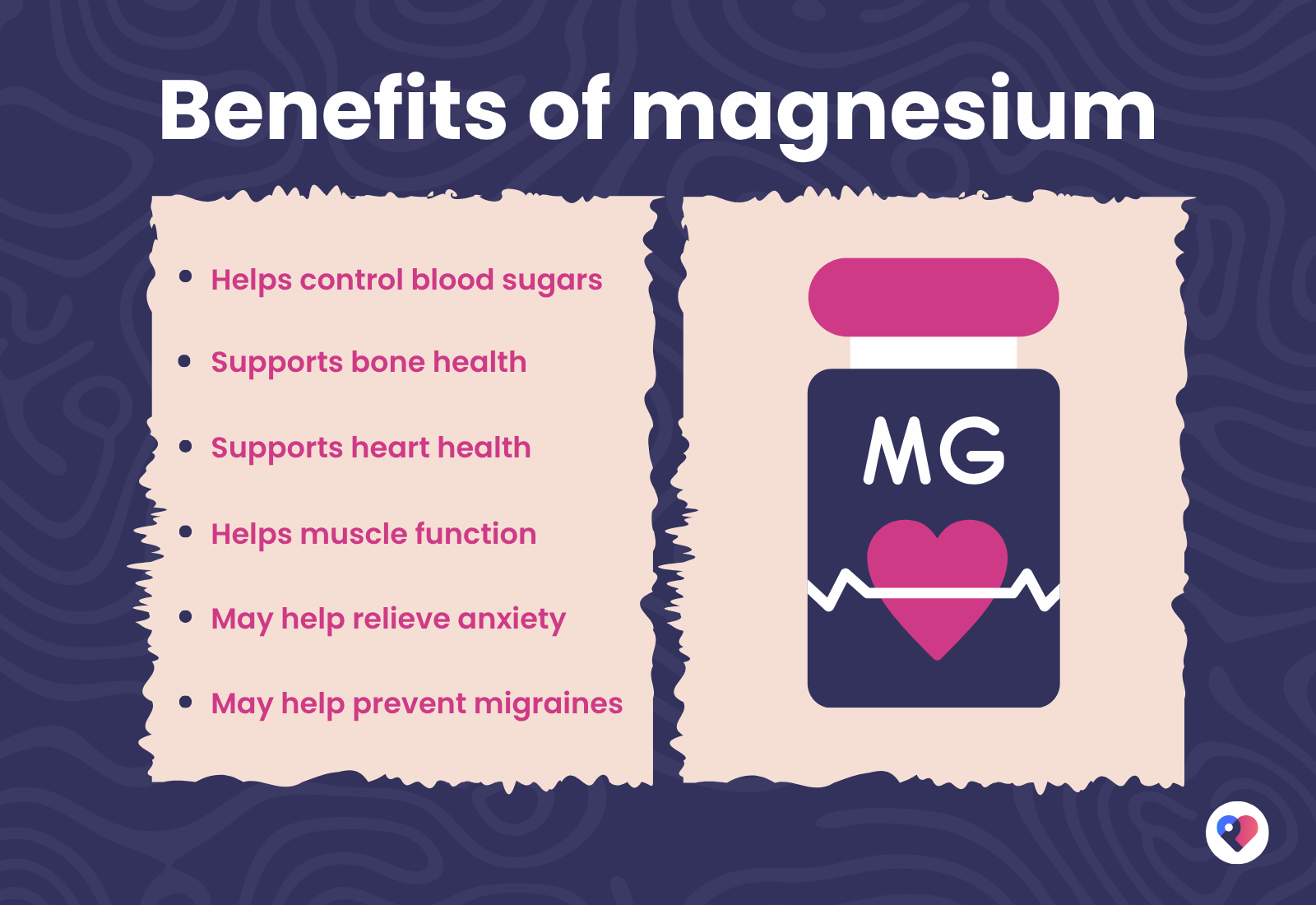
Retour au sommairePotential health benefits of magnesium according to research2 are:
Helps muscle function
Magnesium helps muscles contract and relax properly. Low magnesium levels have been linked to muscle cramps, twitches and weakness. However, evidence for magnesium supplements preventing night-time leg cramps in otherwise healthy people is mixed.3
Supports bone health
Magnesium works alongside calcium and vitamin D to support bone strength. Adequate intake may help maintain healthy bones, particularly as we age. However, magnesium alone does not prevent ostéoporose.
Supports heart health
Magnesium plays a role in maintaining a regular heartbeat and supporting blood vessel function. Some studies suggest that higher magnesium intake may be linked with lower blood pressure, although supplements should not replace prescribed treatment.4
May improve energy levels
Magnesium contributes to normal energy metabolism. Low levels can cause fatigue, weakness and reduced exercise tolerance. If a deficiency is present, correcting it may improve energy levels.
Helps control blood sugar levels
Magnesium is involved in insulin function. Some research suggests that adequate magnesium intake may support healthy blood sugar levels, particularly in people with type 2 diabetes.
Magnesium should not be treated as a substitute for diabetes medicine.5
May help prevent migraines
Magnesium has been studied as a preventive treatment for migraine. Some evidence suggests it may reduce frequency in certain people, although results vary.6
May help relieve anxiety
Because of its role in nerve function and how muscles relax, it has been suggested that magnesium might help with anxiety.
Low magnesium levels have been linked to symptoms such as irritability and low mood, so correcting a deficiency could, in theory, support emotional wellbeing.7
Some small studies suggest magnesium supplements may help mild anxiety, particularly in people who are deficient. But there isn’t strong enough evidence to recommend magnesium as a standalone treatment for anxiety.
If anxiety is ongoing, severe or affecting your daily life, it’s important to speak to a healthcare professional about appropriate support and treatment options.
Should you take magnesium supplements?
Retour au sommaireMost people can get enough magnesium through a varied diet. Good sources include:
Spinach and other leafy greens.
Almonds and cashews.
Pumpkin seeds.
Wholegrain bread and brown rice.
Beans and lentils.
Magnesium supplements may be helpful if a deficiency is diagnosed or strongly suspected. They are also sometimes used for specific conditions such as migraine prevention or de la constipation (certain forms of magnesium have a laxative effect).
Different forms of magnesium are absorbed differently and may cause varying side effects.
Continuez à lire ci-dessous
Are magnesium supplements safe?
Retour au sommaireFor most healthy adults, magnesium from food is safe and unlikely to cause issues.
High doses of magnesium supplements can cause:
Diarrhée.
Crampes d'estomac.
Des nausées.
Very high levels, usually due to excessive supplementation or kidney problems, can lead to more serious symptoms such as pression artérielle basse or irregular heartbeat.
People with kidney disease should not take magnesium supplements without medical supervision, as their bodies may struggle to clear the excess magnesium.
As with all supplements, it’s advisable to speak to a healthcare professional before starting magnesium if you have a long-term health condition or take regular medicine.
Résumé
Retour au sommaireMagnesium is an essential mineral involved in muscle function, nerve signalling, heart rhythm, bone strength and energy production. Many magnesium benefits are most noticeable when levels are low, and a balanced diet usually provides enough for healthy adults.
Magnesium supplements may be useful in certain situations, such as diagnosed deficiency or specific medical conditions, but they are not a cure-all. High doses can cause side effects, and they may not be suitable for everyone.
If you’re concerned about your magnesium intake or symptoms of deficiency, speak to a healthcare professional for advice rather than self-prescribing high-dose supplements.
Questions fréquemment posées
Retour au sommaireIs it safe to take magnesium every day?
Yes, for most people taking magnesium every day is generally safe. However, you should always check with a doctor or pharmacist before taking magnesium supplements, particularly if you use other medications.
Which type of magnesium is best?
The best type of magnesium depends on why you’re taking it. Choose citrate for constipation and digestion, oxide for heartburn and indigestion, or glycinate for stress, anxiety, or sleep. Seek advice from a pharmacist if unsure.
Can magnesium help with sleep?
Magnesium may support sleep by promoting relaxation, but it is not a treatment for insomnia. If sleep problems continue, speak to a healthcare professional to identify underlying causes.
Patient picks for Vitamines et compléments alimentaires

Régime et nutrition
Qu'est-ce que l'ashwagandha ? Bienfaits pour la santé, utilisations et effets secondaires
Ashwagandha (Withania somnifera) est une plante millénaire qui gagne en popularité dans le monde du bien-être d'aujourd'hui. Aussi connue sous le nom de ginseng indien ou cerise d'hiver, elle est traditionnellement utilisée pour aider les gens à se sentir plus calmes et plus énergisés. Nous examinons ici ses utilisations, ses bienfaits prouvés par la recherche et les effets secondaires à connaître.
par Heather Ainsworth

Diabète
Les compléments alimentaires peuvent-ils aider à gérer le diabète ?
Selon Diabetes UK, certaines personnes atteintes de diabète croient que certaines vitamines et suppléments peuvent aider à gérer leur taux de sucre dans le sang. Bien qu'ils ne doivent pas remplacer le traitement conventionnel, voici un aperçu de certains des suppléments les plus couramment utilisés et de leurs avantages supposés.
par Victoria Raw
Sponsorisé
Patient recommends... HEIGHTS
A clean, gentle magnesium formula for head-to-toe health. 1 ingredient (magnesium glycinate), powering 300+ bodily functions.
Lectures complémentaires et références
- U. Gröber et al. "Magnesium in Prevention and Therapy."
- Gerry K Schwalfenberg et al. "The Importance of Magnesium in Clinical Healthcare."
- Noga Roguin Maor et al. "Effect of Magnesium Oxide Supplementation on Nocturnal Leg Cramps: A Randomized Clinical Trial."
- Zoe Argeros et al. "Magnesium Supplementation and Blood Pressure: A Systematic Review and Meta-Analysis of Randomized Controlled Trials."
- Nasiba Al Maqrashi et al. "Effect of Magnesium Supplements on Improving Glucose Control, Blood Pressure and Lipid Profile in Patients With Type 2 Diabetes Mellitus:"
- Ligia J. Domínguez et al. "Magnesium and Migraine."
- Botturi et al: "The role and the effect of magnesium in mental disorders - A systematic review."
Continuez à lire ci-dessous
About the authorView full bio

Josh Alderman
SEO Executive
BA (Hons) Media and Print Journalism
Josh is an SEO executive at Patient with over 4 years experience working within the healthcare sphere.
About the reviewerView full bio

Dr Colin Tidy, MRCGP
Médecin généraliste, Auteur médical
MBBS, MRCGP, MRCP (Paediatrics), DCH
Dr Colin Tidy is an NHS Doctor, based in Oxfordshire.
Historique de l'article
Les informations sur cette page sont examinées par des cliniciens qualifiés.
Next review due: 12 Mar 2029
12 Mar 2026 | Publié à l'origine
Écrit par :
Josh AldermanRevu par
Dr Colin Tidy, MRCGP

Demandez, partagez, connectez-vous.
Parcourez les discussions, posez des questions et partagez vos expériences sur des centaines de sujets de santé.

Vous ne vous sentez pas bien ?
Évaluez vos symptômes en ligne gratuitement
Inscrivez-vous à la newsletter Patient
Votre dose hebdomadaire de conseils de santé clairs et fiables - rédigés pour vous aider à vous sentir informé, confiant et maître de la situation.
By subscribing you accept our Politique de confidentialité. Vous pouvez vous désabonner à tout moment. Nous ne vendons jamais vos données.