Comment vos règles changent pendant la périménopause
Revu par Dr Colin Tidy, MRCGPDernière mise à jour par Lynn StephenDernière mise à jour 20 Feb 2026
Respecte les directives éditoriales
- TéléchargerTélécharger
- Partager
- Language
- Discussion
- Version audio
- Ajouter aux sources préférées sur Google
La périménopause signifie « autour de la ménopause ». C'est la période où votre corps commence à se préparer à la ménopause, c'est-à-dire l'arrêt de vos règles. Pendant la périménopause, vos niveaux d'hormones fluctuent, ce qui peut rendre vos règles plus irrégulières. Nous expliquons pourquoi cela se produit - et à quoi vous pouvez vous attendre concernant votre cycle menstruel pendant la périménopause.
Explore support for menopause symptoms
Get expert healthcare advice from the comfort of home. Complete a quick online consultation, available 24/7, with your request reviewed by a UK-registered clinician. Next day delivery available on eligible treatments.

The average length of time for périménopause is around 4 years, but it is different for each person. Once you've gone through 12 consecutive months without a period, you've officially reached ménopause and the perimenopause period is over.
During perimenopause, your levels of the hormones oestrogen - one of the main female hormones - and progesterone rise and fall. This affects your menstrual cycle.
What to expect during perimenopause
Premenstrual symptoms
Dr Jayne Forrester-Paton, a GP and British Menopause Society accredited menopause specialist at Your Menopause Doctor, says it’s very common for your des règles to gradually change as you enter perimenopause.
“One of the earliest signs of perimenopause can be a gradual worsening of des symptômes prémenstruels (PMS), these can be physical, as well as psychological,” she says. “For example, you may experience worsening récurrents, les ballonnements, breast tenderness, and mood changes in the days leading up to a period. For some women, the duration of PMS lengthens and they have less 'good' days each month.”
Forrester-Paton says some women may notice sueurs nocturnes or hot flushes just in the days leading up to their period.
“Periods may still be regular at this stage,” she adds.
Règles irrégulières
À mesure que vous avancez dans la périménopause, votre des règles may become more irregular than usual.
“A classic pattern is for your periods to get closer together before gradually becoming spaced further and further apart, until they eventually stop altogether,” explains Forrester-Paton.
Heavier or lighter periods
It is also common for periods to become heavier as the gaps between them widen. You may also experience spotting between periods.
“Some people may experience flooding or clots for the first time,” says the menopause specialist. “However, as with everything related to the ménopause and perimenopause, the experience varies widely from person to person. Some will experience periods abruptly stopping with little warning, or others lighter and easier to manage periods.”
Anovulatory cycles
Une anovulatory cycle is a menstrual cycle in which ovulation - the release of an egg from the ovaries - doesn’t happen. Anovulation is often due to hormonal imbalances and can occur during perimenopause.
Signs of an anovulatory cycle vary, but can include:
Règles irrégulières.
Missing periods.
Unusually règles abondantes or light bleeding
Sometimes, though, there are no obvious signs.
Blood colour changes
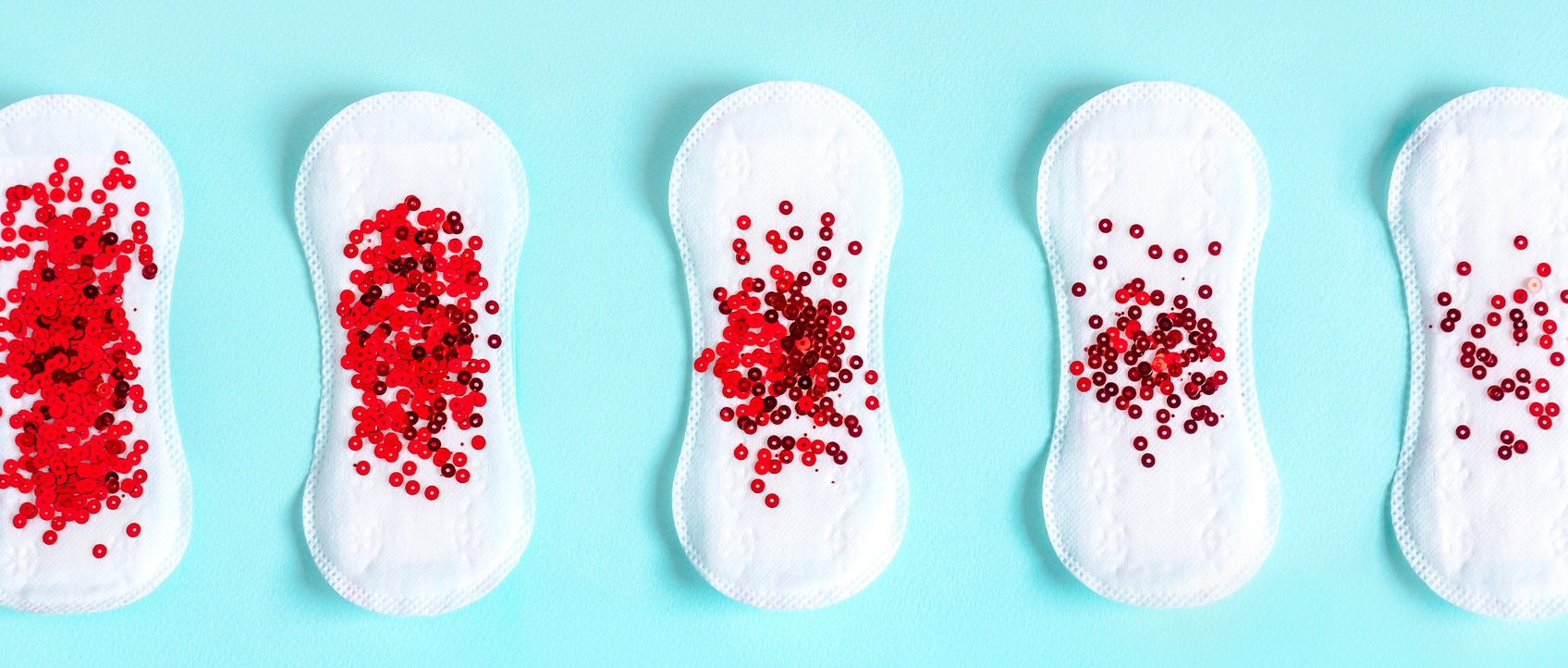
Your menstrual blood may also look different and sometimes, it can appear darker or brown. Menstrual blood appears red when it’s fresh and has left the body quickly, but it can look darker if it is old, oxidised blood that has been in the uterus for longer. This can happen during perimenopause because hormonal imbalances mean the uterine lining breaks down differently.
Discharge changes
You may notice changes in the consistency of your discharge, which may become thinner or thicker.
How to manage changes to your period
It can help to track your period on a calendar, so you can see how your menstrual cycle is changing. Note down any other symptoms, such as unusual bleeding or pain - so you can show your doctor if you need to.
Maintenir tampons, sanitary towels, and a change of underwear in your bag can be a good idea if you’re not sure when your period will arrive, or how heavy it will be. It’s also helpful to have over-the-counter painkillers such as paracetamol or ibuprofen on hand too. You can also buy period-proof underwear, which will absorb unexpected leaks or spotting.
When to see a doctor about changes in your period
Parlez à votre médecin
"It’s important not to ignore changes to your bleeding pattern or flow and to discuss this with your doctor to ensure any concerning causes can be ruled out," says Forrester-Paton.
Irregular bleeding can be a sign of other underlying conditions.
You should speak to your doctor if you have:
Saignements abondants.
Pleeding that lasts longer than a week.
Bleeding that happens more frequently than every 3 weeks.
If you are worried about your menstrual cycle or any other symptoms, it's best to speak to your doctor to be safe.
If you’ve missed a period, and it’s possible you could be enceintes, you should take a pregnancy test. Even if you’re in perimenopause, you can still ovulate and become pregnant. If you are under 50, you can still get pregnant up to 2 years after your last period and if you are over 50, you can still get pregnant up to 1 year after your last period.
Explore support for menopause symptoms
Get expert healthcare advice from the comfort of home. Complete a quick online consultation, available 24/7, with your request reviewed by a UK-registered clinician. Next day delivery available on eligible treatments.
Sélections des patients pour Ménopause et THS

Hormones
Traversez-vous la périménopause ?
You may not have reached menopause if you're experiencing headaches, night sweats, weight gain, anxiety, and depression - but you may be perimenopausal. While this means your body is transitioning towards menopause, it could be years before you reach it.
par Lawrence Higgins

Hormones
Comment gérer les problèmes de peau à la ménopause
La diminution des niveaux d'œstrogènes à la ménopause peut entraîner des changements cutanés tels que la sécheresse, la perte d'élasticité, les taches sombres, les éruptions cutanées et la lente cicatrisation des plaies. Cependant, avec les soins appropriés, il est possible de réduire ces effets. Ici, nous vous montrons ce que vous pouvez faire pour aider votre peau pendant cette période de changement.
par Lawrence Higgins
À propos de l'auteurVoir la biographie complète
Mis à jour par

Lynn Stephen
Rédactrice de contenu
MA (Hons)
Lynn joined Patient in 2023 and her role includes checking all the professional leaflets, patient information leaflets and medicine leaflets, to ensure consistency of spelling, grammar, reference material and brand style, working with the medical authors and clinical director to coordinate the authoring and peer reviewing of the leaflets.
Rédigé par

Lydia Smith
Rédacteur de reportages
Licence, Master, MSc
Lydia Smith est une journaliste primée et rédactrice spécialisée qui a beaucoup écrit sur la santé des femmes et la santé mentale. Elle prépare actuellement un MSc en psychologie.
À propos du critiqueVoir la biographie complète

Dr Colin Tidy, MRCGP
Médecin généraliste, Auteur médical
MBBS, MRCGP, MRCP (Paediatrics), DCH
Le Dr Colin Tidy est un médecin du NHS, basé dans l'Oxfordshire.
Historique de l'article
Article également disponible en Anglais, Allemand, Espagnol, Français, Italien, Portugais, Hindi, Hébreu, Arabe, and Suédois.
Next review due: 20 Feb 2029
20 Feb 2026 | Dernière version
19 sept. 2023 | Publié à l'origine
Écrit par :
Lydia Smith
Participez à la conversation
Partagez vos pensées ou expériences avec les autres dans notre communautés de patients.

Demandez, partagez, connectez-vous.
Parcourez les discussions, posez des questions et partagez vos expériences sur des centaines de sujets de santé.

Vous ne vous sentez pas bien ?
Évaluez vos symptômes en ligne gratuitement
Inscrivez-vous à la newsletter Patient
Votre dose hebdomadaire de conseils de santé clairs et fiables - rédigés pour vous aider à vous sentir informé, confiant et maître de la situation.
En vous abonnant, vous acceptez notre Politique de confidentialité. Vous pouvez vous désabonner à tout moment. Nous ne vendons jamais vos données.