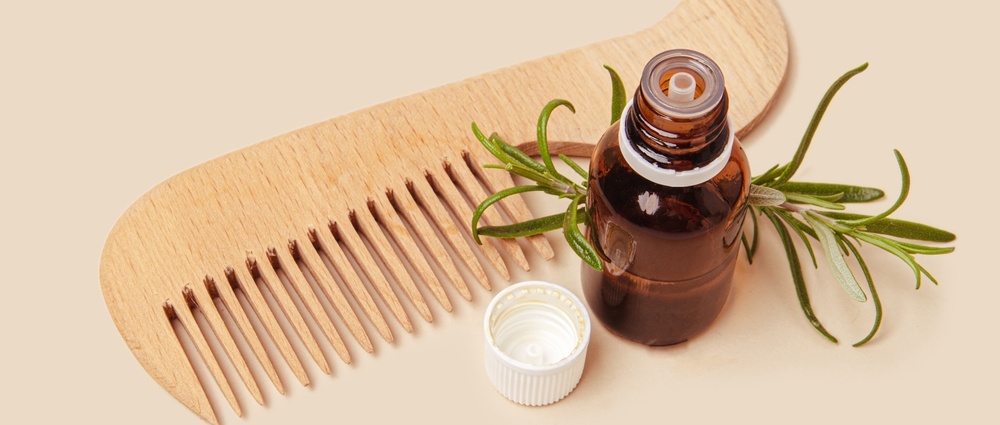
L'huile de romarin aide-t-elle réellement à faire pousser les cheveux ?
Revu par Dr Colin Tidy, MRCGPDernière mise à jour par Lynn StephenDernière mise à jour 7 Oct 2026
Respecte les directives éditoriales
- TéléchargerTélécharger
- Partager
- Language
- Discussion
- Ask Patient
- Version audio
- Ajouter aux sources préférées sur Google
Nous sommes toujours à la recherche du dernier produit miracle pour la santé - surtout s'il est peu coûteux et facilement disponible dans les magasins. Et TikTok regorge de revendications selon lesquelles l'huile de romarin est un remède pour une croissance rapide des cheveux. Mais y a-t-il des preuves que cela fonctionne ?
Explore hair loss treatment for men
Get expert healthcare advice from the comfort of home. Complete a quick online consultation, available 24/7, with your request reviewed by a UK-registered clinician. Next day delivery available on eligible treatments.

Qu'est-ce que l'huile de romarin ?
L'huile de romarin provient de la plante de romarin, une herbe parfumée qui pousse sous forme d'arbuste à feuilles persistantes. Elle est connue comme un assaisonnement alimentaire, mais est également utilisée dans les médicaments à base de plantes et les cosmétiques.
L'huile de romarin peut-elle aider à la perte de cheveux ?
Using rosemary oil as a hair product has fast-become a hit on les réseaux sociaux, beaucoup affirmant qu'il a aidé à traiter la perte de cheveux et à favoriser la croissance. Il existe certaines preuves pour étayer cela.
Une étude a révélé que l'huile de romarin est aussi efficace pour encourager la repousse des cheveux que le minoxidil, un médicament pour traiter la calvitie masculine (alopécie androgénique)1 - however this study was small and it is difficult to make any conclusions from it.
Calvitie masculine is a form of hair loss that happens when a by-product of testosterone called dihydrotestosterone attacks your hair follicles. It’s thought that rosemary oil helps to prevent this hormone from attacking your follicles, which allows your hair to grow. The rosemary oil also reduced scalp itchiness too.
A small body of research suggests that rosemary oil might also help with other forms of hair loss. For example, a study suggested that rosemary oil may help to kill certain bacteria, which may help treat hair loss if it is caused by a bacterial infection.2 There is no solid evidence, however, that rosemary oil definitely works and should replace standard treatments. Although these studies are promising, it’s hard to judge the effectiveness of rosemary oil based on a handful of small studies.
Dr Sharon Wong, Consultant Dermatologist, Hair Specialist, and President of the Institute of Trichologists, London says that rosemary oil is being lauded as a miracle hair growth product, with very little data to back this claim up.
"One study looked at comparing the effects of rosemary oil versus common medical treatment on male pattern baldness," she says. "However, there are several flaws with the study that raise the question of its reliability. Furthermore, there is currently no data that can confirm if rosemary oil works on any other forms of hair loss."
L'huile de romarin est-elle sûre ?
Rosemary oil is a natural remedy, but that does not mean it is safe for everyone. As with any product, some people may be allergic to rosemary oil. Those with sensitive peau may get irritation, rashes, or other skin issues when using it.
If you are pregnant or breastfeeding you should not use rosemary oil unless your doctor advises otherwise. As children’s skin is especially sensitive, it may not be suitable for them.
Comment utiliser l'huile de romarin pour les cheveux
Vous ne devez pas appliquer l'huile de romarin directement sur votre cuir chevelu. Diluez-la toujours avec une huile porteuse - comme l'huile de coco ou l'huile de jojoba. Par exemple, mélangez quelques gouttes d'huile essentielle de romarin avec environ une cuillère à soupe de l'huile porteuse de votre choix.
Avant d'appliquer, effectuez toujours un test préalable pour vérifier toute réaction allergique, et lavez-vous soigneusement les cheveux ensuite avec du shampooing.
Qu'est-ce qui aide encore à la croissance des cheveux ?
The treatments available for hair loss depend on the causes of the issue. Some types of hair loss may be genetic - such as male and female pattern baldness. Other causes include illness, niveaux de stress, cancer treatment, weight loss, or carence en fer. Certains traitements peuvent ne pas être disponibles sur le NHS.
Minoxidil
Le minoxidil et le finastéride sont les principaux traitements de la calvitie masculine. Le minoxidil peut également être utilisé pour traiter la calvitie féminine, mais les femmes ne doivent pas utiliser le finastéride.
Corticostéroïdes
Steroids in the form of creams or injections may help control l'alopécie areata by reducing the inflammation and suppressing the système immunitaire. This stops the body from attacking your hair follicles.
Immunothérapie
Immunotherapy - the topical application of a chemical to bald areas of your scalp - may help those with l'alopécie areata.3 It aims to alter the immune system so that it stops attacking your hair.
Thérapie par lumière de faible intensité
Low-level light therapy, otherwise known as laser therapy, involves using different wavelengths of light to stimulate your hair follicles and promote hair growth. It may help hair loss caused by male and female pattern baldness, alopecia areata, and la perte de cheveux caused by chimiothérapie.4
Mangez sainement
Eating a varied diet which is full of vitamins, minerals, and other nutrients is important for healthy skin and hair. A lack of vitamine D, folate, and zinc may contribute to l'alopécie areata.5 Vitamin D can be found in supplements, sunlight, oily fish, and eggs - but it is often added to cereals, plant milks, and fat spreads.
Green, leafy veg such as spinach, broccoli, and sprouts contain folate, while zinc can be found in meat, beans, nuts, wholegrains such as wholemeal bread, cereals, and dairy products. You can find iron in red meat and green vegetables - for example, broccoli.
Low iron levels are a common cause of hair loss.
Common symptoms of low iron include:
Fatigue.
Essoufflement.
Palpitations cardiaques.
Peau pâle.
Low energy.
Your doctor may carry out blood tests and if your levels are too low, they may recommend taking iron supplements.
Produits volumisants pour cheveux
While these products won't make hair regrow or grow back, it can enhance the look of the hair you have and make it appear thicker. Being gentle with your cheveux - and avoiding using heat from hairdryers or straighteners on it - will also keep it looking healthier. Avoid brushing it when it's wet or vigorously towel drying it, as this can lead to the strands breaking. Also, try not to style your hair in a tight ponytail or bun, as this can pull your hair.
Obtenez de l'aide pour le stress
Psychological stress can lead to hair loss. If you're struggling with niveaux de stress, anxiété, low mood, or any other santé mentale issue, it's important to speak to your doctor - they can advise on the right treatment and support.
Explore hair loss treatment for men
Get expert healthcare advice from the comfort of home. Complete a quick online consultation, available 24/7, with your request reviewed by a UK-registered clinician. Next day delivery available on eligible treatments.
Sélections des patients pour Cheveux et cuir chevelu
Santé de la peau, des ongles et des cheveux
4 problèmes capillaires courants en hiver - et comment les traiter
En hiver, nous passons constamment du froid extérieur au chauffage central intérieur. Ces deux conditions peuvent être agressives pour nos cheveux, les privant de l'humidité dont ils ont besoin pour rester en bonne santé et pleins de vitalité. Nous avons demandé à un spécialiste des cheveux des conseils pour prévenir les problèmes capillaires les plus courants en hiver, et explorer d'autres problèmes de santé qui pourraient être liés à vos soucis capillaires.
par Victoria Raw

Santé de la peau, des ongles et des cheveux
Pourquoi les cheveux deviennent gris - et comment le mode de vie peut jouer un rôle
Il est naturel, en vieillissant, de penser aux cheveux gris. Bien qu'adopter un look blanc naturel, argenté ou poivre et sel puisse être valorisant, beaucoup de gens se demandent si des choix de vie ciblés peuvent le retarder. Que vous soyez prêt à adopter une nouvelle teinte ou que vous souhaitiez conserver votre couleur naturelle un peu plus longtemps, nous explorons la science derrière le grisonnement des cheveux et s'il est réellement possible de ralentir le processus.
par Victoria Raw
Lectures complémentaires et références
- Panahi Y, Taghizadeh M, Marzony ET, et al; Rosemary oil vs minoxidil 2% for the treatment of androgenetic alopecia: a randomized comparative trial. Skinmed. 2015 Jan-Feb;13(1):15-21.
- de Oliveira JR, de Jesus D, Figueira LW, et al; Biological activities of Rosmarinus officinalis L. (rosemary) extract as analyzed in microorganisms and cells. Exp Biol Med (Maywood). 2017 Mar;242(6):625-634. doi: 10.1177/1535370216688571. Epub 2017 Jan 17.
- Singh G, Lavanya M; Topical immunotherapy in alopecia areata. Int J Trichology. 2010 Jan;2(1):36-9. doi: 10.4103/0974-7753.66911.
- Pillai JK, Mysore V; Role of Low-Level Light Therapy (LLLT) in Androgenetic Alopecia. J Cutan Aesthet Surg. 2021 Oct-Dec;14(4):385-391. doi: 10.4103/JCAS.JCAS_218_20.
- Thompson JM, Mirza MA, Park MK, et al; The Role of Micronutrients in Alopecia Areata: A Review. Am J Clin Dermatol. 2017 Oct;18(5):663-679. doi: 10.1007/s40257-017-0285-x.
À propos de l'auteurVoir la biographie complète
Mis à jour par

Lynn Stephen
Rédactrice de contenu
MA (Hons)
Lynn joined Patient in 2023 and her role includes checking all the professional leaflets, patient information leaflets and medicine leaflets, to ensure consistency of spelling, grammar, reference material and brand style, working with the medical authors and clinical director to coordinate the authoring and peer reviewing of the leaflets.
Rédigé par

Lydia Smith
Rédacteur de reportages
Licence, Master, MSc
Lydia Smith est une journaliste primée et rédactrice spécialisée qui a beaucoup écrit sur la santé des femmes et la santé mentale. Elle prépare actuellement un MSc en psychologie.
À propos du critiqueVoir la biographie complète

Dr Colin Tidy, MRCGP
Médecin généraliste, Auteur médical
MBBS, MRCGP, MRCP (Paediatrics), DCH
Le Dr Colin Tidy est un médecin du NHS, basé dans l'Oxfordshire.
Historique de l'article
Article également disponible en Anglais, Allemand, Espagnol, Français, Italien, Portugais, Hindi, Hébreu, Arabe, and Suédois.
Next review due: 7 Oct 2029
7 Oct 2026 | Dernière version
1er sept 2023 | Publié à l'origine
Écrit par :
Lydia Smith
Partagez vos pensées ou expériences avec les autres dans notre communautés de patients.
Accès simple à des traitements fiables et à des services de santé en ligne.
Common conditions
Get help with common conditions through the NHS, without a GP appointment.





Inscrivez-vous à la newsletter Patient
Votre dose hebdomadaire de conseils de santé clairs et fiables - rédigés pour vous aider à vous sentir informé, confiant et maître de la situation.
En vous abonnant, vous acceptez notre Politique de confidentialité. Vous pouvez vous désabonner à tout moment. Nous ne vendons jamais vos données.