Acide glycolique : bienfaits pour la peau, effets secondaires et plus encore
Revu par Dr Colin Tidy, MRCGPDernière mise à jour par Lynn StephenDernière mise à jour 16 nov. 2025
Respecte les directives éditoriales
- TéléchargerTélécharger
- Partager
- Language
- Discussion
- Version audio
- Ajouter aux sources préférées sur Google
De l'anti-âge aux imperfections de couleur de peau et à l'acné, l'acide glycolique est devenu un incontournable de confiance dans de nombreuses routines de soins de la peau. Bien qu'il puisse être utilisé par quiconque cherchant à garder sa peau saine et jeune, l'acide glycolique est un excellent traitement pour ceux qui ont la peau grasse, irrégulière ou sujette à l'acné.
What is glycolic acid?
If you’re looking to upgrade from a skincare amateur to a skincare pro, glycolic acid should be on your need-to-know list.
Glycolic acid is an alpha hydroxy acid (AHA), a natural acid derived from plants - in this case, sugar cane. It's made up of tiny molecules that can easily penetrate your skin barrier, helping to make it a particularly effective anti-ageing ingredient that promotes good skin health.
Benefits: what does glycolic acid do?
So why exactly is glycolic acid good for your skin?
Dr Susan Mayou, consultant dermatologist at the Cadogan Clinic explains that glycolic acid works by dissolving the intercellular glue which holds your skin cells together.
"This results in the exfoliation of those cells - helping to remove dead skin and clear pores," she says.
Unlike mechanical exfoliants, such as face scrubs, glycolic acid is a gentler way to exfoliate your skin. This chemical exfoliant doesn’t require harsh scrubbing and instead removes skin cells while retaining moisture.
Mayou adds: "This helps brighten the skin's appearance, as light reflects better off a smooth skin surface, giving a more youthful and more radiant appearance."
Glycolic acid can benefit everyone's skin but people with the following skin issues may find it particularly helpful.
Is glycolic acid good for ageing skin?
According to Mayou, continued use can help boost collagen production - a natural protein that our bodies produce but which decreases with age. Collagen gives your skin strength and elasticity, and when you have less of it, fine lines and wrinkles appear.
Is glycolic acid good for an uneven skin tone?
As glycolic acid helps shed damaged or discoloured skin cells, it can help to even out patches of lighter or darker colours (hyperpigmentation) and improve skin texture. You may experience this due to sun damage, or you may be more prone to skin disorders such as melasma - usually resulting in darker patches of skin on your face - due to environmental, genetic, or hormonal factors.
Is glycolic acid good for oily skin?
Excess oil and bacteria are also removed during exfoliation. At the same time, this ingredient helps to control how much natural oil (sebum) your skin glands produce while maintaining the moisture you need.
Is glycolic acid good for acne?
"The peeling properties of glycolic acid can also significantly improve the appearance of l'acné," says Mayou. "It unclogs your pores, resulting in fewer acne breakouts and smoother, brighter skin."
In a 2021 study, the appearance of inflamed and red acne breakouts improved significantly between 28 and 56 days and resulted in a 29.4% visible improvement thereafter1.
How to use glycolic acid in your skincare routine
These far-reaching skincare benefits may have you ready to dive head-first into a tub of glycolic acid. However, it's important to get your skin used to the product. Mayou advises first-timers to start with a gentle cleanser that contains a glycolic acid concentration of no more than 2% if you wish to use it every day.
Glycolic acid products come in many forms
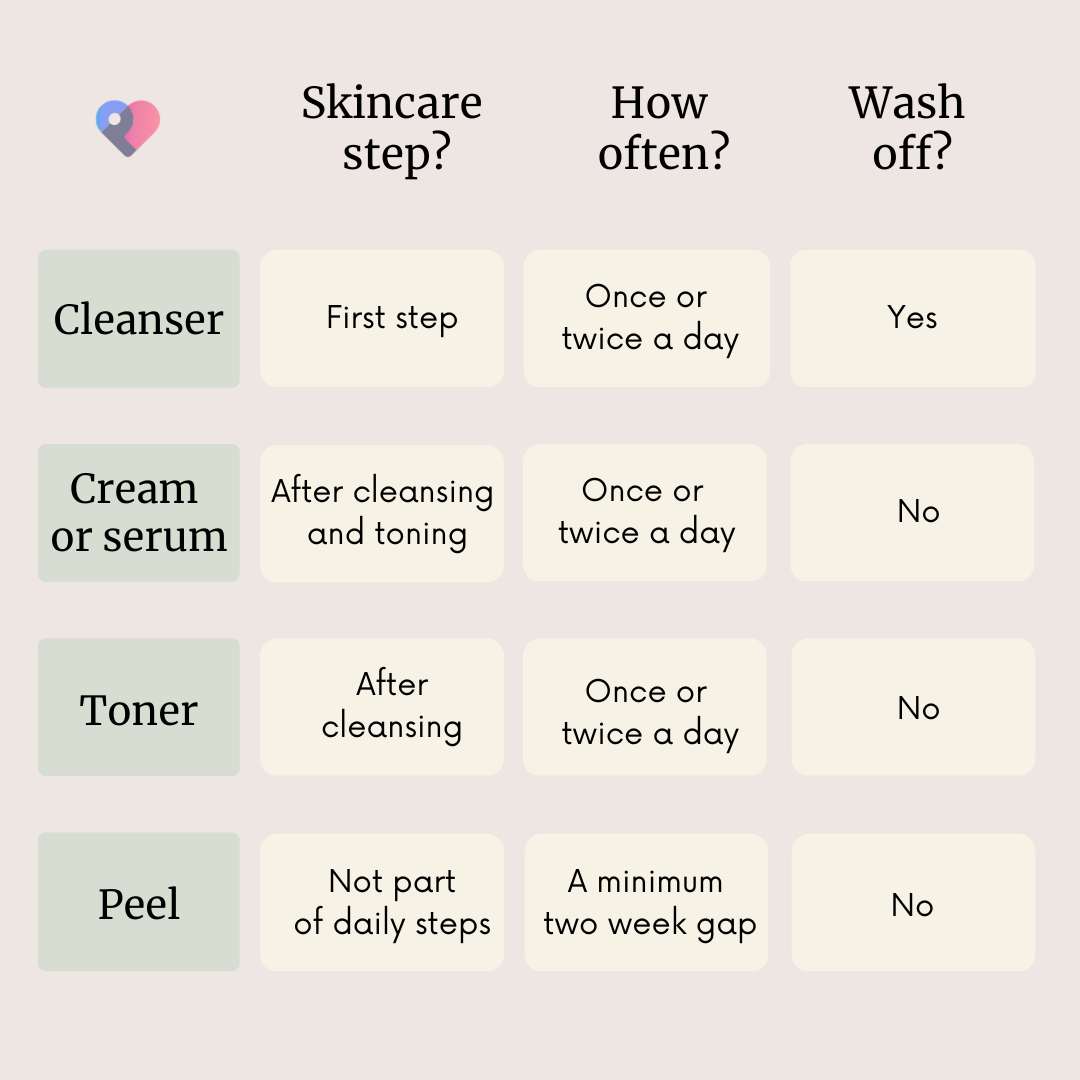
How often should you use glycolic acid?
Low to medium concentrations
Mayou cautions: "If using glycolic acid products containing 1-2% concentration, your skin should be able to tolerate this ingredient daily. However, it's important to build up gradually to avoid intolerance and sensitivity."
Beginners may wish to start by applying glycolic acid just three times per week for the first one or two weeks. If your skin doesn’t feel irritated, you can increase to four times per week for the same period. Continue gradually building up the frequency until it is used as part of your daily skincare routine.
Medium to high concentrations
Mayou says: "Products containing 10% and more should only be used once or twice a week as they are harsher and may cause a reaction. Remember, the higher the concentration the greater the peeling action."
If you have a generous skincare budget, professional glycolic acid peels contain the highest concentration and are a good option if you're looking to treat a specific skin issue. However, this means they carry a greater chance of irritation. You should aim to leave at least two weeks in between peels.
You can also purchase at-home glycolic acid peels. These tend to be more affordable and contain lower concentrations. Always read the label and don't exceed the recommended frequency of use.
Side effects and risks
Irritation
So why do you need to be mindful of how much glycolic acid you use? In short, using too much can upset your skin. For some skin types, even small amounts can lead to side effects.
These include skin:
Dryness.
Rougeur.
Qui brûlent.
Démangeaisons.
Gonflement.
If you notice any of these symptoms, stop using your product. If you wish to try again, give your skin a chance to recover fully, and then choose a smaller concentration and limit how often you apply it.
Sun damage
While glycolic acid offers great anti-ageing benefits, it can leave you more vulnerable to harmful UV rays. One study found that glycolic acid led to DNA damage, sunburn, and erythema - a skin rash caused by inflamed blood vessels - in participants, whereas, another exfoliating and anti-inflammatory skin treatment did not.
When glycolic acid removes the top layer of dead skin cells, it exposes the cells underneath, leaving them more sensitive to sun damage. Therefore, Mayou advises wearing a sunscreen with sun protection factor (SPF) 50+ every day before going outside. You will need to do this for as long as you use glycolic acid and for one week afterwards.
Can you use glycolic acid when pregnant?
Glycolic acid is safe to use in la grossesse et l'allaitement. However, Mayou advises you use a low concentration and remember to apply SPF.
Introducing glycolic acid to your skincare routine can provide a range of benefits. If you are seeking treatment from a dermatologist, then you should discuss your skincare products with them before use.
Pour en savoir plus
Campos, Pitassi, Gonçalves, Sant'Annhttps://pubmed.ncbi.nlm.nih.gov/33617668/am, and Correia "Clinical evaluation of the efficacy of a facial serum containing dioic acid, glycolic acid, salicylic acid, LHA, citric acid, and HEPES in treating post-inflammatory hyperchromia and controlling oily skin in patients with acne vulgaris".
Sélections des patients pour Soin de la peau
Santé de la peau, des ongles et des cheveux
Que fait le sérum à la vitamine C ?
Un sérum de vitamine C de bonne qualité peut être un excellent ajout à votre routine de soins de la peau. Avec tant de choix sur le marché, voici comment en choisir un avec les ingrédients les plus efficaces et scientifiquement prouvés.
par Victoria Raw
Santé de la peau, des ongles et des cheveux
Rétinol : bienfaits pour la peau, effets secondaires et plus encore
Quel que soit votre âge, si vous avez déjà pensé aux soins de la peau, vous avez probablement entendu parler du rétinol. Mais si vous ne savez pas exactement ce que c'est - ou pourquoi vous pourriez avoir besoin de le savoir - vous n'êtes pas seul. Pour compliquer les choses, le terme 'rétinol' est utilisé dans des contextes similaires à 'rétinoïde' et 'acide rétinoïque' entre autres. Voici un aperçu du rétinol, de ses bienfaits pour la peau et des éléments à considérer avant de l'ajouter à votre routine de soins de la peau.
par Lynn Stephen
À propos de l'auteurVoir la biographie complète
Mis à jour par

Lynn Stephen
Rédactrice de contenu
MA (Hons)
Lynn joined Patient in 2023 and her role includes checking all the professional leaflets, patient information leaflets and medicine leaflets, to ensure consistency of spelling, grammar, reference material and brand style, working with the medical authors and clinical director to coordinate the authoring and peer reviewing of the leaflets.
Rédigé par

Amberley Davis
Rédacteur senior
BA (Hons), CPD
Amberley est une rédactrice senior chez Patient et a écrit de manière approfondie sur une gamme de sujets liés à la santé et au bien-être.
À propos du critiqueVoir la biographie complète

Dr Colin Tidy, MRCGP
Médecin généraliste, Auteur médical
MBBS, MRCGP, MRCP (Paediatrics), DCH
Le Dr Colin Tidy est un médecin du NHS, basé dans l'Oxfordshire.
Historique de l'article
Article également disponible en Anglais, Allemand, Espagnol, Français, Italien, Portugais, Hindi, Hébreu, Arabe, and Suédois.
Next review due: 17 Nov 2028
16 nov. 2025 | Dernière version
2 Jul 2022 | Publié à l'origine
Écrit par :
Amberley Davis
Participez à la conversation
Partagez vos pensées ou expériences avec les autres dans notre communautés de patients.

Demandez, partagez, connectez-vous.
Parcourez les discussions, posez des questions et partagez vos expériences sur des centaines de sujets de santé.

Vous ne vous sentez pas bien ?
Évaluez vos symptômes en ligne gratuitement
Inscrivez-vous à la newsletter Patient
Votre dose hebdomadaire de conseils de santé clairs et fiables - rédigés pour vous aider à vous sentir informé, confiant et maître de la situation.
En vous abonnant, vous acceptez notre Politique de confidentialité. Vous pouvez vous désabonner à tout moment. Nous ne vendons jamais vos données.