Cholangite sclérosante primitive
Revu par Dr Doug McKechnie, MRCGPDernière mise à jour par Dr Colin Tidy, MRCGPDernière mise à jour 6 mars 2025
Respecte les directives éditoriales
- TéléchargerTélécharger
- Partager
- Language
- Discussion
- Version audio
- Ajouter aux sources préférées sur Google
La cholangite sclérosante primitive est une affection rare qui touche les voies biliaires et le foie. L'inflammation et la cicatrisation des voies biliaires peuvent entraîner des lésions hépatiques et une cirrhose - une condition où le tissu hépatique normal est remplacé par du tissu cicatriciel (fibrose). Différents traitements sont disponibles pour contrôler les symptômes qui peuvent se développer et également pour gérer les complications qui peuvent survenir. Le pronostic pour les personnes atteintes de cholangite sclérosante primitive peut être très variable.
En un coup d'œil
Primary sclerosing cholangitis (PSC) is a rare condition affecting the bile ducts and liver.
It causes inflammation and scarring of the bile ducts, leading to bile build-up in the liver.
Early symptoms can include tiredness, itching, weight loss, or discomfort in the upper tummy.
PSC can lead to serious complications like cirrhosis, liver failure, and bile duct cancer.
There is no cure, but treatments aim to manage symptoms and complications.
A liver transplant may be considered for badly affected livers.
The cause of PSC is not clear, but it is often linked to inflammatory bowel disease.
Fonction du foie
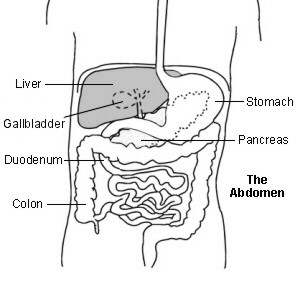
Le foie se trouve dans la partie supérieure droite du ventre (abdomen). Il a de nombreuses fonctions, notamment :
Storing glycogen (fuel for the body), which is made from sugars. When required, glycogen is broken down into glucose which is released into the bloodstream.
Aider à traiter les graisses et les protéines des aliments digérés.
Produire des protéines essentielles à la coagulation du sang (facteurs de coagulation).
Traitement de nombreux médicaments que vous pouvez prendre.
Aider à éliminer ou à traiter l'alcool, les poisons et les toxines du corps.
Making bile, which passes from the liver to the gut down the bile duct. Bile breaks down the fats in food so that they can be absorbed from the bowel.
Upper abdomen showing bile ducts
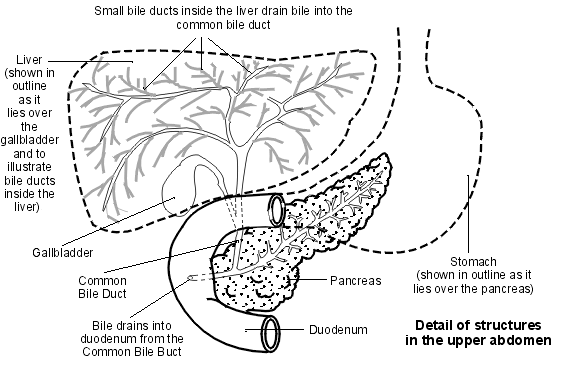
Bile is a yellow-green liquid that contains various chemicals and bile salts. Bile helps you to digest food, particularly fatty foods. It also helps the body to absorb certain vitamins (A, D, E and K) from the food that you eat.
Bile is made by liver cells. Liver cells pass out bile into a network of tiny tubes called bile ducts. They join together (like tributaries of a river) to form the larger common bile duct. Bile constantly drips down the tiny bile ducts, into the common bile duct, and into the first part of the small intestine (which is called the duodenum).
The gallbladder lies under the liver. It is like a pouch off the common bile duct and fills with bile. It is like a reservoir that stores bile. The gallbladder squeezes (contracts) when we eat, as the bile is needed to aid digestion. This empties the stored bile back into the common bile duct and out into the duodenum.
What is primary sclerosing cholangitis?
Primary sclerosing cholangitis (PSC) is a rare condition that affects the bile ducts and liver. PSC can occur at any age but is more common in people aged around 40 years. It is twice as common in men as in women. PSC is called:
Primary - because the cause is not known. (That is, it is not 'secondary' to any known cause such as alcohol or poisons.)
Sclerosing - because it causes scarring and thickening (sclerosis) of the bile ducts.
Cholangitis - which means inflammation of the bile ducts.
In this condition, the bile ducts both inside and outside the liver become inflamed and scarred. The scarring causes narrowing of these bile ducts which results in bile building up in the liver. The bile can then damage the liver cells. Eventually, the scar tissue can spread throughout the liver, causing cirrhosis and liver failure. Cirrhosis is a serious condition where normal liver tissue is replaced by scar tissue (fibrosis). It tends to progress slowly and often does not cause symptoms in its early stages. However, as the function of the liver gradually becomes worse, serious problems can develop.
Voir la brochure séparée intitulée Cirrhose for more details.
Primary sclerosing cholangitis symptoms
In many cases the symptoms develop gradually over weeks or months. At the beginning of the disease, many people have no symptoms at all. The most common early symptoms include:
Se sentir plus fatigué que d'habitude.
Sensation de malaise général.
Peau qui démange.
Perte de poids.
Having some discomfort in the right upper tummy (abdomen).
Jaundice is a symptom of PSC when the condition worsens. If you have jaundice, you 'go yellow'. You tend to notice it first when the whites of the eyes become yellow. This is due to a build-up of the chemical bilirubin, which is made in the liver and, in some liver conditions, spills into the blood.
Primary sclerosing cholangitis causes
The cause is not clear. It can sometimes run in families. Around four out of five people with PSC also have inflammatory bowel disease (most often la colite ulcéreuse, but it can also be associated with maladie de Crohn). About 1 in 10 people with inflammatory bowel disease are affected by PSC.
Primary sclerosing cholangitis treatment
At present there is no specific treatment for PSC which either cures or slows the progression of PSC disease. Treatments aim to improve symptoms and also to manage any complications which may arise.
Treatment of symptoms. Itching of the skin can be difficult to treat but is usually eased with a medicine called colestyramine. Other medicines may be tried if this is not effective.
Medical treatment. Although vitamin supplements may be advised, there is no proven medical treatment that alters the progression or outcome in PSC. Ursodeoxycholic acid (UCDA) is often used and has been shown to improve liver function but clinical trials have not shown any benefit regarding any improved outcome.
Treatment of complications. Antibiotics will be given if you have an episode of infective cholangitis. If your cholangiogram shows that you have an obstruction to the bile duct outside your liver, it may be possible for a doctor to place a small drainage tube (a stent) or use a very small balloon to open up the blockage.
Liver transplant. Liver transplantation is the only treatment able to modify the outlook of the disease. It may be considered if your liver is affected badly. The outlook following a liver transplant is good. However, PSC recurs in around a fifth of cases following a liver transplant.
Diet and alcohol. Most people with PSC will be advised to eat a normal healthy diet. Ideally, anybody with inflammation of the liver ne devrait pas boire d'alcool, or only in very small amounts. If you already have liver inflammation, alcohol may increase the risk and speed of developing cirrhosis - where normal liver tissue is replaced by scar tissue (fibrosis).
Quelles sont les complications ?
Various complications can occur in some people with PSC. These include:
Deficiencies of some vitamins, usually vitamins A, D, E and K. These are the vitamins which are fat-soluble (rather than the other vitamins which are water-soluble). This means they dissolve in fat. Bile helps the fat to be broken down and these vitamins to be absorbed.
PSC cholangitis, which is infection of the blocked bile ducts. This is called infective cholangitis. This may cause chills, fever and upper tummy (abdominal) tenderness.
Cirrhosis - where normal liver tissue is replaced by scar tissue (fibrosis).
Liver failure.
Bile duct cancer. This eventually affects around 1 in 10 people who have PSC.
Diagnosing primary sclerosing cholangitis
Many people with PSC have no, or only vague, symptoms for quite some time in the early stages of the disease. Therefore, the diagnosis is often made when you have tests for an unrelated condition or routine tests if you have inflammatory bowel disease.
Tests usually include:
Des analyses de sang appelées tests de fonction hépatique. Elles mesurent l'activité des substances chimiques (enzymes) et d'autres substances produites dans le foie. Cela donne une indication générale sur l'inflammation du foie et son bon fonctionnement. See the separate leaflet called Abnormal liver function tests for more details.
Other blood tests may be performed to rule out (exclude) other causes of liver conditions, such as viral hepatitis.
Une échographie du foie may be performed.
A cholangiogram is a test which produces a picture of the bile ducts. This is often done using a magnetic resonance imaging (MRI) scan.
Taking a small sample (biopsy) of the liver. This may be carried out to look at the sample under the microscope. It can show inflammation and the extent of any cirrhosis (where normal liver tissue is replaced by scar tissue (fibrosis) in the liver). The liver biopsy can also assess how early or advanced the disease is. See the separate leaflet called Liver biopsy for more details.
Does primary sclerosing cholangitis alter life expectancy?
The course of PSC is variable. The outlook and life expectancy are poorer in older patients, those who have an enlarged liver and spleen, and in patients who are persistently jaundiced. There is also an increased risk of developing cancer of the bile duct (cholangiocarcinoma) or bowel (colorectal) cancer. The risk of developing bowel cancer is higher in people with PSC who also have ulcerative colitis.
Apart from liver transplantation, there are no effective treatments for PSC. Some US studies suggest life expectancy ranges from 9 to 18 years if the patient does not have a liver transplant. However, researchers in the Netherlands concluded that life expectancy may be longer than 21 years from the time when the diagnosis is made.
The treatment of PSC is a developing area of medicine. New treatments continue to be researched and the information above is very general. The specialist who knows your case can give more accurate information about the outlook for your particular situation.
Sélections des patients pour Foie et vésicule biliaire

Santé digestive
Calculs biliaires
Les calculs biliaires sont courants mais ne provoquent aucun symptôme chez deux personnes sur trois qui en ont. Ils provoquent parfois des douleurs, un jaunissement de la peau ou du blanc des yeux (jaunisse), une inflammation du pancréas (pancréatite) et une inflammation de la vésicule biliaire. La chirurgie est le traitement habituel pour les calculs biliaires qui causent des symptômes.
par Dr Colin Tidy, MRCGP

Santé digestive
Insuffisance hépatique
L'insuffisance hépatique survient lorsque de grandes parties du foie sont endommagées et ne peuvent pas être réparées. Le foie ne peut pas fonctionner correctement. L'insuffisance hépatique peut vous faire sentir très mal. L'insuffisance hépatique aiguë est une urgence vitale nécessitant des soins médicaux d'urgence. L'insuffisance hépatique se développe souvent lentement sur de nombreuses années. On parle alors de maladie hépatique chronique. Voir la fiche séparée intitulée Cirrhose pour plus d'informations. L'insuffisance hépatique peut également évoluer rapidement en quelques jours seulement (insuffisance hépatique aiguë). Il existe de nombreuses causes d'insuffisance hépatique aiguë. Parmi celles-ci, on trouve l'empoisonnement au paracétamol, les infections (par exemple, l'hépatite B ou C), la stéatose hépatique aiguë de la grossesse et plusieurs maladies génétiques rares. Chez certaines personnes atteintes d'insuffisance hépatique, la cause n'est pas connue.
par Dr Hayley Willacy, FRCGP
Questions fréquemment posées
How rare is Primary Sclerosing Cholangitis?
Primary Sclerosing Cholangitis (PSC) is described as a rare condition. While specific numbers are not provided, it is highlighted that it can occur at any age, is more common in people around 40, and is twice as frequent in men as in women.
Can Primary Sclerosing Cholangitis be passed on to children?
The article states that the cause of PSC is not clear, but it can sometimes run in families. This suggests a potential genetic link or inherited predisposition, although it doesn't give a definitive answer on direct inheritance.
What is the likelihood of developing other cancers with PSC?
People with PSC have an increased risk of developing cancer of the bile duct (cholangiocarcinoma) and bowel (colorectal) cancer. The risk of bowel cancer is particularly higher in those with PSC who also have ulcerative colitis.
Is it possible to relieve discomfort in the upper right tummy with PSC?
The article identifies discomfort in the right upper tummy as one of the common early symptoms of PSC. While it mentions treatments for skin itching and complications like infective cholangitis, it doesn't specifically detail treatments for general tummy discomfort.
Why is alcohol discouraged for people with Primary Sclerosing Cholangitis?
Alcohol is discouraged because if there is already inflammation of the liver, drinking alcohol may increase the risk and speed up the development of cirrhosis, a serious condition where normal liver tissue is replaced by scar tissue.
Lectures complémentaires et références
- Nicoletti A, Maurice JB, Thorburn D; Guideline review: British Society of Gastroenterology/UK-PSC guidelines for the diagnosis and management of primary sclerosing cholangitis. Frontline Gastroenterol. 2020 Mar 2;12(1):62-66. doi: 10.1136/flgastro-2019-101343. eCollection 2021.
- EASL Clinical Practice Guidelines on sclerosing cholangitis. J Hepatol. 2022 Sep;77(3):761-806. Epub 2022 Jun 21.
- Tan N, Lubel J, Kemp W, et al; Current Therapeutics in Primary Sclerosing Cholangitis. J Clin Transl Hepatol. 2023 Oct 28;11(5):1267-1281. doi: 10.14218/JCTH.2022.00068S. Epub 2023 Apr 17.
- Sarcognato S, Sacchi D, Grillo F, et al; Autoimmune biliary diseases: primary biliary cholangitis and primary sclerosing cholangitis. Pathologica. 2021 Jun;113(3):170-184. doi: 10.32074/1591-951X-245.
À propos de l'auteurVoir la biographie complète

Dr Colin Tidy, MRCGP
Médecin généraliste, Auteur médical
MBBS, MRCGP, MRCP (Paediatrics), DCH
Le Dr Colin Tidy est un médecin du NHS, basé dans l'Oxfordshire.
À propos du critiqueVoir la biographie complète

Dr Doug McKechnie, MRCGP
Rédacteur Médical
MA, MBBS, MSc, DRCOG, MRCP(UK), MRCGP(2021), FHEA
Le Dr Doug McKechnie est un médecin généraliste du NHS travaillant à Londres. Il travaille à plein temps en clinique et est également le chef adjoint du module de Pratique Clinique et Professionnelle à l'École de Médecine de l'University College London.
Historique de l'article
Les informations sur cette page sont rédigées et examinées par des cliniciens qualifiés.
Article également disponible en Anglais, Allemand, Espagnol, Français, Italien, Portugais, Hindi, Hébreu, Arabe, and Suédois.
Prochaine révision prévue : 5 mars 2028
6 mars 2025 | Dernière version

Demandez, partagez, connectez-vous.
Parcourez les discussions, posez des questions et partagez vos expériences sur des centaines de sujets de santé.

Vous ne vous sentez pas bien ?
Évaluez vos symptômes en ligne gratuitement
Inscrivez-vous à la newsletter Patient
Votre dose hebdomadaire de conseils de santé clairs et fiables - rédigés pour vous aider à vous sentir informé, confiant et maître de la situation.
En vous abonnant, vous acceptez notre Politique de confidentialité. Vous pouvez vous désabonner à tout moment. Nous ne vendons jamais vos données.
Plus sur la santé digestive
- Douleur abdominale
- Hépatite auto-immune
- Polypes intestinaux
- Campylobacter
- Cirrhose
- Clostridioides difficile
- Diverticules
- Ulcère duodénal
- Gastrite
- Giardia
- Hépatite A
- Hernie
- Indigestion
- Prurit anal
- Douleur dans le quadrant supérieur gauche
- Saignement rectal
- Douleur à la rate
- Diarrhée du tout-petit
- Diarrhée du voyageur
- Maladie de Wilson