What is the link between IBS and anxiety?
Peer reviewed by Dr Krishna Vakharia, MRCGPAuthored by Victoria RawOriginally published 17 Feb 2025
Meets Patient’s editorial guidelines
- DownloadDownload
- Share
- Language
- Discussion
- Audio Version
- Add to preferred sources on Google
Irritable bowel syndrome (IBS) can cause a combination of tummy cramps, diarrhoea, bloating and constipation. It's a long-term health condition that can affect your quality of life. Although changing your diet and taking certain medicines can help, poor mental health and IBS symptoms can mutually aggravate each other.
Mental health support for adults and children
Online CBT and psychological therapy for adults and children aged 8–17. Onebright’s accredited clinicians support people experiencing anxiety, depression and other emotional challenges.
IBS is a common condition that affects up to 1 in 5 people in the world.
According to Tina Wright, IBS Psychotherapist, Evolve Psychotherapy, Norfolk, UK, up to 6 out of 10 people with IBS report having anxiety or depression.
She explains that people with IBS often develop a heightened fear of symptoms in public or social situations. This can create a cycle of worry and physical discomfort.
"Anxiety can trigger IBS flare-ups, while IBS symptoms like urgency or diarrhoea can, in turn, worsen anxiety," says Wright. "This interplay highlights the importance of addressing both physical and mental health when managing IBS."
What is the gut-brain axis?
Gut-brain axis

© Ben Hudson
Your emotional state can play a big role in influencing IBS and may cause your gut symptoms to worsen.
The gut-brain axis is a two-way communication system that connects your gut and your brain. This happens primarily through the vagus nerve - a major nerve responsible for transmitting signals between the two. Hormonal signals - such as serotonin - and the gut microbiome play significant roles in this relationship.
Wright explains further on the specific roles each component plays:
Serotonin - while it is often associated with mood regulation in your brain, 90% of serotonin is produced in the gut, where it regulates the movement of food through the digestive tract (gut motility). Serotonin produced in the gut cannot cross the blood-brain barrier, so it does not directly influence mood.
Stress, adrenaline, and the gut - when your body perceives a threat, it activates the 'fight or flight' response, releasing adrenaline. This can increase gut motility, causing diarrhoea by reducing the amount of water reabsorbed in the intestines. If you have IBS, this stress response may lead to heightened symptoms during anxiety-provoking situations.
Pain perception and gut sensitivity - research suggests that people with IBS have a heightened sensitivity to gut sensations. Even normal levels of gas or distention, which may go unnoticed by others, are perceived as painful or distressing in those with IBS. This heightened pain perception, combined with stress and anxiety, makes IBS symptoms feel worse.
How to manage IBS and anxiety
How to manage IBS and anxiety
© Graphic: Ben Hudson
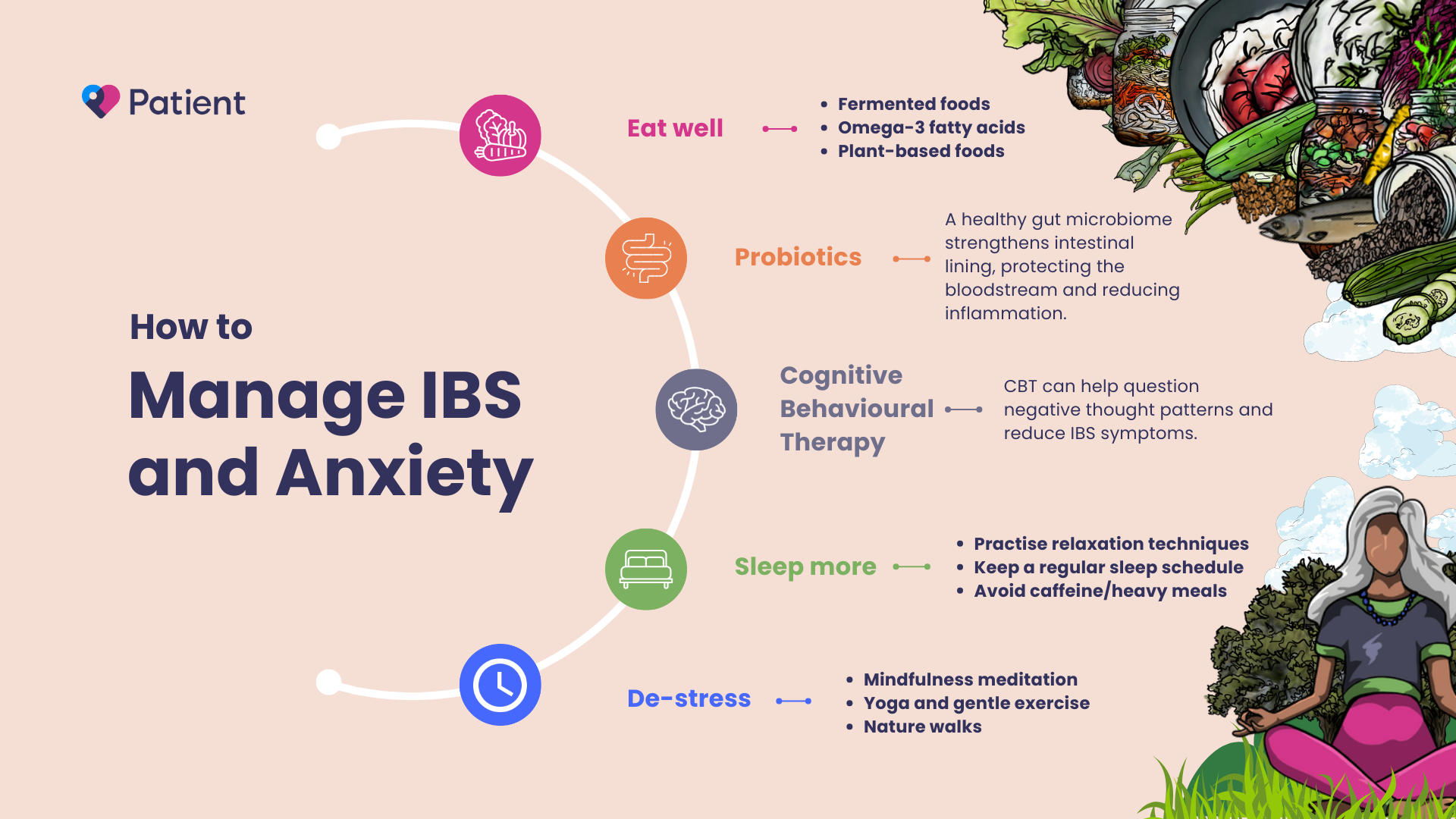
Making changes to your lifestyle can also help manage both IBS and anxiety. According to Wright, there are some effective strategies for minimising these symptoms.
De-stress
Long-term stress can negatively affect your gut, so finding ways to manage it is essential for your health.
Some helpful tips can include:
Mindfulness meditation - reduces the severity of your symptoms and fosters emotional resilience.
Yoga and gentle exercise - can help improve your gut motility and lower stress hormones such as cortisol.
Nature walks - exposure to green spaces can lessen your stress levels and improve your mood.
Sleep more
Not getting enough sleep - both in quality and quantity - can heighten stress levels and make your gut more sensitive.
You can support restful sleep by:
Maintaining a regular sleep schedule.
Avoiding caffeine or heavy meals before bed.
Practising relaxation techniques such as progressive muscle relaxation.
See here for some useful tips to help you get a good night's sleep.
Eat well
Eating foods that nourish your gut can improve both your gut health and your overall wellbeing.
Wright recommends the following foods as being especially good for your gut:
Fermented foods - yoghurt, kefir, and kimchi promote healthy gut bacteria.
Omega-3 fatty acids - found in salmon, flaxseeds, and walnuts, these unsaturated fats can help reduce inflammation.
Plant-based foods - choose a variety of colourful fruits, vegetables, and whole grains to support a healthy gut microbiome.
Try probiotics
Probiotics are friendly microorganisms that help keep your gut healthy. By incorporating probiotics into your diet, you can keep a balanced gut microbiome, helping good bacteria to thrive, and minimising the growth of harmful ones.
Wright explains that a healthy gut microbiome is vital for both digestion and emotional wellbeing.
"Specific probiotic strains like Lactobacillus rhamnosus and Bifidobacterium longum have been shown to reduce abdominal pain and improve mental health," she says. "A wide range of plant-based foods supports microbial diversity, which is linked to improved gut and mental health."
Manage fears
While diet is not the only solution to reducing IBS symptoms, it plays a key role in managing them.
Fermentable Oligosaccharides, Disaccharides, Monosaccharides, and Polyols (FODMAPs) are carbohydrates that ferment in your gut, producing gas.
Common high-FODMAP foods include:
Onions.
Garlic.
Beans.
Certain fruits.
"It is believed these foods can cause IBS flare-ups in some people," Wright explains. "However, research suggests the gas produced is no different in those with or without IBS. Instead, those with IBS may experience increased sensitivity to gas and bloating, making dietary discomfort more painful."
She adds that managing gut sensitivity and pain perception is better than relying on overly restrictive diets. This often involves addressing anxiety and building tolerance for previously feared foods.
"A diverse diet - such as the Mediterranean diet - rich in fruits, vegetables, nuts, seeds, pulses, whole grains, and healthy fats helps balance the gut microbiome," says Wright. "However, these foods are often avoided by people with IBS due to fear of symptoms, so working to reduce anxiety while gradually reintroducing variety is essential."
Relieve anxiety
Managing anxiety during IBS flare-ups is critical for breaking the stress-symptom cycle.
Wright recommends you try these quick techniques:
Diaphragmatic breathing - focus on slow, deep breaths that expand your belly rather than your chest. Breathe in for a count of 4 and out for a count of 6 and repeat 6 times.
Progressive muscle relaxation (PMR) - tense and release each muscle group from head to toe to ease physical tension and mental stress.
Grounding techniques - use the 5-4-3-2-1 method to anchor yourself in the present. Identify 5 things you can see, 4 you can touch, 3 you can hear, 2 you can smell, and 1 you can taste.
Self-reassurance - remind yourself that while IBS symptoms are uncomfortable, they are not dangerous. Practising self-compassion can help reduce the cycle of fear and symptoms.
Cognitive behavioural therapy (CBT)
Given the strong link between IBS, stress and anxiety, CBT can be a powerful tool for helping to question negative thought patterns and reduce IBS symptoms.
Wright explains it can help you:
Reframe anxious thoughts about your symptoms.
Challenge beliefs about catastrophic outcomes - for example, fear of public embarrassment.
Develop coping strategies to manage IBS-related distress.
Reduce triggers
IBS triggers often include stress, diet, or hormonal changes.
Wright suggests that a multi-pronged approach that addresses diet, gut microbiota, and stress is often the most effective way to manage IBS and anxiety.
"IBS and anxiety are closely linked, but understanding the gut-brain connection and adopting evidence-based strategies can break the cycle of symptoms and stress," she concludes. "By managing dietary fears, restoring gut balance, and building emotional resilience, it’s possible to regain control and lead a fulfilling life."
Patient picks for Irritable bowel syndrome
Digestive health
What's the difference between IBS and IBD?
Irritable bowel syndrome (IBS) and inflammatory bowel disease (IBD) are easy conditions to confuse. As well as having similar names, the two have many similar symptoms - if you have one of these conditions you may have abdominal pain, cramps, constipation, and diarrhoea, as well as feeling generally unwell. But the conditions are quite distinct, with different causes and different treatments. If you're having any of these symptoms, it's important to see your doctor who can give you a definite diagnosis.
by Lynn Stephen

Digestive health
Are the symptoms of IBS in men and women different?
We compare the different symptoms of IBS in women and men and explore how both sex and gender can shape your experience of this disorder.
by Amberley Davis
About the authorView full bio

Victoria Raw
Feature Writer
BA (Hons), English Literature
Victoria is a content writer at Patient, with special interests spanning mental wellbeing, societal trends and the impact of technology on our health.
About the reviewerView full bio

Dr Krishna Vakharia, MRCGP
Chief Medical Officer for Health, Optum UK
MBChB, MRCGP(2013), BMedSci (hons), DFSRH, DRCOG, PGDipDerm (Distn)
Dr Krishna Vakharia is an NHS GP. She is also a regular examiner for the postgraduate Diploma in Practical Dermatology at Cardiff University as well as being the Chief Medical Officer for health at Optum UK.
Article history
Article also available in English, German, Spanish, French, Italian, Portuguese, Hindi, Hebrew, Arabic, and Swedish.
Next review due: 17 Feb 2028
17 Feb 2025 | Originally published
Authored by:
Victoria RawPeer reviewed by
Dr Krishna Vakharia, MRCGP
Join the conversation
Share your thoughts or experiences with others in our patient communities.

Ask, share, connect.
Browse discussions, ask questions, and share experiences across hundreds of health topics.

Feeling unwell?
Assess your symptoms online for free
Sign up to the Patient newsletter
Your weekly dose of clear, trustworthy health advice - written to help you feel informed, confident and in control.
By subscribing you accept our Privacy Policy. You can unsubscribe at any time. We never sell your data.
More in digestive health
- Acid reflux diet: foods to eat and avoid
- Can gastroenteritis have long-term effects?
- Can you get gallstones when you're young?
- Coeliac disease diet sheet
- Common causes of an itchy bottom
- Could it be gallstones?
- Crohn's disease in children: How to support your child
- Gallstones diet: foods to eat and avoid
- How Crohn's disease can affect your sex life
- How to deal with gastroenteritis
- How to get rid of haemorrhoids
- How to get rid of threadworms
- How to get rid of trapped wind: home remedies that work
- How to look after your liver during freshers’ week
- How to manage your heartburn at Christmas
- How your gut affects your overall health
- Probiotics for IBS: do they work?
- What does your poo say about you?
- What is the best diet for Crohn's disease?
- What you need to know about hepatitis