Inhibiteurs de l'ECA
Revu par Dr Colin Tidy, MRCGPDernière mise à jour par Dr Toni Hazell, FRCGPDernière mise à jour 18 déc. 2023
Respecte les directives éditoriales
- TéléchargerTélécharger
- Partager
- Language
- Discussion
- Version audio
- Ajouter aux sources préférées sur Google
ACE inhibitors are medicines that are used mainly in the treatment of high blood pressure (hypertension) and heart failure. They are also used in some people with diabetes, for some forms of kidney disease, and after a heart attack, to help protect the heart.
They have a variety of effects on the body. Their ability to relax blood vessels is one of the most important. The side-effects most commonly associated with ACE inhibitors are usually minor. A common side-effect is a persistent dry cough.
En un coup d'œil
ACE inhibitors are medicines used to treat high blood pressure, heart failure, and kidney conditions.
Ils agissent en relaxant les vaisseaux sanguins et en réduisant l'excès de liquide dans le corps.
Les inhibiteurs de l'ECA courants incluent le ramipril, le lisinopril et l'énalapril.
Les femmes enceintes ou allaitantes ne doivent pas prendre d'inhibiteurs de l'ECA.
Les effets secondaires peuvent inclure une hypotension, des étourdissements et une toux sèche persistante.
Très rarement, ils peuvent provoquer un gonflement des lèvres, des yeux ou de la langue.
Si vous ressentez une baisse de tension artérielle et des vertiges, informez votre médecin.

Vous n'êtes pas sûr de mélanger des médicaments ?
Vérifiez les interactions possibles entre les médicaments, les compléments et les aliments avant de les prendre ensemble.
What conditions are ACE inhibitors used to treat?
Angiotensin-converting enzyme (ACE) inhibitors are used to treat a number of different conditions:
Hypertension artérielle (hypertension) - ACE inhibitors usually work well to lower blood pressure.
Insuffisance cardiaque - ACE inhibitors reduce the strain on the heart by decreasing the amount of fluid pumped around the body. They also help the heart by relaxing blood vessels. This reduces the amount of force needed to eject blood from the heart.
Maladie rénale diabétique (diabetic nephropathy) - these medicines can help to maintain good kidney function.
Maladie rénale chronique - ACE inhibitors may help to slow the progress of kidney disease.
After a heart attack (myocardial infarction).
List of ACE inhibitors
Ils incluent :
Each of these medicines also has various different brand names. Some ACE inhibitor medicines are also part of a combined tablet with a calcium-channel blocker medicine ou 'water tablet' (diuretic) medicine.
How do ACE inhibitors work?
ACE inhibitors prevent the body from creating a hormone known as angiotensin II. They do this by blocking (inhibiting) a chemical called angiotensin-converting enzyme.
Angiotensin II has three main effects:
Tightening (constriction) of blood vessels.
Re-absorption of water by the kidneys (taking water back into the body).
Release of the hormone aldosterone which also causes water re-absorption by the kidneys.
Increasing the volume of the blood by adding more water and constricting your blood vessels increases blood pressure.
ACE inhibitors reduce the amount of angiotensin II which causes blood vessels to dilate. The amount of water put back into the blood by the kidneys decreases. These actions reduce blood pressure.
In high blood pressure (hypertension), ACE inhibitors should help to reduce the blood pressure.
In heart failure, there may be too much circulating fluid in the blood vessels. ACE inhibitors help to reduce this. They appear to have a protective effect on the heart and slow the progression of the heart failure.
Who cannot take ACE inhibitors?
People who should not take ACE inhibitors include:
Femmes enceintes et allaitantes.
Those with a known sensitivity to ACE inhibitors.
Those who have had a severe allergic response to ACE inhibitors in the past - eg, swelling of the lips, eyes or tongue (angio-oedema).
People with certain types of kidney disease - for example, renal artery stenosis.
A full list of people who should not take ACE inhibitors is included with the leaflet that comes with your medicine. If you are prescribed ACE inhibitors, read this to be sure you are safe to take it.
Side-effects of ACE inhibitors
Side-effects of ACE inhibitors can include:
Hypotension (hypotension).
Vertiges.
Persistent dry cough.
Swelling of the lips, eyes or tongue (angio-oedema).
Decline in kidney function.
If you experience low blood pressure and dizziness you should report it to your doctor.
Remarque: the above is not the full list of side-effects for these medicines. Please see the leaflet that comes with your particular brand for a full list of possible side-effects and cautions.
A number of medicines may interact with ACE inhibitors. In particular, anti-inflammatoires non stéroïdiens (AINS), 'water tablets' (diuretics) and lithium. Your doctor will normally check what other medicines you take and give further advice about this.
So, make sure your doctor knows of any other medicines that you are taking, including ones that you have bought rather than been prescribed.
Sélections des patients pour Médicaments pour le cœur et le sang
Traitement et médicaments
Anticoagulants
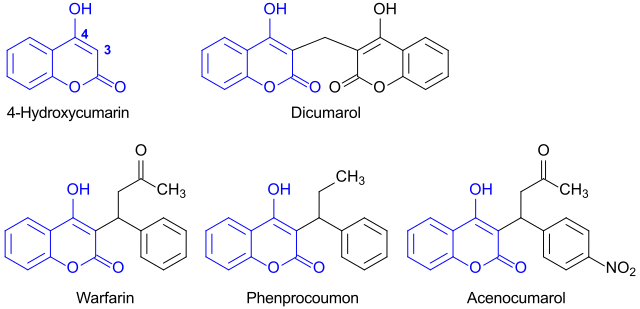
Les anticoagulants sont des médicaments qui empêchent le sang de coaguler aussi rapidement ou aussi efficacement que la normale. Certaines personnes appellent les anticoagulants des "anticoagulants sanguins". Cependant, le sang n'est pas réellement rendu plus fin — il ne coagule simplement pas aussi facilement pendant que vous prenez un anticoagulant. Les anticoagulants sont utilisés pour traiter et prévenir la formation de caillots sanguins dans les vaisseaux sanguins, comme dans les artères ou les veines.
par Dr Doug McKechnie, MRCGP
Traitement et médicaments
Fibrillation auriculaire et prévention des AVC
Les médicaments utilisés pour prévenir un AVC lié à la fibrillation auriculaire sont appelés anticoagulants. Ils aident à empêcher la formation de caillots sanguins dans vos vaisseaux sanguins.
par Dr Colin Tidy, MRCGP
Questions fréquemment posées
Existe-t-il différentes puissances d'inhibiteurs de l'ECA ?
L'article mentionne que chaque médicament inhibiteur de l'ECA a également différents noms de marque. Il indique également que certains médicaments inhibiteurs de l'ECA font partie d'un comprimé combiné avec d'autres médicaments comme les bloqueurs des canaux calciques ou les diurétiques. Cela suggère qu'il peut y avoir différentes formulations ou combinaisons, ce qui peut impliquer des forces variables ou des médicaments co-administrés, mais il ne précise pas explicitement les 'forces'.
Les inhibiteurs de l'ECA peuvent-ils être pris avec d'autres médicaments ?
Les inhibiteurs de l'ECA peuvent interagir avec certains autres médicaments. Plus précisément, les anti-inflammatoires non stéroïdiens (AINS), les 'comprimés d'eau' (diurétiques) et le lithium sont mentionnés comme médicaments interactifs. Il est important d'informer votre médecin de tous les médicaments que vous prenez, y compris ceux achetés sans ordonnance, afin qu'il puisse vous fournir des conseils appropriés.
Que dois-je faire si je ressens une toux sèche persistante en prenant un inhibiteur de l'ECA ?
Une toux sèche persistante est répertoriée comme un effet secondaire possible des inhibiteurs de l'ECA. Si vous ressentez cela ou d'autres effets secondaires, l'article recommande de signaler une pression artérielle basse et des étourdissements à votre médecin. Bien qu'il ne mentionne pas spécifiquement la toux sèche, il est généralement bon de discuter de tout effet secondaire gênant avec votre médecin.
Qu'est-ce que l'angio-œdème et pourquoi est-il important d'en être informé lors de la prise d'inhibiteurs de l'ECA ?
L'angio-œdème est une réaction allergique sévère caractérisée par un gonflement des lèvres, des yeux ou de la langue. C'est un effet secondaire grave des inhibiteurs de l'ECA. Les personnes ayant déjà souffert d'angio-œdème à cause des inhibiteurs de l'ECA ne doivent pas les reprendre. Il est important d'être conscient de ce symptôme car il peut être sérieux.
Puis-je signaler un effet secondaire s'il n'est pas mentionné dans la notice du médicament ?
Oui, vous pouvez signaler tout effet secondaire suspecté d'un médicament, même s'il n'est pas mentionné dans la notice, via le système Yellow Card. Ce système aide les professionnels de santé à prendre connaissance des effets secondaires nouveaux ou non signalés. Vous pouvez le faire en ligne sur www.mhra.gov.uk/yellowcard, en fournissant des détails sur l'effet secondaire, le médicament, la personne concernée et vos coordonnées.
Lectures complémentaires et références
- Insuffisance cardiaque chronique chez l'adulte - diagnostic et prise en charge; Directives NICE (sept. 2018)
- Hypertension chez les adultes : diagnostic et gestion; NICE (août 2019 - dernière mise à jour novembre 2023)
- Marx N, Federici M, Schutt K, et al; 2023 ESC Guidelines for the management of cardiovascular disease in patients with diabetes. Eur Heart J. 2023 Oct 14;44(39):4043-4140. doi: 10.1093/eurheartj/ehad192.
À propos de l'auteurVoir la biographie complète

Dr Toni Hazell, FRCGP
MBBS, BSc, FRCGP, DFSRH, Dip GU med, DRCOG, DCH (London, UK, 2000)
Le Dr Toni Hazell a obtenu son diplôme de l'École de médecine de l'hôpital St. Mary et a effectué son VTS à l'hôpital Northwick Park.
À propos du critiqueVoir la biographie complète

Dr Colin Tidy, MRCGP
Médecin généraliste, Auteur médical
MBBS, MRCGP, MRCP (Paediatrics), DCH
Le Dr Colin Tidy est un médecin du NHS, basé dans l'Oxfordshire.
Historique de l'article
Les informations sur cette page sont rédigées et examinées par des cliniciens qualifiés.
Article également disponible en Anglais, Allemand, Espagnol, Français, Italien, Portugais, Hindi, Hébreu, Arabe, and Suédois.
Prochaine révision prévue : 16 déc. 2028
18 déc. 2023 | Dernière version

Demandez, partagez, connectez-vous.
Parcourez les discussions, posez des questions et partagez vos expériences sur des centaines de sujets de santé.

Vous ne vous sentez pas bien ?
Évaluez vos symptômes en ligne gratuitement
Inscrivez-vous à la newsletter Patient
Votre dose hebdomadaire de conseils de santé clairs et fiables - rédigés pour vous aider à vous sentir informé, confiant et maître de la situation.
En vous abonnant, vous acceptez notre Politique de confidentialité. Vous pouvez vous désabonner à tout moment. Nous ne vendons jamais vos données.
Plus sur le traitement et les médicaments
- Antibiotiques
- Antispasmodiques
- Médicaments biologiques pour la polyarthrite rhumatoïde
- Intoxication au monoxyde de carbone
- Colposcopie et traitements cervicaux
- Médecine complémentaire et alternative
- Angioplastie coronarienne
- Décongestionnants
- Émollients et crèmes pour l'eczéma
- Bêta-lactamases à spectre étendu
- Unités de bout de doigt pour les stéroïdes topiques
- Bloqueurs H2
- Hémodialyse
- Thérapie de remplacement hormonal (TRH)
- Vaccin contre le VPH
- Médicaments contre l'indigestion
- Thérapies parlantes du NHS - auto-référence
- Pédicurie
- Rage et vaccin contre la rage
- Thérapie par ondes de choc