Thyroid and parathyroid problems
Peer reviewed by Dr Surangi Mendis, MRCGPLast updated by Dr Caroline Wiggins, MRCGP Last updated 31 Oct 2023
Meets Patient’s editorial guidelines
- DownloadDownload
- Share
- Language
- Discussion
- Audio Version
- Add to preferred sources on Google
This leaflet gives a brief overview of the thyroid and parathyroid glands and the common medical problems which can occur with these.
At a glance
The thyroid and parathyroid glands are endocrine glands that produce hormones.
The thyroid gland, located in the neck, produces hormones affecting metabolism and blood mineral levels.
Common thyroid disorders include underactive or overactive thyroid, goitre, and nodules.
The four parathyroid glands, behind the thyroid, regulate calcium, phosphorus, and magnesium levels.
Blood tests and scans can help diagnose issues with these glands.
What are the thyroid and parathyroid glands?
Both the thyroid and parathyroid glands are endocrine glands. This means they make and release (secrete) hormones. Hormones are chemicals which are produced by the body and released into the bloodstream.
They act as messengers, affecting cells and tissues in distant parts of your body. Thyroid hormones affect the body's metabolic rate and the levels of certain minerals in the blood. The hormone produced by the parathyroid also helps to control the amount of these essential minerals.
Types of thyroid disorders
Thyroid nodules. These are lumps in the thyroid gland, which are usually non-cancerous (benign).
Thyroid disorder symptoms
Because the thyroid gland produces hormones which travel in the blood and affect body systems, a problem with the gland usually leads to symptoms elsewhere in the body.
Symptoms and signs vary depending on the thyroid disease or problem - see the individual leaflets linked above for details.
Thyroid disorder tests
There are a number of tests (investigations) which may be carried out to check the thyroid gland. Which test is done depends on the symptoms or signs which you have. See the leaflets on the individual conditions for the tests done in each particular problem.
Tests which might be done for people with thyroid issues include:
Blood tests. This includes thyroid function tests and thyroid antibody tests.
An ultrasound scan of the neck.
Special thyroid scans. See the separate leaflet called Thyroid Scans and Uptake Tests for more information.
Taking a sample of tissue for analysis (a biopsy).
Types of parathyroid disorders
Underactive parathyroid (hypoparathyroidism).
Tumours of the parathyroid, such as parathyroid adenoma and parathyroid cancer.
Parathyroid disorder symptoms
As with the thyroid, the parathyroid glands produce hormones which travel in the blood and affect body systems, so a problem with the gland usually leads to symptoms elsewhere in the body. Symptoms and signs vary depending on the parathyroid problem - see the individual leaflets linked above for details.
Parathyroid disorder tests
There are a number of tests (investigations) which may be carried out to check on the parathyroid glands. Which test is done depends on the symptoms or signs which you have. Possible tests for people with parathyroid symptoms include:
Test of the parathyroid hormone level.
Tests for levels of calcium, phosphate and vitamin D.
Thyroid function tests and thyroid antibody tests.
Taking a sample of tissue for analysis (a biopsy).
See the leaflets on the individual conditions for the tests done in each particular problem.
Where is the thyroid gland?
Parathyroid glands
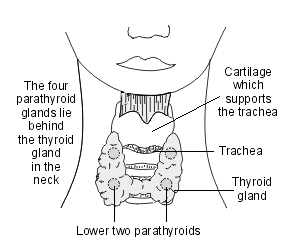
The thyroid gland is found in the front part of your neck. It is made up of two lobes - the right and the left lobes. These two lobes are joined by a small bridge of thyroid tissue called the isthmus. The two lobes lie on either side of your windpipe (trachea).
Thyroid functions
The thyroid gland makes three hormones that it releases (secretes) into the bloodstream. Two of these hormones, called thyroxine (T4) and triiodothyronine (T3), increase your body's metabolic rate. Essentially, the body's metabolic rate is how quickly the cells in your body use the energy stored within them.
Thyroid hormones make cells use more energy. By controlling how much energy our cells use, thyroid hormones also help to regulate our body temperature. Heat is released when energy is used, increasing our body temperature. Thyroid hormones also play a role in making proteins, the building blocks of the body's cells. They also increase the use of the body's fat and glucose stores.
In order to make T3 and T4, the thyroid gland needs iodine, a substance found in the food we eat. T4 is called T4 because it contains four atoms of iodine. T3 contains three atoms of iodine. In the cells and tissues of the body most T4 is converted to T3. T3 is the more active hormone; it influences the activity of all the cells and tissues of your body.
The other hormone that the thyroid makes is called calcitonin. This helps to control the levels of calcium and phosphorus in the blood. These minerals are needed, among other things, to keep bones strong and healthy.
How does the thyroid work?
The main job of the thyroid gland is to produce hormones T4 and T3. To do this the thyroid gland has to take a form of iodine from the bloodstream into the thyroid gland itself. This substance then undergoes a number of different chemical reactions which result in the production of T3 and T4.
The activity of the thyroid is controlled by hormones produced by two parts of the brain - the hypothalamus and the pituitary gland. The hypothalamus receives input from the body about the state of many different bodily functions.
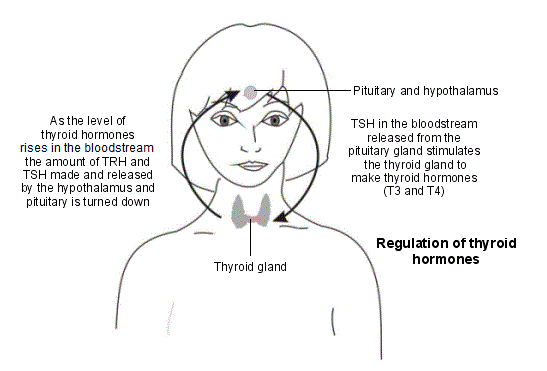
When the hypothalamus senses that levels of T3 and T4 are low, or that the body's metabolic rate is low, it releases a hormone called thyrotropin-releasing hormone (TRH). TRH travels to the pituitary gland via the connecting blood vessels. TRH stimulates the pituitary gland to release (secrete) thyroid-stimulating hormone (TSH).
Location of pituitary gland
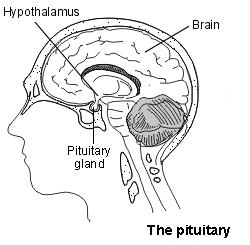
TSH is released from the pituitary gland into the bloodstream and travels to the thyroid gland. Here, TSH causes cells within the thyroid gland to make more T3 and T4. T3 and T4 are then released into the bloodstream to increase metabolic activity in the body's cells.
High levels of T3 stop the hypothalamus and pituitary gland from secreting more of their hormones. In turn this stops the thyroid gland producing T3 and T4. This system ensures that T3 and T4 should only be made when their levels are too low.
Regulation of thyroid hormones
Calcitonin is released by the thyroid gland if the amount of calcium in the bloodstream is high. Calcitonin decreases the amount of calcium and phosphorus in the blood. It does this by slowing the normal process of bone breakdown. Slowing this process reduces the amount of calcium being released into the bloodstream.
Calcitonin also accelerates the amount of calcium and phosphorus taken up as new bone is formed. Calcitonin works together with parathyroid hormone to regulate calcium levels (see below in the parathyroid section for full explanation).
Where are the parathyroid glands?
The body has four parathyroid glands. They are small, pea-sized glands, located in the neck just behind the butterfly-shaped thyroid gland. Two parathyroid glands lie behind each lobe of the thyroid gland.
Parathyroid functions
The parathyroid glands release a hormone called parathyroid hormone. This hormone helps to control the levels of three minerals in the body: calcium, phosphorus and magnesium. Parathyroid hormone functions/effects in the body include:
It causes the release of calcium from bones.
It causes calcium to be taken up (absorbed) into the blood from the intestine.
It stops the kidneys from getting rid of (excreting) calcium in the urine.
It causes the kidneys to excrete phosphate in the urine.
It increases blood levels of magnesium.
How do the parathyroid glands work?
Normally parathyroid hormone release is triggered when the level of calcium in the blood is low. When the calcium level rises and is back to normal, the release of parathyroid hormone from the parathyroids is suppressed.
However, parathyroid hormone and calcitonin work together to control calcium levels in the blood. The blood calcium level is the main trigger for the release of these hormones.
When the calcium level is high in the bloodstream, the thyroid gland releases calcitonin. Calcitonin slows bone breakdown, decreasing blood calcium levels. When calcium levels decrease, this stimulates the parathyroid gland to release parathyroid hormone.
Parathyroid hormone encourages the normal process of bone breakdown (essential for maintenance and growth of the bone), which releases calcium into the bloodstream. Parathyroid hormone acts against the effects of calcitonin. By having two hormones with opposing actions, the level of calcium in the blood can be carefully regulated.
Parathyroid hormone also acts on the kidneys. Here it slows down the amount of calcium and magnesium filtered from the blood into the urine. Parathyroid hormone also stimulates the kidneys to make calcitriol, the active form of vitamin D. Calcitriol helps to increase the amount of calcium, magnesium and phosphorus absorbed from your guts (intestines) into the blood.
Patient picks for Thyroid condtions
Hormones
Overactive thyroid gland
Hyperthyroidism is an uncommon condition where your thyroid gland (which is in your neck) goes into 'overdrive'. It produces too much of a chemical called thyroxine. We all have a certain amount of thyroxine in our bodies to keep us working at just the right 'energy level'. If too much thyroxine is made, you can become very ill with tiredness, a fast heartbeat and weight loss. Initially the symptoms can mimic lots of other conditions. However, the diagnosis is usually made with a simple blood test. A number of treatments are available which makes hyperthyroidism fairly easy to treat: tablets are the mainstay of treatment, followed by radiotherapy. Occasionally surgery is needed.
by Dr Colin Tidy, MRCGP

Hormones
Goitre
A goitre (pronounced goy-ter, sometimes spelt as 'goiter') is an enlarged thyroid gland. This gives you a lump at the front of your neck. Some people with a goitre have an underactive or overactive thyroid gland. This means that they make too much or too little thyroid hormone. There are various causes of goitre and treatment depends on the cause.
by Dr Rachel Hudson, MRCGP
Frequently asked questions
How vital is phosphorus to the human body, and what other minerals do the parathyroid glands regulate?
Phosphorus is one of the three essential minerals, along with calcium and magnesium, whose levels in the body are controlled by the parathyroid glands. The parathyroid hormone specifically helps manage these minerals.
What is the function of the hormone calcitriol?
Calcitriol is the active form of vitamin D, and its production is stimulated by parathyroid hormone in the kidneys. It helps increase the absorption of calcium, magnesium, and phosphorus from your intestines into the bloodstream.
Are there any health implications if my body doesn't get enough iodine?
Yes, iodine is crucial for the thyroid gland to produce the hormones thyroxine (T4) and triiodothyronine (T3). Without sufficient iodine, the thyroid cannot make these hormones, which are essential for regulating metabolic rate and other bodily functions.
How do my brain and thyroid gland communicate to keep hormone levels balanced?
The hypothalamus and pituitary gland in your brain control thyroid activity. When T3 and T4 levels are low, the hypothalamus releases TRH, which prompts the pituitary gland to release TSH. TSH then travels to your thyroid gland, stimulating it to produce more T3 and T4. High levels of T3 and T4 then signal the hypothalamus and pituitary to stop releasing their hormones, maintaining a balanced system.
Further reading and references
- The Endocrine System - an overview; Thyroid UK
- Thyroid disease: assessment and management; NICE guidance (November 2019 - last updated October 2023)
- Hyperparathyroidism (primary): diagnosis, assessment and initial management; NICE guideline (May 2019)
- Hypothyroidism; NICE CKS, May 2021 (UK access only)
About the authorView full bio

Dr Caroline Wiggins, MRCGP
General Practitioner, Medical Author
MBBS Honours (with Distinction), MRCGP (2016), MSc.SEM (with Distinction), BSc (Hons)
Dr Caroline Wiggins is a GP locum currently in the South-West of England.
About the reviewerView full bio

Dr Surangi Mendis, MRCGP
Consultant and Medical Author
MBBS, BSc (1st), MRCGP (2014), DFSRH, PGcert otology and audiology
Surangi Mendis is a consultant in Audiovestibular Medicine and Neuro-otology at The Royal National ENT and Eastman Dental Hospitals, UCLH.
Article history
The information on this page is written and peer reviewed by qualified clinicians.
Article also available in English, German, Spanish, French, Italian, Portuguese, Hindi, Hebrew, Arabic, and Swedish.
Next review due: 29 Oct 2028
31 Oct 2023 | Latest version
Join the conversation
Share your thoughts or experiences with others in our patient communities.

Ask, share, connect.
Browse discussions, ask questions, and share experiences across hundreds of health topics.

Feeling unwell?
Assess your symptoms online for free
Sign up to the Patient newsletter
Your weekly dose of clear, trustworthy health advice - written to help you feel informed, confident and in control.
By subscribing you accept our Privacy Policy. You can unsubscribe at any time. We never sell your data.
More in hormones
- Acromegaly
- Adrenal fatigue
- Chronic pancreatitis
- Congenital adrenal hyperplasia
- Greene Menopause Scale
- Hormone replacement therapy (HRT)
- Hyponatraemia
- Iodine deficiency
- Jet lag
- Ovarian cancer
- Ovarian cyst
- Pelvic pain in women
- Perimenopause
- Pituitary gland disorders
- Polycystic ovary syndrome
- Prolactinoma
- Thyroid cancer
- Thyroid eye disease
- Underactive thyroid gland
- Vaginal dryness