Hyperplasie congénitale des surrénales
Revu par Dr Rachel Hudson, MRCGPDernière mise à jour par Dr Rosalyn Adleman, MRCGPDernière mise à jour 5 juin 2023
Respecte les directives éditoriales
- TéléchargerTélécharger
- Partager
- Language
- Discussion
- Version audio
- Ajouter aux sources préférées sur Google
Congenital adrenal hyperplasia is an inherited (genetic) condition causing swelling of the adrenal glands. The condition is associated with a decrease in the blood level of a hormone called cortisol and an increase in the level of male sex hormones (androgens) in both sexes.
Some people get a mild condition that produces no symptoms. Others (mainly baby boys) develop a severe form that can be life-threatening. Medical treatment to correct hormone levels is available. Surgery to improve the appearance of unusual genitalia (in girls) is sometimes considered.
En un coup d'œil
L'hyperplasie congénitale des surrénales (HCS) est une affection génétique affectant les niveaux d'hormones produites par les glandes surrénales.
Les symptômes varient selon le type et le sexe, y compris des organes génitaux inhabituels chez les petites filles et des signes de puberté précoce chez les garçons.
La forme classique sévère peut rendre les bébés très malades s'ils perdent trop de sel.
Le diagnostic implique souvent des analyses de sang, qui peuvent révéler des niveaux anormaux d'hormones et de sels.
Le traitement de l'ACH classique implique une médication à vie pour remplacer les hormones manquantes.
Les personnes atteintes de CAH peuvent avoir besoin de doses plus élevées de stéroïdes en cas de stress, de maladie ou de blessure.
Si vous avez une HAC, portez une identification médicale d'urgence.
Qu'est-ce que l'hyperplasie congénitale des surrénales ?
Congenital adrenal hyperplasia (CAH) is a condition affecting the level of cortisol, a hormone produced by the adrenal gland. It is a genetic condition and can be inherited from your parents. There are different forms:
Classic: this is the severe form. There are two types - salt-losing and non-salt-losing.
Non-classic: this is milder (also known as late-onset type).
What are the adrenal glands and what do they do?
There is an adrenal gland just above each kidney. Each adrenal gland has an outer part (adrenal cortex) and an inner part (adrenal medulla). Cells in the adrenal glands make various hormones. A hormone is a chemical which is made in one part of the body but passes into the bloodstream and has effects on other parts of the body.
Glandes pituitaire et surrénales
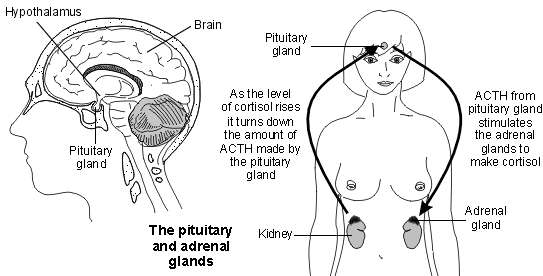
Cells in the outer part of the adrenals (the adrenal cortex) make the hormones cortisol and aldosterone. The amount of cortisol that is made is controlled by another hormone called adrenocorticotrophic hormone (ACTH). ACTH is made in a small gland which lies just under the brain (the pituitary gland).
ACTH passes into the bloodstream, is carried to the adrenal glands, and stimulates the adrenal glands to make cortisol. Cells in the adrenal cortex also make small amounts of sex hormones such as testosterone and oestrogen, although most of these are made in the testicles (testes) and ovaries.
How common is congenital adrenal hyperplasia??
The severe classic form affects 1 in 18,000 births in Great Britain. About three quarters of affected people have the salt-losing type and the rest have the non-salt-losing type. Similar numbers of girls and boys are affected when they are born, but boys tend to have the more severe symptoms.
The milder non-classic form is more common. It affects about 1 in 1,000 white people. It is more common in certain ethnic groups such as Ashkenazi Jewish people of Eastern European origin.
Causes of congenital adrenal hyperplasia
Under normal circumstances, ACTH stimulates the adrenal glands to produce the chemical building blocks (precursors) which make cortisol.
There is a feedback system which controls ACTH production. The rate of release of ACTH depends on the amount of cortisol in the bloodstream. As more cortisol is produced it reduces the release of ACTH, thus slowing down the stimulation of the adrenals and production of cortisol until a balance between these two hormones is achieved.
In CAH there is a blockage in the assembly line that makes cortisol from the precursors. So, the blood level of cortisol is low, and there is never enough cortisol produced to slow the release of ACTH. This means the adrenal glands are constantly stimulated, causing an overgrowth of the adrenal gland (hence, the term hyperplasia).
The large amounts of the precursors from all this stimulation build up in the adrenals and leak out into the bloodstream. One of these is testosterone, a male hormone, which causes the male-like (virilising) features seen in the condition.
The blockage may also cause aldosterone production to be reduced. A drop in the level of this hormone can have an effect on the salt level in the bloodstream.
Symptoms of untreated congenital adrenal hyperplasia
The typical symptoms depend on the type of CAH and whether you are female or male.
Classic form
What are a baby girl's typical symptoms?
Baby girls are usually diagnosed soon after birth because of unusual looking genitalia. The clitoris may be larger than normal. The urine tube (urethra) and vagina may merge to form a larger hole. The womb (uterus) and other female organs are normal. Because the condition is recognised so early, baby girls do not usually become seriously ill through complications (see below).
What are a baby boy's typical symptoms?
These babies look normal, except their skin may be slightly darker than usual. The penis may be enlarged. Other symptoms depend on whether the boy has the salt-losing form or the non-salt-losing form.
Baby boys with the salt-losing form: if the condition is severe, the baby may experience a salt-losing crisis and become quite ill. This happens when they are between 7-14 days old. They may develop symptoms such as:
Perte de poids.
Fatigue extrême.
Severe loss of fluid (dehydration).
Effondrement.
Boys with the non-salt-losing form: these children are usually diagnosed because they develop early virilisation. This means there are signs of early puberty such as an enlarged penis or an increase in body hair. This is often recognised between the ages of 2-4 years.
Non-classic form
This tends to be diagnosed in later childhood or as a young adult.
What symptoms do males get?
In severe forms, boys may become sexually mature at an early age. For example, they may develop:
Early pubic and armpit hair growth.
An enlarged penis.
An early growth spurt.
A young man may have a mild form which causes no symptoms. It may not be diagnosed unless he is tested in later life for some other condition.
What symptoms do females get?
Possible symptoms girls or women may develop include:
Early sexual development - ie early pubic hair and armpit hair growth and a growth spurt.
Excess body hair in a masculine distribution (hirsutism).
Light periods (oligomenorrhoea).
Lack of periods (amenorrhoea).
Syndrome des ovaires polykystiques - a condition in which lots of cysts are found in the ovaries.
Acné.
Both boys and girls may initially seem to be tall for their age due to an early growth spurt, but they usually end up being short as adults if the diagnosis is not made at a young age and treatment commenced.
If you have a mild form you may not have any symptoms at all.
How is congenital adrenal hyperplasia diagnosed?
Analyses de sang are the first tests to be done. These may show a high level of the hormone 17-hydroxyprogesterone. Blood tests may also show that the levels of salts in the blood are outside the normal range. For example, you may have a low sodium level or a high potassium level. You may also have a low blood glucose level.
If there is still doubt about the diagnosis, you may have to have a corticotropin stimulation test. Corticotropin is a hormone which stimulates the adrenal gland. You will have an injection of this hormone and a blood test an hour later to measure how your adrenals have responded.
Une échographie of the pelvis may be done on baby girls who have unusual-looking genitalia. This shows whether a womb (uterus) is present or absent and whether the kidneys look unusual.
les radiographies of a child's bones are sometimes done to check the rate of development of the skeleton (the bone age). In CAH this rate may be faster than normal.
If the baby's sex is in doubt, a blood test to examine the sex genes in a single cell (a karyotype test) may be performed.
Other tests to examine gene defects may also be necessary if the diagnosis is unclear.
An unborn baby may be suspected of having classic CAH if both parents have been identified as carriers. In this case, tests are done to check the sex of the baby and whether it is affected. One test, called amniocentèse, involves taking a sample of the liquid surrounding the baby in the womb (the amniotic fluid). Another test, called villous sampling, involves taking a sample of placental tissue. Newer non-invasive tests have been developed.
Treatment for classic congenital adrenal hyperplasia
Treatment may include:
Glucocorticoids: these are steroid medicines that are similar to cortisol. Cortisol and glucocorticoids have various effects on the body, including helping to regulate the blood sugar (glucose) level. You need a certain level of cortisol or glucocorticoid to keep well. One of this group, l'hydrocortisone, is used in children because it does not have much effect on growth rate. Stronger steroids such as prednisolone et dexaméthasone may be used in adults. Hydrocortisone is still used in short bursts in adults during illness, or after injury or surgery.
Mineralocorticoids: these are a type of steroid similar to aldosterone. One of these may be needed to control the salt concentration in the blood and the level of a kidney hormone called renin. The most common medicine used is fludrocortisone.
Babies with salt-losing CAH may need extra salt (sodium chloride) for the first six months of life. Salt replacement is particularly important in hot weather.
In some cases your specialist will recommend other hormonal treatment. This might include medications such as: somatropin, leuprorelin and histrelin.
What other precautions should people with classic congenital adrenal hyperplasia take?
Extra care should be taken during situations which put extra stress on the adrenal glands. Examples include surgery, infection and injury. You may (in consultation with your GP or hospital specialist) need a higher dose of steroid than you normally take. You may also need extra fluid administered through a drip into a vein.
Your blood glucose level may drop with exercise, illness or fasting and you may need to increase your intake of glucose and carbohydrates to compensate.
You should wear or carry medical alert identification so that any health professional treating you in an emergency will know you have CAH.
Treatment for non-classic congenital adrenal hyperplasia
Treatment is not necessary unless you have symptoms, in which case a glucocorticoid steroid is used. Boys or girls who have features of androgen excess (see above) may need hydrocortisone. An adult woman may need extra treatment to control the androgen effect, such as oral contraceptive pills or a steroid called flutamide.
If you are on a glucocorticoid, you may need extra doses of steroid in situations in which the adrenal glands are stressed, such as illness, surgery or injury.
If you are on a glucocorticoid, you may be able to stop this once your symptoms have improved.
Treatment for an unborn baby
If you and your partner are both carriers of the CAH gene, the mother may be offered treatment with dexamethasone tablets. This helps to reduce the effect that the condition has on the unborn baby's genitalia if it is a girl.
The treatment is controversial because there is only a 1 in 8 chance that the baby will be affected. The specialist will discuss the risks and benefits of this treatment with you. If the tests show that the baby is a boy or a girl who is not affected, treatment should be stopped straightaway.
Treatment for a newborn baby
Three quarters of affected babies with classic CAH are salt losers. They may need treatment through a drip to replace fluid, salt and glucose. They will need long-term glucocorticoid treatment.
Traitement chirurgical
Surgery is sometimes offered when a baby girl has unusual genitalia. This is usually done when the baby is very young because it is technically easier than at later ages. This has been offered in the past not only to make the appearance more typical but also to prevent complications such as urine infections. However, there is a growing body of opinion that these babies should not be subjected to surgery and that even though their appearance is different, they should not be considered 'abnormal'.
Surgery to remove both adrenal glands is very occasionally performed. The operation reduces androgen effects of the condition and prevents weight gain. However, if you have this procedure you would have to be on large amounts of steroid treatment for life. This puts you at risk of a life-threatening condition that happens when there is not enough cortisol in the blood circulation (adrenal crisis).
Will congenital adrenal hyperplasia go away?
CAH is a lifelong condition. However, if you have the correct treatment, either medical or surgical, the outlook is mainly good.
Both men and women may not grow very tall, although normal adult height is usually possible with correct, early treatment.
Women may have fertility problems and difficulties with healthy sexual function. Proper treatment and counselling will be able to help with these difficulties.
It is important that you have a thorough understanding of your condition. The most important point regarding your physical health is to check with your doctor whether you need steroids at times of illness, injury or surgery.
Sélections des patients pour Adrenal conditions
Hormones
Fatigue surrénalienne
Adrenal fatigue is a theory that the adrenal glands can become 'overworked' from chronic stress, leading to symptoms such as fatigue and low energy. However, there is no scientific evidence to support this claim. Adrenal fatigue is not recognised as a medical condition by professional medical societies, and the consensus amongst mainstream doctors is that it does not exist as a disease.
par Dr Doug McKechnie, MRCGP
Hormones
Syndrome de Cushing
Cushing's syndrome is caused by too high a level of glucocorticoid in the body. This can be caused by taking steroid medication long-term (the common cause) or by the body making too much cortisol (the main glucocorticoid made by the body). Symptoms usually develop gradually and so the diagnosis (other than that caused by steroid medication) may not be clear for some time.
par Dr Rachel Hudson, MRCGP
Questions fréquemment posées
Quelle est la différence entre l'hyperplasie congénitale des surrénales classique et non classique ?
Le CAH classique est la forme sévère, qui se divise en types avec perte de sel et sans perte de sel. Le CAH non classique est une forme plus légère, également connue sous le nom de type à apparition tardive.
Comment l'ACTH est-elle liée à l'hyperplasie congénitale des surrénales ?
Normalement, l'ACTH stimule les glandes surrénales pour produire du cortisol. Dans le CAH, il y a un blocage dans la production de cortisol, entraînant de faibles niveaux de cortisol. Cela empêche le système de rétroaction de réduire l'ACTH, de sorte que les glandes surrénales sont constamment stimulées, ce qui les amène à se développer excessivement (hyperplasie) et à produire des précurseurs en excès, y compris des hormones mâles comme la testostérone.
L'hyperplasie congénitale des surrénales peut-elle affecter la taille adulte ?
Les garçons et les filles atteints d'HCS peuvent initialement être grands pour leur âge en raison d'une poussée de croissance précoce. Cependant, si la condition n'est pas diagnostiquée et traitée à un jeune âge, ils peuvent finir par être plus petits à l'âge adulte. Avec un traitement correct et précoce, atteindre une taille adulte normale est généralement possible.
Y a-t-il des controverses concernant le traitement de l'HCS ?
Oui, traiter un bébé à naître avec des comprimés de dexaméthasone pour réduire l'effet de l'HCS sur les organes génitaux d'une petite fille est controversé. Cela est dû au fait qu'il n'y a qu'une chance sur 8 que le bébé soit réellement affecté. Un autre domaine controversé est la chirurgie sur les petites filles avec des organes génitaux inhabituels. Bien que historiquement réalisée pour normaliser l'apparence et prévenir des complications comme les infections urinaires, il y a une opinion croissante selon laquelle de telles chirurgies pourraient ne pas être nécessaires étant donné que les différences physiques ne signifient pas 'anormal'.
Quel type de suivi est nécessaire après un diagnostic de CAH ?
Les analyses de sang régulières sont cruciales pour surveiller les niveaux hormonaux, en particulier le 17-hydroxyprogestérone, ainsi que les niveaux d'électrolytes comme le sodium et le potassium, ainsi que la glycémie. Ces tests aident à ajuster le traitement et à assurer une gestion optimale de la condition. Pour les petites filles, une échographie du bassin peut être effectuée pour vérifier la présence d'un utérus et l'apparence des reins.
Lectures complémentaires et références
- Auchus RJ, Arlt W; Approach to the patient: the adult with congenital adrenal hyperplasia. J Clin Endocrinol Metab. 2013 Jul;98(7):2645-55. doi: 10.1210/jc.2013-1440.
- Dreger A, Feder EK, Tamar-Mattis A; Prenatal Dexamethasone for Congenital Adrenal Hyperplasia: An Ethics Canary in the Modern Medical Mine. J Bioeth Inq. 2012 Sep;9(3):277-294. Epub 2012 Jul 31.
- Mooij CF, Webb EA, Claahsen van der Grinten HL, et al; Cardiovascular health, growth and gonadal function in children and adolescents with congenital adrenal hyperplasia. Arch Dis Child. 2017 Jun;102(6):578-584. doi: 10.1136/archdischild-2016-311910. Epub 2016 Dec 14.
- Living with CAH.com
À propos de l'auteurVoir la biographie complète

Dr Rosalyn Adleman, MRCGP
MRCGP
Dr Rosalyn Adleman est médecin généraliste du NHS travaillant dans le nord de Londres.
À propos du critiqueVoir la biographie complète

Dr Rachel Hudson, MRCGP
Médecin généraliste et auteur médical
MBChB, MRCGP (2008), BSc (Medical Science), DFSRH, DRCOG, DCH
Dr Rachel Hudson est médecin généraliste du NHS travaillant dans le nord-ouest de l'Angleterre.
Historique de l'article
Les informations sur cette page sont rédigées et examinées par des cliniciens qualifiés.
Article également disponible en Anglais, Allemand, Espagnol, Français, Italien, Portugais, Hindi, Hébreu, Arabe, and Suédois.
Prochaine révision prévue : 12 mai 2028
5 juin 2023 | Dernière version

Demandez, partagez, connectez-vous.
Parcourez les discussions, posez des questions et partagez vos expériences sur des centaines de sujets de santé.

Vous ne vous sentez pas bien ?
Évaluez vos symptômes en ligne gratuitement
Inscrivez-vous à la newsletter Patient
Votre dose hebdomadaire de conseils de santé clairs et fiables - rédigés pour vous aider à vous sentir informé, confiant et maître de la situation.
En vous abonnant, vous acceptez notre Politique de confidentialité. Vous pouvez vous désabonner à tout moment. Nous ne vendons jamais vos données.
Plus sur les hormones
- Cours de ménopause de 10 semaines
- Pancréatite aiguë
- Maladie d'Addison
- Fatigue surrénalienne
- Thérapie de remplacement hormonal (TRH)
- Hyponatrémie
- Hypoparathyroïdie
- Testostérone basse
- Ménopause
- Cancer de l'ovaire
- Kyste ovarien
- Syndrome des ovaires polykystiques
- Insuffisance ovarienne prématurée
- Test Synacthène
- Problèmes de thyroïde et de parathyroïde
- Cancer de la thyroïde
- la maladie oculaire thyroïdienne
- Tests de la fonction thyroïdienne
- Hypothyroïdie
- Sécheresse vaginale